
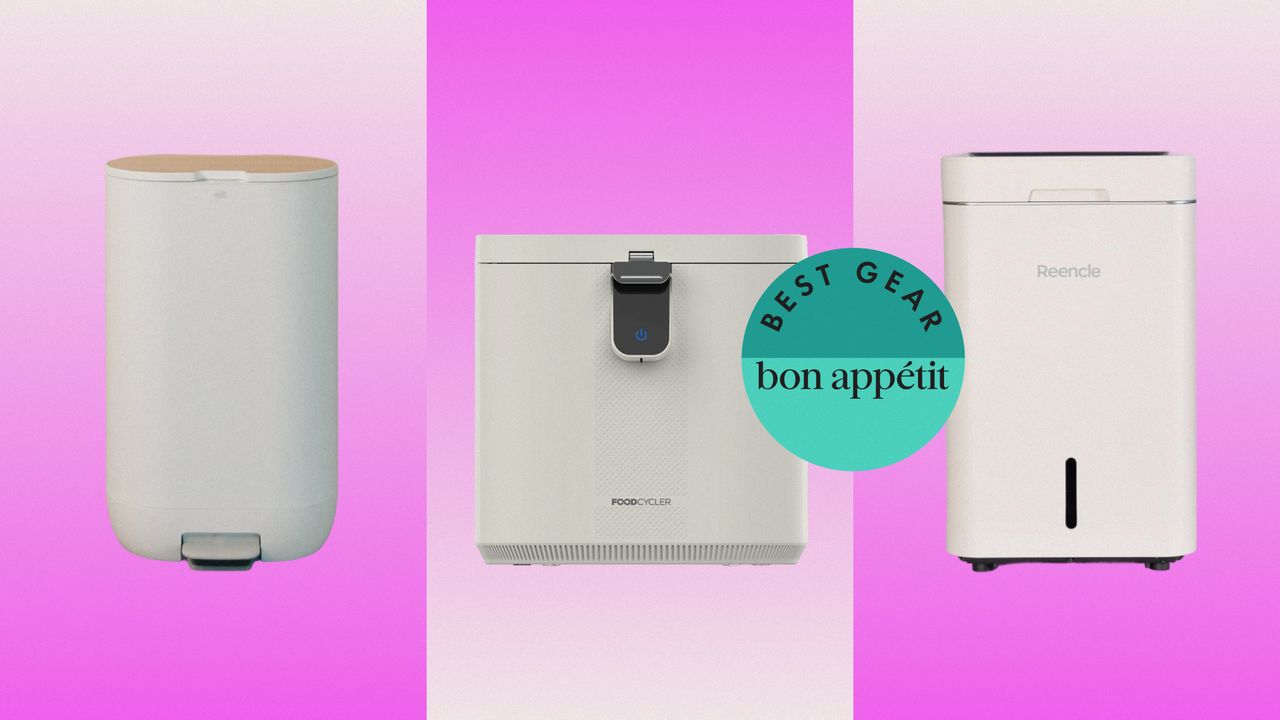
I consider myself a fairly eco-conscious person. I reduce, reuse, recycle; I take public transit; I avoid using AI for meme-making and learning celebrity heights. But composting never really took. I'd try to gather food scraps in a plastic countertop compost bin in my kitchen, but emptying and cleaning the receptacle every couple days was messy and smelly and I'd give up after a couple weeks. In 2025, however, New York City made composting the law of the land and I knew I needed to figure out a more sustainable solution.Electric kitchen composters and food recyclers promise to turn your food scraps into dried grounds or usable compost in a matter of hours, eliminating the need to transport a dripping bag of rotting food goo through your apartment and around the block to where your building keeps the communal bin (just me?). Like magic, these machines can reduce the volume of your food waste by up to 90%, so you can go weeks or months without emptying them. The downside? Many of them are very expensive.To find out whether these appliances are worth the hefty price tag, a few fellow BA editors and I put them to use in our own kitchens. Nearly a year later, I have to say, it's hard to imagine life without mine.The best kitchen composters we triedOur top pick: Reencle Gravity2025 Gear of the Year Award winner: Mill Food RecyclerMost affordable option: Airthereal Revive V500Best mid-size countertop composter: FoodCycler Eco 5Top pick: Reencle GravityThe Reencle Gravity can handle coffee grounds and the paper filter they brew in. Abbey StonePros:Creates real compostEasy set-upNeeds infrequent emptyingVery little maintenance requiredContains odorsCan handle all foods, including meat and dairy“Always on” operation, which means you can add food scraps at any timeReduces waste volume by 90% within 24 hoursCons:Has a loamy smell when the lid is openOpen/close sensor is easily triggeredPriceySize: 20.6" H x 12.4" W x 13.7" DCapacity: 3.3 lbsMaterial: BPA-free plasticEnd product: Nutrient-rich compost that can be used for gardeningTester: Abbey Stone, senior commerce directorWhat I love: Many of the appliances folks refer to as electric composters are actually just dehydrators—they reduce the volume of your food waste by drying and grinding it down. Reencle's products, however, use living microbes to create real compost that's ready to be added to your garden.I was nervous that the microbe thing would mean the Reencle Gravity would be complicated or messy to set up. Not so. Your device comes with a bag of compost starter, little rodent-feed-looking pellets of microorganisms derived from soy and cheese. You just empty the contents into your Reencle along with a small pouch of “compost booster,” add water, and close the lid. Give the machine at least 3 hours to get churning before you start adding your food.From there, it's really a set-it-and-forget-it situation. While many food recyclers run on “cycles" like a dishwasher (you tell it when to start, and then you keep it closed and running until the cycle ends), Reencle's composters are always at work breaking down your scraps. This means you can open the lid to add food whenever you like. Once the bin starts to fill up—which took months in my two-person household—you scoop out the compost to the “minimum” line, leaving the bin about ⅓ full so that the microbes can continue doing their thing.At nearly $700, the Gravity is undeniably expensive, but it's less than the internet-favorite Mill Food Recycler. Also, Reencle often runs discounts and has two smaller models for under $500 in its product line.Longterm testing notes: I've been using the Reencle Gravity for nine months now, and I've literally only emptied it twice. Granted, my household is just my husband and me, and we eat a lot of takeout. Once a year you'll need to replace the appliance's charcoal filter to prevent odors.What I'd leave: The front of a machine has a motion sensor that triggers the top to open, an action accompanied by a beep and an electric whirring sound. This sensor, it turns out, is fairly sensitive. My husband and I would trigger it by moving our dining chairs; my dog would trigger it by sniffing. After a few weeks, the beep-whir got to be pretty annoying, so I put a piece of painter's tape over the sensor and now stick to opening the lid via a button on top of the device.Another slightly irritating quirk is that the top only stays open for 9 seconds. This is usually time enough to scrape what you need inside, but when you're clearing a lot of dishes from dinner or scooping compost out of the machine, it can feel really quick. I've taken to taping the lid open when it's time to empty it. (The Reencle doesn't like this—it beeps at me when I prop the lid open for too long.) Ultimately, neither of these design shortcomings outweigh the appliance's convenience.Mill Food RecyclerMillEssential Food RecyclerA look inside the Mill Food Recycler Olivia TarantinoPros:Massive capacity compared to countertop compostersQuietExcellent odor-control systemFully automated cycles with scheduling optionsBuilt-in app tracks usage and environmental impactIdeal for larger householdsCons:ExpensiveLarger footprint not ideal for apartments and small spacesSize: 23"–27" H x 17" W x 14" DMaterial: Stainless steel interior, metal and plastic exteriorEnd product: Dried, ground food scraps that can be mailed back to Mill or incorporated into soil and compost systemsTester: Olivia Tarantino, senior shopping editorRead our full reviewWhat I love: I'm embarrassed to admit it, but until recently, I had never composted. Living in New York City before composting became mandatory in 2025 meant I’d have to save food scraps in the freezer for days until I could find time to drop them off. With my love of Trader Joe's frozen meals, I wasn't willing to sacrifice that space. Then I found the Mill. A trash-can-sized food-waste dehydrator and grinder, the Mill turns almost any solid food, from chicken bones to avocado pits, into a dry, loamy mix that looks like soil. Overnight, it heats and grinds discarded organics, reducing their volume by about 80 percent. After using it for the last year, I can confidently say that it's the first composting solution that fit into my life—a designation that earned it a 2025 Gear of the Year award.It took me a couple of days to notice, but the Mill removed essentially all food waste-related odor. The smell of discarded food wafting through your kitchen completely disappears. Once it's gone, you almost forget it was ever an issue. The only way you'll get any scent now is to stick your nose directly into the bucket, and even then it's faintly sweet and earthy.Because it dehydrates everything, it takes me and my boyfriend just over a month to fill it up, and what comes out is completely dry. Soggy compostable bags leaking on the way to the bin are a thing of the past. The overnight cycle, adjustable via the app, doesn't interfere with cooking, and it's quiet enough that you'll probably forget it's running. You also have the option to keep the lid unlocked during processing, so you can continue to feed it with scraps while it’s recycling them.What I'd leave: There's no getting around the footprint. The Mill takes up as much floor space as a trash can, which matters if you're already giving up space to trash and recycling bins. The lid can’t lock in an open position, so you have to keep your foot on the pedal the entire time, and it can get tedious during a long cooking session. The interior capacity is also smaller than the exterior suggests, closer to half the height of the can, so on dinner party nights scraps can pile up. I’ve occasionally had to keep some scraps on my counter overnight, but by morning, there's plenty of room again.Finally, the finished product isn't a 1:1 replacement for compost. It's too concentrated to use directly as soil, but you can mix it in as an enhancer, add composting enzymes to finish the process in your backyard, or dump it into a municipal compost bin.Airthereal Revive V500AirtherealRevive Electric ComposterA clear view window let's you watch the Airthereal Revive do its thing Noah KaufmanPros:AffordableCompact, countertop-friendly footprintReduces food waste volume by up to 90%Fast processing timeTransparent lid lets you watch scraps break downStainless steel inner bucket is removable for cleaningEasy, one-button operationCons:Small capacity requires more frequent cyclesBucket coating may wear over timeSize: 12.5" x 10" x 12.5"Material: Stainless steel inner bucket, plastic exteriorEnd product: Dry, nutrient-rich fertilizer or soil amendmentTester: Noah Kaufman, senior shopping editorWhat I love: Electric composters can be a pricey way to dispose of scraps, and Airthereal offers a much more affordable entry point for anyone who isn’t sure just how much food waste they actually generate. At under $200 at the time of writing this, it probably costs less than your blender, only you'll probably use it more.At just 2.5 liters, it's significantly smaller than many of its competitors, which made it much easier to keep on my countertop without sacrificing valuable prep space. The clear viewing window in the lid was another fun touch. Watching banana peels, coffee grounds, and vegetable scraps gradually break down into dry, soil-like material never really lost its novelty. Is it necessary? Not at all, but it was cool to watch. If you want to save money, you can get the Airthereal without a window in it for cheaper.What I'd leave: Because it’s smaller, you’ll have to run it more often. I had to run a cycle for my family of four every 2 to 3 days, though if there were only two adults in the house I might have been able to get by running it once a week. Also, Airthereal notes that the inner bucket can go in the dishwasher for cleaning, though I noticed after about seven months, the coating on it started to chip off and the length of the cycle grew from about four hours to closer to eight. That’s not a huge deal if you run the Airthereal overnight, but every year you may want to replace the bucket (easy to do on the Airthereal website) to help keep everything running smoothly.FoodCycler Eco 5The FoodCycler is sleek-looking and small enough to keep on your countertop Noah KaufmanPros:Large capacityReduces food waste volume by up to 90%Powerful grinding system handles most kitchen scrapsExcellent odor-control systemRemovable bucketFaster processing than many similarly sized competitorsCons:ExpensiveThe grinding bucket requires occasional maintenance and charcoal filter replacementsSize: 13.8" H x 13.8" W x 10.3" DMaterial: Removable grinding bucket, and a plastic and metal exteriorEnd product: Dried, ground food scraps that can be added directly to soil or mixed into traditional compostTester: Noah Kaufman, senior shopping editorWhat I love: For a family of four or five that doesn’t have floor space in the kitchen for a Mill (or wants to pay a little less to serve their composting needs), the Foodcycler Eco 5 is a great piece of equipment. At 5 liters, it’s large enough that, while I was testing it, I only had to run it every 4-6 days for my family of four (including two small children who generate a not insignificant amount of food waste). The charcoal filter system eliminated almost all smell from the area around the composter and it regularly finished its cycle on the fast end of the 4-9 hours the company suggests.The final touch that really makes the Foodcycler a joy to use is a specially-designed cleaning brush (which you do need to buy separately), that fits the shape of the bucket perfectly. It made cleaning the Foodcycler worlds easier than cleaning out a basic countertop composter, which, in my composting experience, is one of the biggest turnoffs of the process.What I'd leave: While the sleek, matte finish is attractive enough to earn a spot on your countertop, its 10- by 13.5- by 14-inch footprint makes it a little too bulky for my liking. Instead, I kept the main unit in the basement and left the smaller, lidded collection bucket in the kitchen, which did an excellent job containing odors between cycles. Luckily, the brand also makes a 3.5- liter model sized to better fit on a countertop that costs $100 less.How we tested these machinesEach tester acquired a food composter appliance to test in their own home and put it to use for at least six months (note, some of the test products were provided to our editors by the brand). We followed the brand's instructions for setup, use, and care.In evaluating each product, we considered its easy of use, design and footprint size, capacity (how often did we need to empty it?), noise level, and value for money.More editor-tested kitchen cleaning solutions:Easy swaps to reduce single-use plastic in your kitchenThe gear you need to keep your dishwasher in tip-top conditionThe best air purifiers to tackle kitchen fumes
The Best Kitchen Composter Actually Makes Compost With No Stench or Mess
Full Article
Original Source
Read the full article at Bonappetit →KhanList aggregates and links to publicly available news content. We do not host full articles from third-party sources. Always verify important information with original sources.