
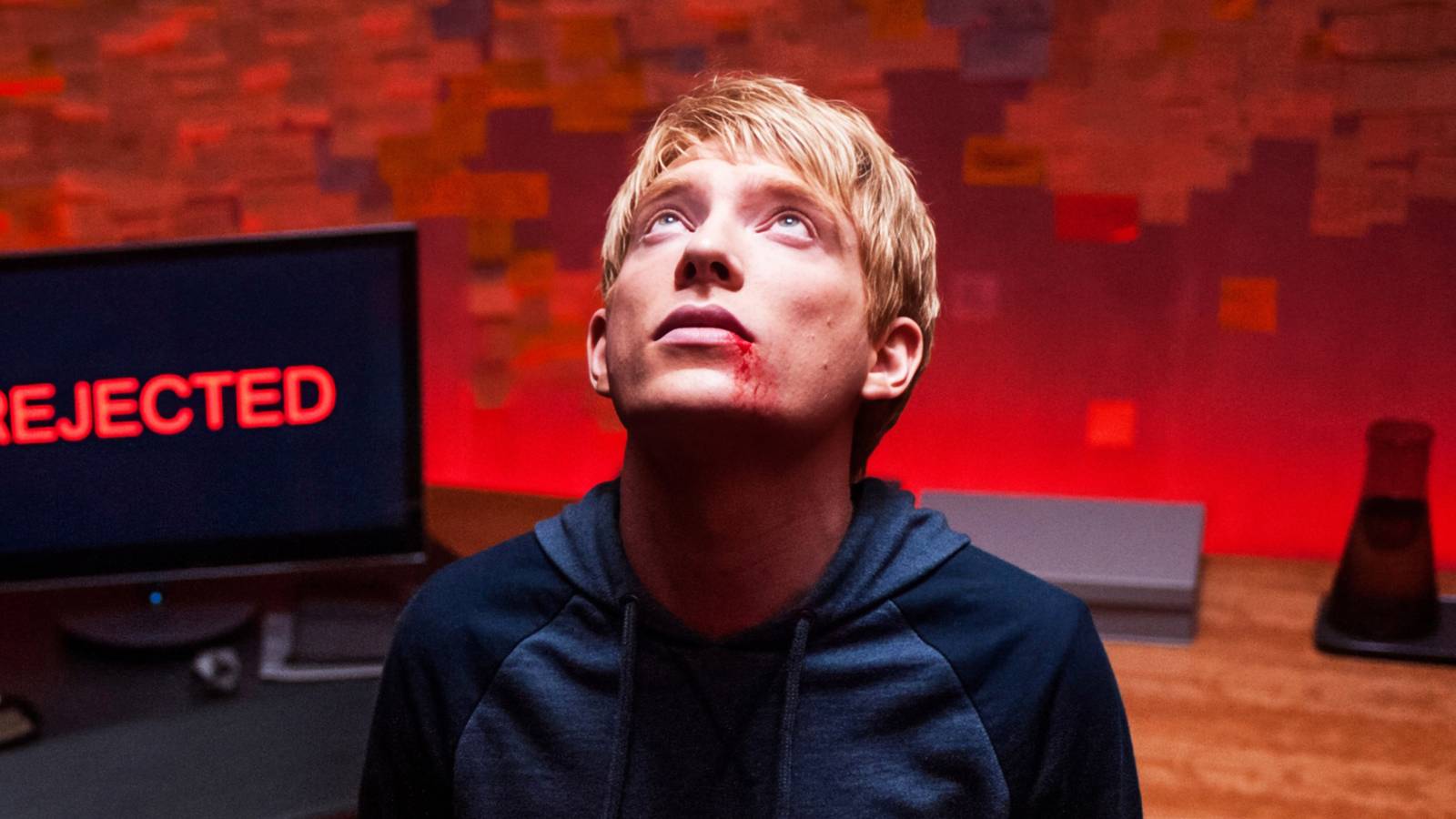
Image via A24 Published Sep 7, 2026, 6:15 PM EDT Michael Block is a 14 time GLAM Award nominated writer, producer, and host of the podcast Block Talk. Throughout his time in the entertainment industry, he has worked on and off Broadway as a stage manager, written several produced plays, critiqued hundreds of theatrical performances, drag and cabaret shows, and has produced events randing from drag competitoons to variety concerts! On Block Talk, he interviews nightlife personalities, covers the wide world of entertainment through features, ranking episodes, and recaps ALL of Drag Race, as well as Dragula and Survivor. He has interviewed hundreds of RuGirls that span the globe at DragCon NYC, DragCon LA, and DragCon UK. In his free time, he makes one-of-a-kind jewelry and gift baskets with his mom. He is a proud member of the LGBTQ+ community. Sign in to your Collider account The science fiction drama provides a mesmerizing opportunity to escape our own realities and explore narratives rooted in ambitious ideas. Whether it's a massive space opera or a dystopian thriller, these films provide a chance to tap into elements that may be tangible, especially if they’re based on hard science. Still, hard science movies can be a double-edged sword; they can be quite intellectually heavy as they spend a lot of time on explanation or are written in a manner that goes beyond the average viewer’s head. But the best hard science fiction films are not only accessible but also, in their own ways, educational. The ten titles on this list are perfectly written as they capture hard science while balancing pure entertainment. '2001: A Space Odyssey' (1968) Image via Metro-Goldwyn-Mayer There are very few films that have influenced not only science fiction but cinema as a whole quite like 2001: A Space Odyssey. The Stanley Kubrick epic spans from the dawn of man to a mission to space, exploring themes of human evolution, technological advancement, the search for a scientific definition of God, and the vast, terrifying mystery known as the universe. Grounded in authentic physics, engineering, and plausible futurism, 2001: A Space Odyssey has an epic feel because it feels tangible. Kubrick consulted Arthur C. Clarke, legendary sci-fi author and scientist, to treat space travel as an extension of heavy engineering and orbital mechanics. Space is depicted as a slow, quiet frontier where sound works in a vacuum, so the sounds come from within the helmets. Then, of course, the script centers on HAL 9000, who feels as prescient today as ever, bringing a masterful psychological tension between human and machine. 2001: A Space Odyssey is a timeless classic because it’s rooted in scientific realism. Simple as that. 'Children of Men' (2006) Image via Universal Pictures One of the most harrowing hard-science fiction films of the 21st century is Children of Men. Directed by Alfonso Cuarón, the dystopian thriller set in 2027 follows a future in which unexplained global infertility brings the world to the brink of collapse. It's up to Theo Faron (Clive Owen) to bring Kee (Clare-Hope Ashitey), the first pregnant woman humanity has seen in two decades, to safety at the Human Project. A nail-biting story that captures hope and faith in the face of defeat, Children of Men depicts how the future can collapse under the weight of nationalism and authoritarianism. The narrative mirrors a modern nativity story, exposing how keeping faith in a time of despair can revive human purpose. The film, based on P.D. James' novel, boasts a five-writer credit that ensured the script was horrifically plausible and utilized a show-don't-tell conceit to build the deeply layered dystopian universe. Rather than relying on an abundance of exposition, Children of Men used visual storytelling to convey the harrowing journey. Image via Warner Bros. Directed by Robert Zemeckis, the hard science fiction drama Contact lifts Carl Sagan's novel into a brilliant adaptation. The story follows Dr. Ellie Arroway (Jodie Foster) as she discovers and decodes a broadcast from an intelligent alien civilization roughly 26 light-years away in the star system Vega. Ellie, an atheist scientist, demands empirical proof, while Palmer Joss (Matthew McConaughey), a religious philosopher, embraces belief without physical evidence. With a screenplay from James V. Hart and Michael Goldenberg, Contact uses the cosmic premise to tell a deeply personal story bout the tension between beliefs. The core story is ironic: Ellie is a woman who strictly needs proof, but her journey forces her to dive into an expedition where she has zero physical evidence. Contact mirrors the nature of religious faith; there are no easy answers to how or why one falls into this mindset, but it raises poignant questions beyond science. The film grounds itself in science to allow the eureka moments to feel as if they're based on logic and deduction. 'Ex Machina' (2014) Image via A24 Taking on the world of robots and how they may alter our future, Alex Garland's Ex Machina follows Caleb Smith (Domhnall Gleeson), a young programmer evaluating an android named Ava (Alicia Vikander). The dynamic leads to a dangerous game of manipulation between CEO Nathan Bateman (Oscar Isaac) and the sentient humanoid artificial intelligence robot. Ex Machina questions whether advanced intelligence can feel and emote or simply simulate humanity to achieve its mission. Through the examination of the god-complex and the manipulative nature of power, survival, and freedom, Ex Machina tests the boundaries between AI and its creator. The tightly crafted four-character chamber film uses sci-fi tropes to craft an enthralling psychological thriller. Written by Garland, Ex Machina subverts the Turing Test by allowing Caleb to know Ava is a machine from the start, weaponizing empathy to showcase how an advanced interface makes a human feel powerful while simply manipulating a trap. It never wastes a single moment, as each scene layers human hubris and machine intelligence to craft a captivating story. Collider Exclusive · Sci-Fi Personality Quiz Which Sci-Fi Hero Are You Most Like? Paul Atreides · Captain Kirk · Princess Leia · Ellen Ripley · Max Rockatansky Five iconic heroes. Five completely different ways of facing an impossible universe. One of them shares your instincts, your values, and your particular way of refusing to back down. Eight questions will tell you which one. 🏜️Paul Atreides 🖖Capt. Kirk ✊Princess Leia 🔦Ellen Ripley 🔥Max Rockatansky FIND YOUR HERO → 01 How do you lead when the stakes couldn't be higher? The way you lead under pressure is the most honest thing about you. AI absorb everything — every variable, every pattern — and move only when I know the path forward. BI read the room, make the call, and own the consequences. Hesitation costs more than mistakes. CI rally people. A cause needs a voice, and I refuse to let fear be louder than conviction. DI assess the threat, establish what needs doing, and get it done without waiting for permission. EI don't lead. I act. Others can follow or not — I'm already moving. NEXT QUESTION → 02 What is your greatest strength in a crisis? The quality that keeps you alive when everything else fails. APrescience — the ability to see further ahead than anyone else and plan accordingly. BImprovisation — I'm at my best when the plan falls apart and I have to invent a new one. CConviction — I know what I'm fighting for, and that certainty doesn't waver under fire. DComposure — I stay functional when everyone around me is falling apart. Panic is a luxury. EEndurance — I outlast things. I take the hit and keep moving long after others have stopped. NEXT QUESTION → 03 What is the thing you'd sacrifice everything else for? Your deepest motivation is your truest compass. AThe survival and dignity of my people — even if I have to become something frightening to ensure it. BThe safety of my crew — every single one of them. No one gets left behind. CFreedom — for my people, for every world still crushed under the weight of an empire. DThe truth — what actually happened, what's actually out there, whether anyone believes me or not. EThe one person — or the one memory — that still makes any of this worth surviving for. NEXT QUESTION → 04 How do you relate to the people around you? Who you are to others under pressure is who you really are. AWith intensity and distance — I care deeply, but the weight I carry makes closeness complicated. BWith warmth and irreverence — I take the mission seriously, not myself. CWith directness and trust — I say what I mean, and I expect the people I work with to rise to it. DWith professional care but clear limits — I'll protect you, but I won't pretend we're family. EWith wariness that slowly becomes loyalty — I don't trust easily, but when I do, it holds. NEXT QUESTION → 05 You're facing a threat that no one else believes is real. What do you do? How you respond when you're the only one who sees it defines everything. APrepare in silence. If they won't listen, I'll be ready when they finally have to. BKeep pushing until someone listens — and if no one does, handle it myself. CBuild the case, find the allies, and make the threat impossible to ignore. DDocument everything. The truth matters even if no one believes it yet. EStop trying to convince anyone. Survive it. That's the only argument that counts. NEXT QUESTION → 06 What has your heroism cost you personally? Every hero pays. The question is what — and whether they'd pay it again. AMy innocence — I've seen what I'm capable of, and I can't unsee it. BPeople I loved — the command chair has a view, but it's a lonely one. CA normal life — I gave up everything ordinary the moment I chose the cause. DMy sense of safety — I know exactly what's out there now, and I can't pretend otherwise. EAlmost everything — and I'm still not sure what I'm carrying it all for. But I keep going. NEXT QUESTION → 07 How do you feel about the rules of the world you're in? Every hero has a relationship with the system. What's yours? AI understand them deeply — and I know exactly which ones must be broken, and why. BI respect the spirit of them and bend the letter when the situation demands it. CThe system is the problem. I'm not here to work within it — I'm here to dismantle it. DI follow protocol until protocol stops being useful. Then I make the call myself. EThe rules collapsed a long time ago. What's left is instinct, and mine are reliable. NEXT QUESTION → 08 When everything is on the line, what keeps you going? The answer is the most honest thing about you. ADestiny — or something that feels so much like it that the difference no longer matters. BThe people on my ship — their faces, their trust, the fact that they're counting on me. CThe belief that what we're fighting for is worth every sacrifice, including this one. DSheer refusal to let it win — whatever it is. I don't stop. That's just who I am. EI'm not sure anymore. But the road is still there, and I'm still on it. REVEAL MY HERO → Your Hero Has Been Identified Your Sci-Fi Hero Is…Your answers point to the iconic sci-fi hero who shares your instincts, your values, and your particular way of facing the impossible. Paul AtreidesYou carry a weight most people would crumble under — the knowledge of what you're capable of, and the burden of what you might have to become. You see further ahead than others and you plan accordingly, even when the vision frightens you. You are driven by loyalty to your people and a sense of destiny you didn't ask for but can't escape. Paul Atreides is not simply a hero — he is someone who understands the cost of power and chooses to bear it anyway. That gravity, that willingness to carry what others won't, is exactly you. Captain KirkYou lead with instinct, warmth, and an absolute refusal to accept a no-win scenario — because you've always believed there's a third option nobody else has thought of yet. You take the mission seriously without ever taking yourself too seriously. Your crew would follow you anywhere, not because you demand it, but because you've earned it. Kirk's genius isn't tactical — it's human. He reads people, bends rules with purpose, and wills outcomes into existence through sheer conviction. That combination of warmth, audacity, and relentless optimism is unmistakably yours. Princess LeiaYou are the kind of person who holds the line when everyone else is losing faith — not because you're fearless, but because giving up simply isn't something you're capable of. You lead through conviction. Your voice carries because your belief is unshakeable. You gave up everything ordinary the moment you chose the cause, and you've never looked back. Leia is not a supporting character in her own story — she is the moral centre of the entire rebellion. That same fierce, principled, unbreakable core is what defines you. Ellen RipleyYou are not reckless, not grandiose, and not particularly interested in being anyone's hero — you just refuse to stop when it matters. You see threats clearly, you document the truth even when no one listens, and when the time comes you handle it yourself. Ripley's heroism is earned, not performed. She doesn't have a speech — she has a flamethrower and a plan. You share her composure under the worst possible pressure, and her refusal to pretend the monster isn't there. When it counts, you don't flinch. That's everything. Max RockatanskyYou have been through fire that would break most people — and what came out the other side is something the world underestimates at its peril. You don't ask for help, don't need validation, and don't wait for anyone to tell you the rules no longer apply. Your loyalty, when it finally arrives, is absolute — but it's earned in silence and tested in action, not in words. Max is not a nihilist. He is someone who lost everything and found, against his will, that he still has something worth protecting. That bruised, stubborn, ultimately human core is exactly yours. ↻ RETAKE THE QUIZ 'Gattaca' (1997) Image via Sony Pictures Releasing Brought to life by Andrew Niccol, Gattaca explores a society in which the future is divided by genetic selection. Valids are genetically enhanced individuals who get high-status jobs, and "in-valids" are people conceived naturally with imperfect genes who are relegated to a mundane and menial life. Vincent Freeman (Ethan Hawke), an "in-valid" with a weak heart and a predicted short lifespan, seeks to become an astronaut at the Gattaca Aerospace Corporation, assuming the identity of Jerome Morrow (Jude Law) by using his blood, urine, and skin samples to pass biological surveillance. A brilliant examination of eugenics, Gattaca forces a conversation about fate, predetermination, and the ways genetic selection can overpower faith and natural conception. Niccol's script uses scientific optimization to explore how society views love, destiny, and the value of humanity. A masterclass in writing, Gattaca hooks the audience from the opening where the terrifying dystopia is established. Through efficient visual storytelling, including Jerome's spiral staircase evoking the double helix DNA and the furnace representing genetic cleansing and erasure of individuality, Gattaca wastes no moment. 'Gravity' (2013) Image via Warner Bros. A profound film of survival, personal rebirth, grief, and the emotional weight of humanity, Gravity is a daring science fiction thriller that brings claustrophobia to the screen. The film tells the story of medical engineer Dr. Ryan Stone's (Sandra Bullock) first space shuttle mission with veteran astronaut Matt Kowalsky (George Clooney). When space debris collides with their shuttle, the ship is destroyed, cutting off all communication with Earth. From there, Gravity becomes an enthralling story of surviving in the all-consuming silence and vast emptiness of deep space. Written by director Alfonso Cuarón and his son Jonás, it's a hyperminimalist take on the great beyond. The relentless survival story becomes the driving force of the action; by stripping away the extensiveness typically found in space drama, it adopts a task-oriented structure that propels Ryan's story. Her fight for physical survival becomes a proxy for her desire to live emotionally despite the tragedy on Earth. Through the implementation of the scientific concept of the Kessler Syndrome, the ticking-clock stakes make Gravity one of the most intense films of the 21st century. 'Her' (2013) Image via Annapurna Pictures If there has ever been a hard sci-fi film that resonates and predicts our near and present future, it's Her. Written and directed by Spike Jonze, the film traces the life of Theodore Twombly (Joaquin Phoenix), a lonely, introverted writer who falls in love with an advanced, artificially intelligent operating system named Samantha (Scarlett Johansson). As Theodore and Samantha grow closer over time, their bond deepens into a complex romantic relationship. Her examines the sorrow of human loneliness in a hyper-connected cyber universe and whether a genuine emotional connection can exist and survive between a human and artificial intelligence. It offers a richly prophetic examination of our dream future, in which humans and AI can live as one. The operating system that Jonze creates is empathetic: it can laugh, listen, and evolve, but that very evolution proves that, like human relationships, it is not built on perfectly suited needs. Though it seems as if happiness comes from an earpiece, Her also proves that people are glued to their technology, furthering their unintentional isolation. 'Moon' (2009) Image via Sony Pictures Classics Moon tells the story of Sam Bell (Sam Rockwell), an astronaut who is nearing the end of a lonely three-year contract mining energy on the moon. While he is with his only companion, GERTY, his rover crashes, leaving him without memory of the rescue. He suddenly makes a discovery that puts everything he knows and believes into question. Moon uses an isolated, claustrophobic locale to showcase the psychological toll of the story's tragic emotional center. From a story by Jones, Nathan Parker's script is a tightly woven narrative pressure cooker. Through Sam's deteriorating health, Moon implements the shocking twist naturally. The writing examines whether and how an individual can have humanity and agency. Can their capacity for empathy, defiance, and self-sacrifice override what they were built for? GERTY becomes a subversive evolution of AI, not meant to be a chilling adversary but a like-minded companion built by someone for nefarious ends. 'The Andromeda Strain' (1971) Image via Universal Pictures One of the most profound pioneering high-science-fiction dramas is Robert Wise's 1971 film The Andromeda Strain. In the film, a team of elite scientists races against time in a top-secret underground lab. They must analyze and stop a deadly extraterrestrial microorganism brought to Earth by a fallen military satellite after it wipes out a small desert town. The alien organism mutates in the lab, becoming a looming threat that may break containment and destroy humanity. Focusing on meticulous scientific research, quarantine protocols, and realistic lab technology, The Andromeda Strain takes science seriously and resonates now in a post-pandemic world. Adapted by Nelson Gidding from Michael Crichton's novel, The Andromeda Strain shows the step-by-step actions of a dedicated team racing against the clock before it’s too late. Noted as one of the most scientifically accurate killer-virus films ever made, The Andromeda Strain's ability to depict how an event of this magnitude can unfold makes it a deeply intense thriller. 'The Martian' (2015) Image via 20th Century Studios With a tour de force performance by Matt Damon, the brilliant Ridley Scott film The Martian remains one of the greatest modern hard sci-fi films. Based on Andy Weir's 2011 novel, the story revolves around Mark Watney (Damon), an astronaut left stranded on Mars after a violent dust storm forces his crew to evacuate without him. Left for dead, Watney uses his skills as a botanist to cultivate potatoes for long-term survival as his former crew set out on a rescue mission, defying NASA's orders. The Martian masterfully tells a tale about resilience and scientific ingenuity through a high-stakes survival thriller. Written by Drew Goddard, The Martian translates a complex, high-tech novel into a high-octane, emotionally resonant thriller. Using Weir's novel as a blueprint, Goddard takes the non-linear diary entries and converts them into an entertaining, straightforward story told chronologically. Damon provides a balanced performance where humor keeps him stable as his intelligence keeps him alive. The Martian is a deeply hopeful story that made science cool. The Martian Release Date September 30, 2015 Cast Matt Damon, Jessica Chastain, Kristen Wiig, Jeff Daniels, Michael Pena, Sean Bean, Kate Mara, Sebastian Stan, Aksel Hennie, Chiwetel Ejiofor, Benedict Wong, Mackenzie Davis, Donald Glover, Nick Mohammed, Chen Shu, Eddy Ko Hung, Enzo Cilenti, Jonathan Aris, Gruffudd Glyn, Geoffrey Thomas, Yang Haiwen, Narantsogt Tsogtsaikhan, Brian Caspe, Szonja Oroszlán, Mark O'Neal Runtime 141 minutes Director Ridley Scott Writers Drew Goddard
10 Hard Sci-Fi Movies That Are Perfectly Written
Full Article
Original Source
Read the full article at Collider →KhanList aggregates and links to publicly available news content. We do not host full articles from third-party sources. Always verify important information with original sources.