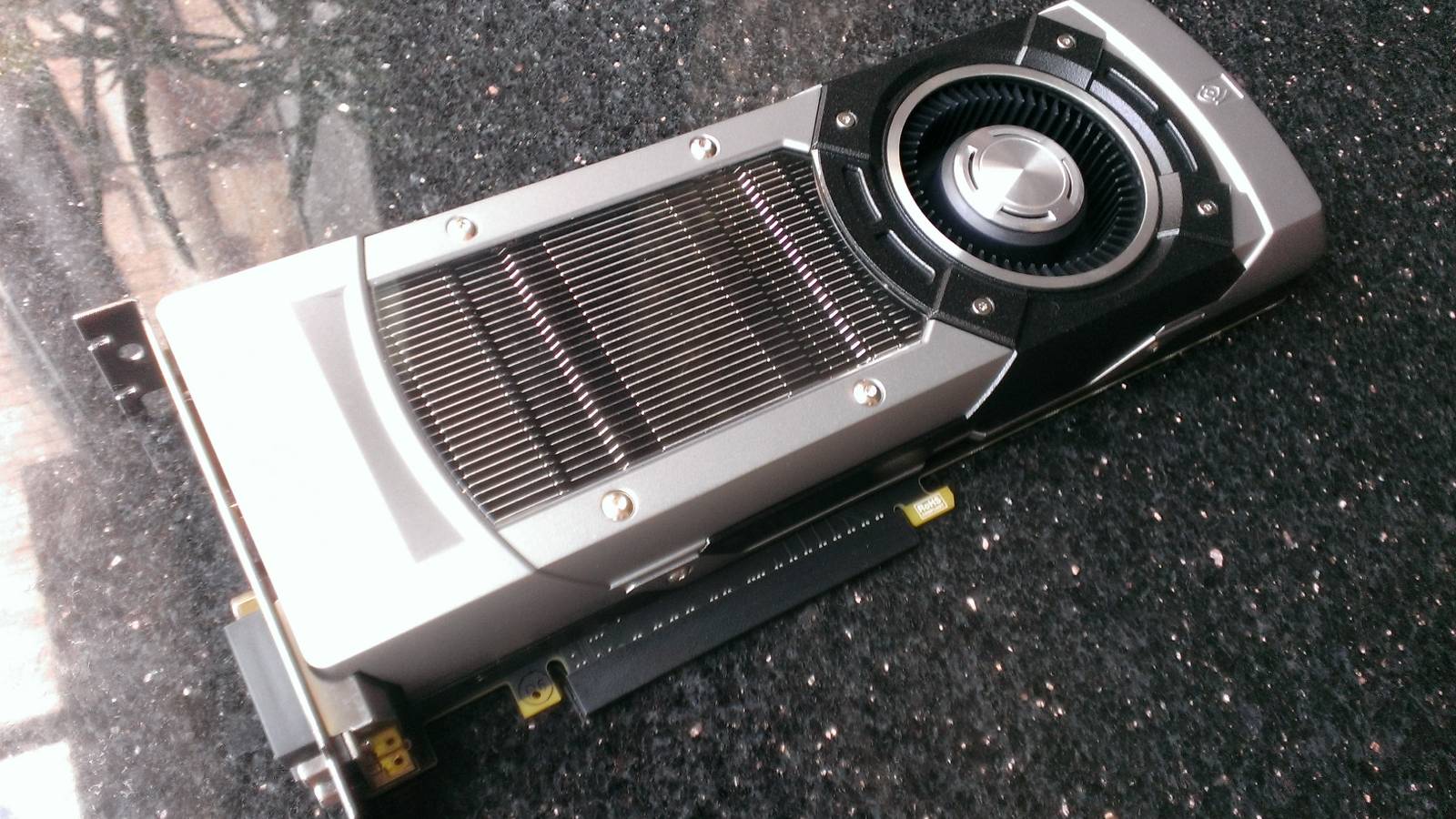
Published Jul 23, 2026, 1:00 PM EDT Monica J. White is a journalist with over a decade of experience in covering technology. She built her first PC nearly 20 years ago, and she has since built and tested dozens of PCs. PC hardware is her main beat, and graphics cards and the GPU market at large are her main area of interest, but she has written thousands of articles covering everything related to PCs, laptops, handhelds, and peripherals. From GPUs and CPUs to headsets and software, Monica's always willing to geek out over all things related to computing. Outside of her work with How-To Geek, Monica contributes to TechRadar, PC Gamer, Tom's Guide, Laptop Mag, SlashGear, Whop, and Digital Trends, among others. Her ultimate goal is to make PC gaming and computing approachable and fun to any audience. Monica spends a lot of time elbow-deep in her PC case, as she's always making upgrades, testing something, or plotting out her next build. She's the go-to tech support person in her immediate circle, so she's never out of things to do. Whenever she has spare time, you'll find her gaming until the early hours and hanging out with her dog. Every gamer has a graphics card they still talk about years later after it left their rig. Most gamers also have that one GPU that got away, the GPU they really wanted to get, but couldn't. Many of these graphics cards have earned legendary status over the years. Be it performance, longevity, or a rare combination of the two, some GPUs are just the greatest of all time -- and this is a complete list of the best ones we've seen to date. 8 AMD Radeon RX 580 The budget king that refuses to die If you have PC gaming friends, you probably know someone who still runs an AMD Radeon RX 580-based rig and claims that it's great. And it's true, this little GPU has truly outstayed its welcome in the best possible way. Launched in 2017, it was a mildly warmed-over version of the RX 480, with up to 8GB of GDDR5 RAM. It was never the fastest card in its generation, but it could trade blows with the famous GTX 1060 at 1080p, but that 8GB VRAM helped it age far better than the 4GB and 6GB cards it launched against. The RX 580 wasn't just popular among gamers, either, having earned its spot in many crypto mining rigs when that was still popular. Nine years later, it's still here, and people still use it for 1080p gaming. The RX 580 gets a lot of brownie points for longevity. AMD Radeon RX 9060 XT The RX 9060 XT can't match up to the greatness of the RX 580, but at least it's a modern GPU. 7 Nvidia GeForce 6800 GT The comeback card Nvidia desperately needed To understand why the GeForce 6800 GT was a big deal, you have to remember how bad things had gotten for Nvidia. The GeForce FX generation contained some of the worst GPUs of all time, and the company's reputation was in genuine trouble. Back in those days, Nvidia wasn't the undisputed king of GPUs as it is now, so that was a big deal. Then, the NV40 showed up in 2004 with a flagship that was roughly twice as fast as Nvidia's best card from the year before. The GT was the smart buy in that lineup; it was essentially a 6800 Ultra with a slightly lower clock speed, but it was also way cheaper, so it became the enthusiast pick of the era. 6 Nvidia GeForce 256 The card that gave the GPU its name The Nvidia GeForce 256 was actually marketed as the world's first GPU, so I can't imagine not putting it on this list. The marketing stuck so thoroughly that we're still using the term to this day. The technical justification was hardware transform and lighting, which moved geometry calculations off the CPU and onto the graphics card itself. The "first GPU" claim was always a bit generous, and it's worth being honest about that. Sony is believed to have used the term first, referring to the chip inside the OG PlayStation. What the GeForce 256 genuinely did invent was the strategy Nvidia still runs today: identify the work that the CPU is doing badly, build dedicated silicon for it, and let everyone else scramble to catch up. 5 Nvidia GeForce 3 The first GPU you could actually program Here we go with another old Nvidia GPU. Before early 2001, graphics cards were fixed-function accelerators. You handed them data in a specific format, they did their thing(s), and any custom visual effect you wanted had to run on the CPU instead. The GeForce 3 broke that open by implementing DirectX 8.0's programmable vertex and pixel shaders in hardware, which meant devs could finally write code that ran on the graphics card itself. Its debut was appropriately epic: John Carmack demoed Doom 3 running on it for the first time. A derivative chip called the NV2A went on to power the original Xbox. Maybe it wasn't the most powerful GPU at the time, but it laid important foundations; you can trace a straight line from this card to programmable compute, to CUDA, to Nvidia's current AI shenanigans. 4 3dfx Voodoo The card that made PC gaming an obsession For a brief reprieve from Nvidia, I present to you the 3dfx Voodoo, a card that's nothing short of legendary. It arrived in late 1996, and it was a 3D-only card, so it worked alongside your existing 2D card through a pass-through cable, and on some models you could actually hear a mechanical relay click when it took over. Nothing before or since has produced a bigger single jump in how games look. Voodoo Graphics revolutionized PC graphics almost overnight and made a huge number of 2D-only card makers obsolete. The ending is grim: Nvidia bought 3dfx's assets in 2000, four years after the Voodoo flipped the market on its head. 3 Nvidia GeForce 8800 GTX The biggest single leap a GPU ever made If you thought the leap from the RTX 3090 to the RTX 4090 was huge (and it was!), then you'll like the GeForce 8800 GTX. It was the world's first shipping DirectX 10 graphics card, and its G80 architecture threw out the old rulebook. Instead of separate vertex and pixel shaders sitting idle whenever a scene didn't need them, it packed 128 unified stream processors that could be dynamically assigned to vertex, pixel, geometry, or physics work. Some contemporary reviews described this GPU as a "monumental event in the history of 3D graphics." It wasn't hyperbole. It improved image quality substantially and ran circles around everything else on the market, and by a wide margin, too. Unified shaders are now how every GPU works, from consoles to AI accelerators. 2 ATI Radeon 9700 Pro The day ATI embarrassed Nvidia Before ATI and AMD became one and the same, ATI skipped ahead and gave up on refining the Radeon 8500 to keep up with Nvidia, instead placing all bets on its successor. The result was the world's first DX9 card that had nearly twice the memory bandwidth of the GeForce4 Ti 4600 (the fastest consumer graphics card at the time). The Radeon 9700 didn't just win, it won by truly embarrassing margins, especially with antialiasing and anisotropic filtering turned on. Then it won again, because Nvidia's DX9 answer, the GeForce FX, ran DX9 workloads at full precision so slowly that developers largely wrote around it. The Radeon 9700 brought on the most complete upset in GPU history, and modern R&D budgets and software ecosystems make it close to unrepeatable, so we're unlikely to see this kind of madness ever again. 1 Nvidia GeForce GTX 1080 Ti The undisputed GOAT How could I possibly write this list without including Nvidia's GeForce GTX 1080 Ti? Widely regarded as the greatest graphics card ever made, the GTX 1080 Ti came with 11GB VRAM, which is still more than many Nvidia and AMD GPUs offer today. That memory is half the reason why it aged so gracefully. It took until the RX 5700 XT in late 2019, two and a half years later, for AMD to release a card that clearly beat the GTX 1080 Ti. Even now, the card remains useful in modern games and is still found in many rigs. The legend, the myth, the GPU we all wanted (and maybe even had) I can bet that some of you owned some of these graphics cards. Any fond memories to share with the class? Personally, I dreamed of the GTX 1080 Ti at the time, but alas, it was out of my price range. I had my good old GTX 1060 for way too long, and it served me well, but it's got nothing on some of the legends described above. And by now, it's officially too old for gaming, as are all these cards ... but they'll never be forgotten. Asus GeForce RTX 5070 Ti Prime Memory Clock Speed 2,482MHz Graphics RAM Size 16GB GPU prices are wild lately, and the RTX 5070 Ti is certainly overpriced, but it'll keep your PC going for the years to come.
The best GPUs of all time, ranked
Full Article
Original Source
Read the full article at Howtogeek →KhanList aggregates and links to publicly available news content. We do not host full articles from third-party sources. Always verify important information with original sources.