
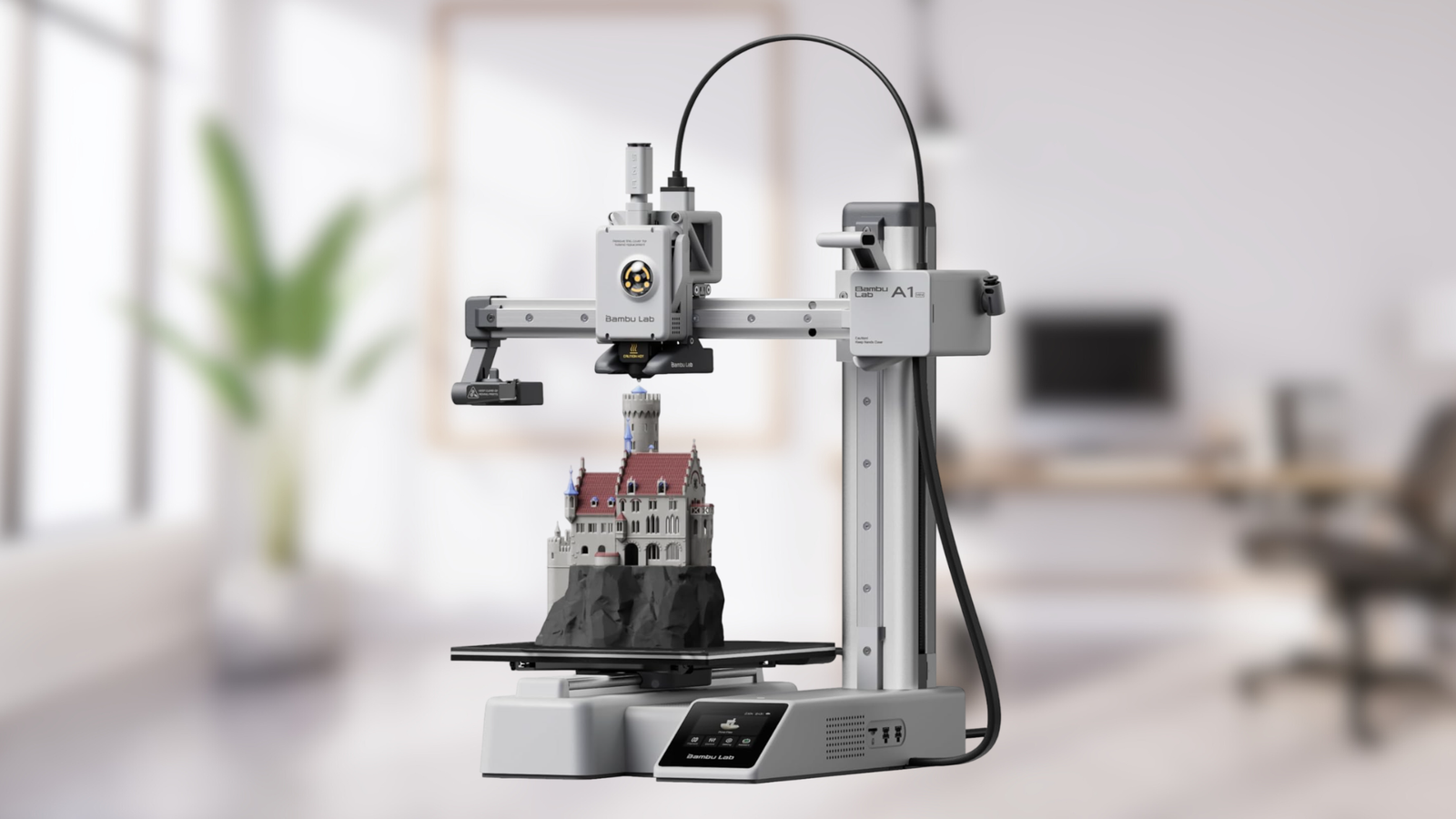
3D printing has never been more accessible, but the barrier to entry is still real. You need a printer that doesn't require a weekend of calibration, a filament profile you can't break, or a budget that stretches into the hundreds. The Bambu Lab A1 is the one that removes all of that friction, and right now it's at its all-time low on Amazon. The price has dropped from $305 to $259, a $46 savings that matches the lowest price since November 2024. This isn't a brief flash sale; it's a genuine dip that makes the A1 the most affordable way to get into serious 3D printing in 2026. If you've been eyeing this printer, the timing is as good as it's going to get. Bambu Lab A1 Bambu Lab A1 Mini 3D Printer Why the Bambu Lab A1 is the best beginner 3D printer Credit: Bambu Lab The A1's core strength is its full-auto calibration system. Every print job automatically calibrates the z-offset, bed level, vibration resonance, and nozzle pressure. There's no manual tuning, no leveling a bed with a sheet of paper, no guessing at flow rates. You load a filament, pick a model from the MakerWorld library, and hit print. The machine handles the rest. This matters because the number one reason beginners quit 3D printing is frustration with the setup. The A1 eliminates that entirely. The active flow rate compensation algorithm reads extrusion in real time and adjusts on the fly, which means your first print looks like your fiftieth. The 1-clip quick swap nozzle makes changing nozzles for different filament types a two-second job instead of a fiddly disassembly. The specs back up the ease of use. The A1 hits a max speed of 500mm/s with 10,000 mm/s² acceleration, which is fast enough for most hobby projects without sacrificing detail. The 256×256×256mm build volume is large for an entry-level machine; you can print a helmet in one piece, which most budget printers can't do. The active motor noise-canceling keeps it at 48 decibels or lower, quiet enough to run in a home office or bedroom without becoming a nuisance. The open-frame design is a trade-off worth understanding. The A1 doesn't have an enclosed chamber like the P1S, which means it's limited to PLA, PETG, TPU, and PVA filaments. You can't print ABS or ASA without warping issues. For most beginners and hobbyists, that's not a limitation at all; those materials are for advanced users who need them. The A1 is built for the people who want to print functional parts, prototypes, and creative projects without dealing with high-temperature materials. Multi-color printing is available through the AMS Lite, which Bambu Lab has recognized as the most reliable multi-color system in its lineup. The AMS Lite uses RFID-sync to automatically match the best print settings for Bambu filaments, delivering consistent results without manual profile tuning. The A1 Combo + LED kit, which includes the AMS Lite, is available for $369, a $50 discount from its $419 list price, if you want to jump straight into multi-color printing. The ecosystem is where Bambu Lab really separates itself from the competition. The MakerWorld model library gives you access to thousands of pre-designed files, and the Bambu Cloud service lets you start, monitor, and control prints from any device. You can run it in LAN-only mode if you prefer not to use the cloud, which is a nice privacy option that most competitors don't offer.
The Bambu Lab A1 is at its all-time low for $259, and it's the best beginner 3D printer you can buy
Full Article
Original Source
Read the full article at Xda-developers →KhanList aggregates and links to publicly available news content. We do not host full articles from third-party sources. Always verify important information with original sources.