
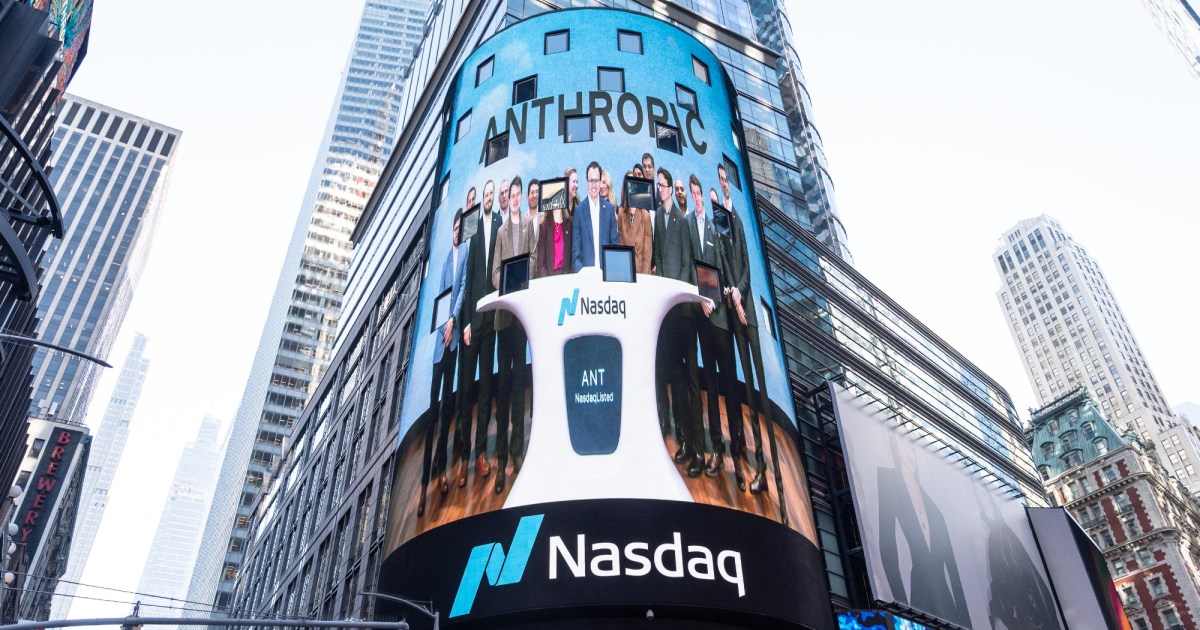
Daniela Amodei, president of Anthropic PBC, Dario Amodei, chief executive officer of Anthropic PBC and executives ring the opening bell as their image is projected on the big screen at the Nasdaq stock exchange headquarters in New York. Lev Radin/ZUMA Get your news from a source that’s not owned and controlled by oligarchs. Sign up for the free Mother Jones Daily. The vast majority of employees of the tech company Anthropic are now millionaires, thanks to the Claude-maker’s record-breaking IPO this week. That’s about 5,100 people, or 96% of their workforce. There are so many newly-minted AI millionaires that some writers have speculated the IPO’s winners will soon strain San Francisco’s housing market, while writers in New York City have helpfully suggested philanthropic causes to which the newly rich might apply their wealth. (Less than half a million could solve New York’s persistent lifeguard shortage; with $50 million, almost 2,500 of the city’s families could be saved from eviction.) It’s difficult for those of us in the paycheck-to-paycheck set to really comprehend the magnitude of the wealth transfer that just happened, from retail traders and retirement funds and into Anthropic insider pockets. Investment firm CEO and former White House advisor Steven Rattner posted on social media this week that the five thousand Anthropic employees—and their seven multibillionaire bosses—now hold more wealth than the 45 million poorest people in America. Wealth concentration is hardly an Anthropic invention; the twelve richest billionaires hold more wealth than half the planet put together. Elon Musk’s money, after the SpaceX IPO, is something like twice that of the bottom half of American households by income. There are plenty of other statistics like this. But while AI enthusiasts rush to crunch the numbers on the new Anthropic millionaires, it’s harder to find data on how that poorer half of America is doing. The USDA stopped tracking household food insecurity in September 2025, claiming that conducting the survey was “redundant” and “politicized.” The One Big Beautiful Bill Act, passed last year, gutted food assistance. According to estimates from the Center on Budget and Policy Priorities, about 5.5 million people stopped receiving Supplemental Nutrition Assistance Program (or SNAP) benefits between July 2025 and July 2026—the month of the SpaceX IPO. That’s a 13% decline in one year. Around 2 million of those people are children. And while Anthropic’s co-founders once promised to commit about 80% of their holdings in the AI startup to philanthropic causes—causes like getting kids fed—they appeared to soften that commitment as the IPO approached. Those acts of philanthropy, their SEC filing stated, are “voluntary, revocable expressions” that “do not constitute binding obligations.”
The Anthropic IPO Was a Massive Wealth Transfer
Full Article
Original Source
Read the full article at Motherjones →KhanList aggregates and links to publicly available news content. We do not host full articles from third-party sources. Always verify important information with original sources.