
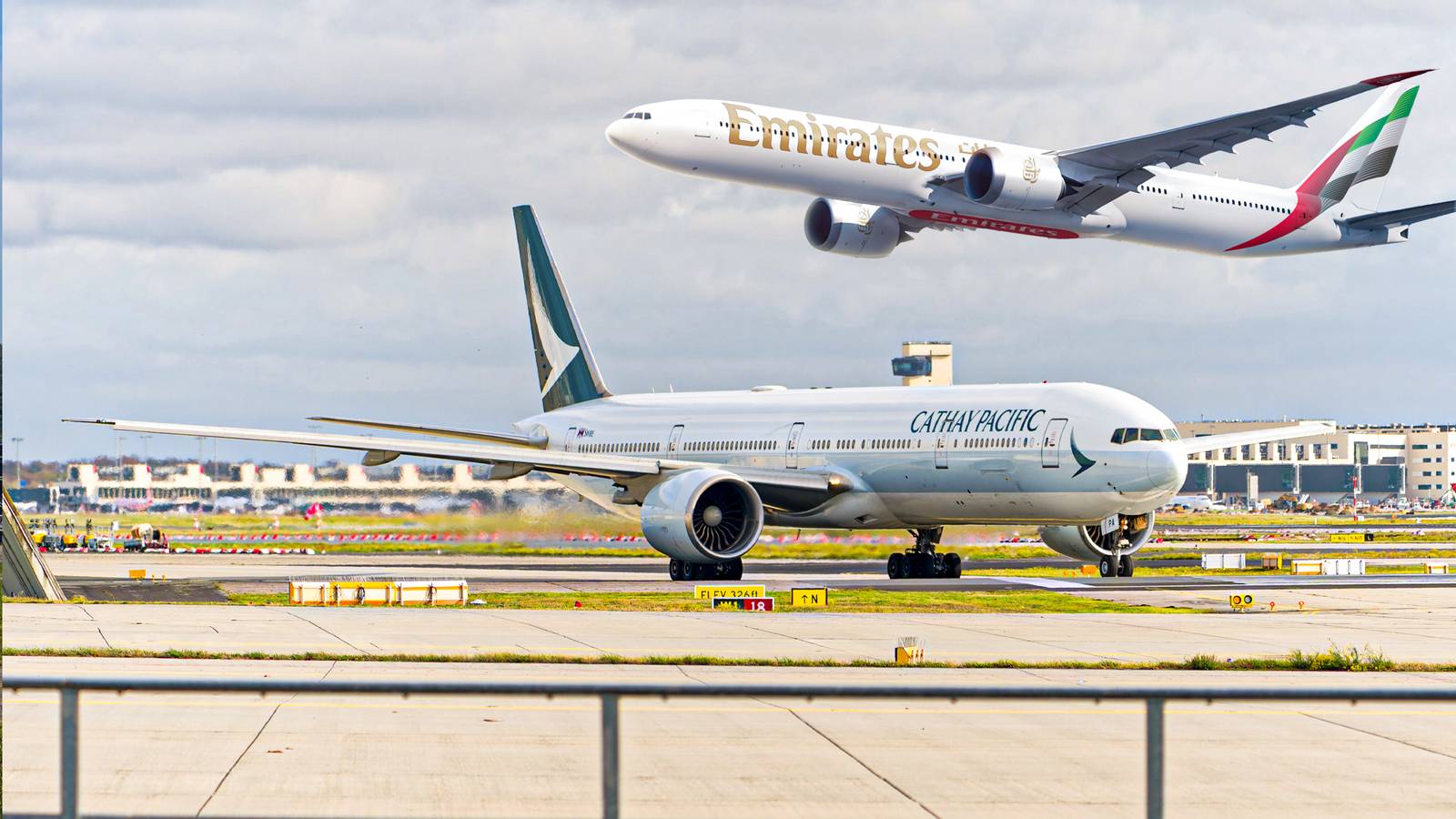
Published Nov 21, 2026, 3:00 PM EST Passionate about promoting aviation, the beauty of flight and the science behind it, Antonio is an avid reader of aviation magazines and books, and he loves visiting airshows all over the world, taking photos and writing about airplanes and helicopters as well. He is currently based in Palermo, Sicily. Boeing has roughly 620 orders for an aircraft that has not delivered a single one yet, and some of the very first examples built may never reach the airline that paid for them. The 777-9 is meant to be the jet that carries the world's biggest long-haul airlines through the 2030s, but the program is about seven years behind its original 2020 service date, and the biggest customer has already turned away its first batch. For an industry that plans fleets decades ahead, that is a very awkward way to start a new era. So who is really lining up to replace their Boeing 777s with the new 777-9, what exactly are they replacing, and when will passengers see the first one? The answers involve Emirates, Qatar Airways, Cathay Pacific, Singapore Airlines, and Lufthansa, plus a rival Airbus that has already started delivering. Emirates & Qatar Airways Dominate The 777-9 Order Book Credit: Qatar Airways newsroom The scale of the commitment is hard to ignore. According to an order book compiled by Airways Magazine at the end of May 2026, the 777X program stood at 619 orders: 521 777-9s, 63 777-8 freighters, and 35 passenger 777-8s, all of them for Emirates. That is a remarkable number for an aircraft that has not carried a single paying passenger, and it makes the 777X Boeing's most important widebody bet of the decade. Airways also noted that the problem is certification, not demand, which is a rare thing to say about a program this delayed. Emirates dominates the list. As reported by Emirates itself, its November 2025 Dubai Airshow deal added 65 more 777-9s, worth $38 billion at list prices, and lifted its total to 270 777Xs. The airline also holds options to convert part of that order into the 777-8 or the proposed, larger 777-10. Airways lists the split as 235 777-9s and 35 777-8s, so the exact mix is still fluid. Qatar Airways is second with 124 aircraft, made up of 90 777-9s and 34 777-8 freighters, followed by Cathay Pacific with 35 and Singapore Airlines with 31. British Airways and its parent IAG have 24, Lufthansa Group has 27 (20 passenger jets and seven freighters), Korean Air has 20, and ANA has 20, including two freighters. Air India, Etihad, and Ethiopian Airlines hold 10, 10, and 8. But a long list of customers only tells us who wants the jet. It says nothing about what each of them plans to retire in exchange, or how long they will have to keep the old aircraft flying while they wait. The Boeing 777-300ER Remains The Main Replacement Target Credit: Petr Podrouzek | Shutterstock For most buyers, the answer is the Boeing 777-300ER, the best-selling long-haul widebody of its generation. Emirates alone flies 119 of them, plus 10 777-200LRs, according to its own fleet table. As noted by Simple Flying, the 777X is also pitched as a successor to high-capacity four-engine jets such as the Boeing 747 and the Airbus A380, which burn far more fuel and cost more to maintain. The new jet's biggest selling point is efficiency. According to Simple Flying's analysis of range and capacity, the 777-9 seats around 426 passengers against roughly 396 on a 777-300ER, while keeping a nearly identical range. The GE9X engines are expected to deliver up to 10% better fuel efficiency than the GE90-115B engines on the older jet. The wing is the other trick: it spans 235 feet, 5 inches (71.8 meters) in flight, but its tips fold to 212 feet, 9 inches (64.9 meters) on the ground so it still fits standard gates. Boeing's pitch to airlines is simple: keep the long range, burn less fuel, and spend less on maintenance than the aging jets on the ramp. Boeing 777-300ER vs. 777-9: the swap in numbers Feature 777-300ER 777-9 Typical two-class seats About 396 About 426 Range 7,370 nautical miles (13,649 km) 7,285 nautical miles (13,492 km) Length 242 feet, 4 inches (73.9 meters) 251 feet, 9 inches (76.7 meters) Engines GE90-115B GE9X (up to 10% better efficiency) On paper, that is a clean trade: more seats, similar range, lower fuel burn. The uncomfortable detail is that the older jets have to keep flying while the replacement is late, and that raises a very practical question about timing. Airways Magazine points out that carriers waiting on the 777-9 have had to stretch the lives of older 777-300ERs, A380s, and 747-400s, which adds maintenance, fuel, and cabin-product pressure with every extra year. Lufthansa And Emirates Will Start The 777-9 Transition Credit: Simple Flying Lufthansa will be the first, with Boeing targeting a 2027 delivery. Emirates said in November 2025 that it expects its first 777-9 from the second quarter of 2027, and its Boeing deliveries stretch all the way to 2038. That means the airline will be swapping 777-300ERs for 777-9s for more than a decade, which is exactly why this story belongs to the 2030s rather than to next year. Emirates still flies 116 Airbus A380s as well, so the transition will be gradual rather than a clean break. Others will wait longer. According to Simple Flying, citing the Mainly Miles blog, Singapore Airlines' fleet plan shows no 777-9 deliveries in the 12 months to March 31, 2027, with Emirates, Qatar Airways, and Lufthansa ahead in the queue. That timing matters because Singapore Airlines is also planning a new premium economy product around the aircraft, making the 777-9 part of a future cabin strategy as well as a fleet replacement program. Even the schedule itself is soft. Airways Magazine reported that FAA Administrator Bryan Bedford signaled the 777X would follow the 737 MAX 7 and MAX 10 into 2027 for certification. So queue position is one thing, but the airlines cannot simply take delivery because they are next in line. The more awkward problem is already sitting on Boeing's property: aircraft built years ago for customers that may no longer want them. Early-Built 777-9s Are Now A Problem For Boeing Credit: Gunnar E Eide | Shutterstock Between 2019 and 2021, Boeing built around 30 777-9s before the program stalled, including aircraft earmarked for Emirates and Lufthansa, according to German aviation outlet aero.de. By the time they could be delivered, they would be about eight years old and technically behind the final production standard. That creates an unusual problem for a brand-new aircraft: the earliest examples are already old enough to require substantial work before an airline wants them. As reported by Simple Flying, Emirates rejected the first batch built for it because bringing those airframes up to the required standard would take extensive and costly rework. Boeing reportedly dismantled one early Emirates-bound 777-9 after the cost to fix it exceeded its value. Lufthansa has since said, on its second-quarter earnings call, that it will refuse some of its earliest aircraft, with Boeing contributing financially to upgrade the rest. Qatar Airways has reportedly signaled that it does not want early-build aircraft either, so Boeing may pool the rejected jets and sell them in bundles. According to aero.de, an unnamed US airline is reportedly interested in 20 early 777-9s, which is striking because no major US carrier has ordered the type at all. A discounted early-build 777-9 could therefore find a new home, but the fact that airlines that ordered the aircraft in the first place are turning some away shows just how unusual this delay has become. The Airbus A350-1000 Has Already Captured Part Of The Market Credit: guilhem gaubert | Shutterstock According to Simple Flying, Qatar Airways put the A350-1000 into service in February 2018, the 777-9 first flew in January 2020 and still was not certified at Farnborough 2026, and Airbus has already delivered 114 A350-1000s against 367 firm orders. Boeing, meanwhile, has delivered none of its more than 520 777-9s. Air Canada is the clearest example. As reported by Business Traveller, the airline ordered eight A350-1000s, with options on eight more, for delivery from the second half of 2030, to modernize a long-haul fleet that includes 19 777-300ERs. Business Traveller calls the A350-1000 a logical replacement for the 777-300ER, and says it brings a cabin altitude of about 6,000 feet (1,829 meters) versus 8,000 feet (2,438 meters) on the 777 family. No North American airline has ordered the 777-9, so for passengers in the US and Canada, the A350-1000 may arrive first. Still, a head start is not the same as a better fit. The 777-9 carries more passengers, and for airlines that fill every seat, that may be the decisive metric. The A350-1000 offers the established nine-abreast cabin and a substantial operating track record, while Boeing's aircraft offers greater capacity and is aimed squarely at airlines that need to move huge numbers of passengers through constrained hubs. That leaves the 777-9 with a clear market, but a narrower one than the raw order total might suggest. What Will Decide Whether The 2030s Skies Belong To The 777-9? Credit: Ian Dewar Photography | Shutterstock The honest answer is volume and density. Emirates and Qatar Airways run some of the busiest trunk routes in the world, and for those carriers, the 777-9's size is a feature rather than a flaw. An A350-1000 cannot match its seat count, and the A380 is out of production, so the 777-9 is effectively the last big twin-engine option left for airlines that need capacity above all else. That is the strongest argument Boeing has, and it is also why the aircraft is best suited to a relatively small group of mega-hub operators. The test comes in the next 18 months. If Lufthansa takes its first jet in 2027 and Emirates follows soon after, the long order book will start to look like a steady delivery stream. If certification slips again, as Airways Magazine warns could compress the entire handover and training timeline, more carriers may do what Air Canada did and look at the A350-1000 instead. The early-build jets will be worth watching too: how many Boeing can remarket, and at what price, will reveal just how costly the delay has been. Emirates has even signed options to stretch part of its order into the 777-10, a bigger variant Boeing is still studying. That may ultimately be the most revealing sign of all: the airlines that have waited longest for the 777-9 are still thinking about what comes after it. By 2035, the question may no longer be whether the 777-9 replaced the 777-300ER. It may be whether Boeing's biggest twinjet has finally found the narrow but extremely valuable market it was designed for.
The Airlines Set To Replace Their Boeing 777s With New 777-9s Throughout The 2030s
Full Article
Original Source
Read the full article at Simpleflying →KhanList aggregates and links to publicly available news content. We do not host full articles from third-party sources. Always verify important information with original sources.