
Published Nov 5, 2026, 7:00 AM EST Luke Diaz is a freelance military writer with experience with active duty experience in the US Navy as well as defense and industrial engineering. He is a former Naval Flight Officer who performed tactical air control on the carrier-based E-2 Hawkeye. As the end of the era of quatjets approaches on the horizon, carriers around the world are still reworking fleet strategies to replace iconic aircraft like Airbus A380. The superjumbo still tops the charts as one of the most popular planes in the sky for its sheer scale as much as the features that a double-decker jetliner makes possible inside the cabin. Yet, with a shuttered assembly line, airlines like Emirates and Qantas must choose from a short list of next-gen twinjets for the successor to Airbus’ flying giant. In general, there is not a single aircraft taking over the missions currently flown by the A380, and many are still slated to serve for years to come. The first of Qantas' replacement jets is not due until April 2027, and the Boeing 777X that Emirates is counting on at the end of the decade is yet to be certified. Thus, the fleet strategies made public represent a split. Instead of buying a new giant plane, airlines are replacing the A380’s mission rather than seats. The primary drivers of this transition are advancements in engine technology, enabling large twin-jets to fly just as far as the A380 but with 25% lower fuel burn and substantially reduced maintenance. Boeing's 787 Dreamliner family is one of the smaller successors, seating anywhere from 180 to 430 depending on layout. The Airbus A350-900 and A350-1000 feature advanced carbon-composite fuselages, ultra-efficient engines, and seat between 350 and 450 passengers. Boeing 777X family comes with industry-first folding wingtips and a capacity equal to or greater than the -1000. Qantas Sets The Earliest Date For Sunset Credit: Qantas Australia’s flag carrier has moved up the formal retirement schedule for its A380 superjumbos. The accelerated timeline has already seen the end of operations from Melbourne Airport (MEL) and dictates that the remaining ten operating A380s will begin exiting the fleet sequentially in March 2028, with the final superjumbo flight projected for the same year. Driven by soaring heavy maintenance costs, worsening fuel price volatility, and recently affirmed delivery certainty for its next-gen planes, Qantas will be one of the industry's first full-scale A380 fleet divestments. Rather than a simple 1-to-1 aircraft replacement, Qantas is executing two parallel replacement programs under the umbrella of ‘Project Fysh’ and ‘Project Sunrise.’ The combination of the two programs will see the introduction of 24 A350-1000s divided between 12 standard and 12 ultra-long-range 'Sunrise' variants, as well as 12 Dreamliners split between four 787-9s and eight 787-10s. The downgrade in seat count of roughly 50% per hull will push prices up, but Qantas is betting on passenger demand for the time-savings of nonstop ultra-long-haul routes. Because the A380 is so massive, it can only fly between specialized mega-airports equipped with double-decker gates. Next-gen twinjets can land anywhere, paving the way for point-to-point travel like Qantas' upcoming Project Sunrise flights. Instead of flying from Sydney to Dubai, waiting for a three-hour layover, and then flying to London, passengers fly completely nonstop, saving up to 4 hours of travel time. To combat the physical toll of ULH flying, Qantas' upcoming A350s will even feature a dedicated, mid-cabin ‘Wellbeing Zone’ for passengers to stretch and enjoy self-serve refreshments. Emirates Spends Billions To Stay On The Course Credit: Airbus Emirates is moving in the opposite direction. President Tim Clark told Aviation Week in 2025 that the active A380 fleet would grow from 95 or 96 aircraft to about 110 by the end of 2026, and that redesigned interiors built by the airline itself would reach every cabin within three years. Clark told CNN that Emirates plans to fly the A380 into the early 2040s, which is why it is spending billions on cabins and technology such as Starlink. Cirium figures cited in CNN reporting show 101 flying and 15 stored, which leaves the airline some distance from the 110 goal by the end of the year. Meanwhile, the Centre for Aviation reported that Emirates reached 100 refurbished aircraft on July 14, made up of 53 'triple sevens' and 47 A380s, under a $5 billion retrofit program, with about 20 more due by the end of December. A further phase covering 60 A380s and 51 777s adds new economy seats, entertainment screens and Starlink connectivity, and the airline plans to install Starlink across all 232 of its in-service aircraft by mid-2027. The Centre for Aviation also noted that Emirates has begun turning high-density two-class A380s into three-class aircraft with premium economy on the upper deck, with 15 planned by the end of this year. George Dimitroff, Cirium's global head of aircraft valuations, told CNN that carriers with small A380 fleets will retire them as the industry leans toward premium travel, and that the type will eventually be flown by Emirates alone. CNN reported that the likeliest handoff to an Emirates-only operation falls between the early and middle 2030s. Emirates' long-term answer is the Boeing 777X. As of July, the airline holds orders for 235 777-9s and 35 777-8s, 270 in total, with the first expected in the second quarter of 2027. Boeing expects to complete certification and begin deliveries in 2027. Even with a plan laid out for succession, the heir shrinks the aircraft. The 777-9 seats around 415 in Qatar's planned two-class layout, according to ch-aviation, against roughly 485 on a Qantas A380 for scale. The first is the delivery of Emirates' first 777-9 in the second quarter of 2027, which will show whether Boeing's 2027 certification target holds. Fewer Seats In Exchange For A Premium Cabin Credit: Airbus Next-generation twinjets optimize airline profitability by reducing total seat counts to make room for larger, highly lucrative premium cabins. Instead of packing an aircraft with maximum economy seating, airlines use the advanced aerodynamics and space efficiency of twinjets like the A350-1000 and 777X to create spacious premium environments that generate higher revenue per square foot. A passenger in economy pays a baseline fare, but a premium passenger pays three to five times more for a ticket while consuming only three to four times the space. By trading raw seat capacity for premium cabins, airlines can generate the same, or higher, flight revenue with far fewer people on board. This reduces the overall weight of passenger baggage and catering supplies, which lowers fuel burn. Qatar serves as the ultimate case study for this premium-heavy twinjet strategy, demonstrating how an airline can completely re-engineer its business model around high-yield real estate rather than raw passenger volume. Under its fleet modernization campaign, the Doha-based carrier is explicitly using the wide fuselage dimensions of next-generation twinjets to blur the line between business class and first class. Qatar Airways pioneered the industry-wide shift in cabin economics with its Qsuite product. In a standard long-haul configuration, a single Qsuite mini-cabin takes up a massive amount of physical real estate, requiring a seat pitch of over 100 inches (2.5 meters) in a staggered 1-2-1 layout. A single one of these private suites consumes the floor space of roughly four economy seats. The Qatar Method: On Again, Off Again Superjumbo Cycles Credit: Airbus Qatar Airways deliberately caps the overall capacity of its flagship aircraft. On its premium-configured A350-1000s, the airline installs a massive block of 46 Qsuites up front. This choice forces the economy cabin down to just 281 seats, a total passenger capacity of 327. For context, some high-density airlines push that exact same airframe past 380 or even 400 seats by slashing the premium cabin. Unlike its competitors, Qatar treats its eight airworthy A380s with data-driven pragmatism, employing them as a capacity bridge to the next-gen twin jets that are incoming. The airline aggressively shifts its superjumbo missions when twinjet operations become more profitable. Case in point, the airline permanently removed the A380 from its Sydney corridor in favor of the Boeing 777-300ER. Qatar also executed a similar withdrawal on its Singapore route, swapping the quadjet for the smaller A350-900. The carrier's aircraft assignments fluctuate based on macroeconomic factors, evidenced by the recent grounding of the fleet following airspace constraints and fuel price volatility in the wake of Operation Epic Fury. That hiatus was followed by a swift reactivation to maximize passenger throughput at slot-constrained mega-hubs like London Heathrow and Bangkok. The A380s are ultimately expected to be systematically retired and sent to the scrapyard when Airbus satisfies the remainder of Qatar's A350-1000 order backlog, and Boeing begins deliveries of the delayed 777-9 widebody. Other A380 Operators Keeping Their Own Calendars Credit: Lufthansa Lufthansa is performing a retrofit campaign for its eight active A380s to keep flying into the late 2030s, in a reversal of the pandemic-era plan to retire the jets early. This strategy shift stems from ongoing delivery delays for the airline's incoming Boeing 777X flagship fleet. To maximize efficiency, Lufthansa consolidated its entire superjumbo fleet at its Munich hub, separating them from the Boeing 747-8 fleet stationed in Frankfurt. This modernization process is scheduled for completion by mid-2027, and Lufthansa has extended the operational window for these aircraft until the early 2030s. This will completely remove the older, business class cabins and replace them with modern XL seats, transforming the space into a direct aisle access layout. Meanwhile, Korean Air is navigating a complex fleet strategy that has been significantly influenced by its merger with Asiana Airlines. The carrier originally intended to retire its ten A380s by 2026, but that timeline collapsed due to systemic bottlenecks at both Airbus and Boeing. Following the decommissioning of four older superjumbos earlier this year, Korean had just six remaining A380s, but the absorption of Asiana added six more to the fleet. This sudden influx created a massive combined fleet of twelve superjumbos, presenting a split logistical burden as the two sub-fleets are equipped with different engine models. Facing a deficit of 40 long-haul widebodies due to assembly line delays, the merged carriers cannot afford to drop capacity. Thus, Korean has officially extended the lifespans of the A380s into the early 2030s, outsourcing heavy maintenance to facilities in the Philippines. The jet will be phased out gradually with the arrival of 20 A350-1000s and follow-on 787-10s, which are finally being delivered.
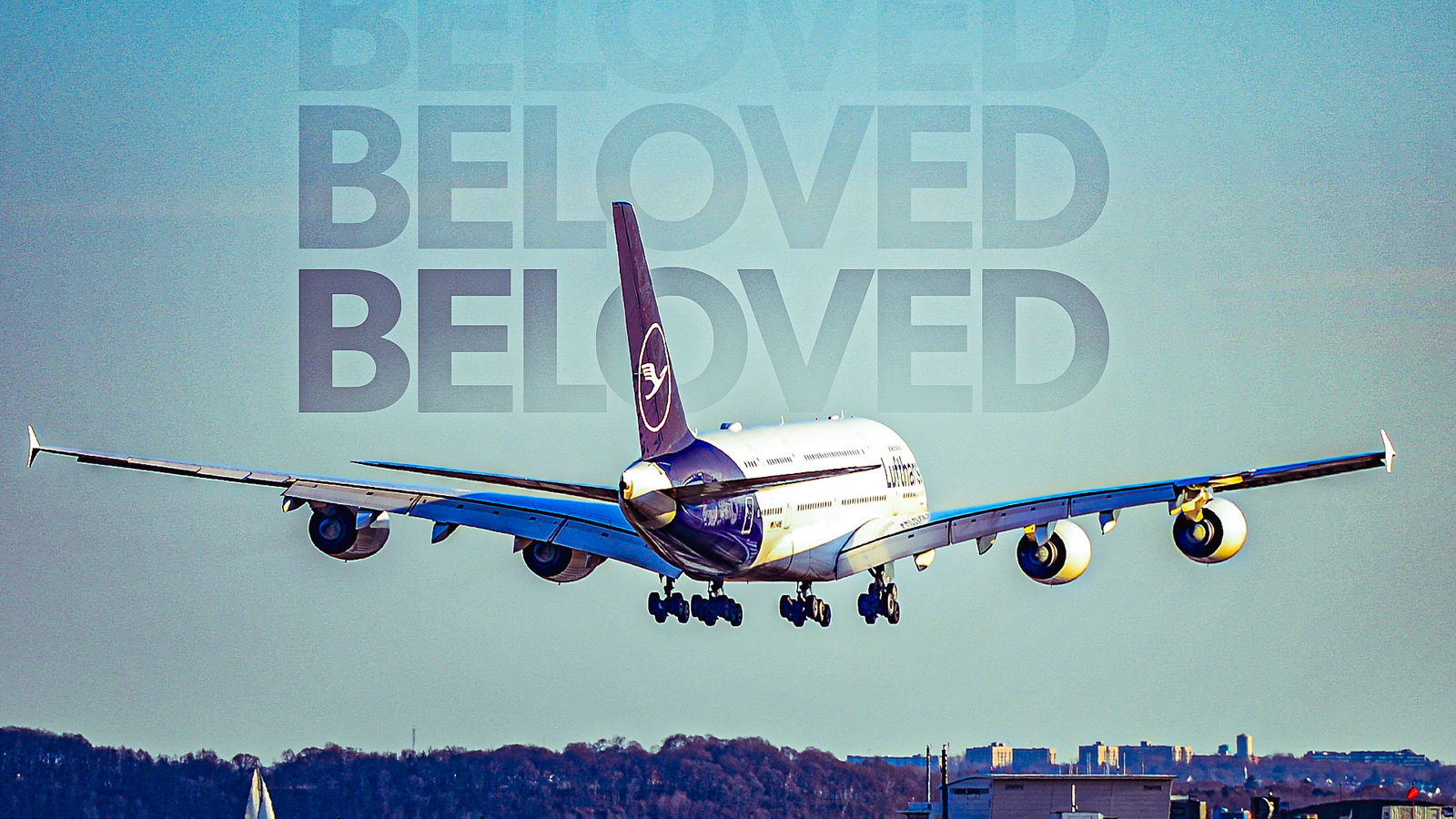
The Aircraft Set To Replace The Most Beloved Aircraft In The Sky In 2026
Full Article
Original Source
Read the full article at Simpleflying →KhanList aggregates and links to publicly available news content. We do not host full articles from third-party sources. Always verify important information with original sources.