
Credit: InsectWorld & Markus Mainka | Shutterstock , Simple Flying Published Nov 8, 2026, 8:00 PM EST Passionate about promoting aviation, the beauty of flight and the science behind it, Antonio is an avid reader of aviation magazines and books, and he loves visiting airshows all over the world, taking photos and writing about airplanes and helicopters as well. He is currently based in Palermo, Sicily. Sign in to your Simple Flying account Air Canada is about to take its first Airbus widebody in nearly three decades. Emirates, meanwhile, added 65 more Boeing 777-9s last November to an order book that now stands at 270. Same industry, same decade, opposite flagships. According to Business Traveller, Air Canada's eight A350-1000s begin arriving in the second half of 2030, while Emirates says its first 777-9 should land in the second quarter of 2027. The split is not about brand loyalty, and it is messier than the headline suggests. Qatar Airways flies the A350-1000 and has ordered the 777-9. Emirates, the world's biggest 777 operator, also flies A350s. Behind those choices are fleet age, delivery schedules, route networks, passenger capacity and, in one particularly important case, an engine. The timing of each airline's decision matters almost as much as the aircraft itself. Airlines Are Choosing The A350-1000 Or 777-9 For Different Reasons Credit: guilhem gaubert | Shutterstock Qatar Airways was the A350-1000's launch operator, putting it into service in February 2018, as Simple Flying previously reported. Japan Airlines(JAL), Delta Air Lines, Air Canada, and Qantas have since built parts of their long-haul plans around the larger Airbus, and British Airways flies it too. Riyadh Air and Philippine Airlines have also ordered the type. The Boeing side has a different starting point. Emirates operates the largest 777 fleet on Earth, about 140 aircraft, based on the 119 777-300ERs, 10 777-200LRs, and 11 freighters. United Airlines flies nearly 100 777s and no A350s at all. American Airlines is retrofitting its 777-300ERs, while Lufthansa is due to become the first airline to fly the 777-9 in 2027. The 777-9 first flew in January 2020 and remains uncertified. Timing accounts for much of the difference. By June 2026, the A350-1000 had 367 orders and 114 deliveries. The 777-9 was still uncertified and targeting a first delivery roughly seven years late. Airlines with aging 777-300ERs could not wait for Boeing's schedule to settle. Others had enough life left in their fleets to take the risk. JAL, Delta & Air Canada Show How The A350 Fits Credit: Hsu-Yu Cheng | Shutterstock JAL offers the cleanest example. Its A350-1000 entered service between Tokyo Haneda Airport (HND) and John F. Kennedy International Airport (JFK) in January 2024, and daily Los Angeles flights followed on June 30, 2025, according to Japan.travel. Delta will add 20 A350-1000s from early 2027 on top of 41 A350-900s already flying. Delta says the new jet burns more than 20 percent less fuel per available seat mile than the aircraft it replaces, and it will debut a next-generation Delta One Suite with a flat bed more than three inches (7.6 cm) longer, giving over six and a half feet (two meters) to stretch out. Air Canada's reasoning is the most revealing. The A350-1000 is a logical stand-in for the 777-300ER, with a 19 to 25 percent cut in fuel burn per passenger-nautical mile and a cabin altitude of about 6,000 feet (1,829 meters) instead of the 777 family's 8,000 feet (2,438 meters). A firm delivery slot mattered more to Air Canada than a bigger airplane on paper. Even so, the airline is not leaving Boeing: it operates 19 777-300ERs and expects 14 787-10s, so the A350 is diversification, not defection. The most dramatic conversion belongs to Qantas, because it is retiring a beloved superjumbo years ahead of schedule. Qantas Shows What Happens When Capacity Gives Way To Range Credit: Mike Fuchslocher l Shutterstock According to Executive Traveller, Qantas will gradually phase out its 10 A380s from 2028, roughly four years earlier than a plan that pointed to fiscal 2032. Qantas took its first A380 in September 2008 and its last in December 2011, so the oldest are approaching two decades of service. Lufthansa and Etihad Airways look set to keep their superjumbos into the early 2030s, while Korean Air and Qatar Airways are likely to follow Qantas out. CEO Vanessa Hudson cited rising maintenance costs and high fuel prices tied to the Middle East conflict. The A350-1000 will take over the flagship routes from Sydney to Singapore, London, and Los Angeles. The transition away from the A380 will not be without capacity challenges. According to Qantas, its A380s have 485 seats, compared with an indicative capacity of more than 250 seats for the planned A350-1000LR replacements. The timing also presents a challenge: as Hudson reportedly said the additional replacement aircraft would not arrive until after 2030. In the meantime, 787s are expected to cover A380 services to Dallas/Fort Worth International Airport (DFW) and Johannesburg. Qantas expects its 12 Project Sunrise A350-1000ULRs to help offset the loss of A380 capacity. Some will operate Perth–London and Auckland–New York services, freeing up 787s for other routes. Designed for ultra-long-haul flights such as Sydney–London and Sydney–New York, the aircraft completed its maiden flight on June 2. Its additional 20,000-liters fuel tank supports flights of up to 22 hours, helping Qantas expand its ultra-long-haul network. Consider two routes. Dubai–London, at roughly 2,900 nautical miles (5,370 km), favors the 777-9's approximately 16% seating advantage, as capacity helps reduce cost per passenger. Perth–London, at around 7,800 nautical miles (14,450 km), favors the A350-1000, with a range of 8,700 nautical miles (16,112 km), compared with 8,000 nautical miles (14,816 km) for the 777-9. Airbus also notes that carbon-fiber composites account for 53% of the A350-1000's structural weight, helping reduce fuel consumption and maintenance requirements. The same industry, but very different economics. The A350 therefore has an advantage on longer routes, particularly where range and delivery timing matter. Yet some of the world's biggest airlines continue to favor Boeing. Why Do Emirates, American, & United Stay With The 777? Credit: d13 | Shutterstock For Emirates, the answer is largely about scale. Its order for 65 more 777-9s, worth US$38 billion at list prices, pushed its 777X total to 270, with first deliveries expected from the second quarter of 2027. The 777-9 seats 375 to 450 passengers against 350 to 410 on the A350-1000, and on dense trunk routes that gap is significant. Emirates chairman Sheikh Ahmed bin Saeed Al Maktoum has also said the airline wants manufacturers to build larger aircraft, and Emirates holds options to convert some orders to the 777-10 or 777-8. According to Executive Traveller, it plans to keep its A380s flying until 2040. American Airlines took a middle road. Its first retrofitted 777-300ER, which began flying from New York to Buenos Aires on September 2, offers 144 premium seats, including 70 Flagship Suites, across a fleet of 20. Flagship First will no longer be sold on those aircraft for travel from November 19. United Airlines' picture is stranger. As of June 30, the airline still lists 45 A350-900s as firm commitments but assigns no delivery dates, amid a $175 million dispute with Rolls-Royce. United's position was considerably different in 2022. According to Reuters , the airline was then considering a triple-digit widebody order involving either 787s or A350s. Kirby's comments reflected the scale of United's fleet-renewal ambitions, although the airline ultimately committed to 100 787s in December 2022. United has since built a 787 order book of 146 firm commitments, which gives it an easy way out. One name keeps turning up in the background: Rolls-Royce. The engine choice on the A350-1000 has become part of the fleet decision itself. The Trent XWB-97 Could Influence The A350-1000 Decision Credit: Ceri Breeze | Shutterstock The A350-1000 has a single engine option, the Trent XWB-97, and Emirates president Tim Clark has called it defective, with engines that, by one account, stay on the wing for only about a quarter of the time Emirates needs between maintenance visits. Airbus said this month that a durability package aims to double time on the wing from 2028, though that improvement has not yet been demonstrated in airline service. Rolls-Royce has committed £1 billion across its Trent Engine family, with much of it aimed at the XWB-97, a sign of how seriously it takes the problem. Delivery certainty may still outweigh the criticism. Emirates reportedly weighed an order for at least 30 A350-1000s, and Simple Flying previously explored why the logic works: the Boeing 777X remains unavailable, while the A350-900 already performs well in Dubai, and the two A350 variants share a type rating and systems architecture, so pilots move between them with minimal extra training. Emirates counts 13 A350-900s in service and 52 on order. Even the Boeing camp's flagship customer is quietly buying Airbus. The planemaker lists certification and first delivery of the Qantas-bound A350-1000ULR for 2027, so the long-range case is about to move from demonstration to service. Neither aircraft has to win every route. For airlines, the choice comes down to range, capacity, costs and availability. In some cases, the smartest move is not choosing one over the other, but using both where they make the most sense. Airlines Can Use Both Flagships On Different Routes Credit: Simple Flying simulation Cathay Pacific appears on the A350-1000 customer list alongside Qatar and also among 777-9 customers, including Singapore Airlines, Lufthansa, and British Airways. Qatar Airways, which has flown the A350-1000 since 2018, has 124 777-9s on order. The usual logic is straightforward: the larger 777 suits the busiest routes, while the A350 can cover missions where range and efficiency matter more. Airbus is also studying a stretched version, informally called the A350-2000, to fill the gap between the A350-1000 and the 777X, although a formal launch depends on how airlines assess the market once the 777X enters service. Airbus will likely have well over 150 A350-1000s flying by the time Boeing delivers its first 777-9 in 2027. That gives the A350 a clear advantage: airlines can look at years of operating experience rather than projected performance figures. Airlines needing aircraft now have few practical alternatives to the A350-1000, and the choice gets harder for deliveries between 2027 and 2030. Air Canada's slots only begin in late 2030, showing how far ahead some large widebody campaigns are being planned. Boeing still leads the order book, with more than 520 777-9s against 367 A350-1000s. Airbus, however, has already delivered 114 A350-1000s. The next few 777-9 deliveries will therefore be important beyond the headline numbers. If Lufthansa's first aircraft slips again, airlines with aging 777-300ERs will have another reason to look at Airbus. If Emirates turns its reported A350-1000 interest into a firm order, the decision becomes harder to describe as a simple Airbus-versus-Boeing split.
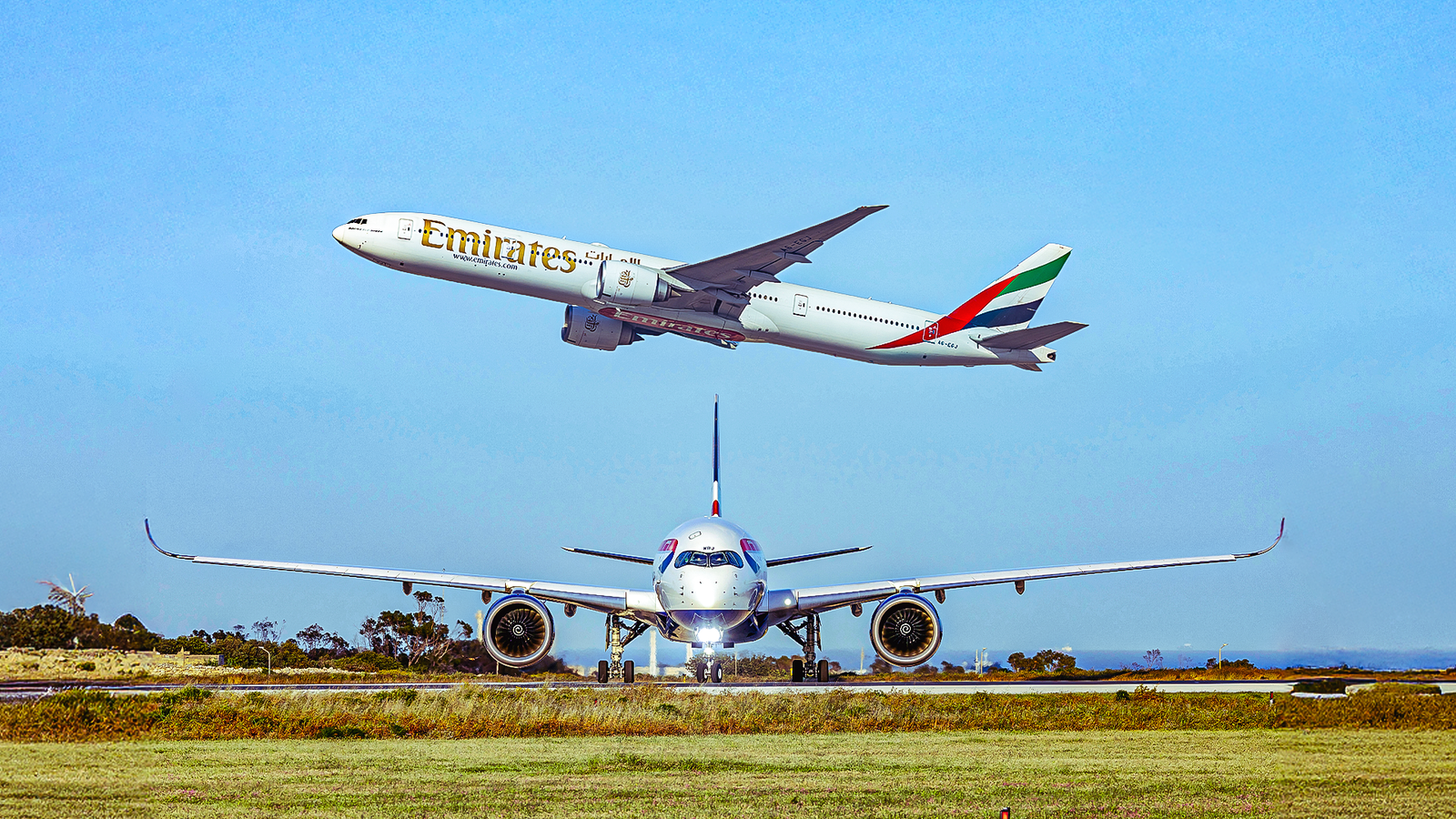
The Airbus A350 Has Become The New Flagship Of Some Airlines While Others Stick With The Boeing 777
Full Article
Original Source
Read the full article at Simpleflying →KhanList aggregates and links to publicly available news content. We do not host full articles from third-party sources. Always verify important information with original sources.