
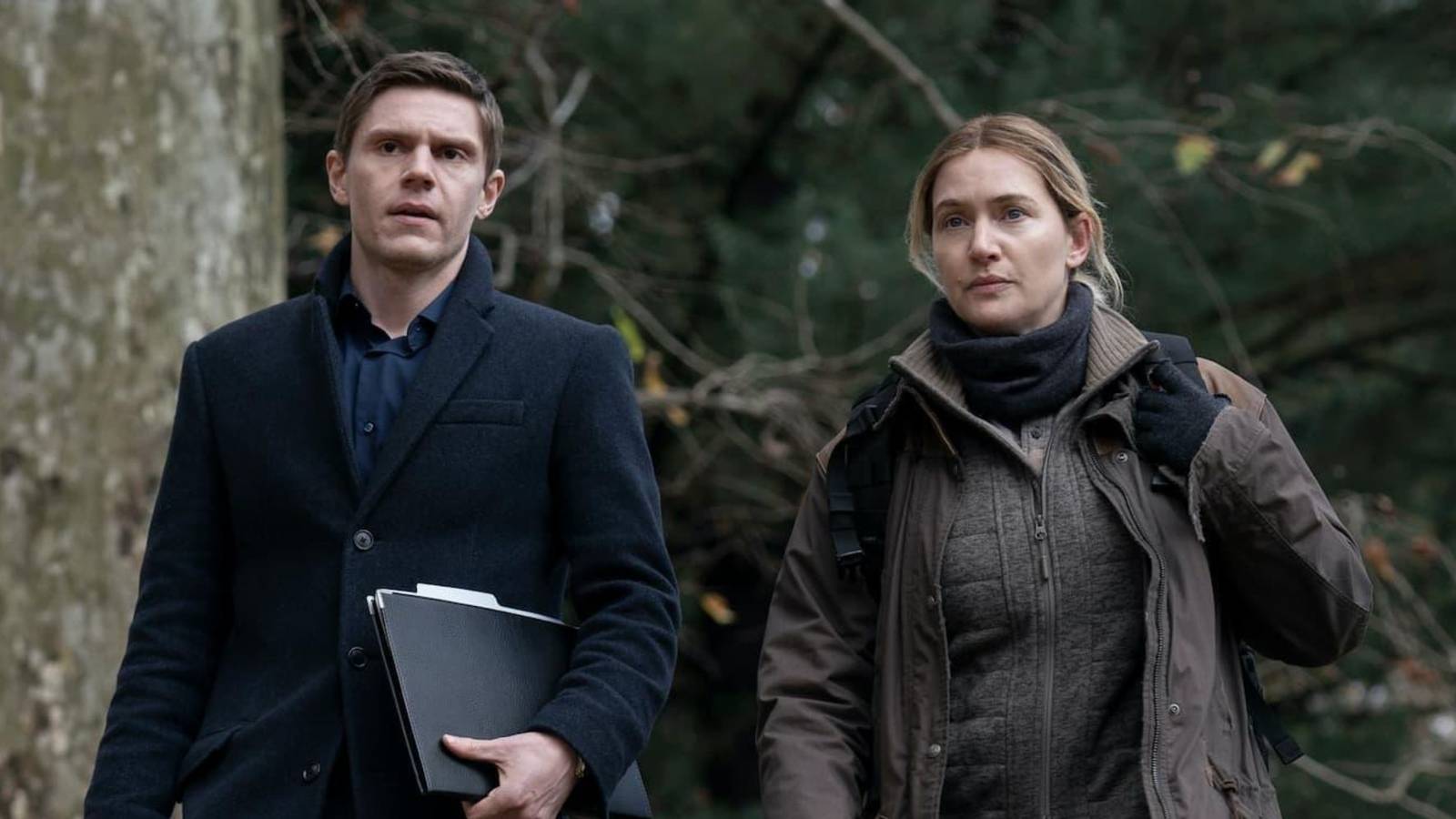
Image via HBO Published Aug 25, 2026, 5:38 PM EDT Sign in to your Collider account A great miniseries gets one complete shot at you. There is no next season waiting to repair a weak character or justify a detour. Every episode has to move the same emotional argument forward, and the best ones use that limited space with almost frightening efficiency. The six that I’ve zeroed-in on here cover murder, addiction, chess, AIDS, nuclear catastrophe, and war, yet all of them understand the same thing. Scale means very little without people worth following through it. These stories became unforgettable for me because of the tiny decisions characters inside made amidst huge circumstances. 6 'The Night Of' (2016) Image via HBO The Night Of takes one disastrous night in New York and follows the damage as it spreads through an entire criminal justice system. College student Naz Khan (Riz Ahmed) borrows his father’s cab, meets a young woman, spends the night with her, and wakes to find her murdered. He has little memory of what happened and enough physical evidence surrounding him to make innocence incredibly difficult to explain. From there, the eight episodes move through interrogation rooms, Rikers Island, legal offices, courtrooms, and the lives of people whose jobs depend on turning uncertainty into an argument. Naz’s transformation is where the series becomes far more unsettling than a standard murder mystery. Prison begins reshaping him before any jury has decided what kind of person he is. Defense attorney John Stone (John Turturro) carries his own wonderfully unglamorous problems into the case, including chronic eczema, cheap suits, and a career spent among people society has already judged. Riz Ahmed and John Turturro anchor a story interested in evidence, class, race, plea bargaining, prison survival, and the enormous distance between legal truth and certainty. Give it one episode and the case becomes very difficult to leave alone. 5 'Mare of Easttown' (2021) Image via HBO Mare of Easttown follows a detective investigating the murder of a teenage mother in a small Pennsylvania community where almost everybody already knows her, her family, or somebody connected to the case. Mare Sheehan (Kate Winslet) has lived in Easttown long enough for police work and private life to overlap constantly. She is grieving a devastating family loss, helping raise her grandson, dealing with her mother under the same roof, and carrying the strange local fame of having once won a high school basketball championship. Nobody lets her forget anything. That density gives the mystery an unusual emotional force. Easttown feels populated rather than constructed around suspects, with old friendships, addiction, teenage relationships, custody battles, money problems, and family resentment continuing whether the investigation needs them or not. Kate Winslet even learned the specific Delaware County accent for Mare, but the character’s exhaustion, stubbornness, humor, and loyalty run deeper than vocal transformation. On the other hand we have Helen Fahey (Jean Smart) who brings badly needed comic life into the Sheehan household without breaking the gravity around it. The murder keeps pulling you forward, while the community makes staying worthwhile. 4 'The Queen's Gambit' (2020) Image via Netflix Chess becomes genuinely thrilling in The Queen’s Gambit, which follows Beth Harmon (Anya Taylor-Joy) from a Kentucky orphanage in the 1950s to international competition during the height of the Cold War. Beth discovers an extraordinary ability to visualize the board while still a child, and that talent eventually places her in tournaments dominated by older men who have rarely encountered anyone like her. Success brings money, travel, attention, and increasingly dangerous freedom as Beth’s dependence on alcohol and tranquilizers grows alongside her reputation. Walter Tevis published the source novel in 1983, and this seven-episode adaptation understands that chess needs personality around it rather than endless explanation. Matches become readable through faces, clocks, preparation, and shifts in confidence, allowing viewers who barely know the rules of chess to understand when Beth is in control and when she has miscalculated. Her relationships with Alma Wheatley (Marielle Heller), Jolene (Moses Ingram), Benny Watts (Thomas Brodie-Sangster), Harry Beltik (Harry Melling), and fellow players gradually complicate the idea of the solitary genius. Beth spends years believing brilliance has to be lonely. The series becomes richer as she learns how many people helped build the player sitting at that board. It is elegant, addictive television with the rare ability to make opening theory feel glamorous. 3 'Angels in America' (2003) Image via HBO Angels in America brings Tony Kushner’s monumental play about AIDS, politics, sexuality, religion, and American identity to television through six interconnected chapters set primarily in 1980s New York. Prior Walter (Justin Kirk) is diagnosed with AIDS as his relationship with Louis Ironson (Ben Shenkman) begins collapsing under the pressure. Mormon lawyer Joe Pitt (Patrick Wilson) struggles with his sexuality while his wife Harper Pitt (Mary-Louise Parker) retreats deeper into fantasy and medication. Roy Cohn (Al Pacino), meanwhile, uses political power and denial to insist that his own AIDS diagnosis cannot possibly mean what everybody knows it means. The story can move from a hospital room to Antarctica, heaven, political history, hallucination, and domestic argument without losing the human pain underneath those shifts. Kushner adapted his own play, while Mike Nichols assembled a cast that included Al Pacino, Meryl Streep, Emma Thompson, Jeffrey Wright, Mary-Louise Parker, Patrick Wilson, Ben Shenkman, and Justin Kirk. Several performers take on multiple roles, which adds to the feeling that identities, histories, and beliefs are constantly echoing one another. Its politics are fierce, yet compassion eventually becomes just as important as anger. Angels in America asks for six hours and fills them with enough ideas, heartbreak, absurdity, and tenderness to make that investment feel almost modest. Collider Exclusive · Oscar Best Picture Quiz Which Oscar Best PictureIs Your Perfect Movie? Parasite · Everything Everywhere · Oppenheimer · Birdman · No Country Five Oscar Best Picture winners. Five completely different visions of what cinema can be — and what it can do to you. One of them is the film that was made for the way your mind works. Ten questions will figure out which one. 🪜Parasite 🌀Everything Everywhere ☢️Oppenheimer 🐦Birdman 🪙No Country for Old Men FIND YOUR FILM → 01 What kind of film experience do you actually want? The best movies don't just entertain — they leave something behind. ASomething that pulls the rug out — that makes me think I'm watching one kind of film and then reveals I'm watching another entirely. BSomething overwhelming — funny, sad, absurd, and genuinely moving, all at once. CSomething grand and weighty — a film that makes me feel the full scale of what I'm watching. DSomething formally daring — a film that pushes what cinema can even do. ESomething lean and relentless — pure tension with no wasted frame. NEXT QUESTION → 02 Which idea grabs you most in a film? Great films are driven by a central obsession. What's yours? AClass, inequality, and what people are willing to do when desperation meets opportunity. BIdentity, family, and the chaos of trying to hold your life together when everything is falling apart. CGenius, moral responsibility, and the catastrophic weight of a decision you can never take back. DEgo, legacy, and the terror of becoming irrelevant while you're still alive to watch it happen. EEvil, chance, and whether moral order actually exists or if we just tell ourselves it does. NEXT QUESTION → 03 How do you like your story told? Form is content. The way a story is shaped changes what it means. AGenre-twisting — I want it to start in one lane and migrate into something completely different. BMaximalist and genre-blending — comedy, action, drama, sci-fi, all in one ride. CEpic and non-linear — cutting between timelines, building a mosaic of cause and consequence. DA single unbroken flow — I want to feel like I'm living it in real time, no cuts to safety. ESpare and precise — every scene doing exactly what it needs to do and nothing more. NEXT QUESTION → 04 What makes a truly great antagonist? The opposition defines the protagonist. What kind of opposition fascinates you? AA system — invisible, structural, and almost impossible to fight because it has no single face. BThe self — the ways we sabotage, abandon, and fail the people we love most. CHistory — the unstoppable momentum of events that no single person can stop or redirect. DThe industry — the machinery of culture that chews up talent and spits out irrelevance. EPure, implacable evil — a force so certain of itself it becomes almost philosophical. NEXT QUESTION → 05 What do you want from a film's ending? The final note is the one that lingers. What do you want it to sound like? AShock and inevitability — a conclusion that recontextualises everything that came before it. BEarned emotion — I want to cry, laugh, and feel genuinely hopeful, even if the world is a mess. CDevastation and grandeur — an ending that makes me sit in silence for a few minutes after. DAmbiguity — something that leaves enough open that I'm still thinking about it days later. EBleakness — an honest refusal to pretend the world is tidier than it actually is. NEXT QUESTION → 06 Which setting pulls you in most? Where a film takes place shapes everything — mood, stakes, what's even possible. AA gleaming modern city with a hidden underside — beauty masking rot, wealth masking desperation. BA collapsing suburban life that opens onto something infinite — the multiverse of a single ordinary person. CThe corridors of power and science at a world-historical turning point — where decisions echo for decades. DThe grimy, alive chaos of New York and Hollywood — fame as both destination and trap. EVast, indifferent landscape — desert and highway where violence arrives without warning or reason. NEXT QUESTION → 07 What cinematic craft impresses you most? Every great film has a signature — a technical or artistic element that makes it unmistakable. AProduction design and mise-en-scène — every frame composed to carry meaning beneath the surface. BEditing and tonal control — the ability to move between registers without losing the audience. CScore and sound design — music that becomes inseparable from the dread and awe of what you're watching. DCinematography as performance — the camera not recording events but participating in them. ESilence and restraint — what's left unsaid and unshown doing more work than any dialogue could. NEXT QUESTION → 08 What kind of main character do you root for? The protagonist is the lens. Who you choose to follow says something about you. ASomeone smart and resourceful who makes increasingly dangerous decisions under pressure. BSomeone overwhelmed and ordinary who turns out to be capable of something extraordinary. CA brilliant, tortured figure whose gifts and flaws are inseparable from each other. DA self-destructive artist whose ego is both their superpower and their undoing. EA quiet, principled person trying to make sense of a world that has stopped making sense. NEXT QUESTION → 09 How do you feel about a film that takes its time? Pace is a choice. Some films sprint; others let tension accumulate slowly, deliberately. AI love a slow build when I know the payoff is going to be seismic — patience for a devastating reveal. BGive me relentless momentum — I want to feel breathless and emotionally spent by the end. CEpic runtime doesn't scare me — if the material demands three hours, give me three hours. DI want it to feel propulsive even when nothing is technically happening — restless energy throughout. EDeliberate and unhurried — I want dread to accumulate in the spaces between the action. NEXT QUESTION → 10 What do you want to feel walking out of the cinema? The best films leave a mark. What kind of mark do you want? AUnsettled — like I've just seen something I can't fully explain but can't stop thinking about. BMoved and energised — like the film reminded me what actually matters and gave me something to hold onto. CHumbled — like I've been in the presence of something genuinely important and overwhelming. DExhilarated — like I've just seen cinema doing something it's never quite done before. EHaunted — like a cold, quiet dread that stays with me for days. REVEAL MY FILM → The Academy Has Decided Your Perfect Film Is…Your answers have pointed to one Oscar Best Picture winner above all others. This is the film that was made for the way your mind works. ParasiteYou are drawn to films that operate on multiple levels simultaneously — that begin in one genre and quietly, brilliantly migrate into another. Bong Joon-ho's Parasite is a film about class, desire, and the architecture of inequality that manages to be darkly funny, deeply suspenseful, and genuinely shocking across a single extraordinary running time. Your instinct is for cinema that hides its true intentions until the moment it's ready to reveal them. Parasite is exactly that — a film that rewards close attention and punishes assumptions, right up to its devastating final image. Everything Everywhere All at OnceYou want it all — and this film gives you all of it. The Daniels' Everything Everywhere All at Once is one of the most maximalist films ever made: action comedy, multiverse sci-fi, family drama, existential crisis, and a genuinely earned emotional core that sneaks up on you amid the chaos. You are someone who responds to ambition, who doesn't want cinema to choose between being entertaining and being meaningful. This film refuses that choice entirely. It is overwhelming by design, and its overwhelming nature is precisely the point — because the feeling of being crushed by infinite possibility is exactly what it's about. OppenheimerYou are drawn to cinema on a grand scale — films that understand history not as a backdrop but as a force, and that place their characters inside that force and watch what happens. Christopher Nolan's Oppenheimer is a film about the terrifying gap between what we can do and what we should do, told with the full weight of one of the most consequential moments in human history behind it. You want your films to feel important without feeling self-important — to earn their ambition through sheer craft and the gravity of their subject. Oppenheimer does exactly that. It is enormous, complicated, and refuses easy comfort. BirdmanYou are drawn to films that foreground their own construction — that make the how of the filmmaking part of the what it's about. Alejandro González Iñárritu's Birdman, shot to appear as a single continuous take, is cinema examining itself through the cracked mirror of a fading actor's ego. You respond to formal daring, to the feeling that a film is doing something that probably shouldn't be possible. Michael Keaton's performance and Emmanuel Lubezki's restless camera create something genuinely unlike anything else — a film that is simultaneously about creativity, relevance, self-destruction, and the impossibility of ever truly knowing if your work means anything at all. No Country for Old MenYou are drawn to cinema that trusts silence, that refuses to explain itself, and that treats dread as a form of meaning. The Coen Brothers' No Country for Old Men is a film about the arrival of a new kind of evil — implacable, arbitrary, and utterly indifferent to the moral frameworks we use to make sense of the world. It is one of the most formally controlled films ever made, and its controlled restraint is what makes it so terrifying. You want your films to haunt you, not comfort you. You are not interested in resolution if resolution would be dishonest. No Country for Old Men is honest in a way that most cinema never dares to be. ↻ RETAKE THE QUIZ 2 'Chernobyl' (2019) Image via HBO Chernobyl is Oppenheimer on steroids. Imagine if the nuclear bomb had accidentally exploded. That’s literally the story here. It dramatizes the April 1986 explosion at Reactor No. 4 of the Chernobyl Nuclear Power Plant and the Soviet response that followed. The five episodes move from the control room and burning reactor complex to hospitals, government meetings, evacuation zones, mines, rooftops, and scientific investigations. The disaster itself is terrifying. The series becomes even more disturbing as technicians, firefighters, doctors, scientists, and officials gradually understand that radiation has created a crisis ordinary human senses cannot detect. Craig Mazin built the drama around documented events while using composite characters in places where television needed to condense the historical record. That distinction is important, especially with Ulana Khomyuk (Emily Watson), who represents several scientists involved in understanding the accident. The larger truth survives through horrifyingly specific details. Firefighters handle radioactive debris without knowing the danger. Residents watch the distant glow. Workers receive jobs that can only be performed for seconds. Valery Legasov (Jared Harris) and Boris Shcherbina (Stellan Skarsgård) gradually form one of the series’ strongest relationships as knowledge replaces political certainty. Chernobyl turns procedure into suspense and institutional dishonesty into something physically frightening. Five episodes somehow feel enormous. 1 'Band of Brothers' (2001) Image via HBO Band of Brothers follows Easy Company of the U.S. Army’s 506th Parachute Infantry Regiment from brutal training at Camp Toccoa through D-Day, Operation Market Garden, the Battle of the Bulge, the liberation of a concentration camp, and the closing months of World War II. It’s based on Stephen E. Ambrose’s nonfiction book, the ten-part series approaches the war through one company rather than trying to summarize the entire European campaign. Men arrive, disappear, earn promotions, suffer wounds, make mistakes, and become part of a unit whose history keeps accumulating around them. It’s the oldest miniseries on the list and still on top for a reason. The interviews with real Easy Company veterans give the drama an emotional foundation before the actors even appear. Once the story begins, leadership becomes one of its richest subjects. Dick Winters (Damian Lewis) earns trust through competence and calm. Herbert Sobel (David Schwimmer) demonstrates how authority can exist without respect. Carwood Lipton (Donnie Wahlberg) quietly holds exhausted men together during Bastogne. Different episodes shift attention toward medics, replacements, officers, and ordinary soldiers, allowing the company itself to become the central character. It was produced by Steven Spielberg and Tom Hanks after Saving Private Ryan and perhaps brought feature-film scale to television for that reason. Maybe it’s even more. Band of Brothers can be harrowing, funny, infuriating, and deeply humane within the same hour. More than two decades later, it remains the miniseries everyone else has to chase.
The 6 Best Miniseries Released Since 1990, Ranked
Full Article
Original Source
Read the full article at Collider →KhanList aggregates and links to publicly available news content. We do not host full articles from third-party sources. Always verify important information with original sources.