
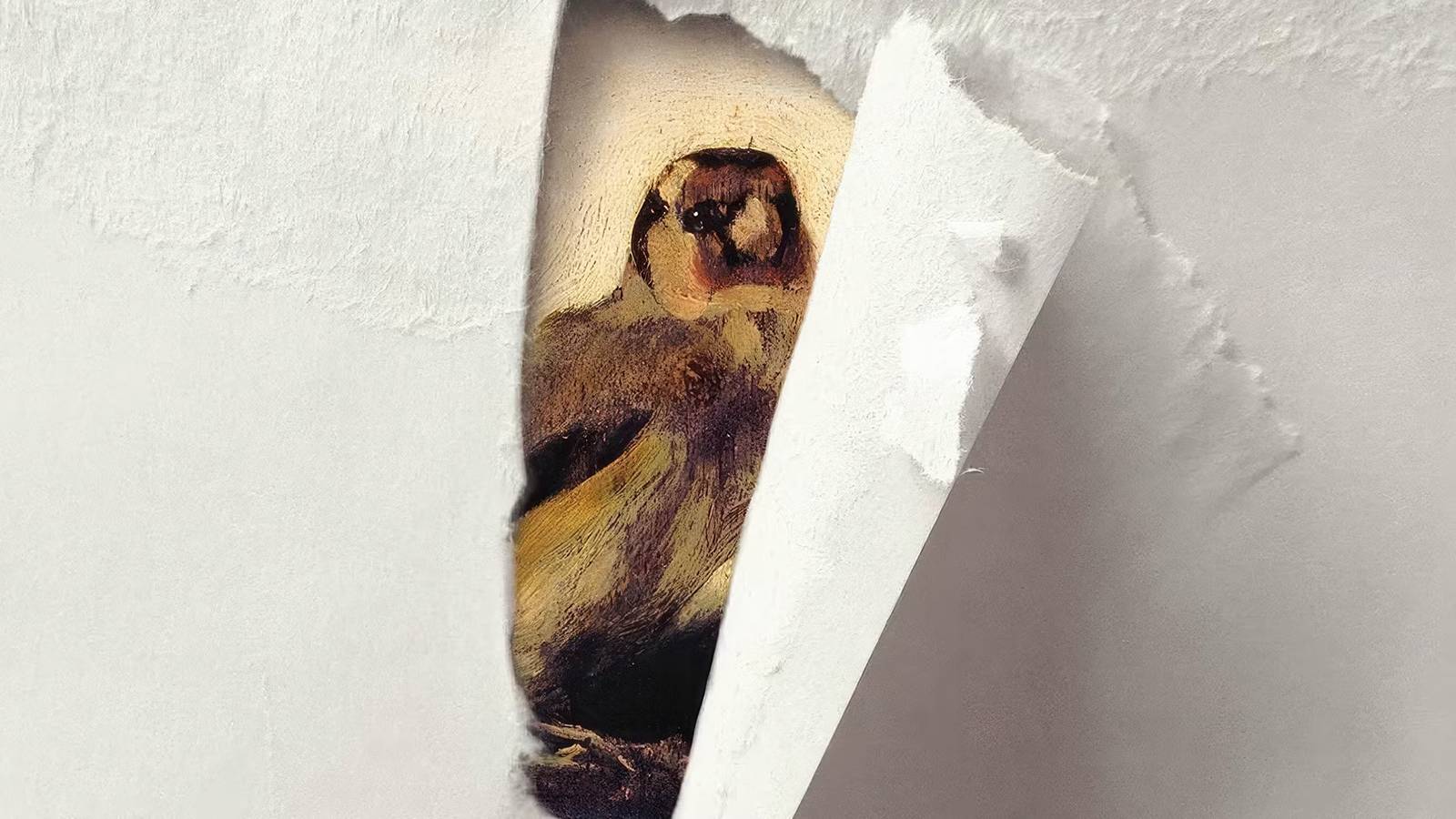
Image via Little, Brown and Company Published Sep 7, 2026, 5:53 PM EDT Sign in to your Collider account The past fifteen years have been unusually good at producing novels that refuse to stay in one lane. Family sagas suddenly widen into histories of migration. Climate fiction can feel intimate enough to break your heart over one marriage. A book about the music business can jump decades, change narrators, become a PowerPoint presentation, and somehow make the whole experiment feel inevitable. That kind of formal confidence is hard to fake. What really separates the six here is how much life they contain beyond their premises. You remember the strange worlds and structural tricks, of course, but you also remember a child keeping a stolen painting because it still feels connected to his mother. These novels have ideas. More importantly, they have people worth carrying those ideas. These are, in my opinion, 6 best books released since 2010. 6 'Station Eleven' (2014) Image via HarperCollins Station Eleven begins with actor Arthur Leander collapsing during a performance of King Lear on the same night a catastrophic flu begins spreading across the world. Twenty years later, civilization has been radically reduced and Kirsten Raymonde travels around the Great Lakes with the Traveling Symphony, a group of actors and musicians performing Shakespeare for scattered settlements. Emily St. John Mandel keeps moving between life before and after the pandemic, gradually showing how Arthur, Kirsten, his former wives, an unfinished comic book, and several apparently minor encounters belong to the same emotional map. The apocalypse gets surprisingly little interest as spectacle. What fascinates the book is everything people decide remains worth preserving after survival has been secured. The Symphony performs because food and shelter cannot satisfy the whole person. Clark builds the Museum of Civilization from dead phones, credit cards, passports, and other objects that once seemed too ordinary to deserve preservation. Even the mysterious Dr. Eleven comics become a private bridge between lives separated by catastrophe. Reading it after the real pandemic adds another layer that Mandel could never have planned. Station Eleven keeps asking what civilization actually consists of, and its answers are far more tender than concrete and electricity. 5 'The Goldfinch' (2013) Image via Little, Brown and Company A bomb explodes inside New York’s Metropolitan Museum of Art while thirteen-year-old Theo Decker is visiting with his mother, killing her and leaving him physically and emotionally stranded. In the confusion, Theo leaves with Carel Fabritius’s small seventeenth-century painting The Goldfinch, and The Goldfinch follows that secret through years of grief, relocation, addiction, friendship, crime, and increasingly complicated attempts to build an adult life. Donna Tartt gives the book nearly eight hundred pages because Theo’s attachment to the painting cannot be separated from the life that formed around it. His years in Las Vegas with Boris are especially vivid. The boys drink, steal, experiment with drugs, and create their own feral version of family while Theo’s unreliable father drifts through another doomed reinvention. Later, Hobie’s antique workshop offers a completely different relationship with damaged objects, one built around restoration rather than possession. The painting keeps gathering meaning as Theo changes. It is evidence, contraband, beauty, guilt, and one surviving thread back to his mother all at once. The book won the Pulitzer Prize and inspired years of arguments about literary taste, which almost suits a novel this excessive. Give yourself to its sprawl and it becomes difficult to imagine Theo’s life told any smaller. 4 'The Overstory' (2018) Image via W. W. Norton & Company The Overstory begins far away from the shape of a conventional ensemble novel. Richard Powers introduces several people in separate stories, including an artist descended from a family that photographed the same chestnut tree for generations, a scientist whose research on tree communication damages her career, and strangers whose lives eventually converge around environmental activism. The book itself is organized through sections called Roots, Trunk, Crown, and Seeds, allowing human lives to occupy a structure borrowed from the organisms everybody has spent centuries treating as background scenery. Once those lives intersect, the scale of the argument becomes almost unnerving. Patricia Westerford’s research suggests forests are communities exchanging information, while characters such as Nick, Olivia, Mimi, Douglas, and Adam move from private dissatisfaction toward increasingly radical attempts to protect ancient trees. Their convictions carry consequences, and Powers never turns environmentalism into a simple morality pageant. The most powerful shift happens in the reader’s attention. A tree that would ordinarily receive half a sentence starts feeling like a life operating on a timescale humans are barely equipped to notice. The Pulitzer recognition brought the novel an enormous audience, but its stranger achievement happens outside the book. You may start looking up more often while walking. 3 'Pachinko' (2017) Image via Grand Central Publishing Sunja is born into a Korean family during the Japanese occupation and grows up helping her widowed mother run a boardinghouse near Busan. Her pregnancy by the wealthy, married Koh Hansu could destroy her standing in the community until a sickly Christian minister named Isak offers marriage and takes her with him to Osaka. From there, Pachinko follows the family across generations as Koreans living in Japan confront poverty, discrimination, war, religion, business, education, and the constant pressure of being treated as outsiders in the country where their children were born. And no, Hachiko is another story of a dog. This one’s not it. Min Jin Lee makes history intimate through consequences that keep traveling through the family. Sunja sells kimchi to survive. Noa pursues education while struggling with what his ancestry means in Japanese society. Mozasu enters the pachinko business, an industry that offers economic mobility while carrying its own social stigma. Hansu remains tied to the family for decades in ways that complicate any clean judgment of him. The title becomes increasingly important as pachinko itself reflects a world where chance appears random while somebody behind the machine still controls the conditions. Pachinko covers most of the twentieth century without letting history swallow the household at its center. By the end, generations of sacrifice sit inside choices that once looked ordinary. 2 'The Fifth Season' (2015) Image via Orbit The world of The Fifth Season has survived repeated geological catastrophes so severe that civilization has built its customs around preparing for the next one. Across the continent known as the Stillness, people fear orogenes, humans capable of controlling seismic energy, even while society depends on that power to survive earthquakes and other disasters. N.K. Jemisin introduces Essun after her husband murders their young son and disappears with their daughter, then expands outward through the stories of Damaya and Syenite until the structure itself becomes part of what the novel is saying about identity and memory. The world-building has teeth because every invented institution tells us who holds power. Orogenes are trained at the Fulcrum, controlled through Guardians, and taught to internalize the contempt directed toward them. That turns spectacular abilities into a source of fear rather than fantasy fulfillment. Jemisin also writes geology with the scale usually reserved for gods. Continents break. Societies prepare caches for disaster. History gets rewritten by whoever survives long enough to record it. The novel began the Broken Earth trilogy and became the first of three consecutive books in that series to win the Hugo Award for Best Novel, an unprecedented run. Start here and the reason becomes obvious quickly. The ground beneath this story is never merely scenery. 1 'A Visit from the Goon Squad' (2010) Image via Knopf This is a different kind of goon squad than today’s generation is used to. But oh well. At the center of A Visit from the Goon Squad are music executive Bennie Salazar and his assistant Sasha, although calling either one the protagonist would make the book sound far tidier than it is. Jennifer Egan moves among friends, lovers, musicians, children, failures, and people who briefly crossed somebody else’s life, jumping backward and forward across decades. A troubled punk scene in San Francisco can lead to a collapsing music career, a disastrous publicity job involving a dictator, or a future New York where toddlers have become a valuable marketing demographic. Every chapter changes the angle without losing the strange web connecting everybody. Then Egan reaches “Great Rock and Roll Pauses,” a chapter presented through PowerPoint slides created by Sasha’s daughter Alison, and the apparent stunt becomes one of the book’s most emotionally precise sections. The pauses inside songs become a way of understanding Alison’s brother, her parents, and all the things a family notices without discussing directly. That is the larger brilliance of the novel. The title’s goon squad is time itself, reshaping bodies, careers, tastes, relationships, and memories while everybody keeps pretending they have more of it. It won a Pulitzer Prize and confirmed its stature early, but fifteen years have only strengthened the case. Few novels this formally adventurous are also this funny, sad, and alive to the embarrassing ways people keep trying to matter to one another. Collider Exclusive · Universe Personality Quiz Which Iconic Universe Do You Belong in the Most? Star Wars · Lord of the Rings · Harry Potter · Game of Thrones · Star Trek Five legendary universes. Five completely different visions of what the world could be — or already was. One of them is the world your instincts, your values, and your particular way of existing were built for. Eight questions will tell you which one. 🚀Star Wars 💍Lord of the Rings 🧙Harry Potter 👑Game of Thrones 🖖Star Trek FIND YOUR UNIVERSE → 01 What gives your life its deepest sense of meaning? Every universe is built around a different answer to this question. ABeing part of something larger than myself — a cause, a rebellion, a fight for freedom that outlasts me. BThe journey itself — the places I'll go, the companions beside me, the world I'll discover on the way. CLearning — unlocking what I'm capable of, understanding the world's hidden mechanics, growing into something more. DLegacy — the name I leave behind, the power I build, the mark I make before the world moves on without me. EUnderstanding — exploring what exists beyond the horizon and asking what it means to be alive in a universe this vast. NEXT QUESTION → 02 Which kind of world do you most want to inhabit? The environment shapes who you become. Choose carefully. AA galaxy of planets, each with its own culture — connected by conflict, trade, and the Force. BAncient lands of breathtaking beauty, deep history, and a creeping darkness at the edges. CA world hidden inside our own — full of wonder, community, and magic waiting to be learned. DA brutal, beautiful continent where power is everything and every alliance is a calculation. EA future where humanity has reached the stars — and must decide what kind of species it wants to be. NEXT QUESTION → 03 How do you prefer your conflicts resolved? The shape of a world's conflicts tells you everything about its soul. AThrough sacrifice and courage — someone has to make the impossible choice so others don't have to. BThrough fellowship — the impossible becomes possible when the right people walk the same road. CThrough growth — confronting what you fear, understanding what you lack, and becoming equal to the challenge. DThrough strategy — outthinking, outmaneuvering, positioning yourself so the outcome was never in doubt. EThrough dialogue — finding the third option, the peaceful resolution, the answer that doesn't require a body count. NEXT QUESTION → 04 Who do you want beside you when things get difficult? Your ideal companions reveal the world you were made for. AA small crew — a pilot, a rogue, a warrior — each broken in their own way, unbeatable together. BA fellowship of different kinds of people, bound by purpose and deepened by the long road. CFriends who grew up alongside me — who knew me before I knew myself, and stayed anyway. DAllies whose loyalty I've earned — and tested — and whose ambitions align with mine, for now. EA crew of brilliant, curious, principled people from every corner of known space. NEXT QUESTION → 05 What is your relationship with power? How you seek, wield, or resist power is the map of who you are. AI want to use it to protect — and I'm terrified of what I might become if I'm not careful. BI distrust it. The most important power in this story is the courage to give it up. CI want to earn it — through knowledge, through effort, through becoming someone worthy of it. DI want to wield it. Preferably before someone else decides to wield it against me. EI want to understand it — its structures, its limits, its ethical dimensions. Power without accountability is the real threat. NEXT QUESTION → 06 How does your universe treat good and evil? A world's moral architecture tells you more about it than any map. AThere is a dark side and a light side — and the choice between them is always present, always personal. BEvil is real and ancient and patient — and goodness, however small, is the only thing that can undo it. CGood and evil are real, but they live inside people — and people are complicated, always capable of both. DGood and evil are mostly a matter of perspective and proximity. Power is the only honest currency. EEvil is usually the result of ignorance, fear, or broken systems — and understanding it is the first step to solving it. NEXT QUESTION → 07 What role would you naturally fall into? Every universe has archetypes. Which one fits you without trying? AThe reluctant hero — ordinary origins, extraordinary moment, changed forever by the choice to act. BThe unlikely carrier — the one nobody expected to matter most, quietly bearing the weight of everything. CThe student — not yet who I'll become, learning through every mistake, growing into something the world needs. DThe player — sharp enough to see the game for what it is, ambitious enough to try to win it. EThe explorer — drawn to the unknown, driven by curiosity, most alive when standing somewhere no one has stood before. NEXT QUESTION → 08 What do you ultimately believe about the future? The answer to this is the clearest window into which universe already lives inside you. AThat hope is real — that even in the darkest galaxy, a new hope is always possible. CThat even the smallest person can change the course of the future, if they have the courage to try. CThat love and friendship and doing what's right will matter in the end, even when everything says otherwise. DThat the wheel keeps turning — that power shifts, winters end, and what endures is those willing to fight for it. EThat humanity — or whatever we become — is capable of extraordinary things, if we choose to be. REVEAL MY UNIVERSE → Your Universe Has Been Chosen You Belong In…Your answers point to the iconic universe your values, your instincts, and your particular way of seeing the world were built for. This is where you would find your people — and your purpose. Star WarsYou believe in the cause — in the idea that freedom is worth fighting for even when the odds are impossible and the empire is vast. You are drawn to the moral clarity of a universe where hope itself is a form of resistance. You'd find your people in the Rebellion — a ragtag coalition of true believers held together by conviction more than resources. Star Wars is fundamentally a story about ordinary people choosing to matter in an extraordinary conflict — and that is exactly your kind of story. The Force may or may not be with you. But the will to use it for something larger than yourself certainly is. Lord of the RingsYou understand, in the deepest part of yourself, that the journey matters as much as the destination — and that the world's beauty is worth protecting even at great cost. Middle-earth is a world of ancient wonder, deep friendship, and a darkness that only retreats when enough small acts of courage accumulate. You would thrive here because you value the fellowship more than the glory — the road more than the arrival. Tolkien's universe rewards patience, loyalty, and the willingness to carry something heavy across a very long distance. Those are not burdens to you. They are simply how you move through the world. Harry PotterYou believe that love, loyalty, and doing what's right are not naive sentiments — they are the most powerful forces in any world, magical or otherwise. The Wizarding World is a place of wonder hidden in plain sight, where learning is transformative and the bonds you form at school follow you into every battle. You would flourish here because you take both the magic and the friendships seriously — and you understand that one without the other is incomplete. Harry Potter's universe ultimately rewards those who choose to stand for something even when standing is terrifying. That choice — made quietly, without guarantee — is something you understand completely. Game of ThronesYou see the world clearly — its power structures, its hypocrisies, its brutal arithmetic — and you are not paralysed by that clarity. You use it. Westeros is a world that rewards intelligence, adaptability, and the willingness to understand that every alliance is also a negotiation. You would survive here — possibly thrive here — because you don't confuse the world as it is with the world as you'd like it to be. Game of Thrones is a story about what happens when the idealists and the realists collide. You are sharp enough to know which one lasts longer. Winter always comes. You are already prepared. Star TrekYou believe the future is worth building — that curiosity, cooperation, and the expansion of understanding are not just ideals but the most practical path forward for any civilisation. Star Trek is a universe where the questions matter as much as the answers, and where encountering something utterly alien is cause for wonder rather than fear. You would belong here because you are fundamentally optimistic about what intelligence and decency can achieve — while being honest about how hard that achievement is. The Federation is the universe's most ambitious thought experiment: what if we actually got better? You don't just hope that's possible. You think it's the only thing worth working toward. ↻ RETAKE THE QUIZ
The 6 Best Books Released Since 2010, Ranked
Full Article
Original Source
Read the full article at Collider →KhanList aggregates and links to publicly available news content. We do not host full articles from third-party sources. Always verify important information with original sources.