
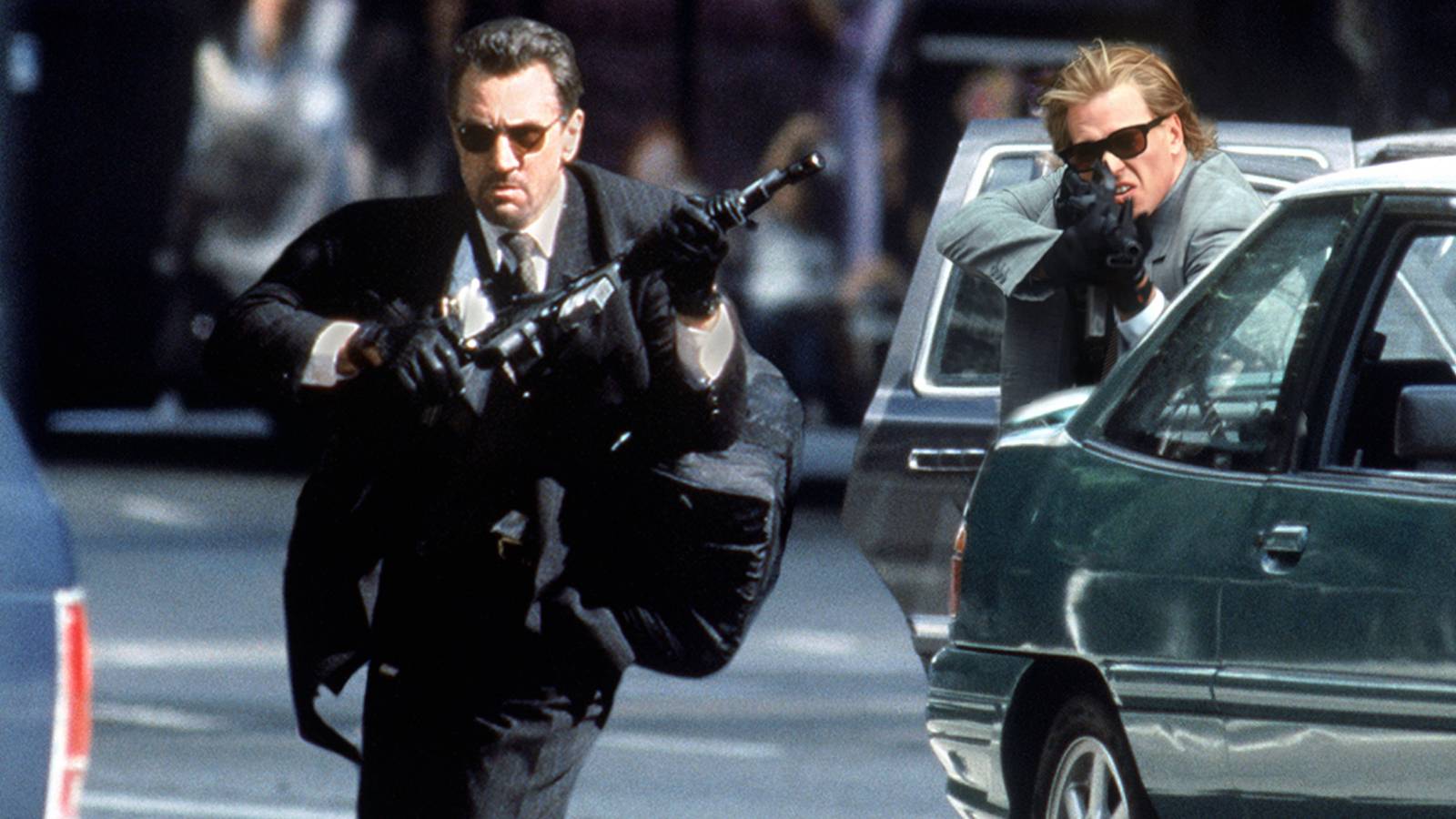
Published Sep 7, 2026, 8:00 PM EDT Anthony is a news reporter and a guide writer who has covered the entertainment industry for five years. He has covered a wide range of genres, including aviation incidents and international crime, and has a keen eye for details that may slip under the radar. When he's not writing, Anthony can be found at Brands Hatch race track or at home watching indie horror movies nobody has heard of. Heat was released in 1995 and is arguably one of the greatest crime movies of the decade. The film is a cop thriller of sorts, though it's also multi-layered, with complex characters, each with unique motivations. Today, it's regarded as one of the greatest crime thrillers of all time, and rightfully so. Heat stars Robert De Niro as Neil McCauley, a professional thief at the top of his game, executing jobs with surgical proficiency. On the other side of the law, the movie also stars Al Pacino as Vincent Hanna. Hanna spells big trouble for McCauley and his crew. He's a veteran LAPD Lieutenant, and no stranger to dealing with criminals at the highest level. The movie tells a busy cat-and-mouse story as Neil's group plans a daring heist with the heat rising around them on all sides. Heat also features a jaw-dropping shootout scene and thoroughly explores the aftermath, with powerful performances from everyone involved. The story is easy to follow, but it's also a surprisingly deep movie that leaves several scenes open to interpretation. The result is a movie that's still hotly discussed today, as fans mull over Neil's motivations and Hanna's actions during Heat's final moments. Audiences can interpret specific moments quite differently, and the beauty of the 1995 title is that there isn't always a 'correct' explanation. Why Neil Goes Back To Kill Waingro Possibly Heat's biggest surprise occurs after the failed bank heist. Hanna has effectively shut down Neil's crew, with losses on both sides. The thieves are on the run, yet it seems Neil still has a way out, with a chartered plane ready to take him and Eady (Amy Brenneman) away. Robert De Niro's character learns Waingro's (Kevin Gage) location while driving to the airport. He's home free at this point, yet decides to settle the score despite the obvious risks. It's never explicitly explained why Neil goes back for Waingro, and it seems out of character. However, Waingro is at the root of several major issues Neil's group faced during the movie. Waingro's actions contribute to several police deaths during the first job at the start of the film. It's the same job that first caught Hanna's attention. He then spoke with Van Zant (William Fichtner), leading to Trejo's (Danny Trejo) death. He's a loose end, and Neil may feel responsible for his crew, as he failed to eliminate Waingro at the diner earlier on. Whether because of anger, guilt, or the need for closure, Neil deemed the journey to the hotel worth the risk. How Neil McCauley Breaks His Own Rule Twice In Heat's Ending MovieStillsDB Heat doesn't necessarily suggest Neil follows a code or set of instructions, but we do know one rule he lives by. When his friend, Chris Shiherlis (Val Kilmer), stays with him after an argument with his wife, Neil says, "Allow nothing to be in your life that you cannot walk out on in 30 seconds flat, if you spot the heat around the corner." It's a cold, if practical, mantra for a professional thief. We also see Neil break that rule twice in quick succession, which ultimately leads to his showdown with Hanna. As we've already mentioned, Neil pursues Waingro, even after suggesting to Nate (Jon Voight) he wouldn't. He refused to go immediately to the airport despite the immense risk. Neil causes a commotion at the hotel and breaks his rule a second time. He leaves Eady in the car outside as he enters to eliminate Waingro. He returns as sirens wail all around the building and is about to reunite with Eady when he spots Hanna down the road. Neil and Eady lock eyes, and it's such a powerful scene because we know Neil is about to make a painful choice. In fact, he silently thinks about his next move for more than 40 seconds as Hanna approaches. If he never returned to the car, or didn't linger, he might still have gotten away. Why Hanna Holds McCauley's Hand While He Dies One of the greatest moments in Heat is arguably Hanna's first face-to-face encounter with McCauley. He pulls him over, and the pair share coffee and get to know each other. We learn so much about both of them during this scene between Al Pacino and Robert DeNiro's Heat characters. Neil says, "I do what I do best. I take scores. You do what you do best, trying to stop guys like me." This exchange is important because it sheds light on the movie's closing moments. Hanna fatally injures McCauley. As he's dying, McCauley says, "Told you I'm never going back." Hanna simply replies, "Yeah," as McCauley holds out his hand. The hand-hold at the end could symbolize many things. On the surface, we can read it as a display of mutual respect, or that Hanna and McCauley view each other as equals or rivals. During the coffee conversation, Hanna says, "I don't know how to do anything else." McCauley replies, "Neither do I." Both men understand that they live for what they do, and it's not personal. Their final exchange is far more nuanced than a Hollywood "We're not so different, you and I." The hand-hold is between two people on different sides of the coin who understood their next encounter could end up with one of them dead. Why Did Lauren Try To Take Her Own Life? In Heat, Hanna retreats to his apartment after a row with his wife, Justine (Diane Venora), to recieve a massive scare when he finds his stepdaughter, Lauren (Natalie Portman) in the bathroom, lying motionless in a bathtub full of bloody water. To his shock, Lauren had attempted to take her own life. The scene is so powerful because it's one of the only times we see Hanna in a panic. He takes his stepdaughter in his arms to a hospital, and she ultimately survives the ordeal. The question remains: why did Lauren attempt to take her own life? There's no clear answer, but we know Hanna's home life is problematic. He even admits it while talking to McCauley in the coffee shop. We also know that Hanna cares about Lauren, though his obsession with his job makes him appear emotionally unavailable. Her suicide attempt could be a cry for help. Lauren may also be struggling with her relationship with her father. We see this at the start of the movie when she appears anxious and tearful. As Vincent and Justine's marriage starts to deteriorate, Lauren may be feeling abandonment from both father figures in her life. The Real Meaning Of Heat's Ending The closing scene of Heat is somber, emotional, and powerful. It does not resolve every plot thread, though we can make some assumptions. Chris presumably evades capture after his wife, Charlene (Ashley Judd), signals him not to come inside. The last we hear about Lauren is that she is stable in the hospital. Hanna fatally shoots McCauley near the airport, but it's not a triumphant moment. As we've already mentioned, there is clearly a mutual respect between the two. Hanna does get the upper hand in the final shootout. Ultimately, Neil said not to get attached to anything you couldn't walk out on in 30 seconds flat. His actions toward the end of the movie did not follow his mantra. As Neil passes away and the music swells, the camera pans to Vincent's face, where it almost looks as if tears are welling in his eyes. It's not a typical action movie "I beat you" moment. We can't tell what is going on in Hanna's head, but it's arguably fair to interpret the scene as him saying goodbye to someone he regarded as an equal in many ways. Neil and Vincent have entirely different moral compasses, but they respected and understood each other's motivations until the end. Release Date December 15, 1995 Runtime 170 minutes Director Michael Mann
Heat Ending Explained: Why De Niro's Neil Goes Back & Breaks His Own Rule
Full Article
Original Source
Read the full article at Screenrant →KhanList aggregates and links to publicly available news content. We do not host full articles from third-party sources. Always verify important information with original sources.