
Image via Picador Collection Published Oct 5, 2026, 7:51 AM EDT Sign in to your Collider account A list like this should make you a little nervous. Best books since 1990 is the sort of phrase that can turn perfectly normal people into prosecutors. Somebody will want Morrison. Somebody will want Sebald higher. Somebody will insist ranking literature is idiotic (me some years ago) and then immediately become furious about the ranking. Good. Books this great should provoke ownership. They should make readers irrationally protective. What links these six is harder to explain than genre or prestige. Each one changes the temperature of your thinking while you read it. And once the book has done that to you, putting it back on the shelf feels almost ridiculous, because some part of it stays open. 6 'The Fifth Season' (2015) Image via Hachette The Fifth Season follows Essun, a woman able to control seismic forces, as she searches for her kidnapped daughter after her husband murders their son on the same day a catastrophic geological rupture begins tearing civilization apart. N. K. Jemisin wrote the novel, building a world where orogenes are feared, controlled, and exploited precisely because society desperately needs their power. The brilliance sneaks up through structure. You are following different lives, different ages, different relationships to power, and the book seems almost aggressively determined to make you assemble the emotional logic yourself. Then the pieces connect and suddenly earlier chapters hurt differently. Jemisin never lets apocalypse become scenery. The world can literally split open, but Essun’s attention keeps returning to one missing child. That scale mismatch is devastating. The planet is ending. A mother still has somewhere to go. 5 'Never Let Me Go' (2005) Image via Knopf Doubleday Publishing Group Never Let Me Go is Kathy H.’s account of growing up with Ruth and Tommy at the seemingly idyllic English school Hailsham, where the students slowly learn that they were created as clones so their organs can eventually be harvested for other people. Kazuo Ishiguro wrote it with such restraint that the horror often arrives several minutes after the sentence that caused it. That calm is what destroys you. Kathy remembers cassette tapes, childish jealousies, art classes, crushes, arguments, and little social cruelties with the same care anyone might give an ordinary adolescence. The extraordinary cruelty has been normalized so completely that nobody needs guards at every door. Even the hope that love might postpone their fate becomes something heartbreakingly small. 4 'Austerlitz' (2001) Image via Hanser Austerlitz follows Jacques Austerlitz, an architectural historian who gradually uncovers the truth that he was sent from Czechoslovakia to Britain on a Kindertransport as a child and that most of his early life, including the fate of his parents, has been buried beneath decades of forgetting. W. G. Sebald wrote it, and the book moves through conversations, photographs, train stations, buildings, and memories with almost no interest in behaving like a conventional novel. You do not read Austerlitz for plot momentum. You read it because one forgotten detail suddenly opens a door to forty years of suppressed history. A railway station can become unbearable once Austerlitz understands what happened there. A photograph can feel more dangerous than a confession. Sebald makes memory physical, something stored in architecture, objects, rooms, and routes people once traveled. It is one of those books that leaves ordinary places looking slightly haunted afterward. You start wondering what happened in the room before you entered it. 3 'The Road' (2006) Image via Picador The Road follows a father and his young son traveling south through a burned, post-apocalyptic America, pushing their belongings in a shopping cart while searching for food, shelter, and some reason to believe surviving another day is still worthwhile. Cormac McCarthy wrote it in prose so stripped down that every loaf of bread, can of food, warm fire, and safe night begins feeling enormous. The horror is rarely the ruined world itself. It is what the father knows people can become inside it. He teaches the boy about “carrying the fire,” partly as morality and partly because he needs his son to believe goodness remains possible after nearly every institution that once supported it has vanished. That tension makes even kindness frightening. Can they trust the old man on the road? Can they help anyone without dying themselves? John Hillcoat’s 2009 film captured the ash and misery remarkably well. The book leaves you with something even harder: a child learning compassion from a father increasingly too terrified to practice it. 2 'The Known World' (2003) Image via Amistad Press The Known World begins with the death of Henry Townsend, a formerly enslaved Black man in antebellum Virginia who became a slaveholder himself, and follows the people connected to his plantation as his death destabilizes the system around them. Edward P. Jones wrote the novel, and he refuses the comforting idea that American slavery can be understood through one morally tidy arrangement of victims and villains. The book keeps widening. A minor character can suddenly receive an entire future in two sentences. Someone introduced casually may be followed decades beyond the main action. The effect is extraordinary because slavery stops being a backdrop to individual drama and becomes a network touching law, family, money, religion, memory, and identity. Henry’s ownership of other human beings is shocking because Jones never treats it as a twist. It is simply one fact inside a world capable of teaching people to reproduce the logic that once imprisoned them. Few novels make history feel this populated. 1 'Wolf Hall' (2009) Image via Henry Holt & Company Wolf Hall follows Thomas Cromwell as he rises from a blacksmith’s son to the inner circle of Henry VIII, helping the king break from his marriage to Catherine of Aragon and navigate the political, religious, and personal upheaval surrounding Anne Boleyn. Hilary Mantel wrote it, and somehow turned Tudor politics, already among the most overworked material in historical fiction, into something that feels newly alive and faintly dangerous. Cromwell is the reason. He notices debts, favors, family connections, moods, weaknesses, the person standing quietly at the edge of the room. Power becomes less about grand speeches than remembering who owes whom. Mantel gets so close to his intelligence that court politics begins feeling like weather he can read before everyone else sees the clouds. The BBC adaptation with Mark Rylance is superb. The novel has access to something television cannot quite replicate and it is the speed and privacy of Cromwell’s thought. You finish Wolf Hall understanding why people feared him, relied on him, misunderstood him, and kept inviting him back into the room. Collider Exclusive · 8 Questions · 2 Minutes Which Iconic Fandom Should You Join? Harry Potter · Lord of the Rings · Star Wars · Star Trek Eight honest questions about how you actually are: what you put on when you need cheering up, how deep you go into the things you love, what you argue about, what you keep on your shelf. Answer them and we will tell you where you belong. Four of the biggest fandoms on earth are taking new members, and they could not be more different from one another. ⚡Harry Potter(Wizarding World) 💍Lord of the Rings(Middle-earth) ⚔️Star Wars(A Galaxy Far Away) 🖖Star Trek(The Final Frontier) FIND YOUR PEOPLE → 01 What do you put on when you need cheering up? Nobody is brave about this one. AThe same thing I have watched a hundred times. BSomething long, slow and beautiful. CSomething big and loud with a great score. DOne clever episode of something hopeful. NEXT QUESTION → 02 How deep do you go into something you love? There is no shallow end here, only different deep ends. AI know every character and all the gossip. BI have read the appendices and studied the maps. CI have a ranked opinion on every instalment. DI want to know how the world actually works. NEXT QUESTION → 03 What do you and your friends actually argue about? Every fandom has one argument it has been having for years. AWhich one of us is which type. BWhether the adaptation got it right. CWhether the new stuff ruined the old stuff. DWhether the right thing was actually done. NEXT QUESTION → 04 How do you feel about a room full of strangers? Every one of these comes with a very big room. AGreat, and I will know everybody by the end. BFine, as long as they take it seriously. CBrilliant, especially if there is something to dress up for. DHappy, provided the conversation is interesting. NEXT QUESTION → 05 Where would you rather spend a week? Pick on instinct rather than on budget. AAn old castle somewhere rainy. BMountains, long walks, no phone signal. CA desert with an unbelievable night sky. DA city built around a university. NEXT QUESTION → 06 What do you believe about people, mostly? All four of these stories have an answer, and they disagree. AMost of them turn out better than expected. BThe smallest ones decide the biggest things. CAnybody can change, even very late on. DWe work it out if we keep talking. NEXT QUESTION → 07 What is actually on your shelf? Look over at it before you answer. AEverything I owned when I was twelve. BHardbacks, in order, read more than once. CFigures, posters, and a few things still boxed. DBooks about how things work, plus a model or two. NEXT QUESTION → 08 What do you actually want from a story? Eight questions in, this is the one that picks your fandom. AA place I can go back to whenever I need it. BA world complete enough to get lost in. CSomething huge I can share with everybody. DAn idea that changes how I think. REVEAL MY FANDOM → Membership Confirmed Your Fandom Is…Four of the largest communities on the planet, and four completely different reasons to belong to one. Here is yours, what it would give you, and the argument you would be having within a week. Harry PotterYou belong to the fandom that is really about comfort. Hogwarts works on people because it is a place rather than a plot, and the pull is not the wizard war so much as the corridors, the food, the weather and the sense that somebody is expecting you. You are drawn to belonging, which is why this fandom sorted itself into houses within about five minutes and has never stopped. This is the most social of the four, and the one most likely to know which type every single person in your life would be. The books are built to be reread rather than analysed, and rereading is exactly what you do with things you love. The new HBO series is bringing the whole thing back one book at a time, which means the arguments are about to start all over again. Lord of the RingsYou belong to the deepest fandom on this list, the one where somebody has always read further than you and is quietly delighted to say so. Middle-earth rewards patience more than any other world in popular culture. You like the sense that the story you are reading is only the visible part of something enormous, which is precisely how Tolkien built it. This fandom takes adaptation seriously to a degree that other fandoms find slightly alarming, and it has good reasons for that. Your favourite thing about the books is probably the bit that is not action at all, which is the walking, the songs and the long goodbyes. Nobody here thinks heroism belongs to the powerful, and the whole story exists to make that argument. Star WarsYou belong to the loudest and largest tent of the four, the one where three generations are all watching the same thing and none of them agree about any of it. That disagreement is not a flaw in this fandom, it is the main activity. You want something you can share with absolutely everybody, from a six year old to a grandparent, and this is the only one on the list that really does that. Nobody argues like Star Wars fans argue, and the argument has been running since roughly 1980 with no sign of resolution. The pull here is sensory before it is narrative, since it is the sound design, the score and the look of a used and dented galaxy. You would be first in the queue, in costume, with strong opinions and a genuinely good time. Star TrekYou belong to the thinking fandom, the one that turns up for the argument rather than the explosion. Trek has always been a series of ethical problems in space, and the people who love it love being asked what they would have done. You are an optimist in a way that is currently unfashionable, and this is the only major franchise still willing to say the future might be better. The best episodes are the ones where nobody fires anything, which is a sentence that makes perfect sense to this fandom and to nobody else. Starfleet Academy brought the franchise back to a classroom in 2026, which is appropriate, because Trek has always been a bit of a seminar. You would want the conversation afterwards more than the episode itself, and here you will always find somebody willing to have it. ↻ RETAKE THE QUIZ
The 6 Best Books Released Since 1990, Ranked
Full Article
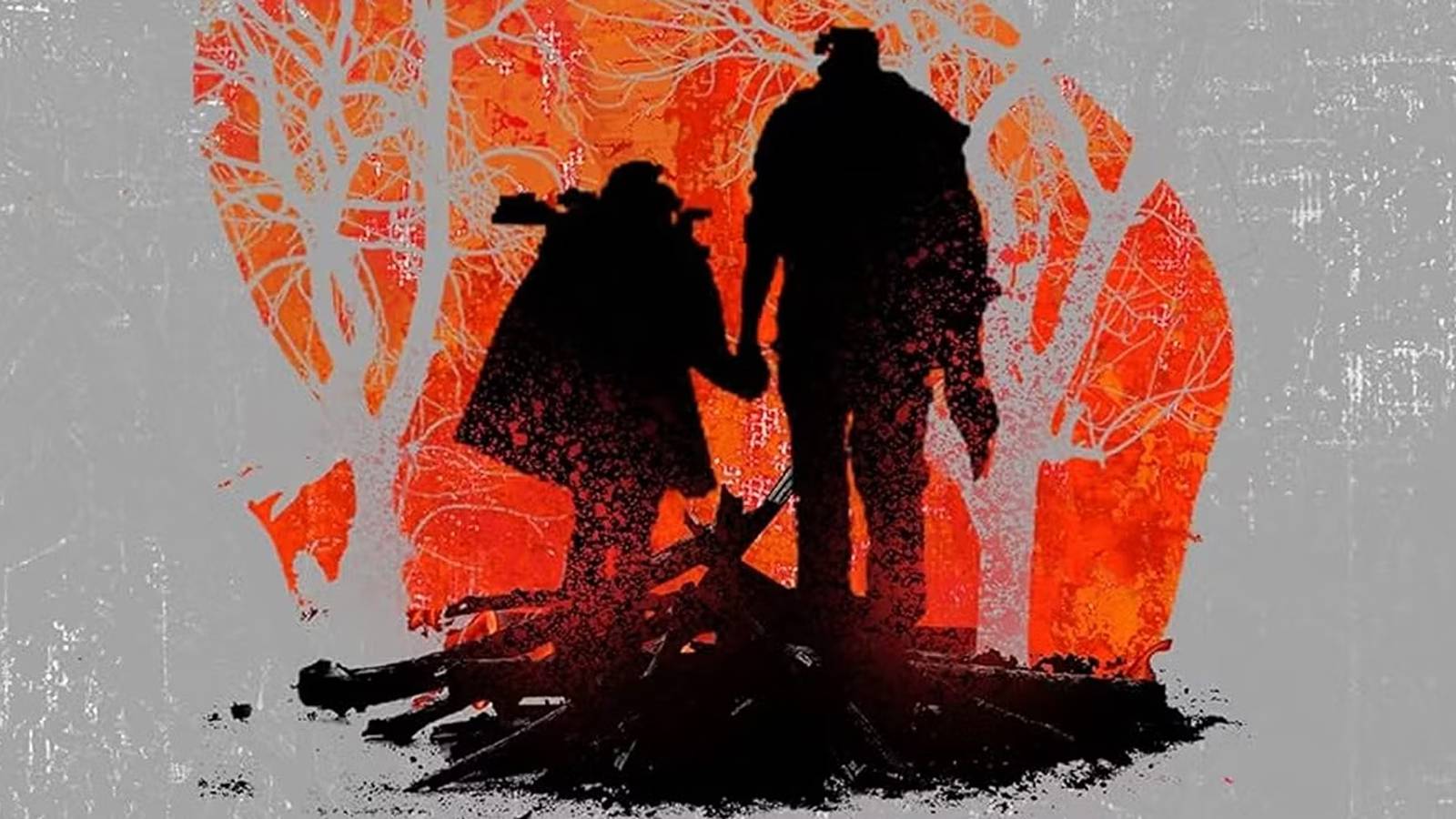
Original Source
Read the full article at Collider →KhanList aggregates and links to publicly available news content. We do not host full articles from third-party sources. Always verify important information with original sources.