
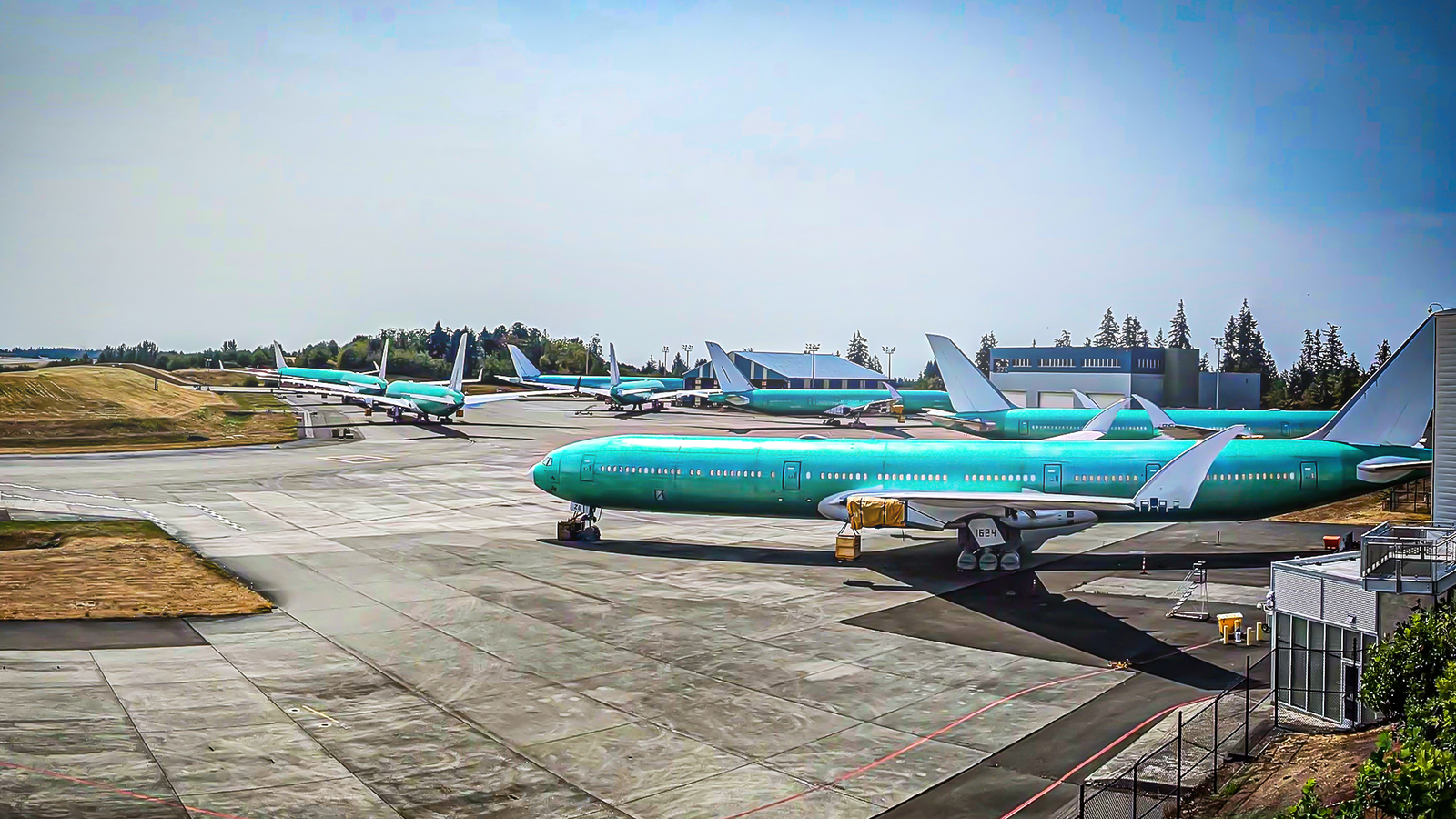
Published Nov 21, 2026, 5:16 AM EST A graduate in German, Jake has a passion for history and regional aviation, and enjoys sampling new carriers and aircraft. He has visited OEM facilities as far and wide as Bristol, Toulouse, and Seattle, and recently enjoyed the milestone of flying his 150th sector as a passenger. Based in Norfolk, UK. The Boeing 777X is finally beginning to look like a real aircraft rather than an endless certification project, with the 777-9 having been busy with its planned certification testing and Boeing still targeting first deliveries in 2027. By the summer of 2026, the test fleet had accumulated more than 4,800 flight hours across roughly 1,700 flights. All the while, regulators and Boeing continue working through the remaining Type Inspection Authorizations and the approvals needed for extended operations. However, the most interesting 777X story in 2026 is not the certification progress bar. It is the collection of more than 30 completed or substantially completed 777X airframes sitting at locations in Washington State, including Paine Field and Moses Lake. This is because the earliest production aircraft were built before the final production standard was established. Lufthansa, one of the program's launch customers, now wants Boeing to pay for accepting some of those airplanes, while Emirates has taken an even harder public line on the earliest examples. The Aircraft Are Finished, But Not Finished Enough Credit: Falcons Spotters | Shutterstock The unusual situation exists because Boeing has been building customer aircraft while simultaneously completing the certification and production work needed to bring the 777-9 into commercial service. That is not necessarily unusual for a program of this scale, but the 777X program has taken so long to reach certification. This means that the gap between the earliest completed airframes and the final production configuration has become particularly significant. The result is a group of large, expensive widebodies that look ready to an observer on the ground but cannot simply be handed to an airline and flown into commercial service. Reports indicate that more than 30 pre-standard 777-9 aircraft are parked while they await modifications needed to bring them closer to the configuration that Boeing ultimately intends to deliver. These aircraft are therefore not unwanted in the conventional sense, because airlines still want the 777-9 itself, but the earliest examples can carry a substantial financial and operational disadvantage. An airline taking one would effectively be accepting an aircraft that needs additional work before it becomes equivalent to a later production aircraft. That distinction explains why the headline about airlines refusing to fly the aircraft can be misleading. Lufthansa has not rejected the 777-9 program, and it still has 20 examples on order. Instead, the Star Alliance carrier's Chief Executive Officer Carsten Spohr has said the airline is discussing with Boeing which early-built aircraft it will accept and which it will not, with financial compensation required if Lufthansa takes aircraft that need to be modernized. Certification Is Moving, But Slowly Credit: Boeing Boeing's certification updates provide a much more encouraging picture than the parked aircraft might suggest. In July, the company said that the 777-9 had completed 50% of its planned certification testing, with more than 4,800 flight-test hours and roughly 1,700 flights accumulated by the test fleet. Orders (Per ch-aviation) Airline Boeing 777-8 Boeing 777-9 Total 1 Emirates 35 235 270 2 Qatar Airways - 90 90 3 Cathay Pacific - 35 35 4 British Airways - 24 24 5 Lufthansa - 20 20 Boeing also said that most Type Inspection Authorizations had been granted, leaving further approvals, including those associated with ETOPS demonstrations, among the important remaining steps. The Boeing 777-9 is now in the later stages of its certification campaign, with Boeing describing the program as focused on closing remaining regulatory requirements rather than discovering whether the aircraft fundamentally works. The Icing Tests Show How Detailed Certification Gets Credit: Falcons Spotters | Shutterstock In August, Boeing flew both the 777-9 and 737 MAX 10 through naturally occurring icing conditions. Rather than relying entirely on simulated environments, Boeing's teams searched for clouds containing supercooled water and deliberately positioned the aircraft where ice could accumulate on important aerodynamic surfaces. The 777-9 completed an 8.5-hour flight, while the 737 MAX 10 spent six hours in the relevant conditions. The testing was designed to examine how the airplanes handled with ice accumulating on the wings, horizontal stabilizers, vertical stabilizers, and other critical areas, with Boeing targeting roughly one to two inches of ice during parts of the campaign. Meteorologists monitored weather systems and helped crews locate suitable conditions, while onboard instrumentation measured the environment and the aircraft's response. Such testing illustrates why certification can take years even after an aircraft has already completed thousands of hours of development flying. For the Boeing 777-9, the result was encouraging, with test pilots reporting that the aircraft maintained its expected handling characteristics in the icing environment. The aircraft's handling remained consistent enough that the icing would have been difficult to notice without the flight-test instrumentation. That is good news for Boeing, but it does not remove the separate problem involving aircraft already built before the final production standard was established. Credit: Boeing Lufthansa is particularly important because it is set to be the 777-9's launch customer and has a direct interest in receiving aircraft as soon as possible without inheriting an avoidable modernization bill. Spohr has confirmed that the airline is in discussions with Boeing over which of the first-built 777-9s it will accept. He has also explicitly linked acceptance of aircraft requiring later modernization to financial compensation from Boeing. The airline's position closely resembles that of Emirates, which has publicly expressed reluctance to accept the earliest 777-9 examples because of the amount of work needed to bring them to final production standard. Spohr acknowledged that Lufthansa has been less public about the issue but said the situation is essentially the same. For airlines, the concern is not simply whether an early aircraft can eventually be made compliant, but whether taking it creates additional downtime, engineering work, maintenance complexity, and uncertainty compared with receiving a later-built aircraft. That is why Boeing's compensation discussions matter. If an airline accepts an early-production aircraft and Boeing covers the modernization costs, the aircraft can still become a useful part of the fleet. Without compensation, however, the airline would be absorbing the consequences of receiving an aircraft whose configuration reflects the long development process of the 777X program. Lufthansa's comments therefore suggest the parked aircraft are becoming as much a commercial negotiation as a manufacturing problem. The Parked Aircraft Are A Legacy Of The Delay Credit: BlueBarronPhoto | Shutterstock The 777X was supposed to enter service years ago, and that long delay has created an unusual production challenge. Boeing has continued developing the aircraft, conducting certification testing and preparing production airplanes while the regulatory process stretched far beyond the original schedule. As a result, Boeing completed some aircraft before it knew exactly what the final certified configuration would require. That creates a difficult choice for Boeing: leaving the aircraft parked preserves them while the company works through the necessary changes, but every month they remain on the ground adds storage, maintenance, and financing costs. Sending them to customers without the appropriate modifications would create an equally difficult problem, because airlines would have to schedule the additional work and potentially accept lower utilization from brand new aircraft. The reported fleet of more than 30 parked aircraft therefore represents both a liability and a sign of how far the program has progressed. Boeing would not have dozens of customer-bound 777Xs sitting around if it were still at the early design stage, but it also would not need extensive rework if the earliest production airplanes already matched the final standard. The aircraft are caught between those two realities, waiting for the certification and industrial processes to catch up with their physical completion. Airlines Still Want The Boeing 777-9 Credit: VanderWolf Images | Shutterstock Despite the controversy surrounding the first aircraft, little evidence suggests airlines have abandoned the 777-9 itself. More than 650 777X aircraft have been ordered between the three variants, making the program one of the industry's most important future widebody families. Lufthansa remains committed to its 20-aircraft order, while Emirates has an order for 235 777-9s plus 35 777-8s, showing that the industry's largest customers still see a role for the aircraft. The reason is straightforward: the 777-9 offers airlines a combination of size, range and efficiency that fits the upper end of the long-haul market, particularly as carriers replace older four-engine aircraft and earlier-generation 777s. Airlines therefore have a strong incentive to wait for the program rather than abandon it, even if they would prefer not to receive the earliest production examples. The commercial disagreement is about which aircraft should arrive first and who should pay to make them ready, not necessarily about whether the aircraft has a future. Lufthansa's own contingency planning shows how seriously airlines are treating the delivery schedule. Spohr has said the airline has prepared for both a scenario in which the 777-9 arrives as planned and one in which further delays require older aircraft to remain in service, including the possible reactivation of older A340-300s. For Boeing, then, the next challenge is not simply getting the 777-9 certified: it is turning a backlog of early-built aircraft into acceptable assets while delivering a production standard that airlines are prepared to put into everyday service.
The 30 Finished Boeing 777-9s Parked In Washington That No Airline Wants To Fly
Full Article
Original Source
Read the full article at Simpleflying →KhanList aggregates and links to publicly available news content. We do not host full articles from third-party sources. Always verify important information with original sources.