
Published Nov 21, 2026, 4:00 AM EST Daniel comes to Simple Flying with a business focused approach to the aviation world. Daniel enjoys analyzing strategy and how companies move against each other to gain a step ahead in the skies. Besides strategy, Daniel also has a passion for aircraft design and the history of aviation. Based in New York Lufthansa is set to be the launch customer for the upcoming Boeing 777-9. The problem, however, is that it was scheduled to enter service in 2020. The entry-into-service date for the 777-9 has been pushed back several times, and the aircraft has become one of the most delayed projects in commercial aviation history. What's more, the 777-9 is not a new aircraft; rather, it's an overhaul of an existing aircraft type (albeit an extremely thorough one). The 777-9's EIS is now set for 2027. In 2023, Lufthansa ordered the Airbus A350-1000. While the A350-1000 competes with the 777-9, Lufthansa will operate both in complementary roles. Strikingly, Lufthansa has already received its first A350-1000, with the first example having been delivered in November 2026. The German flag carrier ordered the A350-1000 a full ten years after it first placed its orders for the 777-9, yet its first A350-1000 has arrived a few months before the first 777-9 is set to be delivered, and this assumes that the current 2027 timeline will stick. Lufthansa's Orders For Large Widebodies Credit: Airbus Lufthansa first ordered the 777-9 in 2013, initially placing 34 orders for the aircraft. Interestingly, this was the first time the airline had ordered a passenger variant of the 777, and it will be the first to operate the type once it's ready. In 2019, Lufthansa converted 14 of its firm orders to options, leaving it with 20 firm orders and 24 options for the 777-9. In addition, Lufthansa Group also holds orders for seven 777-8Fs to be operated by Lufthansa Cargo, and it will be the first European operator of the aircraft. The group ordered ten A350-1000s in 2023, as part of a larger order that included five A350-900s and seven Boeing 787s. The A350-1000 order was later increased to 15 units, and they will mainly operate out of Munich. Lufthansa took its first A350-1000 in November 2026, and including subsequent A350-900 orders, the airline group has ordered 75 A350s in total, split between 60 A350-900s and 15 A350-1000s. While the A350-1000 will primarily be a Munich aircraft, the 777-9 is mainly intended to operate out of Frankfurt, and it will initially replace the airline's Boeing 747-400 fleet. While the configuration has not been officially revealed, the 747-400s that will be replaced by the 777-9s feature a relatively dense configuration with no first class cabin. As such, some of the airline's 777-9s may have only a three-class interior, while others may be delivered with a four-class layout and first class. Delivery Delays With The Boeing 777-9 Credit: Ian Dewar Photography | Shutterstock Despite being in development for nearly 14 years, the 777-9 is still not certified. The program has repeatedly encountered setbacks, and there have been multiple delays to the aircraft's certification. Boeing hoped to start delivering the 777-9 in 2020, but now anticipates that the aircraft will begin being delivered to customers in 2027. Lufthansa, meanwhile, has removed the 777-9 from internal planning for the 2027 summer schedule, meaning that it does not expect to have received a significant number of 777-9s, if any at all, before the season ends. The aircraft's certification was heavily impacted by the two fatal Boeing 737 MAX 8 crashes in 2018 and 2019, which led to a 20-month grounding of the 737 MAX worldwide. Boeing faced increased scrutiny from the FAA following the tragic crashes, including closer oversight of the 777-9 certification program. COVID stretched out the timeline again, and multiple engineering and design challenges have further delayed the aircraft's certification. The 777-9 features several new design elements that make it quite different from earlier 777 models. This includes a new carbon-composite wing, new engines, a fuselage stretch, a thoroughly updated cabin, and more. This means there are more variables with the 777-9 than with a project like the Airbus A320neo, where almost everything was identical to its predecessors apart from the engines. Most recently, the FAA shifted resources towards certifying the 737 MAX 7 and 737 MAX 10, which are now ready to fly. With the two new 737 variants approved to enter service when ready, the FAA can allocate more resources to the 777-9 program. In addition, General Electric is awaiting FAA approval on a new mid-seal design for the GE9X, while certification flights are still ongoing. Lufthansa's Broader Widebody Fleet Plans Credit: Omid Behzadpour | Shutterstock Unlike most customers for the aircraft, Lufthansa doesn't plan to use the 777-9 as its flagship aircraft. Instead, the 747-8 will remain in this role, with Lufthansa operating 17 examples out of its Frankfurt hub, all of which will receive new interiors. The 20 777-9s will slot underneath the 747-8s. In Frankfurt, Lufthansa is also operating the 787-9, which will serve as its smallest widebody to operate thinner routes, along with some A350-900s. Meanwhile, the airline will operate most A350-900s out of Munich, alongside the A350-1000 and the Airbus A380. The airline is currently flying just three Airbus A330-300s, which are set to be transferred to other airlines within Lufthansa Group by the end of the year. In addition, there are still six 747-400s flying and 11 A340-300s, which are meant to be fully retired by 2028 as the carrier takes more 777-9s and 787-9s. Furthermore, Lufthansa is operating eight A380s, which are receiving new business class seats that are different from the new Allegris interiors, and they should remain in service until the 2030s. Lufthansa Current Widebody Fleet (Planespotters.net) Number Airbus A330-300 3 Airbus A340-300 11 Airbus A350-900 31 Airbus A350-1000 1 Airbus A380-800 8 Boeing 747-400 6 Boeing 747-8 17 Boeing 787-9 20 Total 97 Looking ahead, Lufthansa's fleet will center on the A350-900 family and the 787-9, with the A350-900s mainly concentrated in Munich and the 787s based in Frankfurt. The 777-9s and 747-8s will remain Lufthansa's larger options for routes out of Frankfurt, while the equivalent for Munich will be the A350-1000 and A380-800. The A380s should be the next aircraft type to go in the 2030s, while the 747-8 is expected to remain in the fleet long-term. What To Expect From Lufthansa's 777-9 Credit: VanderWolf Images | Shutterstock While the seat count by cabin has yet to be revealed, the 777-9s will feature Lufthansa's Allegris interiors. The 777-9 was originally meant to launch the Allegris seats in 2020, but delays with the program led Lufthansa to introduce the seats on the A350-900 four years after their intended launch. For the most part, the Allegris cabins are the same for different aircraft from a customer experience standpoint (although different suppliers manufacture the seats for different aircraft). The new first class cabins feature one row with three suites across, while the suites themselves offer near-ceiling-height partitions and sliding doors, along with modernized technology and in-suite climate controls. Uniquely, the center suite is sized to accommodate two passengers traveling together as a couple, with two seats side by side, a larger monitor, and double-bed capability. In a sense, it's one suite that can accommodate two passengers, which is a very unusual proposition. The Allegris business class seats offer direct aisle access, alternating between a three-abreast and a four-abreast layout. The seats are in a staggered layout, with some being angled toward the aisle in a manner that closely resembles United Airlines' last-generation Polaris seats. Lufthansa offers five different types of seats in the Allegris business class cabin, which each offer progressively more space and privacy for a fee. In addition, Allegris includes new seats for premium economy and economy. The A350-1000 Versus The 777-9 Credit: Ian Dewar Photography | Shutterstock The A350-1000 and 777-9 are competitors in the sense that they're the largest aircraft sold by Airbus and Boeing. But while airlines do compare them, they have significant differences, the most obvious being size. The 777-9 is much larger than the A350-1000 or the 777-300ER, and it can carry nearly as many passengers as the 747-400. The A350-1000 has lower trip costs and greater range, but the 777-9 has lower seat-mile costs and greater cargo volume. Because these aircraft are quite compelling in different ways, several airlines have elected to buy both rather than choose. The A350-1000 can serve as a large ultra-long-range aircraft, while the 777-9 is typically bought for its floor space to serve as a flagship aircraft. Lufthansa has installed a first class cabin on its A350-1000s, but it's actually the exception, and Lufthansa has one of the largest first class fleets in the world. The carrier's new A350-1000s can carry 300 passengers, and while the layout for the 777-9 has not been revealed, it's believed these planes will likely seat over 350 passengers. In addition, the airline plans to base the two at different hubs. Overall, they serve different purposes for Lufthansa and multiple other airlines. Reportedly, the airline is looking to place a new order for large widebodies, pitting the A350-1000 against the 777-9, but a split order is most likely given their complementary roles.
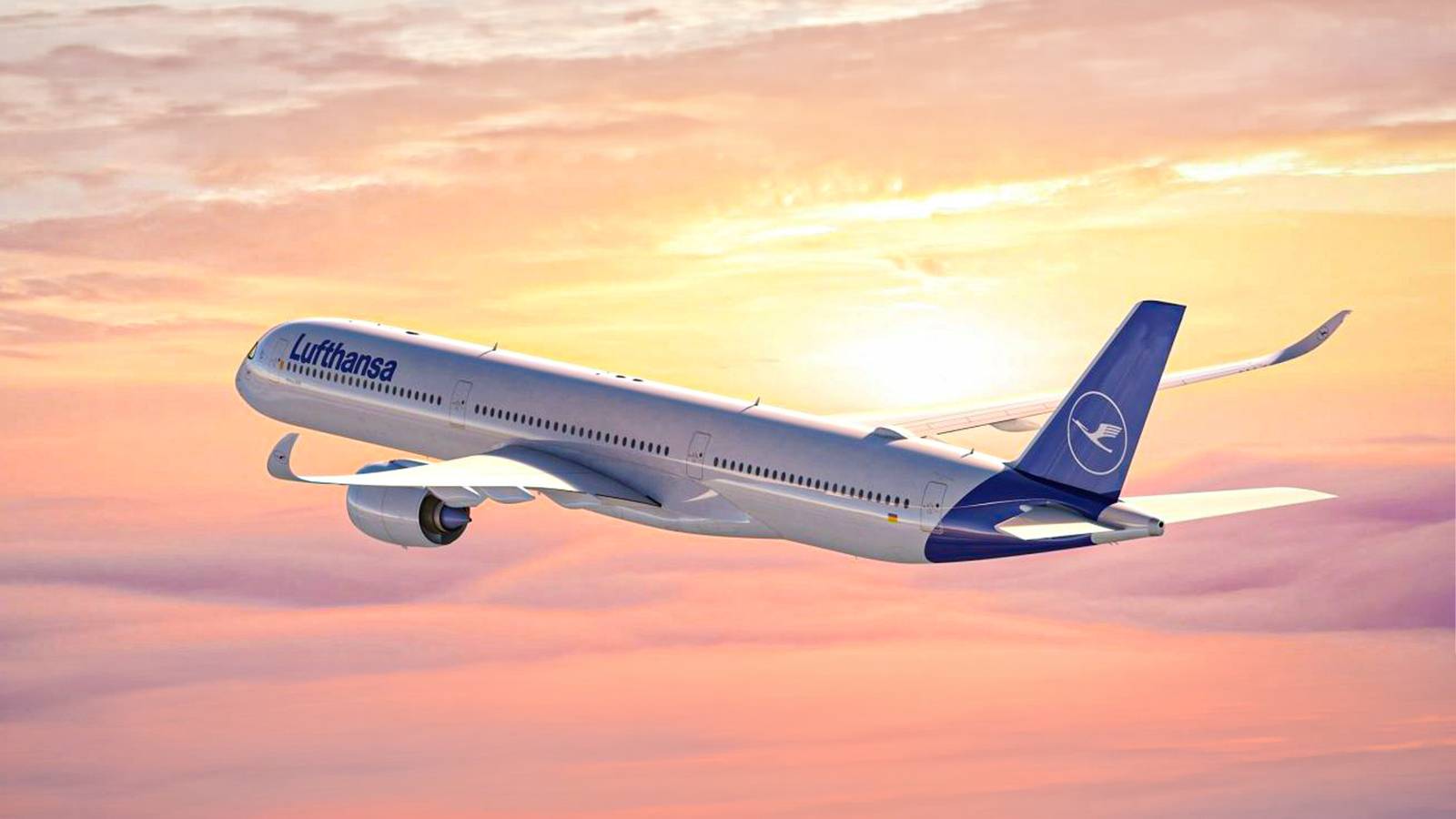
Lufthansa Ordered The Airbus A350-1000 In 2023 & Got It Before The Boeing 777-9 It Ordered In 2013
Full Article
Original Source
Read the full article at Simpleflying →KhanList aggregates and links to publicly available news content. We do not host full articles from third-party sources. Always verify important information with original sources.