
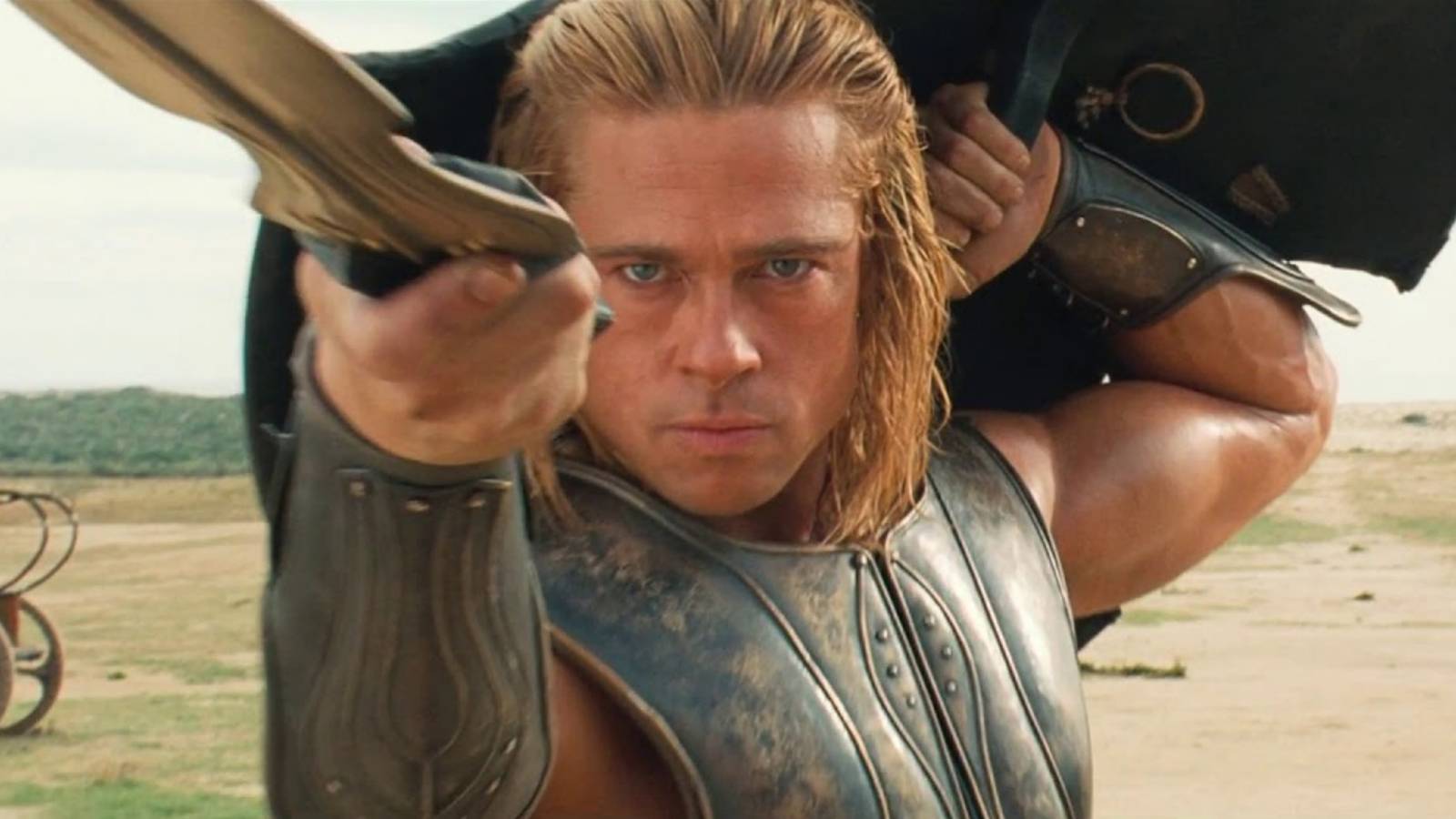
Image via Warner Bros Published Nov 28, 2026, 11:40 PM EST Michael Block is a 14 time GLAM Award nominated writer, producer, and host of the podcast Block Talk. Throughout his time in the entertainment industry, he has worked on and off Broadway as a stage manager, written several produced plays, critiqued hundreds of theatrical performances, drag and cabaret shows, and has produced events randing from drag competitoons to variety concerts! On Block Talk, he interviews nightlife personalities, covers the wide world of entertainment through features, ranking episodes, and recaps ALL of Drag Race, as well as Dragula and Survivor. He has interviewed hundreds of RuGirls that span the globe at DragCon NYC, DragCon LA, and DragCon UK. In his free time, he makes one-of-a-kind jewelry and gift baskets with his mom. He is a proud member of the LGBTQ+ community. Sign in to your Collider account The thrill of cinema is experiencing a story on the big screen that feels grander than our own world. While some stories can be more intimate, others are, well, epic. The genre features a wide-sweeping narrative that pairs large-scale spectacle with major themes or a central hero's journey. These films can range from historical or mythological settings to sci-fi, fantasy, and westerns that capture that same monumental feeling. Hollywood has produced some epic epics, but they’ve also been responsible for some absolute flops. From takes on infamous Greek heroes to journeys through profound lands, these movies were well-intended but failed miserably. They may feature extraordinary production elements, but their execution is horrid. These are the worst of the worst. How many of these films did you suffer through? 10 'The Mission' (1986) Image via Columbia-Cannon-Warner Distributors Yes, it’s true The Mission earned an Oscar for Best Cinematography alongside seven nominations. But it may have been due to prestige rather than quality. Directed by Roland Joffé, the 1750s South America-set story follows Jesuit priest Father Gabriel (Jeremy Irons) and repentant former slave trader Rodrigo Mendoza (Robert De Niro) as they build a jungle sanctuary for the indigenous Guaraní people. When a colonial treaty transfers the territory to pro-slavery Portugal and the Vatican orders the settlement closed, the two men divide over whether to defend the tribe through peaceful resistance or armed rebellion. The sweeping story struggles to build a coherent narrative or make viewers emotionally invested, despite the prestigious performers in the film. One thing we learn about epic films is that they often take artistic liberties and historical inaccuracies in exchange for a Hollywood cash grab. The Mission compresses and misplaces historical events and decrees, framing the Jesuit reductions and colonial dynamics in ways that historians debate. Once the political conflict escalates, the film's characters feel stagnant and one-dimensional. Father Gabriel's unwavering pacifism becomes excruciatingly frustrating rather than compelling. The Mission suffers from slow pacing before the central conflict takes hold. While the visual scope and Ennio Morricone's score are positives for the film, it’s simply just not as strong as it was viewed back when it was released. 9 'Exodus: Gods and Kings' (2014) Image via 20th Century Studios Ridley Scott has done extraordinary work in his career. Exodus: Gods and Kings is not one of them. Raised as an Egyptian prince alongside his adoptive brother, Moses (Christian Bale) is exiled into the desert after his true Hebrew heritage is uncovered. Following a divine encounter, he returns to confront Pharaoh Ramses II (Joel Edgerton) and lead 600,000 enslaved Hebrews out of Egypt through devastating plagues and the parting of the Red Sea. A story of biblical proportions, Exodus: Gods and Kings is best remembered for its tonal whiplash, casting controversies, and flat pacing despite its wide-scale visual scope that pulled the wool over audiences' eyes. Written by multiple screenwriters, the script shifts awkwardly between a grounded "realistic" retelling, traditional biblical drama, and political action. With wooden dialogue and the shocking omission of iconic moments like "Let my people go,” the 150-minute runtime is grueling. The film faced heavy backlash for casting predominantly white actors in lead Egyptian and Hebrew roles; the whitewashing caused a massive stir. Depicting God as a young British boy was a jarring decision that was anything but awe-inspiring. If you’re looking for a strictly retelling of the Bible, you won’t find it here. Departures from traditional biblical timelines, character arcs, and key events alienated viewers looking for a faithful adaptation. 8 'Caligula' (1979) Image via Analysis Film Releasing Corporation It’s not that we need big-screen adaptations of every divisive historical figure; it’s more about that we can. In 1979, the world was introduced to Caligula. The film chronicles the rise and fall of the infamous Roman Emperor Gaius Germanicus (Malcolm McDowell), who seizes the throne after the murder of his adoptive grandfather, Tiberius (Peter O’Toole). Consumed by megalomania and grief following the death of his beloved sister Drusilla (Teresa Ann Savoy), he proclaims himself a living god and plunges Rome into a brutal four-year reign of debauchery, humiliation, and torture before being assassinated in a palace coup. Caligula earns the distinction of a terrible epic because it clashed two incompatible projects: a serious Roman historical drama and separately shot hardcore pornography. Disowned by its creators, Penthouse founder Bob Guccione financed the film and inserted separately shot hardcore pornographic scenes after principal photography. Many actors did not know these inserts would be added. Screenwriter Gore Vidal and director Brass both disassociated themselves from the theatrical release after creative clashes and re-editing, with Brass even locked out of the editing room. The sheer fact that serious performances from McDowell, O'Toole, John Gielgud, and Helen Mirren sit awkwardly beside explicit sex and extreme violence is more than just a shock; it’s a travesty. It’s essentially a 5-hour historical epic with high-budget pornography. Needless to say, it’s a disjointed mess. 7 'Australia' (2008) Image via Hulu If there’s one thing Baz Luhrmann loves, it’s making epics. But not one he makes is great. Such is the case for Australia. Set on the brink of World War II, the film follows an English aristocrat, Lady Sarah Ashley (Nicole Kidman), who travels to northern Australia and inherits a struggling cattle station after her husband's murder. To save the ranch from a rival cattle baron's takeover, she joins forces with a rugged local stockman (Hugh Jackman) to drive her herd across the unforgiving outback while protecting a young mixed-race Aboriginal boy, Nullah (Brandon Walters), from forced government separation policies and surviving the Japanese bombing of Darwin. The concept of bringing the beautiful country to life was more than just a passion project, but its bloated narrative, tonal whiplash, and uneven execution simply brought down its homegrown star power and stunning visuals. Luhrmann tries to do far too much in Australia. The film often feels drawn out and episodic, shifting awkwardly across storylines and time jumps until it feels like multiple films stitched together in a patchwork. Luhrmann mixes broad camp, cheesy humor, and classic Hollywood clichés with heavy historical tragedies like the Stolen Generations and the bombing of Darwin, making the sudden juxtaposition from silly to somber feel jarring. With a sweeping Outback shooting location, Australia works better as a tourist advert than a Hollywood blockbuster. And yet, when green screens are used, Luhrmann tends to forget to hide it. Jackman provides a robust performance, but Kidman is out of her depth. The film tried to pull a fast one by splitting it into a six-part miniseries called Faraway Downs. Did it change anything? Not a chance! The melodrama prevailed. 6 'Waterworld' (1995) It’s a fun film, but overall, Waterworld is a big yikes. In the post-apocalyptic action film directed by Kevin Reynolds, set in a post-apocalyptic future where melted polar ice caps have completely submerged Earth beneath an endless ocean, a mutated, gilled drifter known as the Mariner (Kevin Costner) reluctantly helps a woman named Helen (Jeanne Tripplehorn) and a young girl named Enola (Tina Majorino) escape ruthless sea pirates led by Deacon (Dennis Hopper). Because Enola carries a mysterious map tattooed on her back that leads to the mythical "Dryland," the trio must outrun Deacon and his violent gang of Smokers across the open sea. A notorious epic flop, Waterworld was cursed through its ballooning budget, chaotic open-ocean filming, constant script rewrites, and a cold, unlikable lead character. As one of the era's most expensive films, it was plagued by ocean hazards during filming. Shooting on open water off Hawaii meant drifting camera boats, rough weather, and equipment damage. A massive floating atoll set sank during a storm and had to be rebuilt, pushing the shoot to 166 days. Director Reynolds clashed with Costner, who also served as a producer, and left during post-production. It’s fitting that Costner’s on-screen character was as icky as his off-screen actions. Several cast and stunt crew members also faced dangerous accidents on set. Multiple writers worked on the screenplay, and rewrites continued during production, turning the narrative into a messy patchwork. With logic out the window and scientific stretches in its flooded-world premise, Waterworld felt like a repetitive story better suited to a theme park. And guess what! At least the film gave way to the super fun Universal Studios water show. 5 'Troy' (2004) Image via Warner Bros. There is most certainly an entire generation who watched Troy and thoroughly believed it was a true story. But that’s, ok, Brad Pitt looked like a stud, so certainly it had to be real! Directed by Wolfgang Petersen and written by David Benioff, Troy tells the story of Trojan prince Paris (Orlando Bloom) seducing Queen Helen of Sparta (Diane Kruger) and bringing her back to Troy, giving King Agamemnon (Brian Cox) a pretext to unite the Greek armies and launch a massive invasion of the walled city. Loosely adapted from Homer's Iliad, the story follows the legendary warrior Achilles (Pitt) as he clashes with Agamemnon and battles Troy's noble defender, Prince Hector (Eric Bana), in a brutal war driven by pride, love, and the pursuit of eternal glory. With a cast perfectly suited to an epic, the big-budget action spectacle drew heavy criticism from history buffs for changing fates simply to serve a Hollywood blockbuster. The biggest blasphemous decision was cutting out the gods. Troy grounds the story in realism and treats the Greek gods mostly as background superstition rather than active characters who intervene in battles, which is why many may have believed it was real. The movie shrinks a 10-year war down to a matter of weeks or days and rewrites character arcs and deaths, such as killing off Menelaus (Brendan Gleeson) and Agamemnon differently than the myths. While it is an absolutely spectacular-looking film, the period mismatches are glaring. Iron weapons and coins appear where they don't belong in the Bronze Age setting. With flat emotional weight making way for big action sequences, many of the battles didn’t feel the stakes of which they were based upon. But at least they added a romantic subplot with Briseis (Rose Byrne) because Pitt is a leading man, after all! It’s a fun, guiltless film if you simply don’t mind the liberties taken. 4 'Alexander' (2004) Image via Warner Bros. Pictures Another example of history being botched, I give you Oliver Stone’s epic biographical history drama Alexander. The film chronicles the life and military campaigns of Alexander the Great (Colin Farrell), from his youth in Macedonia to his conquest of the Persian Empire and expansion into India. Framed through the aging recollections of his general Ptolemy (Anthony Hopkins), the film explores Alexander's complex relationships with his parents, King Philip II of Macedon (Val Kilmer) and Queen Olympias (Angelina Jolie), his lifelong bond with Hephaestion (Jared Leto), and the personal toll of his relentless ambition. With fragmented yet bloated storytelling, jarring performances from its all-star ensemble, and heavy-handed narration, it turns a massive conquest into a slog. At nearly three hours, it packs in too much biographical ground without building steady dramatic tension, leaving massive stretches feeling sluggish and disjointed. Jumping back and forth in time while leaning on Hopkins’s Ptolemy for constant voice-over explanations isn’t a necessary narrative device, but it's the unfortunate reality of too much content being chopped in. Now, if accents are a point of contention, steer clear of this one. They’re all over the map. Literally. The mix of regional accents completely pulls you out of reality. Even with heavy emotional speeches, Alexander feels like a period soap opera that undercuts the scope of the battles and political stakes. While some recuts have tried to fix its flaws, it’s still a messy, mediocre movie at best. The fact that Troy and Alexander came out in the same calendar year is hard to miss. No wonder Greek and Roman epics had a major pause after these flops! Justice for the sword-and-sandal epics! 3 'Ben-Hur' (2016) Image via Paramount Pictures In a genuine example of not everything needs to be remade, please welcome the 2016 iteration of Ben-Hur. Directed by Timur Bekmambetov, the fifth adaptation of the book follows Judah Ben-Hur (Jack Huston), a wealthy Jewish prince in Roman-occupied Jerusalem who is falsely accused of treason and condemned to years of brutal galley slavery by his adoptive Roman brother, Messala (Toby Kebbell). After surviving a shipwreck and training as a charioteer under Sheik Ilderim (Morgan Freeman), Judah returns to Jerusalem to exact vengeance on Messala in a high-stakes chariot race, only for his encounters with Jesus Christ (Rodrigo Santoro) to guide him toward forgiveness and redemption. Despite its massive budget, Ben-Hur was a stale, flat film that lost the grand scale and emotional punch that made the 1959 film a classic. Despite the price tag, Ben-Hur was a waste for all involved. What should have appeared as a big-budget cinematic wonder felt closer to a fine-looking made-for-TV film. The cinematography and staging lacked the grandeur that the story requires. Living in the shadows of its predecessors, Ben-Hur was scaled down, even in its ambition. Between the choppy editing, handheld camera work, and heavy CGI, the film made big moments like the chariot race feel artificial rather than thrilling. Cutting the runtime down to around two hours left less room to build tension between Judah Ben-Hur and Messala or give secondary characters room to breathe. It’s a by-the-numbers revenge story that ultimately toned down the religious elements by treating Jesus more as a moral teacher than a divine figure. It weakened the emotional payoff of the faith-and-forgiveness arc. Ben-Hur gave filmmakers pause at trying to undo the power of the classics. 2 'The Conqueror' (1956) Image Via RKO Radio Pictures John Wayne will forever be known for making Westerns one of the greatest genres of all time. So when he steered away temporarily, it became an epic misstep. Directed by Dick Powell, The Conqueror is a literal mess. In the 12th century, Mongol chieftain Temujin (Wayne) abducts the defiant Tartar princess Bortai (Susan Hayward), sparking a brutal conflict with her father's rival tribe. While trying to win Bortai's love and survive political betrayal from a scheming shaman and uneasy allies, Temujin unites the Mongol clans to claim his destiny as Genghis Khan. An absolute disaster of a movie, The Conqueror’s jarring miscasting, stiff, melodramatic dialogue, and a notoriously troubled production made it a tragedy in itself. COLLIDERInteractive Ballot sealed Movies/Academy Awards/Best Picture Collider · Best Picture Which Oscar Best PictureIs Your Perfect Movie? Five winners · ten questions · one envelope Five Oscar Best Picture winners. Five completely different visions of what cinema can be and what it can do to you. One of them is the film made for the way your mind works, and ten questions will work out which. The nominees 2020Parasite 2023Everything Everywhere All at Once 2024Oppenheimer 2015Birdman 2008No Country for Old Men Open the envelope Question 01 of 10TONE 01 What kind of film experience are you really after? The best movies do not just entertain. They leave something behind. ASomething that pulls the rug out, that makes me think I am watching one kind of film and then reveals I am watching another entirely. BSomething overwhelming: funny, sad, absurd and genuinely moving, all at once. CSomething grand and weighty, a film that makes me feel the full scale of what I am watching. DSomething formally daring, a film that pushes what cinema can even do. ESomething lean and relentless, pure tension with no wasted frame. ← Back Keys 1 to 5 or A to E · Enter to advance Next Question 02 of 10THEME 02 Which idea grabs you most in a film? Great films are driven by a central obsession. What is yours? AClass, inequality, and what people are willing to do when desperation meets opportunity. BIdentity, family, and the chaos of holding your life together while everything falls apart. CGenius, moral responsibility, and the catastrophic weight of a decision you can never take back. DEgo, legacy, and the terror of becoming irrelevant while you are still alive to watch it happen. EEvil, chance, and whether moral order exists at all or we just tell ourselves it does. ← Back Keys 1 to 5 or A to E · Enter to advance Next Question 03 of 10STRUCTURE 03 How do you like your story told? Form is content. The way a story is shaped changes what it means. AGenre-twisting. I want it to start in one lane and migrate into something completely different. BMaximalist and genre-blending: comedy, action, drama and sci-fi in one ride. CEpic and non-linear, cutting between timelines to build a mosaic of cause and consequence. DA single unbroken flow. I want to feel like I am living it in real time with no cuts to safety. ESpare and precise, every scene doing exactly what it needs to do and nothing more. ← Back Keys 1 to 5 or A to E · Enter to advance Next Question 04 of 10VILLAIN 04 What makes a truly great antagonist? The opposition defines the protagonist. What kind of opposition fascinates you? AA system: invisible, structural, and almost impossible to fight because it has no single face. BThe self, and the ways we sabotage, abandon and fail the people we love most. CHistory, and the unstoppable momentum of events no single person can stop or redirect. DThe industry, the machinery of culture that chews up talent and spits out irrelevance. EPure, implacable evil, a force so certain of itself it becomes almost philosophical. ← Back Keys 1 to 5 or A to E · Enter to advance Next Question 05 of 10ENDING 05 What do you want from a film's ending? The final note is the one that lingers. What do you want it to sound like? AShock and inevitability, a conclusion that recontextualizes everything before it. BEarned emotion. I want to cry, laugh and feel hopeful, even if the world is a mess. CDevastation and grandeur, an ending that leaves me sitting in silence for a few minutes. DAmbiguity, something open enough that I am still turning it over days later. EBleakness, an honest refusal to pretend the world is tidier than it is. ← Back Keys 1 to 5 or A to E · Enter to advance Next Question 06 of 10WORLD 06 Which setting pulls you in most? Where a film takes place shapes everything: mood, stakes, what is even possible. AA gleaming modern city with a hidden underside, beauty masking rot and wealth masking desperation. BA collapsing suburban life that opens onto something infinite, the multiverse inside one ordinary person. CThe corridors of power and science at a world-historical turning point, where decisions echo for decades. DThe grimy, alive chaos of New York and Hollywood, fame as both destination and trap. EVast, indifferent landscape, desert and highway where violence arrives without warning or reason. ← Back Keys 1 to 5 or A to E · Enter to advance Next Question 07 of 10CRAFT 07 What cinematic craft impresses you most? Every great film has a signature, the element that makes it unmistakable. AProduction design and mise-en-scène, every frame composed to carry meaning beneath the surface. BEditing and tonal control, the ability to move between registers without losing the audience. CScore and sound design, music that becomes inseparable from the dread and awe of what you see. DCinematography as performance, the camera not recording events but taking part in them. ESilence and restraint, what is left unsaid doing more work than any dialogue could. ← Back Keys 1 to 5 or A to E · Enter to advance Next Question 08 of 10PROTAGONIST 08 What kind of main character do you root for? The protagonist is the lens. Who you follow says something about you. ASomeone smart and resourceful who makes increasingly dangerous decisions under pressure. BSomeone overwhelmed and ordinary who turns out to be capable of something extraordinary. CA brilliant, tortured figure whose gifts and flaws cannot be separated from each other. DA self-destructive artist whose ego is both their superpower and their undoing. EA quiet, principled person trying to make sense of a world that has stopped making sense. ← Back Keys 1 to 5 or A to E · Enter to advance Next Question 09 of 10PACE 09 How do you feel about a film that takes its time? Pace is a choice. Some films sprint. Others let tension accumulate slowly, deliberately. AI love a slow build when the payoff is going to be seismic. Patience for a devastating reveal. BGive me relentless momentum. I want to feel breathless and emotionally spent by the end. CEpic runtime does not scare me. If the material demands three hours, give me three hours. DI want it propulsive even when nothing is technically happening, restless energy throughout. EDeliberate and unhurried. I want dread to accumulate in the spaces between the action. ← Back Keys 1 to 5 or A to E · Enter to advance Next Question 10 of 10AFTERMATH 10 What do you want to feel walking out of the cinema? The best films leave a mark. What kind of mark do you want? AUnsettled, like I have just seen something I cannot fully explain and cannot stop thinking about. BMoved and energized, like the film reminded me what matters and gave me something to hold onto. CHumbled, like I have been in the presence of something important and overwhelming. DExhilarated, like I have just watched cinema do something it has never quite done before. EHaunted, like a cold, quiet dread that stays with me for days. ← Back Keys 1 to 5 or A to E · Enter to advance Reveal my film The envelope, pleaseAnd the Oscar goes to ★ Best Picture, 2020 Parasite Bong Joon-ho, 2019 A film that hides its true intentions until the moment it is ready to reveal them. You are drawn to films that operate on several levels at once, that begin in one genre and quietly, brilliantly migrate into another. Bong Joon-ho's Parasite is a film about class, desire and the architecture of inequality that manages to be darkly funny, deeply suspenseful and genuinely shocking across a single extraordinary running time. Your instinct is for cinema that rewards close attention and punishes assumptions, right up to its devastating final image. From the Collider file The first film not in the English language to win Best Picture, in the Academy's 92-year history to that point. It took four Oscars in one night: Picture, Director, Original Screenplay and International Feature. It won the Palme d'Or at Cannes in 2019 by a unanimous jury vote, the first Korean film to do so. The Park family's modernist house was not a location. It was built from scratch on an outdoor lot. Reads between the lines Loves a reveal Attention to detail ★ Best Picture, 2023 Everything Everywhere All at Once Daniel Kwan and Daniel Scheinert, 2022 A film that refuses to choose between being entertaining and being meaningful. You want it all, and this one gives you all of it. The Daniels' Everything Everywhere All at Once is among the most maximalist films ever made: action comedy, multiverse science fiction, family drama, existential crisis, and an emotional core that sneaks up on you in the middle of the chaos. You respond to ambition. Being overwhelmed is the design, not the side effect, because the feeling of being crushed by infinite possibility is exactly what the film is about. From the Collider file Seven Oscars, including three acting wins for Michelle Yeoh, Ke Huy Quan and Jamie Lee Curtis. Michelle Yeoh became the first Asian woman to win Best Actress. The visual effects were handled by a team of fewer than ten people, most of them self-taught. Ke Huy Quan had all but left acting for two decades before this role brought him back. Wants everything Big swings Soft center ★ Best Picture, 2024 Oppenheimer Christopher Nolan, 2023 A film about the gap between what we can do and what we should do. You are drawn to cinema on a grand scale, films that treat history not as a backdrop but as a force, then place their characters inside that force and watch what happens. Christopher Nolan's Oppenheimer sits inside one of the most consequential moments in human history and refuses to look away from it. You want your films to feel important without being self-important, earning their ambition through craft and the gravity of the subject. This one is enormous, complicated, and offers no easy comfort. From the Collider file Seven Oscars, including Nolan's first wins for directing and for Best Picture. Cillian Murphy and Robert Downey Jr. both took their first Academy Awards for it. Kodak engineered a black-and-white 65mm stock that did not previously exist so Nolan could shoot those sequences on IMAX. A three-hour, R-rated drama about theoretical physics that passed 950 million dollars worldwide. Thinks in decades Scale and weight No easy comfort ★ Best Picture, 2015 Birdman Alejandro G. Iñárritu, 2014 A film doing something that probably should not be possible. You are drawn to films that foreground their own construction, where the how of the filmmaking becomes part of the what it is about. Alejandro G. Iñárritu's Birdman, stitched to appear as one continuous take, is cinema examining itself through the cracked mirror of a fading actor's ego. You respond to formal daring. Michael Keaton's performance and Emmanuel Lubezki's restless camera make something unlike anything else: a film about creativity, relevance, self-destruction and never quite knowing whether your work means anything at all. From the Collider file Four Oscars, among them Best Picture and Best Director for Iñárritu. Emmanuel Lubezki's win here was the middle of three consecutive cinematography Oscars, after Gravity and before The Revenant. Antonio Sánchez's improvised drum score was ruled ineligible for the score category, which caused a minor uproar. The long-take illusion was built from a handful of extended shots joined by hidden cuts. Formally daring Camera as character Ego and art ★ Best Picture, 2008 No Country for Old Men Joel and Ethan Coen, 2007 A film that treats dread as a form of meaning. You are drawn to cinema that trusts silence, refuses to explain itself, and lets unease do the talking. The Coen Brothers' No Country for Old Men is about the arrival of a new kind of evil: implacable, arbitrary, and indifferent to the moral frameworks we use to make sense of things. It is one of the most tightly controlled films ever made, and that control is the source of the terror. You want your films to haunt you rather than comfort you, and you have no interest in a resolution that would be a lie. From the Collider file Four Oscars: Picture, Director, Adapted Screenplay, and Supporting Actor for Javier Bardem. Adapted from Cormac McCarthy's 2005 novel, with much of his dialogue carried over intact. Carter Burwell's score runs about sixteen minutes and is nearly inaudible by design. Roger Deakins was nominated twice that year, for this and The Assassination of Jesse James, and won for neither. Trusts silence Dread over answers No tidy endings Ballot tally · your top three 1 2 3 ↻ Retake the quiz Copied to your clipboard Ballot counted byCOLLIDERCollider.com · The Awards Desk Where to begin? Casting Wayne, an icon of the American West, as the 12th-century Mongol leader was a massive mismatch, to put it mildly. He kept his familiar swagger and delivery, resulting in lines like "I feel this Tartar woman is for me" that instantly became unintentionally funny. From there, the film leaned heavily into cultural insensitivity, using offensive stereotypes and heavy makeup to depict Mongol and Tartar characters. The film wasn’t meant to be camp. If you want camp, go listen to the Eurovision Song Contest’s West Germany 1979 entry, Dschinghis Khan’s song “Dschinghis Khan,” where they at least owned how campy and inappropriate their attire was. Beyond the weak romantic narrative and clunky dialogue, the production was an utter nightmare. Over time, its reputation has also been shaped by serious health controversies tied to its Utah filming location. Filming took place near St. George, Utah, amid extreme heat, flash floods, and animal mishaps. The red-rock desert scenery also looked little like the Mongolian steppe. The location sat downwind of the Nevada Test Site, where atmospheric nuclear tests took place in 1953. Later, a widely cited tally reported that 91 of 220 cast and crew members developed cancer over the years and 46 died—including Wayne, Hayward, Powell, Agnes Moorehead, and Pedro Armendáriz. While researchers and health experts have debated how much radiation exposure contributed compared with baseline cancer rates and heavy smoking in that era, the tragedy hangs heavily over the film's legacy. 1 'The Last Airbender' (2010) Image via Paramount Pictures The conceit of bringing a beloved Nickelodeon animated series to the big screen as a love-action epic was a novel idea. Unfortunately, M. Night Shyamalan botched it. The film follows Aang (Noah Ringer), a young boy who awakens after a century frozen in ice to discover he is the Avatar, the only person capable of mastering the elements of air, water, earth, and fire. Alongside his new Water Tribe friends Katara (Nicola Peltz) and Sokka (Jackson Rathbone), Aang embarks on a perilous journey to the Northern Water Tribe to learn waterbending and stop the warmongering Fire Nation from conquering the world. The Last Airbender became a notoriously terrible fantasy epic by stripping away the original show's humor and warmth and breaking its own magic rules. Shoving an entire season into a single film was its ultimate downfall. So many crucial plot points were rushed, and it lost many important emotional arcs. Rather than letting scenes unfold naturally, the script relies heavily on clunky dialogue and voiceover exposition. The playful, adventurous spirit of the animated series is replaced by a somber, stiff tone and monotone performances. The film was poorly cast, which contributed to its whitewashing. Casting white actors as the main heroes while casting South Asian and Middle Eastern actors in villainous Fire Nation roles was a horrid decision that tarnished the film. Core names and terms like "Aang," "Sokka," and "Iroh" are pronounced differently than in the original series, which immediately jarred longtime viewers. But the biggest travesty was the broken bending. Then, with abysmal combat choreography, the source material was rendered totally sanitized. The film lacked punch and urgency, and it needed a Netflix series to make fans forget this epic flop.
The 10 Most Unwatchable Epic Movies, Ranked
Full Article
Original Source
Read the full article at Collider →KhanList aggregates and links to publicly available news content. We do not host full articles from third-party sources. Always verify important information with original sources.