
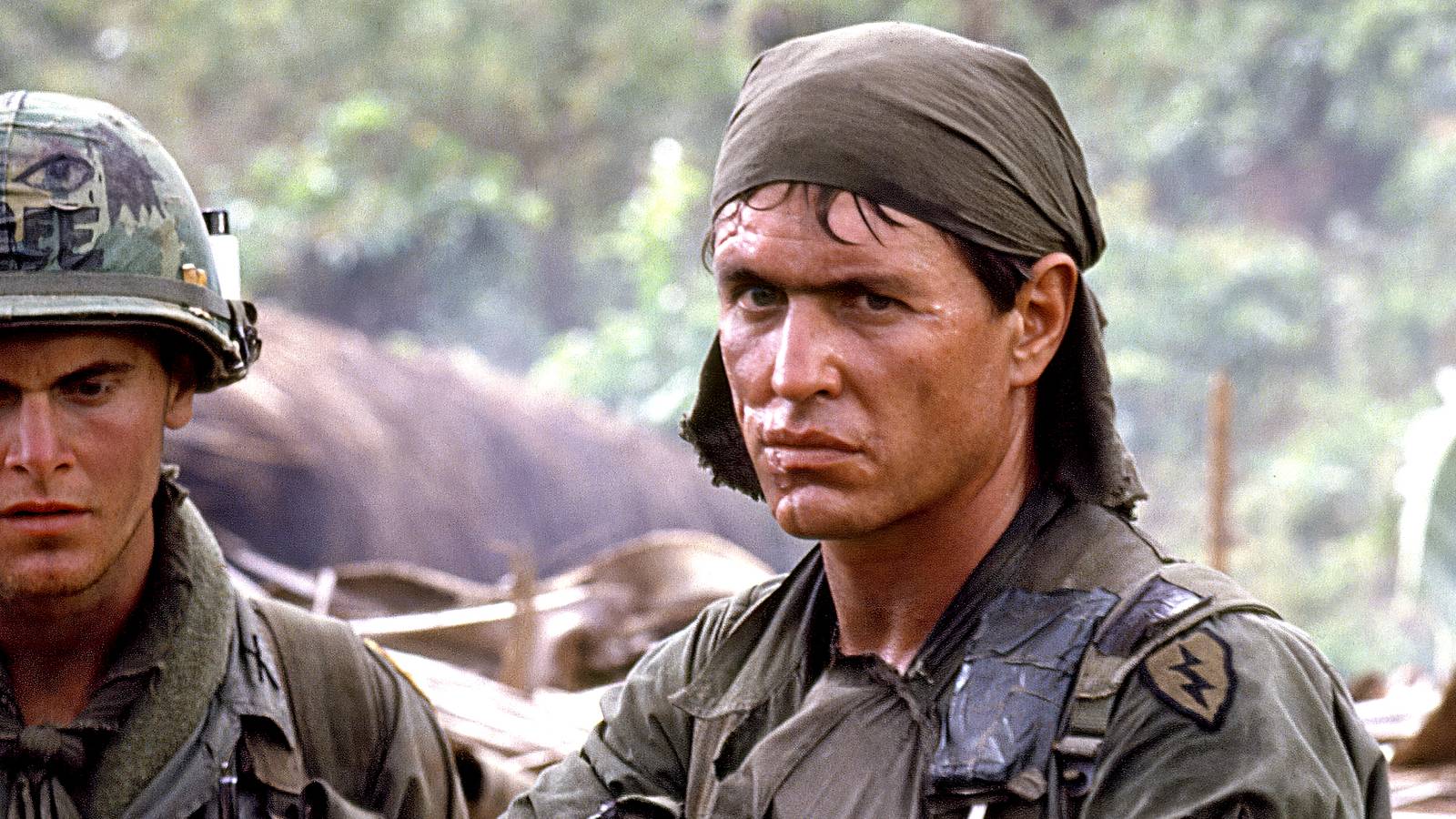
Published Nov 29, 2026, 12:29 AM EST Returning to your Prime Video streaming menus on December 1 is one of the most celebrated war movies of all time – Oliver Stone’s 1986 movie Platoon. Charlie Sheen's cinematic breakthrough, this tale of a young soldier sent to Vietnam in the late 1960s moved audiences with its grit, memorable scenes, and unnerving authenticity. Inspired by the memories of Stone himself, it marked the high point of a wave of movies that charted a dark chapter in American history. 'Platoon' Follows the Battle for a Soldier's Soul Set in 1967 at the height of the Vietnam War, Sheen stars as U.S. Army volunteer Chris Taylor, an idealistic young man brought to South Vietnam and assigned to a platoon of the 25th Infantry Division. He is quickly exposed to the horrors of war, seeing his comrades abuse their power to assault and kill innocent people. The platoon itself splits between two ideological camps – one led by the vindictive, hard-edged Staff Sergeant Barnes (Tom Berenger), the other by the compassionate, empathetic Sergeant Elias (Willem Dafoe). As tensions rise between the men and the violence of the war escalates, Taylor finds himself torn as to how he reacts to what he has seen. The film’s famous poster tagline reads: “The first casualty of war is innocence,” which sums up its messaging perfectly. The movie is the first in a thematic trilogy of films from Stone where the conflict is criticized, and the role of the US questioned. The movie made a huge impact upon its release, and won four Academy Awards including Best Picture and Best Director for Stone. It proved vindication for his storytelling, which came from a very personal place. Oliver Stone Went Into His Own Past to Create a Classic Image via Movie Nation Some directors research conflict to portray it accurately on screen, but Oliver Stone simply drew on his own experience. Before becoming a filmmaker, he served in Vietnam, seeing action and winning numerous medals, including the Purple Heart. “I ended up in Vietnam, among other reasons, for patriotic reasons because I wanted to fight,” he told an audience at the BANFF Centre for Arts and Creativity in 2015. “I went through the looking glass, so to speak, in Vietnam,” he continued. “I was in shock. I was trashed out, burned. I’d seen so much — disgusting things. It’s that journey from innocence to trauma that makes Platoon so affecting as a film. We see this fresh-faced, 20-year-old Sheen enter an environment that, for most of us, would only be seen in nightmares. The brutality is given an almost operatic quality by Stone, particularly in the film’s iconic image of Elias’ death – arms out, almost Christ-like, an apt depiction of a man who had fought to retain his goodness in all the madness of war, only to be killed mere yards from a helicopter extraction. Stone’s tirade against the war is not just about who died, but what it also did to the men who survived. 'Platoon' was the Peak of a Wave of Anti-Vietnam Movies Stone may have a reputation as a maverick in Hollywood, but he was by no means the only filmmaker to cast a critical eye over the Vietnam War. Following the conclusion of the conflict in 1975, studios avoided portraying it on the big screen for a few years, until a new wave of visionary directors created a number of classics set in the period. Just in the ten-year period between 1978 and 1988, there was Francis Ford Coppola’s Apocalypse Now, Oscar winner The Deer Hunter, First Blood, and Stanley Kubrick’s Full Metal Jacket. None of these films glorified the war in the way that had happened after World War II. Instead, they all focused on the psychological damage inflicted on young men who returned haunted to an indifferent America. That is perhaps where Platoon rises above the rest, as Stone doesn’t ask for political discourse, but instead demands you look in the eyes of the men as they stare into the face of Hell. Human beings warped by what unfolds in front of them, who are asked to make complex moral judgments that gauge how much of their old selves still remains. It is a testament to the stories that were never told, either because the men never came back, or that they were too traumatized to tell them.Whether a film is a fictional portrayal, a biopic, or somewhere in between, movies have often been used by culture to make sense of the parts of history we don’t understand. Platoon puts audiences in the heart of darkness, showing how those who are called to serve for noble reasons were led to a reality that was far from what they had imagined. It's a gripping movie that is just as powerful on your 50th viewing as it is the first. Release Date December 19, 1986 Runtime 120 minutes Director Oliver Stone Writers Oliver Stone Producers Arnold Kopelson, A. Kitman Ho
40 Years Later, 'Platoon,' One of the Greatest War Movies of All Time Is Officially Returning to Streaming
Full Article
Original Source
Read the full article at Collider →KhanList aggregates and links to publicly available news content. We do not host full articles from third-party sources. Always verify important information with original sources.