
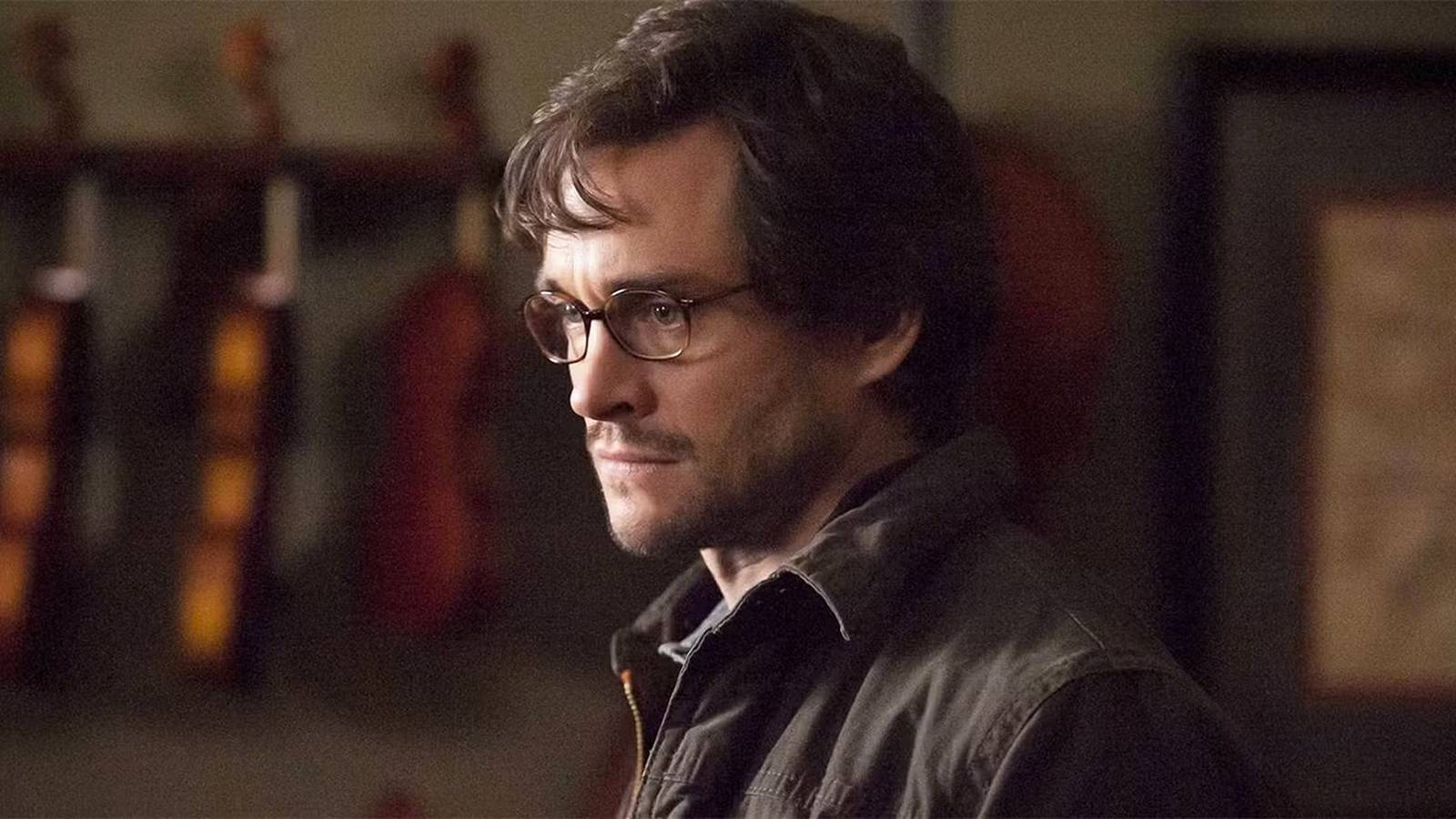
At 9:58 p.m., network television used to commit unspeakable crimes against my nervous system. And the nostalgic vibe of it is priceless still. It would be almost time to go to bed and somebody would discover a body, recognize a familiar face in the wrong place, or open a door they absolutely should have left closed. Then the screen went black. Seven days until the next episode. Seven! And all week, I'd be imagining increasingly terrible possibilities for people who weren't even real. But there's a cruelty far worse than a cliffhanger. It's watching somebody do everything right and still lose, or seeing a character escape one nightmare only to discover another waiting outside. That's the particular misery these shows understand. Their characters aren't always innocent, and some make absolutely unforgivable decisions. Yet I keep finding myself on their side, hoping against all available evidence that this time, somehow, things might be different. These are 8 most hopeless network TV shows, ranked. 10 'Prison Break' (2005–2009, 2017) Image via Fox Michael Scofield (Wentworth Miller) deliberately gets himself imprisoned at Fox River State Penitentiary to rescue his brother Lincoln Burrows (Dominic Purcell), who's awaiting execution for a murder he didn't commit. Michael has secretly incorporated the prison's blueprints into an elaborate tattoo covering his body. Prison Break begins with an absolutely irresistible idea, following two brothers whose survival depends upon a plan so complicated that practically anything could destroy it. The heartbreaking part is how much Michael sacrifices for somebody he loves. He enters prison believing he understands the risks, only to discover that escaping the building is considerably easier than escaping the conspiracy surrounding Lincoln. Even their allies, particularly the wonderfully loyal Fernando Sucre (Amaury Nolasco), become vulnerable to consequences they never anticipated. I still find the first season unbearably tense. Michael has prepared for almost everything except the possibility that saving his brother might permanently destroy the life he wanted them to share. 9 'The X-Files' (1993–2002, 2016–2018) Image via FOX Fox Mulder (David Duchovny) believes his younger sister Samantha was abducted by extraterrestrials, an obsession that drives his work investigating unexplained phenomena for the FBI. His partner Dana Scully (Gillian Anderson) initially approaches their cases with scientific skepticism, although years of terrifying discoveries make their relationship with the truth increasingly complicated. The X-Files mixes extraordinary standalone mysteries with a sprawling conspiracy involving government secrecy and apparent alien activity. What breaks my heart is how thoroughly Mulder's desperation gets exploited. He wants to believe Samantha might still be alive, and powerful people repeatedly recognize that longing as something they can manipulate. Scully's suffering is equally cruel. Her abduction and subsequent cancer diagnosis transform their investigation from an intellectual disagreement into something painfully personal. Chris Carter, who created the series, gave television one of its greatest partnerships, then surrounded it with institutions determined to conceal practically everything. I still get excited whenever Mulder and Scully uncover another piece of evidence. Knowing how frequently their discoveries are buried somehow makes me more desperate for them to succeed. 8 'Dollhouse' (2009–2010) Image via FOX A woman's memories can be erased, her personality replaced, and her body rented to wealthy clients for whatever elaborate experience they've purchased. That horrifying business operates beneath the apparently elegant facilities of Dollhouse, where Echo (Eliza Dushku) begins developing an awareness that persists despite repeated memory wipes. FBI agent Paul Ballard (Tahmoh Penikett) becomes obsessed with exposing the operation, unaware of just how enormous its implications are. Consider Sierra (Dichen Lachman), whose original identity was stolen through the manipulation of a man determined to possess her. The technology makes exploitation horrifyingly convenient because victims can be programmed not to remember it. And then Joss Whedon's series pushes the idea further. What happens when the same technology capable of controlling individuals becomes powerful enough to destroy civilization? Topher (Fran Kranz), initially delighted by his own technical ingenuity, must confront what his inventions have enabled. His eventual sacrifice is moving, but the innocence he once possessed is long gone. Even saving the world cannot give these people back the lives that were stolen. 7 'Terminator: The Sarah Connor Chronicles' (2008–2009) Image via FOX Terminator needed a show and this story proves it. The Sarah Connor Chronicles follows the titular character, Sarah Connor (Lena Headey), who knows exactly how humanity's future is supposed to unfold. An artificial intelligence called Skynet will initiate a nuclear catastrophe, and her teenage son John (Thomas Dekker) is destined to lead the human resistance. With assistance from a reprogrammed Terminator named Cameron (Summer Glau), Sarah spends her life attempting to prevent a war that hasn't happened yet. The sudden death of Derek Reese (Brian Austin Green) is absolutely brutal. One moment he's fighting to protect the others, and the next he's killed without the dramatic farewell television usually grants beloved characters. That's the terrifying logic of Sarah's existence. She can prepare John for countless dangers but cannot guarantee that anyone they love will survive. And the show's last episode leaves John stranded in a future where the resistance fighters don't even recognize his name. Imagine preparing your child his entire life for a destiny that might no longer exist. Sarah has sacrificed everything to save the future, and neither she nor John can be certain what they've actually changed. 6 'The Following' (2013–2015) Image via Fox A serial killer escapes prison, and former FBI agent Ryan Hardy (Kevin Bacon) is pulled back into the investigation that nearly destroyed his life. The fugitive, Joe Carroll (James Purefoy), has cultivated a devoted following of murderers who treat his literary obsessions and personal grievances like commandments. The Following makes the search for Carroll terrifying because his accomplices could be practically anybody. Emma Hill (Valorie Curry) particularly unnerves me. She can appear friendly, trustworthy, even vulnerable, then demonstrate how completely she's surrendered her judgment to Carroll. His followers aren't merely protecting a murderer. They want his approval badly enough to sacrifice their own lives and destroy strangers. Ryan understands Carroll's cruelty, yet that knowledge never protects the people closest to him. Even the experienced investigators around him become targets. I find the show's repeated betrayals exhausting in exactly the intended way. Eventually, every new acquaintance feels suspicious, and the possibility of ordinary human trust starts disappearing. 5 '24' (2001–2010) Image via FOX Jack Bauer (Kiefer Sutherland) works for the Counter Terrorist Unit, where national security emergencies unfold over twenty-four consecutive hours. Assassination plots, biological threats, government conspiracies, and terrorist attacks repeatedly force him into situations where every decision carries potentially catastrophic consequences. 24 turns the ticking clock into an almost physical source of anxiety. Jack barely has time to understand one disaster before another begins. Season 1 delivers a punishment I still find unbelievably cruel. Jack successfully prevents an assassination and survives the conspiracy threatening his family, only to discover that his wife Teri (Leslie Hope) has been murdered by Nina Myers (Sarah Clarke), a trusted colleague who betrayed him. Think about that. He accomplishes the impossible under extraordinary pressure, and the person he was fighting to protect is still gone. His subsequent relationships and increasingly brutal decisions carry that loss. The show sometimes celebrates Jack's willingness to cross moral boundaries, but it also demonstrates how little peace those choices bring him. Saving the country never seems to mean saving himself. The whole show is beyond amazing. 4 'Lost' (2004–2010) Image via ABC Lost was iconic and still is, only because it was hopeless and still is. Oceanic Flight 815 crashes onto a mysterious island, leaving a group of survivors struggling to find rescue while encountering strange phenomena and evidence that other people have been living there. Lost follows characters including surgeon Jack Shephard (Matthew Fox) and John Locke (Terry O'Quinn), gradually connecting their troubled pasts to the extraordinary circumstances surrounding the island. Locke is the one I cannot get over. Before the crash, he was a lonely man who desperately wanted his life to mean something. On the island, he can suddenly walk again, and for the first time, he believes he has a purpose. Then comes “The Life and Death of Jeremy Bentham.” Locke is so defeated that he prepares to kill himself, only for Ben Linus (Michael Emerson) to talk him down and subsequently murder him. It's sickening. The man who spent years searching for something to believe in dies after allowing somebody else to exploit that faith. The series ultimately offers its characters spiritual reconciliation, but that doesn't undo how mercilessly their hopes were manipulated while they were alive. 3 'The 100' (2014–2020) Image via The CW Ninety-seven years after a nuclear apocalypse, one hundred juvenile prisoners are sent from an orbiting space station to determine whether Earth has become habitable again. Among them are Clarke Griffin (Eliza Taylor) and Bellamy Blake (Bob Morley), who soon discover that humanity hasn't entirely disappeared from the planet. The 100 begins as a survival adventure before developing into an increasingly vicious examination of leadership, tribalism, and the terrible compromises people make to protect their communities. I will never forget Mount Weather. Clarke and Bellamy discover that their friends are being exploited by a community desperate to survive radiation exposure. With their options exhausted, they make a decision that saves their people while killing the facility's inhabitants, including innocent civilians. Jasper (Devon Bostick) loses Maya, the girl he loves, and his grief becomes a devastating reminder of the human cost. The show keeps asking its characters to choose who deserves to live, then punishes them for the answers. Clarke wants to be a good person. Eventually, she can barely distinguish doing good from doing whatever keeps her people alive. 2 'Millennium' (1996–1999) Image via FOX Millennium follows Frank Black (Lance Henriksen) is a former FBI profiler whose extraordinary ability to understand the minds of murderers has made him intimately familiar with humanity's most disturbing impulses. He works with a mysterious organization called the Millennium Group, and investigates horrific crimes while attempting to protect his wife Catherine (Megan Gallagher) and daughter Jordan (Brittany Tiplady) from the darkness consuming his professional life. Henriksen is magnificent because Frank's exhaustion seems almost permanent. Every investigation forces him to confront another example of what human beings are capable of doing to one another. Yet home offers him something worth protecting, and that possibility becomes increasingly precious as the Millennium Group's apocalyptic interests emerge. Catherine dies, and Frank discovers how thoroughly the organization he trusted has betrayed its supposed mission. Chris Carter's series reaches a level of despair few network thrillers would dare approach. Frank possesses an exceptional understanding of evil, but that knowledge cannot protect the person he loves most. He can recognize darkness almost anywhere except inside the institutions he's trusted to fight it. 1 'Hannibal' (2013–2015) Image via NBC Hannibal follows Will Graham (Hugh Dancy) who can reconstruct a murderer's thinking with extraordinary accuracy, making him invaluable to the FBI's investigations into violent crime. His unsettling psychological abilities also leave him vulnerable to manipulation, particularly when psychiatrist Hannibal Lecter (Mads Mikkelsen) enters his life. Unbeknownst to Will and investigator Jack Crawford (Laurence Fishburne), Hannibal is himself a serial killer with a horrifying fascination for the man he's supposedly helping. I think the most terrible thing Hannibal does is offer Will something he's almost never experienced before. Genuine recognition. Somebody finally understands his frightening abilities, his loneliness, and the parts of himself he'd rather deny. Except that person wants to cultivate his capacity for violence. The betrayal at Hannibal's house in “Mizumono” is devastating because every emotional wound has been carefully prepared. Abigail Hobbs (Kacey Rohl), whose survival once represented a possibility of healing, becomes another instrument of cruelty. Bryan Fuller, who developed the series, understands that psychological intimacy can be more dangerous than physical captivity. And the ending still haunts me. Will and Hannibal fight Francis Dolarhyde (Richard Armitage) together, finally moving with a terrible understanding of each other's instincts.
The 10 Most Hopeless Network TV Shows, Ranked
Full Article
Original Source
Read the full article at Collider →KhanList aggregates and links to publicly available news content. We do not host full articles from third-party sources. Always verify important information with original sources.