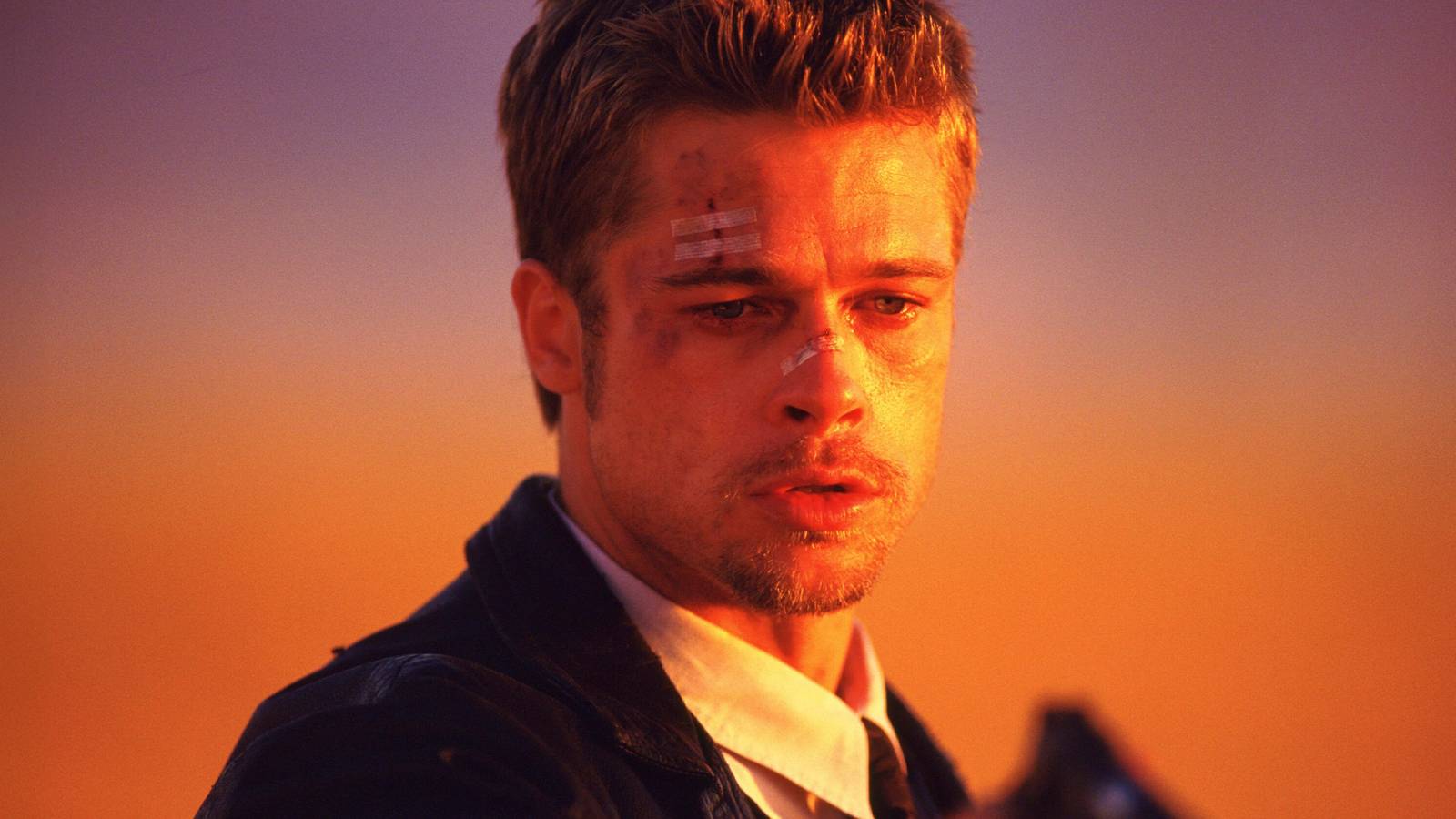
Image via New Line Cinema Published Jul 30, 2026, 8:33 AM EDT Liam Gaughan is a film and TV writer at Collider. He has been writing film reviews and news coverage for ten years. Between relentlessly adding new titles to his watchlist and attending as many screenings as he can, Liam is always watching new movies and television shows. In addition to reviewing, writing, and commentating on both new and old releases, Liam has interviewed talent such as Mark Wahlberg, Jesse Plemons, Sam Mendes, Billy Eichner, Dylan O'Brien, Luke Wilson, and B.J. Novak. Liam aims to get his spec scripts produced and currently writes short films and stage plays. He lives in Allentown, PA. Sign in to your Collider account Warning: The following article contains discussion of unsettling, graphic, and violent content.Crime dramas are one of the most important genres in the history of film, as it is impossible to look back at the history of the medium without thinking about all-time classics like The Godfather, The Maltese Falcon, or Taxi Driver. Crime films have often been at the foray of pushing the film industry forward in terms of incorporating explicit content on screen; even when Hollywood dealt with more serious censorship issues, crime films were able to hint at darker themes that many studios would traditionally shy away from. Today, crime movies are where many of the most exciting filmmakers are working to make exciting and potentially divisive films, even though the genre has been dominated by many prestige television shows. Here are the grittiest and most disturbing crime films, ranked. 10 'Oldboy' (2003) Image via Show East Oldboy has one of the most upsetting plot twists of all time, but that’s not the only reason why Park Chan-wook’s captivating 2003 thriller is one of the most disturbing films ever made. Oldboy is a film that questions the value of revenge, as it suggests that any acts of vengeance are bound to result in even more violence and catastrophe. Oldboy became renowned for its brutal fight scenes, including the infamous “hallway sequence,” which has inspired many other “one shot” moments in popular projects, most notably in the first season of the Marvel Netflix series Daredevil. The depiction of torture, sexual assault, mental health disorders, and drug abuse makes Oldboy a completely unique reinvention of the crime thriller genre that is very hard to watch more than once, even for those who can stomach disturbing content on a regular basis. 9 'American History X' (1998) Image via New Line Cinema American History X is unlike any other drama film because it seeks to unpack the origins of the country’s racial discrimination issues. Edward Norton gives one of the best performances of his career as a former neo-Nazi skinhead who goes through a significant change when he is imprisoned and begins seeking out a path of redemption. American History X includes extremely upsetting depictions of hate crimes, sexual assault, and police brutality, all of which sadly feel just as relevant today as they were when the film was first released in 1998. What’s most upsetting is that American History X does not sanitize its narrative in the hope of giving an easy solution to an issue this complex; the shocking moment of violence that ends the film indicates that the cycle of hatred and bloodlust cannot easily be stopped, even if redemption is possible. 8 'We Need To Talk About Kevin' (2011) Image via Oscilloscope Laboratories We Need To Talk About Kevin evokes modern fears about the epidemic of school shootings by delving into the mind of a disturbed teenager (Ezra Miller) and his complex relationship with his mother (Tilda Swinton). The brilliance of We Need To Talk About Kevin is that it does not treat the outburst of violence as a major plot twist; the audience is well aware of what’s coming and is forced to sit with the uncomfortable ending that the film is hinting at. We Need To Talk About Kevin brings to life every parent’s nightmare about raising a monster, and shows the shame, guilt, and anxiety that are specific to the maternal experience. Director Lynne Ramsay has a history of making very visceral crime movies, but We Need To Talk About Kevin is certainly the most disturbing film that she has made thus far in her career. 7 'Bad Lieutenant' (1997) Image via Aries Films Bad Lieutenant was a subversion of the typical “heroic cop” narrative that had been perpetrated by many crime films, as Harvey Keitel gave a transfixing performance as a corrupt law enforcement officer who is assigned to track down the criminals responsible for assaulting a Catholic nun. Bad Lieutenant is among the rare NC-17-rated films that actually made a sizable dent at the box office, as generally the restrictive rating limits the commercial potential. Bad Lieutenant depicts harrowing moments of violence, drug abuse, and sexual assault that are disturbing because of how realistically Abel Ferrara directs the film’s analysis of police and criminal culture. While the film touches on potent themes of sin and forgiveness, it is also the type of project that is meant to provoke extreme reactions out of its audience because of how bleak its worldview is. 6 'Bad Education' (2004) Image via Warner Sogefilms Bad Education is one of the many masterpieces of Pedro Almodóvar’s career, but one of the few instances in which the beloved Spanish writer/director used his aptitude for sprawling ensemble stories for a crime drama. Bad Education is a film that viewers may need to take multiple viewings to fully comprehend, as it incorporates several plot twists and fluctuating character identities; that being said, Bad Education is also a harrowing examination of sexual abuse that may be difficult to watch more than once. Bad Education is a harrowing look at the lingering effects of childhood trauma that has real empathy for the victims of abuse, thanks in no small part to the brilliant performance by Gael García Bernal. The similarities that Almodovar draws with more traditionally crowd-pleasing coming-of-age narratives only make the subtext of Bad Education more disturbing. Collider Exclusive · Oscar Best Picture Quiz Which Oscar Best PictureIs Your Perfect Movie? Parasite · Everything Everywhere · Oppenheimer · Birdman · No Country Five Oscar Best Picture winners. Five completely different visions of what cinema can be — and what it can do to you. One of them is the film that was made for the way your mind works. Ten questions will figure out which one. 🪜Parasite 🌀Everything Everywhere ☢️Oppenheimer 🐦Birdman 🪙No Country for Old Men FIND YOUR FILM → 01 What kind of film experience do you actually want? The best movies don't just entertain — they leave something behind. ASomething that pulls the rug out — that makes me think I'm watching one kind of film and then reveals I'm watching another entirely. BSomething overwhelming — funny, sad, absurd, and genuinely moving, all at once. CSomething grand and weighty — a film that makes me feel the full scale of what I'm watching. DSomething formally daring — a film that pushes what cinema can even do. ESomething lean and relentless — pure tension with no wasted frame. NEXT QUESTION → 02 Which idea grabs you most in a film? Great films are driven by a central obsession. What's yours? AClass, inequality, and what people are willing to do when desperation meets opportunity. BIdentity, family, and the chaos of trying to hold your life together when everything is falling apart. CGenius, moral responsibility, and the catastrophic weight of a decision you can never take back. DEgo, legacy, and the terror of becoming irrelevant while you're still alive to watch it happen. EEvil, chance, and whether moral order actually exists or if we just tell ourselves it does. NEXT QUESTION → 03 How do you like your story told? Form is content. The way a story is shaped changes what it means. AGenre-twisting — I want it to start in one lane and migrate into something completely different. BMaximalist and genre-blending — comedy, action, drama, sci-fi, all in one ride. CEpic and non-linear — cutting between timelines, building a mosaic of cause and consequence. DA single unbroken flow — I want to feel like I'm living it in real time, no cuts to safety. ESpare and precise — every scene doing exactly what it needs to do and nothing more. NEXT QUESTION → 04 What makes a truly great antagonist? The opposition defines the protagonist. What kind of opposition fascinates you? AA system — invisible, structural, and almost impossible to fight because it has no single face. BThe self — the ways we sabotage, abandon, and fail the people we love most. CHistory — the unstoppable momentum of events that no single person can stop or redirect. DThe industry — the machinery of culture that chews up talent and spits out irrelevance. EPure, implacable evil — a force so certain of itself it becomes almost philosophical. NEXT QUESTION → 05 What do you want from a film's ending? The final note is the one that lingers. What do you want it to sound like? AShock and inevitability — a conclusion that recontextualises everything that came before it. BEarned emotion — I want to cry, laugh, and feel genuinely hopeful, even if the world is a mess. CDevastation and grandeur — an ending that makes me sit in silence for a few minutes after. DAmbiguity — something that leaves enough open that I'm still thinking about it days later. EBleakness — an honest refusal to pretend the world is tidier than it actually is. NEXT QUESTION → 06 Which setting pulls you in most? Where a film takes place shapes everything — mood, stakes, what's even possible. AA gleaming modern city with a hidden underside — beauty masking rot, wealth masking desperation. BA collapsing suburban life that opens onto something infinite — the multiverse of a single ordinary person. CThe corridors of power and science at a world-historical turning point — where decisions echo for decades. DThe grimy, alive chaos of New York and Hollywood — fame as both destination and trap. EVast, indifferent landscape — desert and highway where violence arrives without warning or reason. NEXT QUESTION → 07 What cinematic craft impresses you most? Every great film has a signature — a technical or artistic element that makes it unmistakable. AProduction design and mise-en-scène — every frame composed to carry meaning beneath the surface. BEditing and tonal control — the ability to move between registers without losing the audience. CScore and sound design — music that becomes inseparable from the dread and awe of what you're watching. DCinematography as performance — the camera not recording events but participating in them. ESilence and restraint — what's left unsaid and unshown doing more work than any dialogue could. NEXT QUESTION → 08 What kind of main character do you root for? The protagonist is the lens. Who you choose to follow says something about you. ASomeone smart and resourceful who makes increasingly dangerous decisions under pressure. BSomeone overwhelmed and ordinary who turns out to be capable of something extraordinary. CA brilliant, tortured figure whose gifts and flaws are inseparable from each other. DA self-destructive artist whose ego is both their superpower and their undoing. EA quiet, principled person trying to make sense of a world that has stopped making sense. NEXT QUESTION → 09 How do you feel about a film that takes its time? Pace is a choice. Some films sprint; others let tension accumulate slowly, deliberately. AI love a slow build when I know the payoff is going to be seismic — patience for a devastating reveal. BGive me relentless momentum — I want to feel breathless and emotionally spent by the end. CEpic runtime doesn't scare me — if the material demands three hours, give me three hours. DI want it to feel propulsive even when nothing is technically happening — restless energy throughout. EDeliberate and unhurried — I want dread to accumulate in the spaces between the action. NEXT QUESTION → 10 What do you want to feel walking out of the cinema? The best films leave a mark. What kind of mark do you want? AUnsettled — like I've just seen something I can't fully explain but can't stop thinking about. BMoved and energised — like the film reminded me what actually matters and gave me something to hold onto. CHumbled — like I've been in the presence of something genuinely important and overwhelming. DExhilarated — like I've just seen cinema doing something it's never quite done before. EHaunted — like a cold, quiet dread that stays with me for days. REVEAL MY FILM → The Academy Has Decided Your Perfect Film Is…Your answers have pointed to one Oscar Best Picture winner above all others. This is the film that was made for the way your mind works. ParasiteYou are drawn to films that operate on multiple levels simultaneously — that begin in one genre and quietly, brilliantly migrate into another. Bong Joon-ho's Parasite is a film about class, desire, and the architecture of inequality that manages to be darkly funny, deeply suspenseful, and genuinely shocking across a single extraordinary running time. Your instinct is for cinema that hides its true intentions until the moment it's ready to reveal them. Parasite is exactly that — a film that rewards close attention and punishes assumptions, right up to its devastating final image. Everything Everywhere All at OnceYou want it all — and this film gives you all of it. The Daniels' Everything Everywhere All at Once is one of the most maximalist films ever made: action comedy, multiverse sci-fi, family drama, existential crisis, and a genuinely earned emotional core that sneaks up on you amid the chaos. You are someone who responds to ambition, who doesn't want cinema to choose between being entertaining and being meaningful. This film refuses that choice entirely. It is overwhelming by design, and its overwhelming nature is precisely the point — because the feeling of being crushed by infinite possibility is exactly what it's about. OppenheimerYou are drawn to cinema on a grand scale — films that understand history not as a backdrop but as a force, and that place their characters inside that force and watch what happens. Christopher Nolan's Oppenheimer is a film about the terrifying gap between what we can do and what we should do, told with the full weight of one of the most consequential moments in human history behind it. You want your films to feel important without feeling self-important — to earn their ambition through sheer craft and the gravity of their subject. Oppenheimer does exactly that. It is enormous, complicated, and refuses easy comfort. BirdmanYou are drawn to films that foreground their own construction — that make the how of the filmmaking part of the what it's about. Alejandro González Iñárritu's Birdman, shot to appear as a single continuous take, is cinema examining itself through the cracked mirror of a fading actor's ego. You respond to formal daring, to the feeling that a film is doing something that probably shouldn't be possible. Michael Keaton's performance and Emmanuel Lubezki's restless camera create something genuinely unlike anything else — a film that is simultaneously about creativity, relevance, self-destruction, and the impossibility of ever truly knowing if your work means anything at all. No Country for Old MenYou are drawn to cinema that trusts silence, that refuses to explain itself, and that treats dread as a form of meaning. The Coen Brothers' No Country for Old Men is a film about the arrival of a new kind of evil — implacable, arbitrary, and utterly indifferent to the moral frameworks we use to make sense of the world. It is one of the most formally controlled films ever made, and its controlled restraint is what makes it so terrifying. You want your films to haunt you, not comfort you. You are not interested in resolution if resolution would be dishonest. No Country for Old Men is honest in a way that most cinema never dares to be. ↻ RETAKE THE QUIZ 5 'The House That Jack Built' (2018) Image via IFC Films The House That Jack Built is proof that Lars Von Trier is the most uncompromising filmmaker of his generation, as none of the controversy surrounding his work on Nymphomaniac or Breaking the Waves dissuades him from making his most disturbing thriller yet. The House That Jack Built is a look into the mind of a truly disturbed serial killer, played in a haunting performance by Matt Dillon, who had once been a generational heartthrob with his work in The Outsiders and Drugstore Cowboy. The House That Jack Built is unafraid to get darkly comic when detailing its violent sequences, forcing the audience to question how far they are willing to go. Nothing about the experience of watching The House That Jack Built is intended to be pleasant, but the idea that Von Trier was able to laugh at some of the most extreme acts of savagery somehow makes it even more disturbing. 4 'Wild at Heart' (1990) Image via Universal Pictures Wild at Heart is perhaps the darkest film of David Lynch’s career, as even narratives as oppressive and disturbing as Blue Velvet or Twin Peaks: Fire Walk With Me leave the door open for some amount of hope. Comparatively, Wild at Heart is a disturbing venture into the dark side of the “American dream” that retrofits the iconography of Elvis Presley music and The Wizard of Oz into a dark road trip adventure about two lovers having to elude the forces that seek to drive them apart. Wild at Heart is quite shocking in its depiction of evil, as Willem Dafoe plays one of the most evil characters that have appeared in any of Lynch’s films. Although aspects of the film are quite gritty, the surrealist influence turns the somewhat straightforward setup into what feels like waking up from a nightmare. 3 'Se7en' (1995) Image via New Line Cinema Se7en kicked off a wave of serial killer films in the 1990s, but managed to get far deeper into the psychology of disturbed villains than many of its imitators. David Fincher created a series of graphic murders, each of which is more disturbing than the next; the iconic ending featuring the excruciating death of Gwyneth Paltrow’s character has been seared in the memories of every moviegoer who was taken by surprise when they first witnessed it. However, some of the most disturbing moments in Se7en are those that Fincher leaves open to interpretation. Se7en is particularly disturbing because Fincher’s worldview is so cynical, as evidenced by the haunting final line from Morgan Freeman. Fincher would return to the serial killer genre with Zodiac and The Girl With the Dragon Tattoo, but Se7en remains the most visceral project that he has ever worked on about the subject. 2 'Man Bites Dog' (1992) Image via Roxie Releasing Man Bites Dog was a radical reinvention of the mockumentary genre that follows a group of fictional filmmakers who track the activities of a serial killer. While most mockumentaries tend to be more comedic in the vein of This Is Spinal Tap or Popstar: Never Stop Never Stopping, Man Bites Dog explores the concept to its logical extremes as the film crew begins aiding and abetting the serial killer that they are intending to cover. Man Bites Dog has a lot to say about how willful ignorance is an issue in media, and its use of realistic crime scene photography only makes the central conceit more disturbing. Man Bites Dog isn’t just a collection of disturbing moments of murder and assault, but a condemnation of audiences that seek out these types of stories and don’t think about the events that inspired them. 1 'Funny Games' (1997) Image via Concorde-Castle Rock/Turner Funny Games is a masterwork from director Michael Haneke that plays with the cinematic medium to create an ambiguous story that breaks the fourth wall. Unlike traditional slasher films, Funny Games presents serial killer characters who look and feel like normal people up until the point that their dastardly evil plans are revealed. Funny Games is disturbing because it uses the home invasion genre to destroy the concept of safety, giving the victims no room to feel safe in any capacity. Although the film can certainly be perceived to be a satire of the indifference of the wealthy class that is never held accountable for their privilege, there’s never a moment when the rampant abuse and torture that the characters are forced to go through is not upsetting to watch. Funny Games Release Date September 11, 1997 Runtime 108 Minutes
The 10 Most Disturbing Crime Movies of All Time, Ranked
Full Article
Original Source
Read the full article at Collider →KhanList aggregates and links to publicly available news content. We do not host full articles from third-party sources. Always verify important information with original sources.