
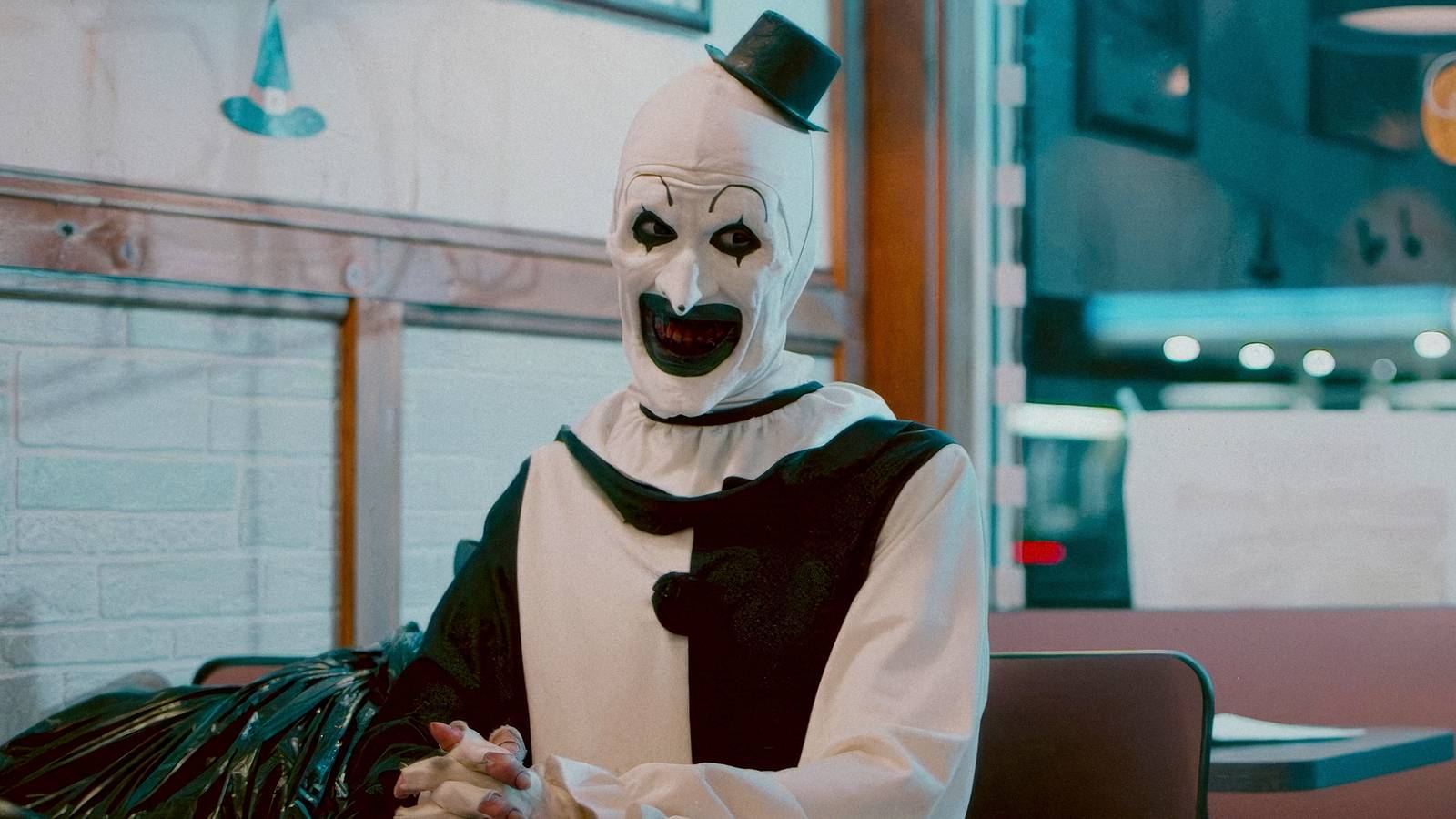
Image via Epic Pictures Releasing Published Sep 1, 2026, 7:25 PM EDT A New York native, Joe graduated from an avant-garde theater school upstate, where he was obsessed with sketch comedy. There, he and his lunatic friends founded The Sketchies — which still lives on at Skidmore College today. Living in New York City, a screenwriter friend of his then taught him how to write for film. This awakened a new passion in Joe. Since then his scripts have garnered over 200 festival selections, nominations, and wins all over the globe (including the BlueCat Best Feature award). Several of his screenplays have been made into feature films — some of them not that bad! Overall, he loves to create unique, hilarious, touching, and bizarre stories. Sign in to your Collider account There’s been a very recent trend in low budget and UBL (ultra low budget: technically made for 300k or less) horror films catching fire and blowing big-budget films out of the water. Obviously, the two prime examples are Backrooms and Obsession, as they have brought in 40 and 400 times their budgets, respectively. So, the lesson is that one really doesn’t need to break the bank when it comes to horror in order to make extraordinarily resonant, terrifyingly entertaining works of dark art. Capping the budget off here at a mere 150k, some of the films on this list will simply blow your mind. All the filmmakers featured here could give classes in cinematic economics, as they took relatively meager (and in some cases, laughable) amounts of cash and turned them into pure horror gold. Like the most famous examples, The Blair Witch Project and Paranormal Activity, the rest of the films featured here were all made on shoestring budgets and have had lasting effects on the world of creepy movie-making. 10 'Basket Case' (1981) Image via Basket Case Productions This disaster may be one of the "worst" horrors ever, but since it has brought so much unintentional joy to so many — and because it was made on a micro-budget of 30k — it’s become a cult classic in its own right. Shot in New York City (back when the Times Square area was truly gritty and seedy and wonderful), without permits, this run-and-gun guerrilla style film is laden with boisterous charm and a gross, funny little bad guy who will warm your heart (and possibly make you vomit). The story follows a dude, Duane (Kevin Van Hentenryck), who was a conjoined twin with a squirmy, fleshy creature (basically the same plot of the movie Twins, with Danny DeVito and Arnold Schwarzenegger). The monstrous little critter, Belial, was removed from Duane, and thrown in the trash (eventually he finds a nice cozy home in…a basket). Belial comes back for revenge, naturally — and really is a mood killer when Duane attempts to be amorous with his love interest, Sharon (Terri Susan Smith). Intrepid writer-director Frank Henenlotter’s Basket Case also gets points for having a completely out of left field, full-frontal nudity scene with Duane, jogging and bouncing down the street. 9 'Eraserhead' (1977) Image via Libra Films David Lynch kicked off his illustrious career as one of the best, weirdest filmmakers of all time with Eraserhead, a hybrid body-horror-psycho-drama for the ages. Shot in black and white, over the course of several years (as Lynch scraped together funding from sundry sources), this movie has got some of the most surreal images in Lynch’s oeuvre, and still holds up (the way any of his mind-boggling films can) to this very day. The basic tale is of Henry Spencer (Jack Nance), a guy with Kramer-like hair who works in a factory in a bleak, industrial sector of a city. From the onset, it’s giving Kafka. Henry eventually learns that his ex, Mary X (Charlotte Stewart), has been blessed with a beautiful baby…thing. A cross between a bird, lizard, and xenomorph, the lil critter incessantly cries and shrieks in the most adorable manner. A harrowing metaphor for unexpected parenthood, this movie is as darkly humorous as it is disturbing. Despite numerous roadblocks, Lynch luckily endured and got this film made, as it helped birth the rest of his mind-scrambling, monstrous movies. 8 'Resolution' (2012) Image Via Tribeca Film Writer-director Justin Benson and co-director Aaron Moorhead must’ve known they had a winner with Resolution. By utilizing two of the most potent themes in horror, addiction and (duh) fear, they capitalized on both in brilliant fashion. The fact that this film was made for only 20k highlights how solid and captivating the story is. The sheer wizardry employed in bringing the characters, lore, and eventually, brutally realized, omniscient presence to life, make this a can't-miss horror gem. The plot focuses on two friends who sequester themselves in a cabin on a Native American reservation (a genius device in itself to keep the location count to a minimum). The goal of Michael Danube (Peter Cilella) is to get his meth-addicted friend, Chris Daniels (Vinny Curran), clean. Both of the actors give wrenching, heartfelt performances with total commitment. The success of the film hinges on this, and the performers certainly came through. What happens while they’re there is that an odd collection of media surfaces, showcasing Michael and Chris in different scenarios — indicating that they are being watched. The filmmakers here never insult their audience’s intelligence; they know you know this is about addiction and the havoc it wreaks on people’s lives. The drug metaphor is clear and quite palpable, but then another theme takes over: that of an otherworldly control. This movie is also about the creative process, and how “characters” are manipulated. It’s a head-trip, to say the least. Throw in some really cool practical effects, and you've got a very nuanced gem of a film (made for less than a 2015 Toyota Camry). 7 'A Dark Song' (2016) Image via IFC Midnight One of the best ways to keep an audience entertained (and electrified) is to have a really, really strong story. Director Liam Gavin is well aware of this, and with a stirring script that he penned himself, he set out to not only terrify viewers, but to utterly captivate them as well. The resulting film, A Dark Song, succeeds on just about every cinematic front, with chilling moments galore, a deeply woven mystery, unusual lore, powerhouse performances, and even an uplifting final message. All this on a budget of about 50k. The story starts out relatively clean and simple. A grieving mom, Sophia Howard (Catherine Walker, who gives everything to this role), hires an “occultist,” Joseph Solomon (Steve Oram, also dynamic and oddly compelling), to try to get in contact with her deceased son. He knows how to do it, but…it’s going to be a pretty grueling endeavor. So, sequestered in a remote, salt-encircled house, the two of them initiate the process of reaching “the other side.” With more twists and turns than a malfunctioning roller-coaster, this movie takes the viewer on quite the disorienting and highly thought-provoking journey to hell. Overall, this budget-friendly song will be stuck in your head for quite some time. 6 'Terrifier' (2016) Image via Grindhouse The young Turk director Damien Leone set out with only 35 thousand bucks, a (disturbing) dream, and the knowledge that clowns are fundamentally scary. He then made one of the new generation of filmmakers' best debut slasher films ever, and bestowed upon the world one of the creepiest, most amusing villains to come along since Freddy Krueger. The story follows the adventures of Art the Clown (David Howard Thornton), who at first seems like your run-of-the-mill demented lunatic, but later is revealed to be supernaturally sinister in nature. He’s really intent on ruining the Halloween of two friends, Tara Hayes (Jenna Kanell) and Dawn (Catherine Corcoran), and, incidentally, every other happy human in his path. What makes this movie such a crowning achievement in creepy clown culture are the string of highly inventive and gruesome kill scenes. Art is indeed artful in his eviscerating of his victims. It’s a simple story all around, and that’s part of its success: evil clown plus a diverse, unsuspecting collection of victims (dispatched with sick glee) equals horror gold. Collider Exclusive · Horror Survival Quiz Which Horror Villain Do You Have the Best Chance of Surviving? Jason Voorhees · Michael Myers · Freddy Krueger · Pennywise · Chucky Five killers. Five completely different ways to die — if you're not smart enough, fast enough, or self-aware enough to avoid it. Only one of them is the villain your particular set of instincts gives you a fighting chance against. Eight questions will figure out which one. 🏕️Jason 🔪Michael 💤Freddy 🎈Pennywise 🪆Chucky TEST YOUR SURVIVAL → 01 Something feels wrong. You can't explain it — you just know. What do you do? First instincts are the difference between the survivor and the first act casualty. ALeave immediately. I don't need to understand a threat to respect it. BStay quiet and observe. If I can see it, I can understand it. If I can understand it, I can avoid it. CStay awake. Whatever this is, I am not going to sleep until I feel safe again. DConfront it directly. Fear grows in the dark — I'd rather know what I'm dealing with. ECheck everything, trust nothing. The threat might be closer than I think — and smaller. NEXT QUESTION → 02 Where are you most likely to find yourself when things go wrong? Setting is everything in horror. Where you are determines which rules apply. ASomewhere remote — a cabin, a campsite, off the grid and away from people. BA quiet suburban neighbourhood where nothing ever happens. Except tonight. CIn my own head — the most dangerous place of all, depending on what's already in there. DWherever children are — because something about this place attracts the worst things. ESomewhere ordinary — a house, a toy store, a place where the last thing you'd expect is a threat. NEXT QUESTION → 03 What is your most reliable survival asset? Every survivor has a quality the villain didn't account for. What's yours? APhysical fitness — I can run, I can swim, I can outlast something that relies on brute persistence. BSpatial awareness — I always know the exits, the hiding spots, the fastest route out. CPsychological resilience — I've faced my worst fears before. They don't have the same power over me. DEmotional steadiness — I don't panic. Panic is what gets you caught. EScepticism — I don't underestimate threats because of how they look. Size is irrelevant. NEXT QUESTION → 04 What kind of fear is hardest for you to fight through? Knowing your weakness is the first step to not dying because of it. AThe unstoppable — something that will not stop, cannot be reasoned with, and is always getting closer. BThe invisible — a threat I can feel but can't locate, watching from somewhere I can't see. CThe psychological — something that uses my own mind and memories against me. DThe unknowable — something ancient, shapeless, that feeds on the fear itself. EThe mundane — a threat so ordinary-looking that no one will believe me until it's too late. NEXT QUESTION → 05 You're with a group when things start going wrong. What's your role? Horror movies are brutally clear about who survives group situations and who doesn't. AThe one who says "we need to leave" first — and means it, even when no one listens. BThe one who stays quiet, watches the others, and figures out the pattern before anyone else does. CThe one who holds the group together when panic sets in — because someone has to. DThe one who asks the questions nobody wants to ask — because ignoring them gets people killed. EThe one who takes the threat seriously when everyone else is laughing it off. NEXT QUESTION → 06 What's the horror movie mistake you're most likely to make? Honest self-assessment is a survival skill. Denial is not. AGoing back for someone — I know I shouldn't, but I can't leave them behind. BAssuming I'm safe once I've found a hiding spot. That's when it finds me. CFalling asleep when I absolutely cannot afford to. Exhaustion is its own enemy. DLetting my curiosity override my instincts — I always need to understand what I'm dealing with. EDismissing the threat because of how it looks. That's exactly what it wants. NEXT QUESTION → 07 What's your best weapon against something that can't be stopped by conventional means? Every horror villain has a weakness. The survivors are always the ones who find it. AThe environment itself — I use the terrain, the water, the geography against it. BPatience — I wait, I watch, and I strike at the one moment it doesn't expect. CLucidity — if I can stay in control of my own mind, it loses its primary weapon. DCourage — facing it directly, refusing to run, taking away the fear it feeds on. EImprovisation — I use whatever's at hand, however unconventional. Creativity over brute force. NEXT QUESTION → 08 It's the final scene. You're the last one standing. How did you make it? The final survivor always has a reason. What's yours? AI kept moving. I never stopped, never hid for too long, never let it corner me. BI figured out the pattern before anyone else did — and I used it against the thing following it. CI stayed awake, stayed lucid, and refused to give it the one thing it needed most. DI stopped being afraid of it. And the moment I did, everything changed. EI took it seriously from the start — and I never once made the mistake of underestimating it. REVEAL MY VILLAIN → Your Survival Odds Have Been Calculated Your Best Chance Is Against…Your instincts, your strengths, and your particular way of thinking under pressure point to one villain you actually have a fighting chance against. Everyone else — good luck. Jason VoorheesJason is relentless, but he is also predictable — and that is the gap you would exploit. He moves in straight lines toward his target. He doesn't strategise, doesn't adapt, doesn't outsmart. He simply pursues. Your ability to keep moving, use the environment, and resist the panic that freezes most victims gives you a genuine edge. The Crystal Lake survivors were always the ones who stopped running in circles and started thinking about terrain, water, and distance. You think like that. Which means Jason, for all his indestructibility, would face someone who simply refused to be where he expected. Michael MyersMichael watches before he moves. He is patient, methodical, and almost impossible to detect — until it's too late for anyone who isn't paying close enough attention. But you are paying attention. You notice the shape in the window, the car parked slightly wrong, the silence where there should be sound. Michael's power lies in the invisibility of ordinary suburbia — the fact that nothing ever looks wrong until it already is. Your spatial awareness and instinct to map every room, every exit, and every shadow before you need them is precisely the quality Laurie Strode had. You are not a victim waiting to happen. You are someone who already suspects something is wrong — and acts on it. Freddy KruegerFreddy wins by getting inside your head — using your own fears, your own memories, your own subconscious as weapons against you. That strategy requires a target who can be destabilised. You are harder to destabilise than most. You've faced uncomfortable truths about yourself and you haven't looked away. The survivors on Elm Street were always the ones who understood what was happening and chose to face it rather than flee from it. Freddy's greatest weakness is that his power evaporates in the presence of someone who refuses to give him the fear he feeds on. Your psychological resilience — the ability to stay grounded when reality itself becomes unreliable — is exactly the quality that keeps you alive here. PennywisePennywise is ancient, shapeshifting, and feeds on terror — but it has one critical vulnerability: it cannot function against someone who genuinely stops being afraid of it. The Losers Club didn't survive because they were braver than everyone else. They survived because they faced their fears together, and faced them honestly. You ask the questions others avoid. You look directly at what frightens you rather than turning away. That directness — the refusal to let fear fester in the dark — is Pennywise's worst nightmare. It chose the wrong target when it chose you. You are exactly the kind of person whose fear tastes like nothing at all. ChuckyChucky's greatest advantage is that nobody takes him seriously until it's already too late. He exploits the gap between how something looks and what it actually is. You don't have that gap. You take threats seriously regardless of how they present — and you never make the mistake of underestimating something because of its size or appearance. Chucky relies on surprise, on the delay between recognition and response. You close that delay faster than almost anyone. Your instinct to treat every unfamiliar thing with appropriate scepticism — rather than dismissing it because it seems absurd — is the exact quality that keeps you breathing. Against Chucky, not laughing is already winning. You are very good at not laughing. ↻ RETAKE THE QUIZ 5 'Paranormal Activity' (2007) Image via Blumhouse After the success of The Blair Witch Project, filmmakers saw a golden opportunity to produce films with minuscule budgets by using the found footage format (hey, that shot can be out of focus because it’s real). Naturally, this resulted in a boring boat-load of extremely shaky camera, nauseating, impossible-to-watch dreck. However, some filmmakers used the format to their advantage, and there may be no better example than writer-director Oren Peli’s bone-chilling Paranormal Activity. The story is as basic as they come: a couple deals with the day-to-day struggles of coupledom in their new home, and then, the lady gets possessed by an evil spirit. Leaning into “realism,” Katie Featherston as Katie, and Micah Sloat in the role of Micah, both give powerful, maximum commitment performances. The real genius behind this movie, though, is the mind-blowing, exceptionally creative tactics employed to showcase how the ghostly entity moved things, and moved about, in the house. With nary a CGI element in sight, the practical effects that Peli and his team employed really did feel real — which resulted in audiences getting scared silly (and, consequently, spawned six sequels/spin-offs). The budget was 15k, which returned 194 million. There’s absolutely nothing normal about that. 4 'The Blair Witch Project' (1999) Image via Summit Entertainment While the 1961 film The Connection, directed by Shirley Clarke, is often cited as the first feature-length found footage film, and the infamous Cannibal Holocaust, directed in 1980 by the controversial Ruggero Deodato, is known as the first true found footage horror, not a lot of people were talking about this film style/format until the Godmother of FF was released in 1999. Yes, we’re of course talking about Daniel Myrick and Eduardo Sánchez’s The Blair Witch Project, the wildly Wiccan tale that only cost 60k — and gave rise to a sea of putrid found footage imitators. The story is simplistic enough. A trio of documentary filmmakers trek into the woods (armed with only one map) to find evidence of a local legend, the Blair Witch. Things go awry when the alleged witch begins messing with them, until they end up so disoriented they end up dripping weepy snot directly into the camera lens. The aforementioned actors, Heather Donahue, Michael C. Williams, and Joshua Leonard, all gave truly inspired performances, and really made this thing feel authentic. At the time, the filming technique felt very innovative, and the themes of abject guilt and stark ambition were quite nicely unfurled. The straightforward yet elegant moments of horror in this film were perfectly placed and really drove the message home that you don’t need to really show anything in order to really scare people. The studio that picked the “project” up, Artisan Entertainment, knew they had gold in their hands, and so they threw roughly 600k in marketing money at it (which resulted in probably the best film promotion bonanza ever, as many people thought it was a real documentary). In the end, TBWP has wracked up nearly 250 million bucks, and its impact is still very widely felt in the world of low/no-budget horror. 3 'Creep' (2014) Image via The Orchard Patrick Brice and Mark Duplass’s found footage masterpiece isn’t just a low-budget hit: it’s a no-budget hit. Reportedly made for zero dollars, the ingenious filmmakers used everything at their disposal to bring this chilling flick to life (some sources cite its budget at $500, which probably just includes the DoorDash bill). Actors who also act as the cinematographers, a free location, and a cunning attention to detail were apparently all that were needed to make a movie that keeps the audience’s anxiety level steadily rising until the heart-stopping climax. Aaron (Brice) is a documentary filmmaker looking for work. He answers a somewhat cryptic ad from a (at first) seemingly normal guy, Josef (Duplass) looking to leave a “video will” for his unborn child. So, armed with just his handy digital Handycam, Aaron ventures to Josef’s house and lets it roll. The only issue is that Josef’s story doesn’t quite add up...and he’s prone to don a terrifying wolf mask now and again. Creep isn’t just an amazing achievement in film because of it’s (lack of) budget; it’s a scary-as-all-heck movie in its own right. 2 'Night of the Living Dead' (1968) Image via Continental Distributing Raising funds for a zombie movie, even just 114k, must’ve been quite difficult in the late 60s. Horror movies of this nature were not really popular at the time, with vampire, werewolf, and alien flicks receiving the most productions. So, when George Romero decided to launch his (now quite storied) career with an allegorical movie about the undead, he knew it was going to be difficult. The end result, obviously, was well worth the effort, as it was the first zombie film to make big bucks (over $42 million worldwide). The classic tale follows a group of survivors who hole themselves up in an old farmhouse as the undead unearth themselves and “mindlessly” go in search of tasty brains. The protagonists (notably, Judith O’Dea as Barbara, and Duane Jones as Ben) must stave off the zombies and try their best to prevent in-fighting in the house (like The Real World, but with less catty drama). The film is a clear metaphor for the paranoid attitudes in America in the 60s, with the threat of class and nuclear war looming over everyday life. All in all, Night of the Living Dead exemplifies how you can make a classic film with the right mixture of a great (yet simple) story, fierce actors, clever makeup effects, and 100% commitment. 1 'The Texas Chain Saw Massacre' (1974) Image via Bryanston Distributing Company Location, location, location. That is probably what iconic director Tobe Hooper was thinking when he first set out to make one of the most iconic horror movies of all time — on a budget of 140k. Hooper shot The Texas Chain Saw Massacre in a dilapidated farming town outside of Austin, Texas, and the creepy, run-down environment did a lot of the heavy lifting in terms of setting the mood. The Texas heat did its fair share in creating grueling conditions for the actors involved too, so a lot of the terror, pain, and anguish was, well, kinda real. Massacre is, on the surface, a brutal look at a very dysfunctional family: the sensational Sawyers. The fam in question is, of course, a thinly-veiled reflection of American temperament and values as a whole, as the country was deeply embroiled in the Vietnam War during its creation. The way the U.S. government savagely murdered, and sent its own people to die, in a “conflict” that Hooper (and many others) thought was largely unnecessary, was the true catalyst for this blood-soaked film. As Sally (Marilyn Burns) and the other young folk who encountered the Sawyer family learned, human life can mean very little to certain individuals. Overall, Massacre is a modern masterpiece in horror, and a masterclass in low-budget brilliance.
The 10 Greatest Ultra Low-Budget Horror Movies of All Time
Full Article
Original Source
Read the full article at Collider →KhanList aggregates and links to publicly available news content. We do not host full articles from third-party sources. Always verify important information with original sources.