
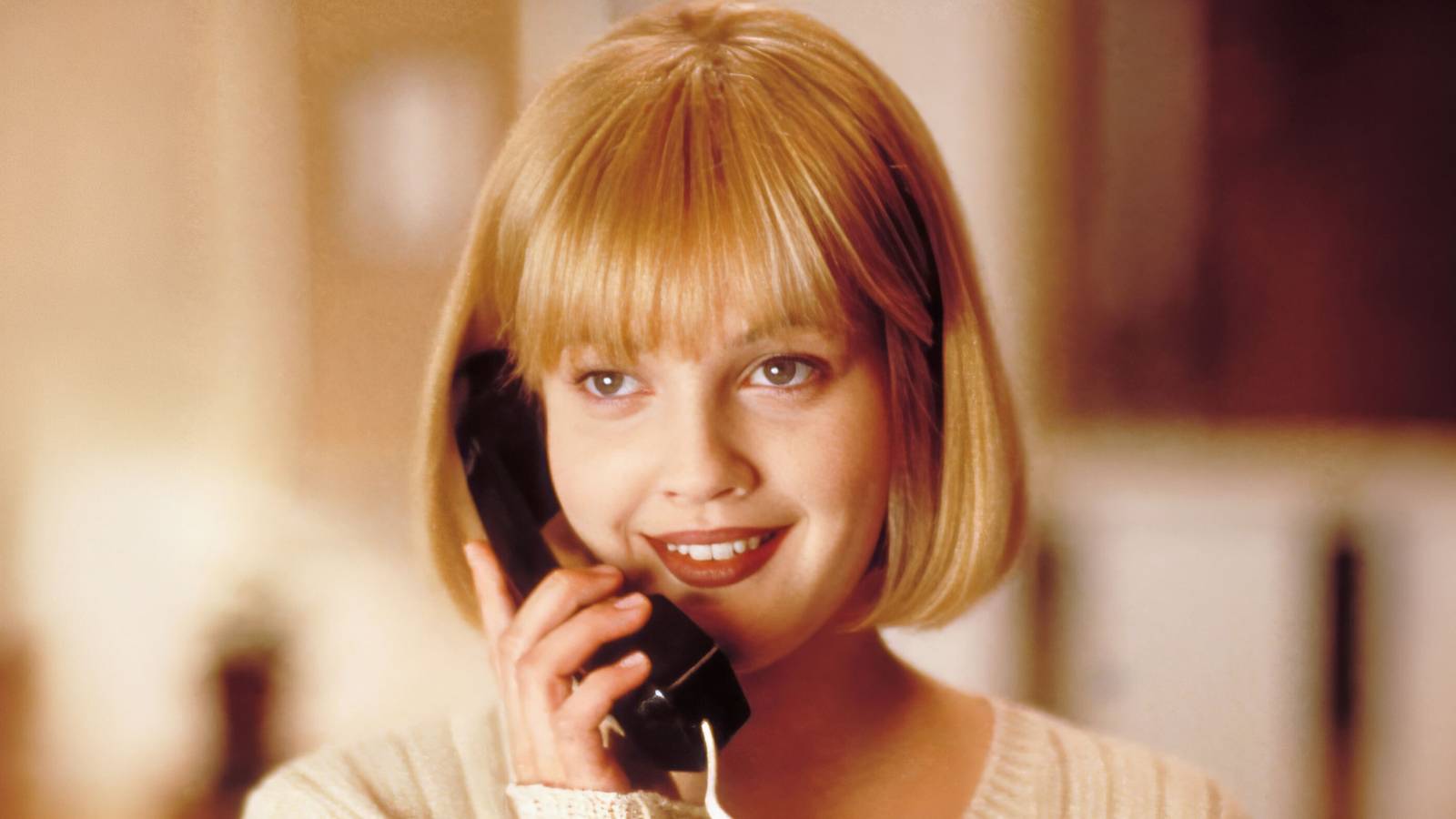
Image via Dimension Films Published Nov 3, 2026, 5:23 PM EST Daniel is a 27-year-old List Writer for Collider living in the south suburbs of Chicago, Illinois. As an avid film buff, he watches and analyzes many films and TV shows, especially in the horror genre, and regularly attends movie screenings. Sign in to your Collider account Horror thrillers are a special kind of horror that needs to grip you in the plot right from the very beginning. It is essential to set up the story, build the suspense, and attract the audience's attention right from the opening scene in all genres of cinema. Horror particularly needs this, resulting in some of our favorite opening moments of all time. The opening scene, when done right, can fill the viewers in on what they can expect and enjoy the absolute wonder they're about to experience for the rest of the story. Sometimes, the opening surpasses the rest of the film even. Horror has no short list of the most compelling opening scenes, but the best ones truly come from when horror meets thriller. No better genres mix suspense, atmosphere, and bone-chilling dread than these two when combined. They've resulted in some of the best openings horror has to offer. From one nail-biting sequence to the next, here are the ten best first scenes in horror-thriller history. 10 'Midsommar' (2019) Image via A24 Ari Aster established himself as the king of thematic horror thanks to his 2019 cult classic Midsommar. This eerie slow-burner is the modern equivalent of Robin Hardy's The Wicker Man, combining slow-moving tension and shocking rug pullers. But unlike its iconic inspiration, Midsommar hits the ground running with one hell of a brutal opening tragedy. The film starts with the protagonist, Dani (Florence Pugh), beginning her spiraling descent into grief and madness when her mentally struggling sister kills her parents and herself via carbon monoxide poisoning. It's a gun-punching opener highlighted by a slow, quiet first few moments followed by an intense transition to a graphic mass murder, accompanied by haunting music. This scene perfectly sets up the unexpected brutality of Aster's unique film. 9 'Get Out' (2017) Image via Blumhouse Productions The pinnacle of horror in the late 2010s, Jordan Peele's remarkable filmmaking debut, Get Out, is the modern masterpiece that so many films since have continued to reach for greatness. A thriller that constantly keeps you on the edge of your seat, its greatest strengths come from its ambiguity and unconventional storytelling. Hardly anywhere does this shine more than in its eerie and rather strange opener. Instead of a gruesome kill or frightening introduction of an antagonist, it opens with an ordinary Black man (Lakeith Stanfield) walking down a dark street when he's kidnapped by a mysterious man in a knight's helmet. It doesn't establish the plot, and we don't even know who this young man is; we just witness a bizarre kidnapping that we don't get an answer for until much later in the story. Though this might seem unusual, it perfectly grips you into a one-of-a-kind psychological story that will surely leave you speechless by the end. 8 'Final Destination' (2000) Image via New Line Cinema Horror saw an unbelievable change at the turn of the 21st century with James Wong's Final Destination. Easily one of the most paranoia-inducing horror films in history, this incredible nail-biter changed the game with its unique premise and unrelenting suspense, making viewers scared that anything terrible could happen at any moment. And it all starts with a highly tense opening scene, which has become cemented in horror history. When high schooler Alex Browning (Devon Sawa) experiences a premonition of a horrific disaster before his class trip's plane takes off, he freaks out and escapes the departure along with a lucky few shortly before the plane actually explodes. This opener has become synonymous with tension building. It's perfectly set up through the use of subtle ominous foreshadowing and eerie leitmotifs, and the terrifying punch comes when Alex's vision comes true. It's a well-crafted, successful opener that jump-started this iconic horror franchise with a legendary boost. 7 'Dawn of the Dead' (2004) Image via Universal Pictures Before reinventing the DC Universe, Zack Snyder dipped his hands in horror, and boy did he give it a considerable contribution when revitalizing the popularity of one of the greatest zombie movies of all time, Dawn of the Dead. His 2004 remake of the late George Romero's masterpiece is certainly more fast-paced, action-packed and intense than its 1978 original. The wild, chaotic madness of its thrilling opener certainly affirms it. In perhaps the greatest opening scene in zombie history, our lead heroine, Ana (Sarah Polley), awakens to a world rapidly descending into chaos as the dead are quickly rising. This opener doesn't hold back, dropping you right into the confusing mayhem and keeping you feeling completely on edge. While arguably the rest of the film doesn't match the intensity of this iconic introductory sequence, it's still a perfect starter that hardly any other zombie film can top. 6 'A Quiet Place' (2018) Image via Paramount Pictures John Krasinski's A Quiet Place is the thrilling sci-fi chiller that continues to define horror in the 21st century. With a unique, frightening concept, endless suspense, and a constant sense of impending doom, this 2018 masterpiece knows how to scare us out of our wits, and it first achieved this with a suddenly tragic opener that continues to give us nightmares. In a world devastated by an invading hostile alien species known as "The Death Angels," the Abbott family, led by their struggling patriarch Lee (Krasinski), are forced to adapt to this new way of living while trying not to make too much noise, or else attract the attention of these predators. Unfortunately, one crucial mistake leads their poor youngest, Beau (Cade Woodward), to suffer a gruesome fate right in front of them. This opening kill hits viewers like a truck, instantly establishing the severity of what happens when these characters make a sound. It's an unflinching and sudden gut-puncher that perfectly sets this story off on a high note. 5 'It Follows' (2014) Image via RADiUS-TWC Hailed as one of the scariest monster thrillers of all time, 2014's It Follows takes the cake for mounting dread and suspense. It is a masterclass in tension, telling a fresh, original, and horrifying story of an unstoppable entity slowly but surely walking towards its victim. Even its very first scene quickly establishes just how inescapable and bone-chillingly unsettling this idea is. It starts with a young woman, Annie (Bailey Spry), chaotically rushing out of her house and across her neighborhood alone while looking around like something is walking straight towards her. The audience doesn't see through her perspective, nor is there an indication that something actually is following her. By the end of this scene, it cuts to a shocking image of Annie's mangled corpse on a beach. This startling scene quickly sets up the story but doesn't give anything away. It's a brilliant approach that instantly hooks the viewer into figuring out what did this to that poor girl. 4 'Halloween' (1978) Image via Compass International Pictures The film that changed slashers forever, John Carpenter's indie horror masterpiece Halloween reshaped this legendary subgenre into the dominant force it is today. Featuring iconic moments and characters that have become synonymous with horror, Halloween gave audiences an unforgettably eerie thriller that kept them on the edge of their seats right off the bat. In perhaps one of the most famous twists in all of cinema, the film starts from the perspective of an unknown killer as they slowly stalk and murder poor teenager Judith Myers (Sandy Johnson) in her home, before stepping outside to be unmasked by his parents as six-year-old Michael Myers. From Carpenter's eerie score to the unsettling tone and uninterrupted suspense, this perfect opener set up what made Halloween such a cherished icon of horror. It's a masterclass in using mood, cinematography, and music to create the best kind of terror. Collider Exclusive · Horror Survival Quiz Which Horror Villain Do You Have the Best Chance of Surviving? Jason Voorhees · Michael Myers · Freddy Krueger · Pennywise · Chucky Five killers. Five completely different ways to die — if you're not smart enough, fast enough, or self-aware enough to avoid it. Only one of them is the villain your particular set of instincts gives you a fighting chance against. Eight questions will figure out which one. 🏕️Jason 🔪Michael 💤Freddy 🎈Pennywise 🪆Chucky TEST YOUR SURVIVAL → 01 Something feels wrong. You can't explain it — you just know. What do you do? First instincts are the difference between the survivor and the first act casualty. ALeave immediately. I don't need to understand a threat to respect it. BStay quiet and observe. If I can see it, I can understand it. If I can understand it, I can avoid it. CStay awake. Whatever this is, I am not going to sleep until I feel safe again. DConfront it directly. Fear grows in the dark — I'd rather know what I'm dealing with. ECheck everything, trust nothing. The threat might be closer than I think — and smaller. NEXT QUESTION → 02 Where are you most likely to find yourself when things go wrong? Setting is everything in horror. Where you are determines which rules apply. ASomewhere remote — a cabin, a campsite, off the grid and away from people. BA quiet suburban neighbourhood where nothing ever happens. Except tonight. CIn my own head — the most dangerous place of all, depending on what's already in there. DWherever children are — because something about this place attracts the worst things. ESomewhere ordinary — a house, a toy store, a place where the last thing you'd expect is a threat. NEXT QUESTION → 03 What is your most reliable survival asset? Every survivor has a quality the villain didn't account for. What's yours? APhysical fitness — I can run, I can swim, I can outlast something that relies on brute persistence. BSpatial awareness — I always know the exits, the hiding spots, the fastest route out. CPsychological resilience — I've faced my worst fears before. They don't have the same power over me. DEmotional steadiness — I don't panic. Panic is what gets you caught. EScepticism — I don't underestimate threats because of how they look. Size is irrelevant. NEXT QUESTION → 04 What kind of fear is hardest for you to fight through? Knowing your weakness is the first step to not dying because of it. AThe unstoppable — something that will not stop, cannot be reasoned with, and is always getting closer. BThe invisible — a threat I can feel but can't locate, watching from somewhere I can't see. CThe psychological — something that uses my own mind and memories against me. DThe unknowable — something ancient, shapeless, that feeds on the fear itself. EThe mundane — a threat so ordinary-looking that no one will believe me until it's too late. NEXT QUESTION → 05 You're with a group when things start going wrong. What's your role? Horror movies are brutally clear about who survives group situations and who doesn't. AThe one who says "we need to leave" first — and means it, even when no one listens. BThe one who stays quiet, watches the others, and figures out the pattern before anyone else does. CThe one who holds the group together when panic sets in — because someone has to. DThe one who asks the questions nobody wants to ask — because ignoring them gets people killed. EThe one who takes the threat seriously when everyone else is laughing it off. NEXT QUESTION → 06 What's the horror movie mistake you're most likely to make? Honest self-assessment is a survival skill. Denial is not. AGoing back for someone — I know I shouldn't, but I can't leave them behind. BAssuming I'm safe once I've found a hiding spot. That's when it finds me. CFalling asleep when I absolutely cannot afford to. Exhaustion is its own enemy. DLetting my curiosity override my instincts — I always need to understand what I'm dealing with. EDismissing the threat because of how it looks. That's exactly what it wants. NEXT QUESTION → 07 What's your best weapon against something that can't be stopped by conventional means? Every horror villain has a weakness. The survivors are always the ones who find it. AThe environment itself — I use the terrain, the water, the geography against it. BPatience — I wait, I watch, and I strike at the one moment it doesn't expect. CLucidity — if I can stay in control of my own mind, it loses its primary weapon. DCourage — facing it directly, refusing to run, taking away the fear it feeds on. EImprovisation — I use whatever's at hand, however unconventional. Creativity over brute force. NEXT QUESTION → 08 It's the final scene. You're the last one standing. How did you make it? The final survivor always has a reason. What's yours? AI kept moving. I never stopped, never hid for too long, never let it corner me. BI figured out the pattern before anyone else did — and I used it against the thing following it. CI stayed awake, stayed lucid, and refused to give it the one thing it needed most. DI stopped being afraid of it. And the moment I did, everything changed. EI took it seriously from the start — and I never once made the mistake of underestimating it. REVEAL MY VILLAIN → Your Survival Odds Have Been Calculated Your Best Chance Is Against…Your instincts, your strengths, and your particular way of thinking under pressure point to one villain you actually have a fighting chance against. Everyone else — good luck. Jason VoorheesJason is relentless, but he is also predictable — and that is the gap you would exploit. He moves in straight lines toward his target. He doesn't strategise, doesn't adapt, doesn't outsmart. He simply pursues. Your ability to keep moving, use the environment, and resist the panic that freezes most victims gives you a genuine edge. The Crystal Lake survivors were always the ones who stopped running in circles and started thinking about terrain, water, and distance. You think like that. Which means Jason, for all his indestructibility, would face someone who simply refused to be where he expected. Michael MyersMichael watches before he moves. He is patient, methodical, and almost impossible to detect — until it's too late for anyone who isn't paying close enough attention. But you are paying attention. You notice the shape in the window, the car parked slightly wrong, the silence where there should be sound. Michael's power lies in the invisibility of ordinary suburbia — the fact that nothing ever looks wrong until it already is. Your spatial awareness and instinct to map every room, every exit, and every shadow before you need them is precisely the quality Laurie Strode had. You are not a victim waiting to happen. You are someone who already suspects something is wrong — and acts on it. Freddy KruegerFreddy wins by getting inside your head — using your own fears, your own memories, your own subconscious as weapons against you. That strategy requires a target who can be destabilised. You are harder to destabilise than most. You've faced uncomfortable truths about yourself and you haven't looked away. The survivors on Elm Street were always the ones who understood what was happening and chose to face it rather than flee from it. Freddy's greatest weakness is that his power evaporates in the presence of someone who refuses to give him the fear he feeds on. Your psychological resilience — the ability to stay grounded when reality itself becomes unreliable — is exactly the quality that keeps you alive here. PennywisePennywise is ancient, shapeshifting, and feeds on terror — but it has one critical vulnerability: it cannot function against someone who genuinely stops being afraid of it. The Losers Club didn't survive because they were braver than everyone else. They survived because they faced their fears together, and faced them honestly. You ask the questions others avoid. You look directly at what frightens you rather than turning away. That directness — the refusal to let fear fester in the dark — is Pennywise's worst nightmare. It chose the wrong target when it chose you. You are exactly the kind of person whose fear tastes like nothing at all. ChuckyChucky's greatest advantage is that nobody takes him seriously until it's already too late. He exploits the gap between how something looks and what it actually is. You don't have that gap. You take threats seriously regardless of how they present — and you never make the mistake of underestimating something because of its size or appearance. Chucky relies on surprise, on the delay between recognition and response. You close that delay faster than almost anyone. Your instinct to treat every unfamiliar thing with appropriate scepticism — rather than dismissing it because it seems absurd — is the exact quality that keeps you breathing. Against Chucky, not laughing is already winning. You are very good at not laughing. ↻ RETAKE THE QUIZ 3 'The Thing' (1982) Image via Universal Pictures John Carpenter continued to produce memorable horror openers in the 20th century as his next big masterpiece, The Thing, kicked things off with a compelling mystery. Widely considered the greatest horror movie of all time by many, The Thing has been hailed for creating endless terror and suspense from beginning to end. It starts with utter chaos as the beautiful Antarctic tundra silence is interrupted when two Norwegians in a helicopter shoot at a defenseless snow dog running towards an American base. As the Norwegians continue to shoot at the dog while at the base, the confused Americans are forced to kill them in self-defense, but it seems clear the Norwegians were targeting that strange-acting dog for a dire reason. This opening scene is much like the rest of the film: ominous, ambiguous, and truly unsettling. It keeps audiences hooked and wanting to watch more of what's happening. 2 'Scream' (1996) Image via Dimension Films All hail one of the most influential horror classics, Scream, released in 1996. This Wes Craven-helmed groundbreaker reinvented the slasher subgenre at a point when it needed it the most. Terrifying, darkly hilarious, and sharply witty thanks to a superb Kevin Williamson script, it first drew audiences in with a now-legendary opening kill that has been cemented in pop culture. It all begins with a phone call. Woodsboro high school student Casey Becker (Drew Barrymore) answers a call one night from a mysterious voice who quickly goes from friendly to sinister, forcing her to play his sadistic game of horror movie trivia before ultimately killing her and her tied-up boyfriend Steve (Kevin Patrick Walls) while in a Ghostface costume. Scream's opening has been praised for its intensity and perfect pacing, dropping viewers into an unforgettable story that they certainly won't want to miss. It's tense, suspenseful, and utterly thrilling, greatly starting this bona fide masterpiece on the strong note that it deserved. 1 'Jaws' (1975) Image via Universal Pictures Finally, the top spot goes to arguably the most iconic and frightening opener in horror history. Released in 1975 and directed by the great Steven Spielberg, Jaws is the monumental horror blockbuster that boosted the genre to new heights of box office dominance. It's undoubtedly a thrilling roller-coaster from start to finish, beginning with a legendary first kill that has become immortalized in cinema history. While out for a peaceful night swim, poor Chrissie Watkins (Susan Backlinie) swims a little too far out and unknowingly attracts a mysterious predator lurking in the depths. Suddenly, the unseen creature strikes and drags her screaming below the waves. Jaws' opening scene cemented a place in pop culture for being a masterclass in build-up and suspense. From John Williams' iconic score to the unique POV shots of the shark as it rises up out of the depths, this one ultimately takes the crown as the best horror thriller opening of all time. Jaws Release Date June 20, 1975 Cast Roy Scheider, Robert Shaw, Richard Dreyfuss, Lorraine Gary, Murray Hamilton, Carl Gottlieb, Jeffrey Kramer, Susan Backlinie, Jonathan Filley, Ted Grossman, Chris Rebello, Jay Mello, Lee Fierro, Jeffrey Voorhees, Craig Kingsbury, Phil Murray, Robert Nevin, Peter Benchley, Fritzi Jane Courtney, David Engelbach, Dorothy Fielding, Joe La Creta, Belle McDonald, Joseph Oliveira, Beverly Powers Runtime 124 minutes Director Steven Spielberg Writers Peter Benchley, Carl Gottlieb
The 10 Greatest Horror Thriller Opening Scenes, Ranked
Full Article
Original Source
Read the full article at Collider →KhanList aggregates and links to publicly available news content. We do not host full articles from third-party sources. Always verify important information with original sources.