
Published Nov 16, 2026, 3:42 PM EST Born with Autism (formerly classified as Asperger syndrome), Tyler B. Searle has been obsessed with storytelling since he was old enough to speak. He gravitated towards fairy tales, mythology, the fantasy genre, and animated movies and shows aimed at family audiences. When not writing, Tyler enjoys watching more cartoons and reading fantasy books in his home in Ontario, Canada. Dragons are the most iconic fantasy creatures, and for a good reason. These mighty serpents appear in some form across all cultures, ranging from vicious weapons of death and destruction to powerful beings of wisdom and grace. This unique duality allows storytellers to go wild with their depictions of dragons, and, theoretically, no two are the same. It's no surprise that there are plenty of great dragon books out there that feature these mighty beasts. However, some of them stand out a bit better than others thanks to how they present the dragons and their use in the narrative. Note that there are tens of thousands of fictional dragons, so this list can be viewed as a snapshot of some of the greatest. 10 'The NeverEnding Story' (1979) Image via Dutton Books for Young Readers Michael Ende's The NeverEnding Story is best known for its 1982 film adaptation, widely regarded as one of the darkest fantasy movies for families. However, the movie only covered the first half of the book, which wouldn't be adapted until 1990 in The NeverEnding Story 2. Dragons have a few small but very important roles in the narrative, and come with lots of thematic significance. The most obvious one is Falcor the Luck Dragon, who resembles a lion-headed beast with pinkish skin and the ability to fly without wings. He represents wisdom and optimism, encouraging the heroes to keep faith in their quests, and that good luck always comes to those most deserving of it. Later, the protagonist, Bastian, impulsively wishes the dragon Smerg into existence—a grotesque, chimeric abomination that represents how reckless abuse of power can have disastrous consequences on the world at large. 9 'The Chronicles of Narnia: The Voyage of the Dawn Treader' (1952) Image via HarperCollins C. S. Lewis' The Chronicles of Narnia is among the first fantasy series people get into, and remains very popular and beloved to this day. For the third book, The Voyage of the Dawn Treader, Lewis created his own odyssey as the characters go looking for seven missing lords and then try to find the end of the world and the country of Aslan, the great lion and creator of Narnia. During their stop on one isle, Eustace Scrubb discovers an elderly dragon as it dies among its hoarded treasure, and, when he sleeps among it, transforms into a dragon himself. Lewis uses Eustace's transformation to explore themes of human greed and how selfish desires can turn us into something monstrous. It also has ties to Norse mythology through Fafnir, who was originally a dwarf but transformed into a dragon after killing his father and stealing his treasures. Of course, since Lewis was a staunch Christian, he has Eustace change back after he uses his draconic abilities to help the crew of the Dawn Treader, before allowing Aslan to tear away his dragon skin as a symbolic representation of divine redemption. 8 'The World of Ice and Fire' (2014) Image via Bantam Few series have had the level of effect on modern fantasy as George R. R. Martin's A Song of Ice and Fire. Thanks to the success of the HBO adaptation, Game of Thrones, it spawned a new wave of fantasy media based on political intrigue with reserved levels of magic, for better or for worse. Martin himself also produced a number of spin-off works, such as The World of Ice and Fire, which gives greater details about Westeros, Essos, and continents never visited in the main series. The book also gives a wider impression of the dragons tamed by House Targaryen, who are all but extinct in the main series. Beautiful artwork depicts Targaryen dragons in all their glory, and detail is also given of the Valyrian Empire that the Targaryens originated from, which could field thousands of dragons in their wars of conquest. And once you're done with the dragon history, there's plenty more lore to immerse yourself in thanks to Martin's unique skill in writing such an engaging secondary world. 7 'Dragon Champion' (2005) Image via Rock Books While dragons appear in plenty of stories, very few are told from their perspective. Enter E. E. Knight's Age of Fire series, which follows a trio of dragon siblings right from birth as they interact with a complex world of humans, dwarves, elves, and others. The first book, Dragon Champion, is told from the perspective of the eldest dragon sibling, AuRon, who is a rare scaleless dragon, meaning he doesn't need to eat metal to keep them strong. Knight has a lot of fun going into the biology of his dragons, from the use of a flammable fatty liquid for their fire breath to the detail that they don't grow their wings until they reach maturity. He also does a good job demonstrating how dragons view the passing of time, as AuRon meets multiple characters along his journey, only for them to age drastically between chapters while AuRon feels like only a week has passed. Later books would get caught up in geopolitics as the siblings end up shaping the fate of the world, but Dragon Champion keeps things to the life of a dragon in the wild, which makes it stand out the most. 6 'His Majesty's Dragon' (2006) Image via Del Rey/Voyager Speculative history is a fun genre that sees writers try to imagine how the world might change if history had gone a different way or included a fantastical element. Naomi Novik asked a very interesting question: what if the Napoleonic Wars had dragons? The result is His Majesty's Dragons, the first book in her Temeraire series. The book uses dragons as an aerial equivalent to warships. They bond to a human upon hatching, and, once trained and grown, carry entire squadrons of human soldiers with them into combat. Meanwhile, the dragons are still fully sentient creatures, and there are multiple different breeds that grow to different sizes and exhibit different powers. 5 'Dragonology: The Complete Book of Dragons' (2003) Image via Candlewick Press Given that every culture in the world has its own creature that fits into the broad idea of what a dragon is, it's common to wonder if they might all be related, or what their biology might be like. Dugald Steer, author of the speculative Ology series, decided to tackle it with Dragonology: The Complete Book of Dragons. Authored in text by Dr. Ernest Drake, the book goes into a deep dive regarding dragon biology and how they interact with humans. The detail put into this book is fantastic, down to the book containing small letters meant to be opened and read alongside the main text, and "samples" of dragon scales and dust that readers can interact with. Dr. Drake also assigns Latin names to each dragon species featured, making the book truly feel like a scientific journal meant to be taken seriously. Combined with the gorgeous illustrations, this book is a must-have for any dragon lover, or aspiring world-builders looking to develop their own. 4 'Dragonflight' (1968) Image via Del Rey The idea of dragon riders is one of the coolest in fiction. Who doesn't want to have a draconic companion of their own with whom they can fly through the sky or even just converse with on a deep level? Modern audiences might think of the How to Train Your Dragon movies when imagining dragon riders, but the concept arguably first exploded in pop culture thanks to Dragonflight, the first book in Anne McCaffrey's Dragonriders of Pern series. Set in the far future when humans have been able to colonize other planets, the dragons of Pern are telepathic beings who imprint on their riders at birth. They're not magical creatures, but rather came to be through years of selective breeding, and have plenty of sci-fi abilities like the ability to access a form of hyperspace called "going between." By chewing on special stones, the dragons are able to breathe fire, which the people of Pern use to protect them from regular attacks by voracious organisms called Thread. 3 'A Wizard of Earthsea' (1968) Image via Gollancz Ursula K. Le Guin's Earthsea books take readers to a fantastical archipelago where magic is commonplace and learning something's true name gives you power over it. The first book, A Wizard of Earthsea, follows a young man named Ged as he learns the ways of magic. So, naturally, his travels bring him into contact with dragons. The dragons of Earthsea vary in size and power, but at their apex, they are every bit the ancient and powerful creatures you would expect them to be. While most dragons are wise and deeply tied to magic, they also look down on humans and are more likely to kill them than converse. That said, it is possible for a human to win a dragon's respect enough to have a conversation with them, especially if they're able to decipher the dragon's true name. 2 'The Hobbit' (1937) Image via George Allen & Unwin While grading papers one day, Professor J. R. R. Tolkien found a blank sheet and wrote down: "In a hole in the ground, there lived a hobbit." From there, he worked backwards to figure out what a hobbit was, and before long, The Hobbit was published. Widely regarded as one of the greatest fantasy books ever made, it has never been out of print since its release, eventually leading to The Lord of the Rings. The story is a classic hero's journey centered on a quest to reclaim treasure stolen by the dragon Smaug, and draws heavily from Germanic mythology. Though Smaug himself only appears in two chapters near the end of the book, he leaves quite the impression, thanks in large part to Tolkien's decision to let him speak, something that was not common at the time. It not only made Smaug a representation of avarice and greed, but also a cunning and intelligent foe capable of manipulating anyone he talks to thanks to eloquent words and sharp questions that plant seeds of doubt in a person's mind. 1 'Beowulf' (c. 700-100 AD) Image via HarperCollins The oldest surviving epic poem in the English language is Beowulf; it has long been a source of inspiration for fantasy writers, including Tolkien, who wrote an entire essay about the poem's importance. Namely, he focused on its monsters and argued that they represented man's fears and our struggles against adversity and strife. This is best represented by Beowulf's third and final opponent: a dragon who awakens in wrath when its hoard is plundered. Beowulf's dragon can be interpreted in many ways, but many of them boil down to the inevitable end. There are some forces that simply cannot be fully conquered, represented by Beowulf slaying the dragon but dying in the process. The fact that it came from beneath the earth and guarded treasure from the ancient past also represents the passage of time and how all empires will inevitably come to an end.
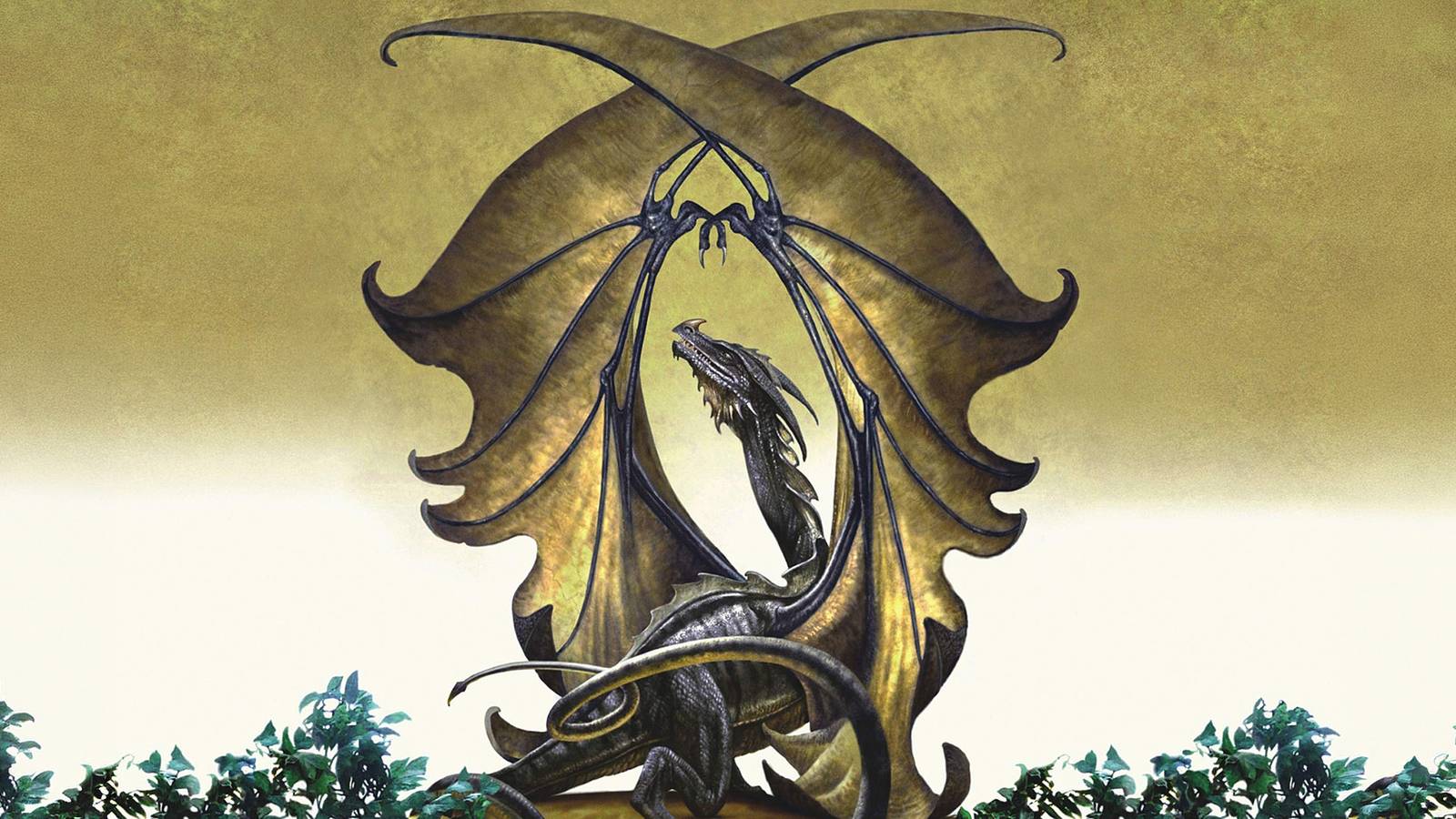
The 10 Greatest Dragon Books of All Time, Ranked
Full Article
Original Source
Read the full article at Collider →KhanList aggregates and links to publicly available news content. We do not host full articles from third-party sources. Always verify important information with original sources.