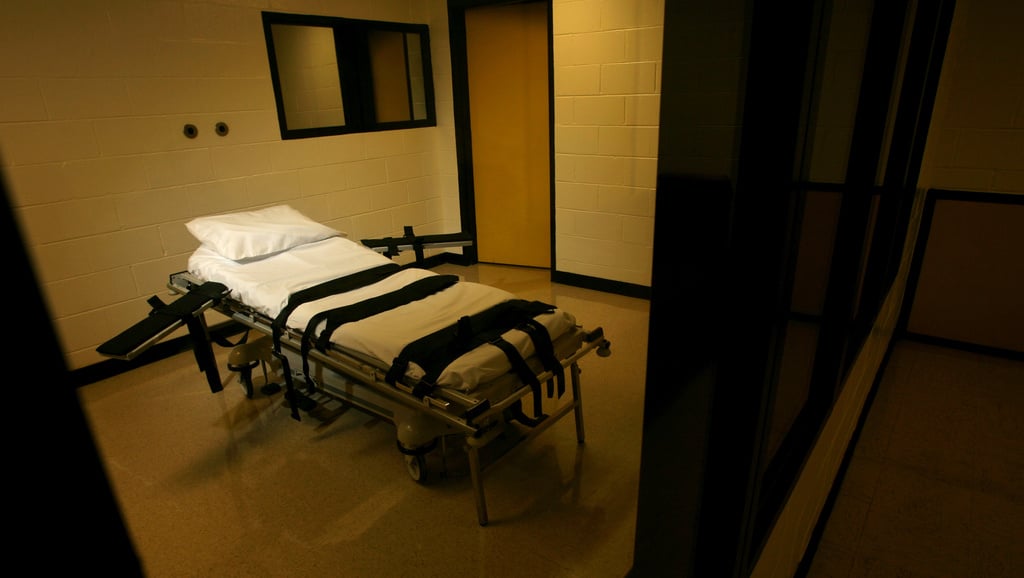
Problems with lethal injection attempts are becoming increasingly common, leading death row inmates to file last-minute appeals seeking information about the procedures to be used in their executions.WASHINGTON (CN) — Just months after a botched attempt, the Supreme Court on Thursday greenlit a Tennessee man’s execution despite concerns about the competency of officials set to carry out his lethal injection.Anthony Darrell Hines was sentenced to death for the 1985 murder of Katherine Jenkins. Hines has maintained his innocence, but the Supreme Court overturned his chance at a new trial in 2021.Over five years later, Hines returned to the high court, hoping the justices would be more sympathetic to a plea to halt his execution. Hines says his rights would likely be violated if Tennessee carried out the lethal injection, citing a botched attempt just three months ago and health issues that would complicate the procedure.“It is a grotesque spectacle for Tennessee to move forward with the execution of Darrell Hines given his debilitated medical condition and the many unanswered questions following the botched execution attempt of Tony Carruthers," Kit Thomas, an attorney for Hines said in a statement.In May, corrections officials in Tennessee spent over an hour poking and prodding Tony Carruthers while trying to establish an IV line as he was strapped to the execution table. The attempt, cited by Hines’ application, went forward after the Supreme Court also refused to block that execution. Carruthers’ attorney, who was in the room, described the procedure as “outright barbaric.”Tennessee officials were forced to abandon the bungled execution attempt, giving Carruthers a year reprieve.Hines said he would be subjected to the same fate if his execution proceeded. According to his attorneys, the same physician who mishandled Carruthers’ lethal injection would be responsible for Hines’ execution.“The Tennessee Department of Correction violated its own protocol by employing a doctor, Dr. Mark Fowler, who was underqualified and unable to set a central line, resulting in May’s horrific botched execution attempt,” Thomas said. “All of the available evidence suggests that TDOC intends to rely on Dr. Fowler despite his disastrous mishandling of the attempted execution of Mr. Carruthers. TDOC knows that Dr. Fowler can’t do the job the protocol requires him to do, and we’ve seen what that means in practice: a torturous, failed procedure that leaves staff, witnesses, and the prisoner traumatized.”But the justices ruled against Hines again shortly before his scheduled execution on Thursday. The high court did not explain its ruling, and there were no noted dissents. There are also scheduled executions in Oklahoma and Alabama Thursday, the first time there were three lethal injections set simultaneously in the U.S. since 2010.A Tennessee state court denied Hines’ appeal, leading him to file an emergency application at the U.S. Supreme Court.“At no point in the state court proceedings did the state of Tennessee offer any information to establish that Physician A is, in fact, qualified to establish a central IV-line or had been replaced by someone who is,” Hines wrote. “Instead, the state took the position that it does not matter whether Physician A is qualified to perform one of the two duties assigned to him under the protocol, because, it argued, maladministration claims are simply not cognizable under this court’s Eighth Amendment case law.”The state urged the justice to deny Hines’ appeal, stating that his “abusive delay” tactics were an attempt to manipulate the judicial process.Death penalty states have struggled to carry out lethal injections because of limited access to the drugs and personnel required for the procedures. Pharmaceutical companies object to their products being used in capital punishment, and most professionals refuse to take part in executions because of ethical concerns.In 2022, Tennessee had to abandon the execution of Oscar Smith after officials discovered the drugs planned for his lethal injection had not been properly tested. And a subsequent investigation uncovered numerous problems with the state’s procedures.Hines says the physician who botched Carruthers’ execution was a family medicine doctor who hadn’t placed a central IV line in over a decade. And his attorneys say the doctor wasn’t aware he would be required to establish central IV access until a deposition about the case.Death penalty states are increasingly turning to alternative executive methods as failed lethal injection attempts pile up. Alabama corrections officials conducted a nitrogen hypoxia execution — which uses a mask that pumps nitrogen into inmates’ airways and deprives them of oxygen — after a monthslong pause on lethal injections in 2022.South Carolina opted for a firing squad in 2025, marking the first of its kind in nearly 15 years.Lethal injection was first approved for use in the U.S. in 1977, and Texas became the first state to carry out a lethal injection execution in 1982. While it was introduced as a quick and painless death, an NPR investigation of over 200 autopsies of death row prisoners found that 84% showed evidence of pulmonary edema, a condition where a person’s lungs fill with fluid, creating the feeling of suffocation or drowning akin to waterboarding.Subscribe to our free newslettersOur weekly newsletter Closing Arguments offers the latest about ongoing trials, major litigation and rulings in courthouses around the U.S. and the world, while the monthly Under the Lights dishes the legal dirt from Hollywood, sports, Big Tech and the arts.Additional Reads
Supreme Court won’t stop Tennessee execution months after botched lethal injection attempt
Full Article
Original Source
Read the full article at Courthousenews →KhanList aggregates and links to publicly available news content. We do not host full articles from third-party sources. Always verify important information with original sources.