
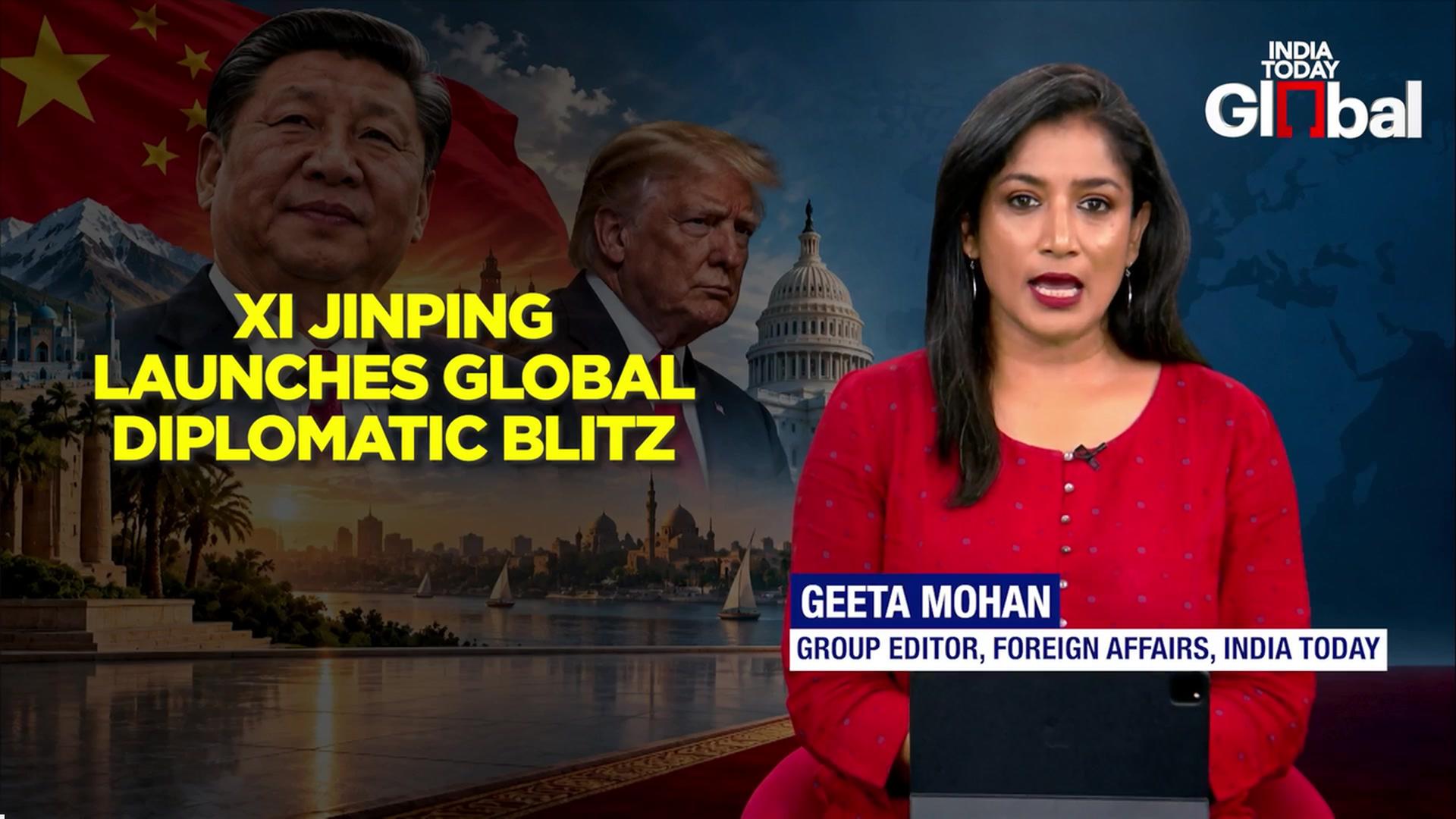
UPDATED: Sep 4, 2026 20:49 ISTChinese President Xi Jinping has embarked on an extensive foreign travel schedule across Kyrgyzstan, Egypt, India, and the United States. In Bishkek, Xi attended the Shanghai Cooperation Organisation summit, reinforcing regional transport and energy corridors across Central Asia while meeting key leaders. In Egypt, Beijing pitched artificial intelligence infrastructure and Huawei data centres to expand Chinese technological ecosystems in the Global South. Xi is also slated to attend the BRICS Summit in New Delhi hosted by Prime Minister Narendra Modi, where discussions focus on south-south cooperation, trade, and managing bilateral friction along the border. Rather than an alignment solely behind Beijing, Global South nations are hedging between the United States and China to secure capital, infrastructure, and technology. The sequencing of this diplomatic tour allows Beijing to showcase international partnerships, markets, and strategic alternatives before Xi enters bilateral negotiations with Donald Trump in Washington DC. Read MoreVIDEOS FROM OTHER SECTIONSLATEST VIDEOSXi Jinping’s Diplomatic Marathon: China’s Power Play Before TrumpXi Jinping is on a diplomatic marathon — and the timing matters. From Kyrgyzstan and the Shanghai Cooperation Organisation to Egypt, BRICS in New Delhi and an expected meeting with Donald Trump, China’s president is building partnerships, expanding options and strengthening Beijing’s influence across the Global South. Xi Jinping | West Asia War | Xi Jinping Arrives In Cairo | Xi Jinping Egypt State Visit | China Egypt Relations | Xi Jinping Cairo Visit | Chinese President In Egypt | Xi Jinping Egypt Visit | China Egypt Partnership | China Egypt Ties | Egypt China Diplomatic Relations | Xi Jinping Latest News | Xi In Cairo | China Foreign Policy | Egypt State Visit | China Egypt Cooperation | China Diplomacy | Egypt Diplomacy | International Relations | Global News | World News | Diplomacy | Geopolitics | Foreign Policy #xijinping #china #egypt #cairo #chinaegypt #chinaegyptrelations #xiinegypt #statevisit #chinadiplomacy #egyptdiplomacy #chinanews #egyptnews #geopolitics #internationalrelations #globalnews #worldnews #diplomacy #geopolitics #foreignpolicy Why is Xi travelling so extensively now? China wants to show that it has markets, technology, infrastructure projects and diplomatic partners beyond Washington. From AI data centres in Egypt to transport corridors in Central Asia, Beijing is using trade and technology to deepen its global reach. BRICS and the SCO offer another platform to challenge Western dominance and promote greater use of local currencies. But India remains a crucial piece of this strategy. Can Xi and Prime Minister Narendra Modi stabilise ties despite years of border tensions? Meanwhile, Pakistan is using a very different strategy. Islamabad has officially pushed the term “Fitna al-Hindustan” for Baloch militant groups, framing the Baloch insurgency as an Indian-backed conflict. But can an internal crisis be rewritten simply by blaming an external enemy? This episode of Statecraft examines Xi’s diplomatic outreach, China’s Global South strategy, BRICS, India-China ties, Pakistan’s Balochistan narrative and the growing battle over geopolitical influence.Godavari-Cauvery River Linking Plan: Route Details, State Concerns & Key Hurdles ExplainedThe proposal to link the Godavari and Cauvery rivers faces complex political and legal hurdles among southern states. Andhra Pradesh Chief Minister N Chandrababu Naidu has advocated linking the Godavari with the Cauvery by tapping surplus river water flowing into the Bay of Bengal and diverting it to drought-prone regions, proposing a route starting at Polavaram and seeking national project status. Under the Central government's National River Linking Project blueprint, the route begins at Inchampally in Telangana and passes through Nagarjuna Sagar and Somasila before reaching the Grand Anicut in Tamil Nadu. However, interstate disagreements persist. Telangana questions how surplus water is calculated, raising concerns over downstream diversions impacting its needs. Karnataka insists any extra Cauvery inflows cannot solely benefit Tamil Nadu and demands its own share be protected. Tamil Nadu seeks additional water without compromising existing river entitlements. Upstream states including Chhattisgarh, Odisha, and Maharashtra also hold stakes, leaving a consensus among stakeholders elusive.Exclusive: Envoy Sergio Gor decodes US-India ties, QUAD, PM Modi-Trump bonhomieIn an interview with India Today, United States Ambassador to India Sergio Gor discussed bilateral relations, defense cooperation, and trade. Speaking on the strategic partnership between India and the United States, Gor stated, "The numbers don't lie," pointing to rising bilateral trade, defense deals, and joint military exercises. He highlighted the Quad framework and noted that the four partner countries share trust and collaborate on critical minerals, artificial intelligence, and disaster relief. Gor mentioned upcoming diplomatic engagements, including visits by US Secretary of State Marco Rubio and Indian officials, alongside potential meetings at the G20 summit in Florida. Addressing economic cooperation, Gor stated that bilateral trade reached 240 billion dollars with a target of 500 billion dollars, noting progress on a bilateral trade agreement. He added that defense initiatives such as the Javelin joint venture and Apache helicopter deliveries demonstrate mutual trust, alongside joint military drills like Yudh Abhyas in Rajasthan.Nepal Glacial Flood Exposes Himalayan Risks: India Tracks 195 Vulnerable Glacier LakesA devastating flood triggered by a glacial collapse in Nepal's Rasuwa region near the Nepal-Tibet border has highlighted major risks of cascading Himalayan hazards. In response to rising threat levels from Glacial Lake Outburst Floods, the National Disaster Management Authority has identified 195 vulnerable glacier lakes across Himachal Pradesh, Sikkim, Ladakh, Arunachal Pradesh, Jammu and Kashmir, and Uttarakhand. India relies on multiple disaster monitoring systems, including Indian Space Research Organisation satellites for remote sensing and terrain mapping, Met Department weather models providing river sub-basin quantitative precipitation forecasts, and Central Water Commission river gauges offering up to 24-hour advance flood warnings. The National Remote Sensing Centre integrates geospatial data into a national emergency database to provide hazard maps and early warnings. However, the Nepal disaster underscores gaps in monitoring high-altitude ice collapses, where one failure sets off a chain of catastrophic events across the fragile Himalayan ecosystem.
Statecraft With Geeta Mohan | Xi Jinping Is Not Isolated: Building a Global Bloc Against Trump
Full Article
Original Source
Read the full article at Indiatoday →KhanList aggregates and links to publicly available news content. We do not host full articles from third-party sources. Always verify important information with original sources.