
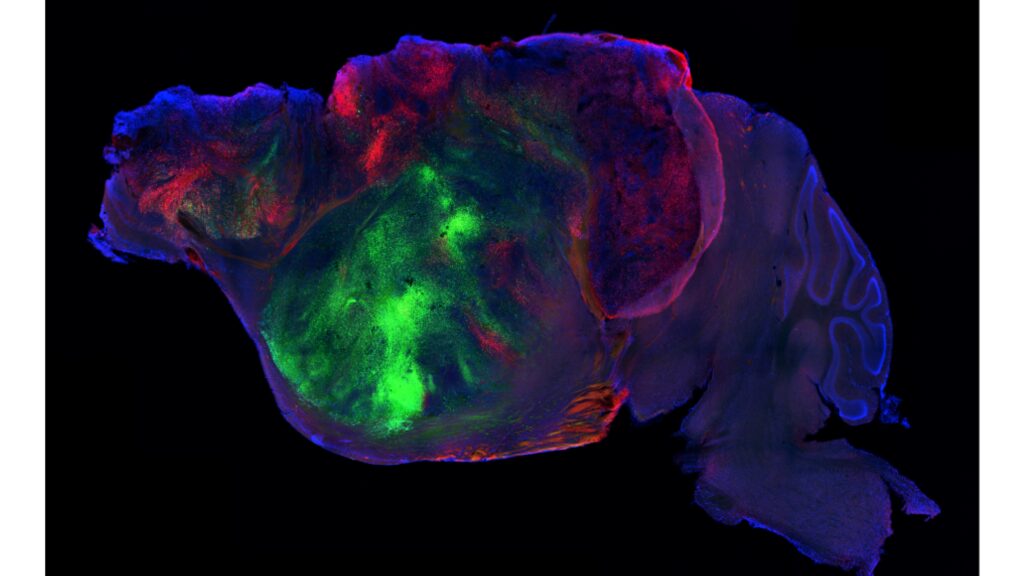
For the last decade, scientists have been steadily getting better at growing “cerebral organoids,” miniature, three-dimensional brain-like structures, from human stem cells in the lab. Now, a group from Stanford University has found a way to advance their usefulness for studying brain development and disease — by instead growing them inside mice that have had large parts of their own brains genetically removed. Neuroscientists say these “neuro-chimeric” mice, whose brains are half-human — by volume, not by number of neurons — are an important innovation for a field hampered by longstanding challenges in accessing human brain tissue for research. But such models also raise a host of ethical questions that will get thornier the more advanced they become. In a study published Wednesday in Nature, the Stanford team reported finding types of human cells inside the brains of 3-month-old chimeric mouse pups that are very hard to obtain in a dish. They included pyramidal projection neurons that had wound their way into some of the animals’ spinal cords. The scientists also found evidence of specialized, super-sized neurons involved in social cognition only found in large-brain mammals like elephants, whales, and primates, including humans. STAT+ Exclusive Story Already have an account? Log in This article is exclusive to STAT+ subscribers Unlock this article — plus in-depth analysis, newsletters, premium events, and news alerts. Already have an account? Log in View All Plans To read the rest of this story subscribe to STAT+. Subscribe
STAT+: Scientists made mice with half a brain. Then they filled them with human organoids
Full Article
Original Source
Read the full article at Statnews →KhanList aggregates and links to publicly available news content. We do not host full articles from third-party sources. Always verify important information with original sources.