
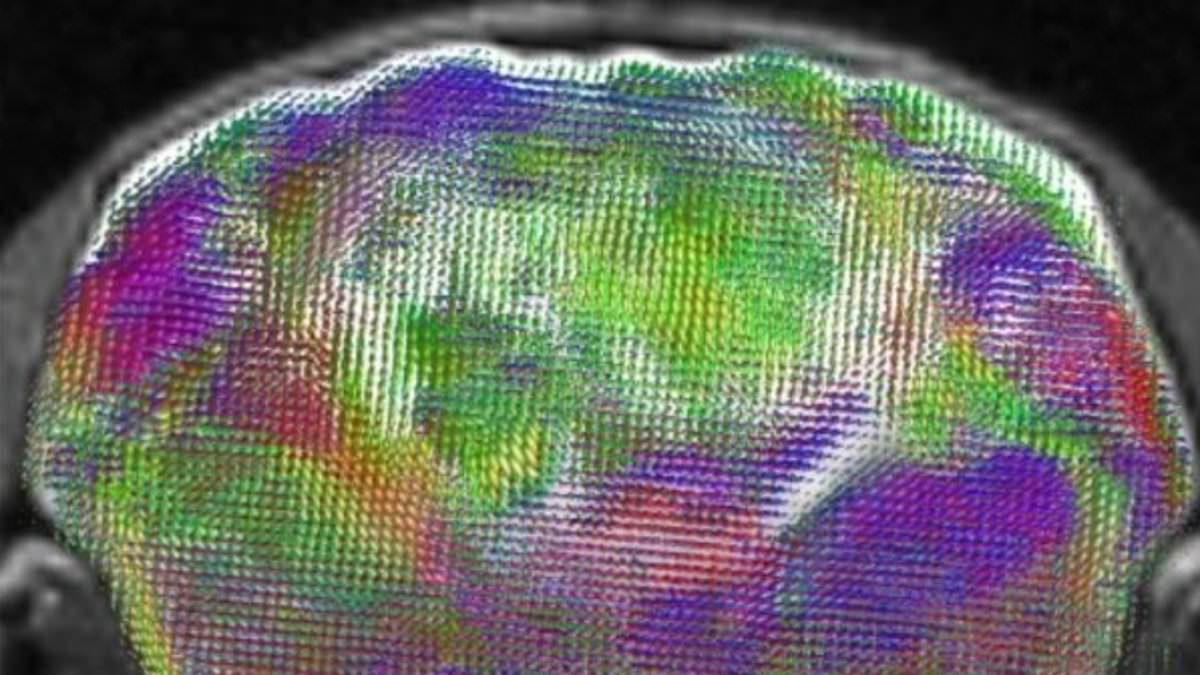
The idea of a mouse with a half-human brain might sound like something created in Dr Frankenstein's lab. But it has become a reality in California, where scientists from Stanford University have transplanted lab-grown human brain tissue into bioengineered mice.The human tissue replicates key features of brain development – including the formation of functional neural networks.This is significant because living human brain tissue is essentially inaccessible for research purposes for ethical reasons.According to the researchers, the breakthrough could speed up research into the causes and mechanisms of devastating disorders such as profound autism, epilepsy, cerebral palsy and schizophrenia.'This gives us a way to study human neural tissue across several levels, from genes and individual cell types to circuits and functional consequences in an animal,' said senior author Professor Sergiu Pasca.'We can begin to ask how disease-associated human genetic changes alter neural development and circuitry and whether potential treatments can prevent or correct those changes.' A map of estimated nerve-fibre pathways in the brain of an experimental 'xenocortical' mouse that was bioengineered with lab-grown human brain tissue The human tissue replicates key features of brain development – including the formation of functional neural networksIn the study, the team used stem cells to create mini, 3D organoids that can reproduce features of the human cerebral cortex. This is the part of the brain that controls cognition, language, attention and decision–making. Next, the team used a genetic strategy in mice to block the development of most of the cells that normally give rise to the cerebral cortex. Professor Pasca explained: 'The space normally occupied by the mouse cortex allowed us to transplant human cortical organoids shortly after birth and gave the human tissue room to grow extensively.'In these mice, the human grafts generated a broad diversity of cortical cell types and established functional connections throughout the mouse nervous system.'The researchers call the resulting mice 'xenocortical', rather than 'humanised'. 'These animals retain a mouse nervous system, but they contain a larger volume of human cortical tissue that develops, integrates and forms connections within it,' Professor Pasca said.'Cortical organoids give us an experimental window into human brain development and disease. 'They are not miniature brains and do not reproduce the full complexity of the human brain, but they allow us to study human neural cell types and developmental processes that would otherwise be extremely difficult to access.' A cross-section MRI scan through a xenocortical mouse brain showing a map of estimated nerve-fibre pathways and directions In the future, the mice could help scientists to investigate disorders such as autism, epilepsy and schizophrenia. However, as a first application, the researchers used the mice to understand what happens during oxygen deprivation – something that can have major neurological consequences when it occurs during pregnancy or birth. The results revealed that the bioengineered mice looked like ordinary laboratory mice as they moved around and explored their environment. However, they had deficits in fine motor coordination and differences in memory abilities. Professor Pasca said: 'In the xenocortical mice, a period of low oxygen caused substantial injury to human cortical cells and was accompanied by abnormalities in gait and motor coordination.'The researchers said the experiments adhered to ethical guidelines focused on two issues in particular.'The first is animal welfare: the scientific question has to justify the use of animals, suffering must be minimized and experiments should only be performed when the information cannot adequately be obtained with alternative approaches,' Professor Pasca said.'The second is whether introducing increasingly complex human neural tissue into an animal nervous system could lead to unexpected, emergent or novel properties that would require additional ethical consideration.'The expert added: 'We also have to weigh the cost of not doing this work,' noting that neurological and psychiatric disorders affect nearly one in five people even as scientific understanding remains limited and effective treatments remain lacking for many of these conditions.
Rise of the Frankenmice! Scientists create mice with half-human BRAINS
Full Article
Original Source
Read the full article at Dailymail →KhanList aggregates and links to publicly available news content. We do not host full articles from third-party sources. Always verify important information with original sources.