
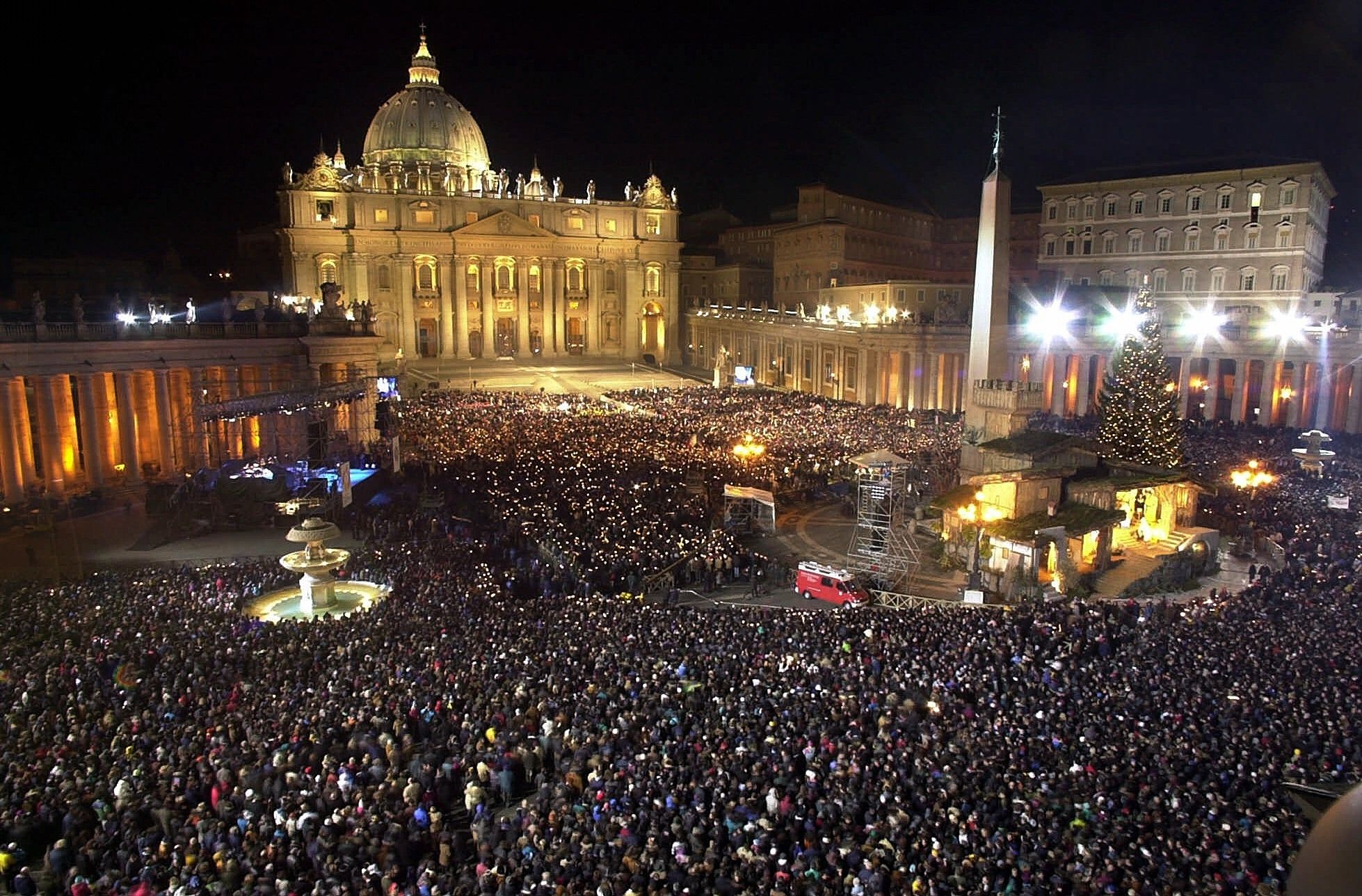
A setting for papal ceremonies and a destination for millions of pilgrims each year, the basilica was built over the traditional burial site of the Apostle Peter.VATICAN CITY (AP) — St. Peter’s Basilica, the spiritual heart of Roman Catholicism whose commanding dome defines the Roman skyline, marks the 400th anniversary of its dedication Wednesday, a monument to artistic achievement and perseverance.Its construction spanned 120 years, 20 pontificates and the work of a succession of 12 architects, enduring the Protestant Reformation and the sack of Rome before Pope Urban VIII dedicated it on Nov. 18, 1626.“You walk through those doors and you won’t feel the conflicts and the disasters and the setbacks,” said Elizabeth Lev, a Rome-based American art historian. “You walk through those doors and you see continuity and beauty and achievement and triumph.”A setting for papal ceremonies and a destination for millions of pilgrims each year, the basilica was built over the traditional burial site of the Apostle Peter, replacing a church that had stood for more than a millennium.Pope Julius II laid the foundation stone on April 18, 1506, launching a project whose architects included Donato Bramante, Michelangelo and Carlo Maderno, who completed its facade.Even on the day of its dedication, the basilica’s familiar setting was still taking shape.“The church facade was complete, but the amazing piazza, which is part and parcel of the church we know today, wasn’t there yet,” Lev said.“As a matter of fact, you would have heard lots of people complaining about the new facade and how it blocked Michelangelo’s dome,” she said.Gian Lorenzo Bernini’s sweeping oval piazza was completed in 1667, its curving colonnades conceived as the welcoming arms of the Church. Its 284 columns, arranged in four rows, frame an oval space connected to the basilica by a trapezoidal forecourt.Inside, the basilica’s architecture draws attention toward its spiritual center: Peter’s tomb beneath the main altar, Bernini’s monumental bronze canopy and Michelangelo’s dome rising overhead. Generations of popes have been entombed in the basilica and the Vatican Grottoes below.“The inside of St. Peter’s Basilica is marked by unity and magnificence,” Lev said. “So for a church that took 120 years, it’s amazing how each part fits together into something of a unified whole.”The basilica and its square have witnessed the opening of the Second Vatican Council, papal funerals and the first appearances of newly elected pontiffs. Crowds gather in the square for Sunday blessings, while at Christmas and Easter the pope traditionally delivers his message and “Urbi et Orbi” blessing — Latin for “to the city and to the world” — from the basilica’s central balcony.In one of the defining images of the coronavirus pandemic, Pope Francis stood before the rain-soaked, deserted square to impart an extraordinary blessing on March 27, 2020.The basilica also provided the setting for a private meeting between U.S. President Donald Trump and Ukrainian President Volodymyr Zelenskyy before Francis’ funeral on April 26, 2025.For Lev, the basilica’s long history offers a message for another unsettled age.“I think one of the great lessons about St. Peter’s is that people adapt, the church adapts according to the circumstances,” she said. “And yes indeed, many terrible things happened while they were building that church and they forged onwards and they ended up making something beautiful.”Subscribe to our free newslettersOur weekly newsletter Closing Arguments offers the latest about ongoing trials, major litigation and rulings in courthouses around the U.S. and the world, while the monthly Under the Lights dishes the legal dirt from Hollywood, sports, Big Tech and the arts.Additional Reads
St. Peter’s Basilica marks 400 years at the heart of Roman Catholicism
Full Article
Original Source
Read the full article at Courthousenews →KhanList aggregates and links to publicly available news content. We do not host full articles from third-party sources. Always verify important information with original sources.