
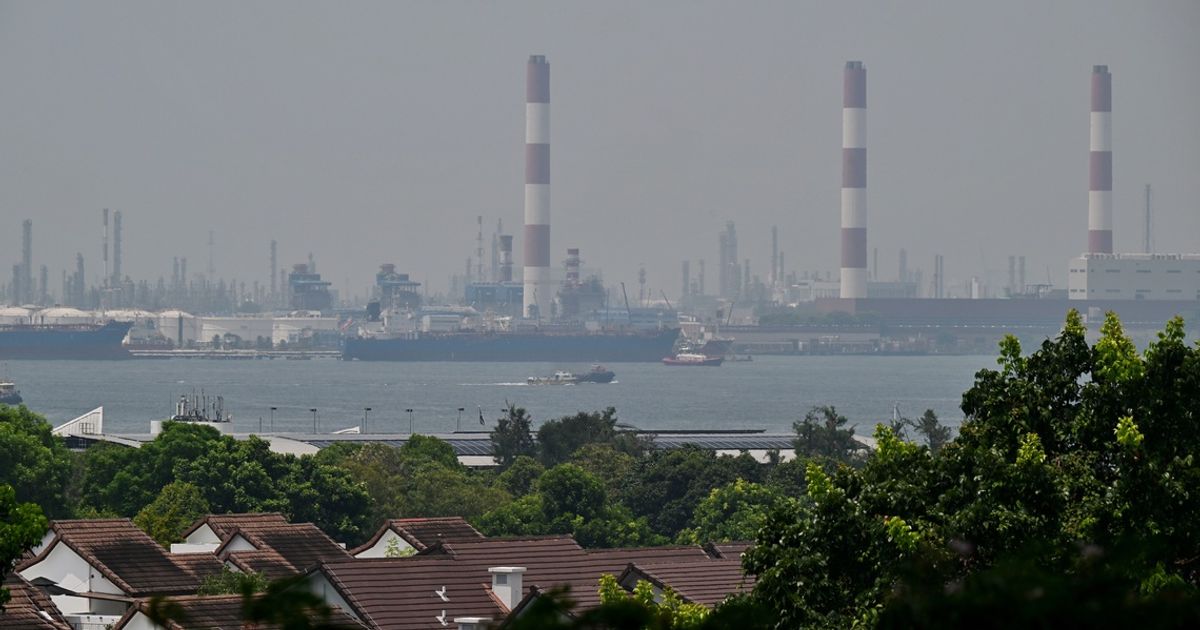
ANTALYA, Turkey – Singapore is preparing to transition its economy from a fossil-fuel based to a greener one, but will do so in a carefully managed way. This is so it can remain economically competitive even as it does “the right thing for the world and our future generations”.Minister for Sustainability and the Environment Grace Fu said this on Nov 17, in her delivery of Singapore’s national statement at the COP31 UN climate talks in the Turkish city of Antalya.The two-week summit, which is due to end on Nov 20, has been billed an “implementation COP” for its focus on translating pledges to concrete actions.Addressing world leaders at the COP31 high-level segment, the minister said: “The next phase of global climate cooperation must place greater emphasis on implementation. It will require us to focus less on declarations alone, and more on the practical work of delivery.”In her speech, she fleshed out the country’s plans to cut emissions and protect its people from climate impacts, while taking steps to help emissions-intensive sectors develop new business models.For example, Singapore has plans to transform industrial Jurong Island into a sustainable energy and chemicals park, by increasing output of sustainable products such as biofuels, and boosting the energy efficiency of its factories.How countries can green their economies in ways that will not disadvantage workers in the fossil fuel sectors, or cause higher costs of living for lower-income groups, are a key focus at this year’s talks.“We are striving to maximise sector transformation and decarbonisation efforts, even as we secure our strategic and growth priorities,” Fu said.She also highlighted the various efforts that Singapore has embarked on to help the renewable energy-disadvantaged country cut its emissions from the power sector, which contributes 40% of the nation’s total emissions.Singapore now relies on natural gas, a fossil fuel, for 95% of its energy needs. But Fu said the country plans to reduce its reliance on this by importing low-carbon electricity and exploring tapping various low-carbon energy sources.It is also studying the potential deployment of nuclear energy and geothermal energy, among other things.But even as Singapore moves to do more for climate action domestically, it also recognises the importance of international cooperation, Fu said.Singapore on Nov 17 pledged US$500,000 (S$644,000) to a fund called for by small island nations in the Pacific to strengthen their resilience against climate change and natural disasters.“This reflects our commitment to supporting the Pacific’s efforts to strengthen climate resilience and natural disaster preparedness at the community-level,” she said. Pacific island nations are hoping to raise US$500 million under the fund.The Republic’s contribution to the Pacific Resilience Facility is part of the broader Singapore Green Cooperation Programme, which was also launched on Nov 17.The programme pulls together all of Singapore’s climate-related development partnership initiatives, including its expanded support for developing country partners.The programme also entails sharing the nation’s expertise in areas like carbon markets with partner countries and providing support for developing countries through grants and blended finance mechanisms.She added that Singapore believes that trade can be an enabler of climate action and support countries’ decarbonisation efforts.“Open, predictable and well-functioning trade can facilitate and encourage greater flow of clean energy, low-carbon goods and services,” Fu said.On regional cooperation, Fu said that as Singapore assumes the ASEAN chairmanship in 2027, it will be a timely opportunity to work with the bloc on initiatives that can help promote climate action.One of these is the ASEAN power grid, which will allow countries in the region to trade electricity freely with one another.As ASEAN Chair in 2027, Singapore will play a constructive role in advancing this, she added.Tackling transboundary haze is another issue that Singapore wants to work with its neighbours in ASEAN on.Haze shows how peatland, forest management and climate change are closely linked, the minister said. “Haze is not an inevitable seasonal phenomenon. It can be prevented through companies responsibly managing their land, effective enforcement and regional cooperation,” she said.Overall, Singapore experienced more than seven weeks of haze in 2026, where air quality first entered the unhealthy range on Sept 4.As the impacts of climate change worsen, the UN has called on countries to take steps to protect their people from changing weather patterns and extreme weather events.Fu said Singapore is also moving on this front, rolling out new policy initiatives and research programmes to help people in the tropical country cope with rising temperatures, among other climate impacts.For instance, Singapore had in March established a heat resilience office to coordinate heatwave response measures across various sectors, and launched a S$40 million initiative on heat-related research for the vulnerable groups.Singapore will also be developing its first national adaptation plan that will be released in 2027, said Fu.This involves a comprehensive review of adaptation measures across coastal, flood, heat and food resilience, she noted.Fu said that Singapore is committed to meeting its climate targets despite mounting challenges, and urged other countries to do the same.“COP31 must send a clear signal that multilateral cooperation on climate change can and is continuing to drive global climate action,” she said.“The next phase of global climate cooperation must place greater emphasis on implementation… It will require us to preserve multilateral cooperation, even when consensus is difficult.”
S’pore to carefully manage its green transition while staying competitive: Grace Fu at COP31
Full Article
Original Source
Read the full article at Straitstimes →KhanList aggregates and links to publicly available news content. We do not host full articles from third-party sources. Always verify important information with original sources.