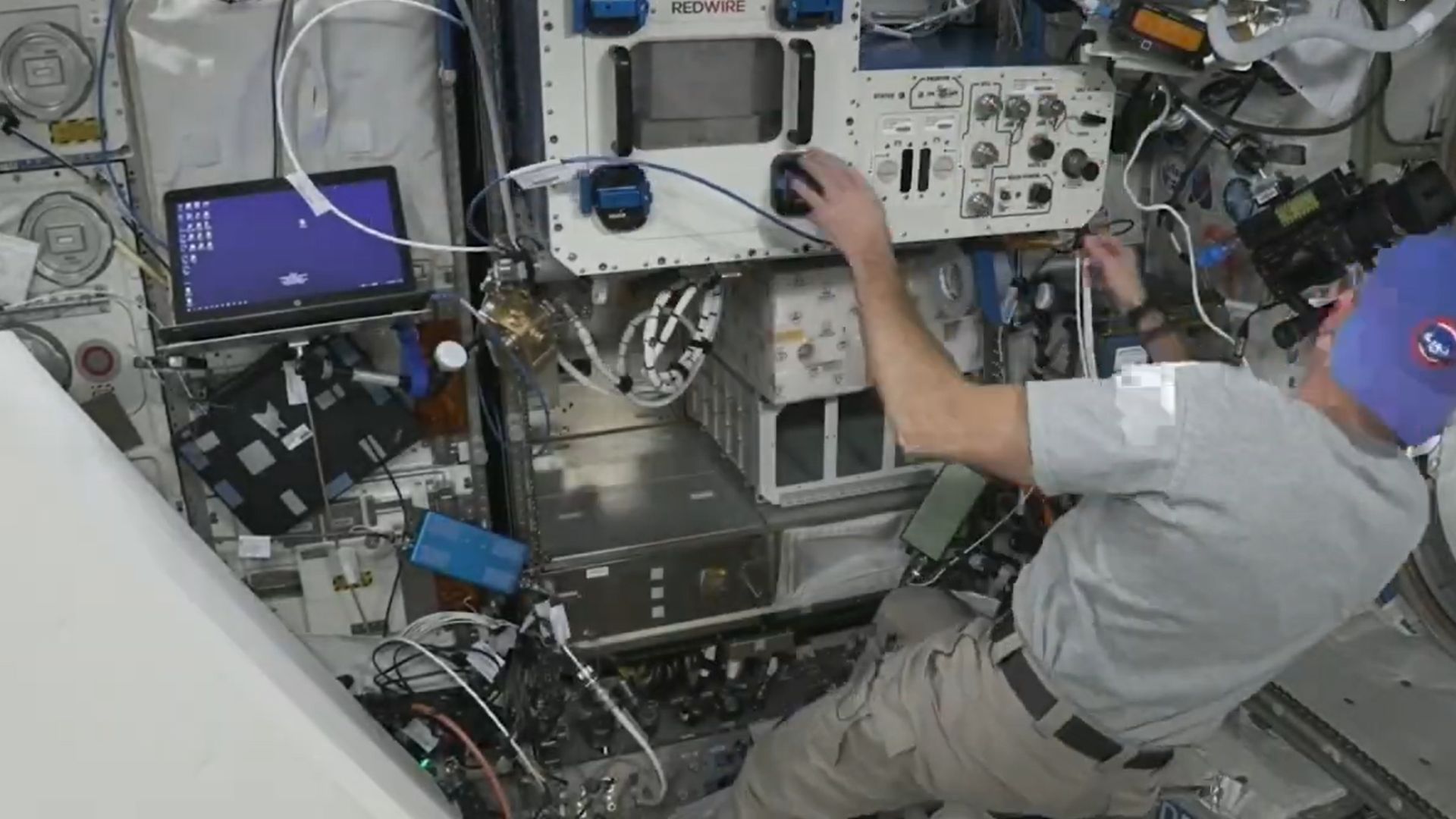
SpaceMD, a wholly owned subsidiary of US space infrastructure company Redwire, has signed a contract to fly pharmaceutical research aboard SpaceX’s new Starfall spacecraft. Planned for launch in 2028, the mission will use microgravity to study drug compounds and accelerate the development of improved medicines for patients on Earth. The spacecraft is expected to carry up to 32 Pharmaceutical In-Space Laboratory boxes, or PIL-BOXes, providing pharmaceutical companies, biotechnology firms, and academic researchers with a dedicated orbital laboratory. SpaceMD says the flight could become the largest dedicated commercial microgravity research mission conducted to date. A larger laboratory in orbit SpaceMD will develop a new PIL-BOX variant designed to use and optimize research across the Starfall spacecraft. The system will allow researchers to expose selected drug candidates to a controlled microgravity environment for a tailored period before returning them to Earth for analysis. Microgravity can change how biological materials and chemical compounds behave. In pharmaceutical research, it can enable drug compounds to form larger and more uniform crystals than those typically produced under Earth’s gravity. Scientists can analyze these structures to understand molecules better, refine formulations, and potentially develop more effective therapeutics. Starfall is designed to provide affordable and routine access to microgravity for manufacturing, scientific research, and technology testing. Pairing the spacecraft with Redwire’s laboratory hardware could increase both the number and frequency of commercial experiments flown in orbit. Decades of microgravity research “Space-based pharmaceutical development is reaching an inflection point. For decades, Redwire has built and operated the infrastructure that has enabled critical progress in microgravity research,” said John Vellinger, CEO of SpaceMD. “Now, by combining our flight-proven microgravity payloads, such as PIL-BOX, with SpaceX’s innovative transportation capabilities, we’re dramatically expanding our ability to serve customers, increase research cadence, and accelerate the creation of life-changing therapies,” he added. The planned mission builds on pharmaceutical and life sciences research performed using Redwire hardware aboard crewed spacecraft, from NASA’s Space Shuttle to the International Space Station. Since November 2023, 54 PIL-BOX systems have flown to the ISS. Another 12 systems are being prepared for launches scheduled across September, October, and December, according to the company. Targeting major diseases SpaceMD has used its orbital laboratories to crystallize 45 unique compounds. These include insulin and molecules associated with treatments for cancer, cardiovascular disease, obesity, and diabetes. The 2028 Starfall mission represents a significant increase in scale. By carrying as many as 32 laboratories on one spacecraft, SpaceMD could run multiple investigations during the same flight while providing researchers with different experiment configurations and mission durations. The contract also reflects the growing effort to establish commercial research platforms beyond the ISS. As access to orbit becomes more frequent, dedicated spacecraft could give companies greater control over schedules, experimental conditions, and return timelines. For SpaceMD, that means turning microgravity research from an occasional opportunity into a repeatable pharmaceutical development service. The broader goal is to shorten research cycles and use conditions unavailable on Earth to help produce new formulations and therapies for a broader range of commercial customers. Recommended ArticlesAtharva is a full-time content writer with a post-graduate degree in media & amp; entertainment and a graduate degree in electronics & telecommunications. He has written in the sports and technology domains respectively. In his leisure time, Atharva loves learning about digital marketing and watching soccer matches. His main goal behind joining Interesting Engineering is to learn more about how the recent technological advancements are helping human beings on both societal and individual levels in their daily lives.
SpaceX to launch 32 pharma laboratories into orbit for microgravity drug production
Full Article
Original Source
Read the full article at Interestingengineering →KhanList aggregates and links to publicly available news content. We do not host full articles from third-party sources. Always verify important information with original sources.