
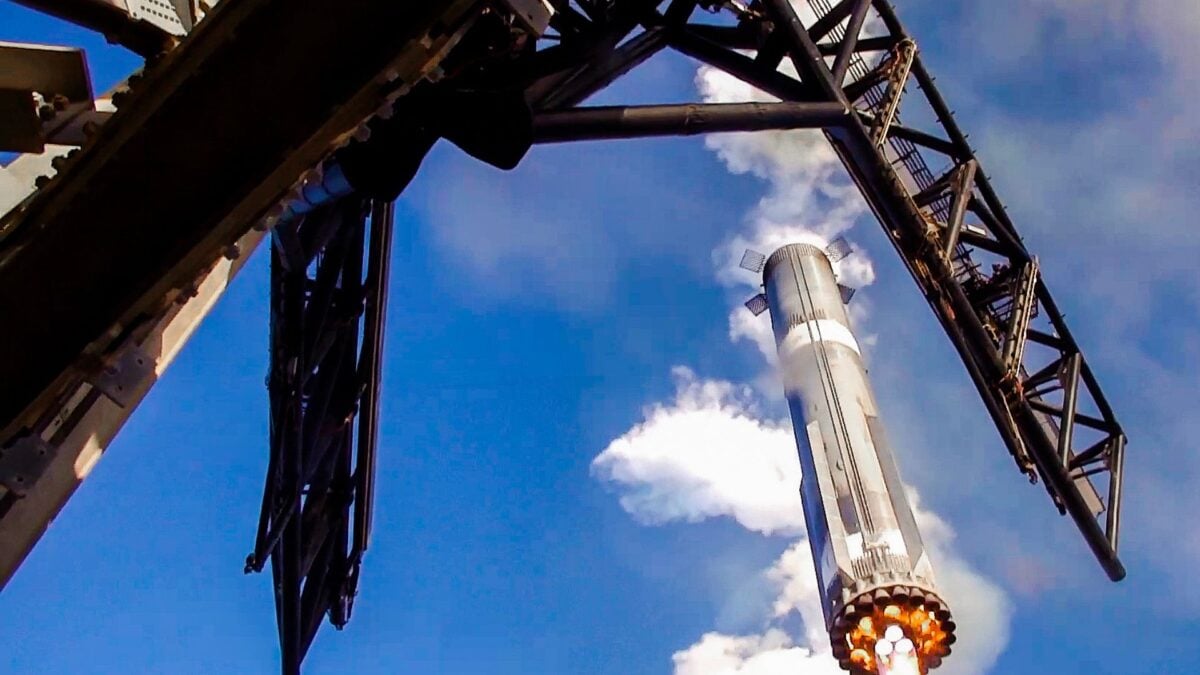
SpaceX is preparing to take rocket reusability to the next level. During its upcoming test flight on Friday, the company will attempt to catch both stages of its Starship rocket for the first time. Beyond the spectacle, the double catch attempt represents a crucial test of the company’s plans to make Starship fully reusable. Starship’s flight 15 is scheduled for launch on Friday, November 13, during a 75-minute launch window that opens at 5:45 p.m. ET. While SpaceX has successfully caught Starship’s Super Heavy booster three times before, this will be the first attempt to catch the upper stage. Success would bring the company one step closer to demonstrating that its massive rocket can be recovered, refurbished, and launched again. “If successful, this will mark the first full recovery of an orbital launch system and a breakthrough moment in making Starship a reliable, rapidly reusable rocket,” SpaceX wrote. Catch them both, fly them again SpaceX has been building up to this moment for quite some time. During Starship’s latest test flight on September 28, the massive rocket reached orbit for the first time. It was a major step toward turning Starship into an operational launch vehicle, although the flight also exposed some lingering engine reliability issues. SpaceX had planned a nearly 10-hour mission, including approximately six orbits around Earth. However, following an engine issue during ascent, the team opted to shorten the flight and bring Starship back sooner. The spacecraft performed its first-ever deorbit burn, survived atmospheric reentry, and successfully splashed down in the Pacific Ocean roughly three hours after launch. Shortly after Starship’s first orbital flight, SpaceX founder and CEO Elon Musk revealed the company’s plans for a double catch attempt during flight 15. “The only way that we can extend consciousness beyond Earth on a sustained basis is with a fully reusable orbital launch vehicle. So this is, I think, a profound technology milestone in the history of civilization and consciousness,” Musk said during a company earnings call in October. The double catch attempt will involve two “Mechazilla” launch and catch tower systems at Starbase in South Texas. The 480-foot-tall (146-meter-tall) structures feature chopstick arms designed to catch the booster or upper stage following their controlled descent toward Earth. Catching the Super Heavy booster and Starship’s upper stage presents two very different challenges. The booster returns relatively soon after liftoff, using a series of carefully timed engine burns to slow its descent and position itself for a catch by Mechazilla’s mechanical arms. Starship’s upper stage, however, must travel much farther and faster, reaching orbital velocity before making its way back through Earth’s atmosphere. Its return involves surviving the intense heat of atmospheric reentry, maneuvering into the correct position, and slowing down enough to be caught by the tower. A flight to remember For its upcoming flight, Starship is expected to go orbital once again. The upper stage will also deploy 26 of SpaceX’s next-generation Starlink V3 satellites. Starship is expected to orbit Earth at an altitude of around 171 miles (275 kilometers). The plan is for Starship to complete approximately 14 orbits around the planet over the course of a more than 22-hour flight, according to SpaceX. “Similar to Starship’s first orbital mission, the flight profile has been designed with the opportunity to insert into a passively safe suborbital trajectory or safely deorbit at multiple pre-determined areas over the ocean after raising to an orbital altitude,” the company wrote. This means that, should there be another engine anomaly or some other issue that comes up during the flight, SpaceX is prepared to end the mission early and perform a splashdown of the upper stage. Ultimately, the double catch is about much more than pulling off an impressive maneuver. SpaceX’s vision for Starship hinges on its ability to recover both stages intact, rapidly prepare them for another flight with minimal refurbishment, and send them back to space. If successful, catching both the Super Heavy booster and Starship would bring the company closer to a fully reusable launch system, potentially driving down launch costs and allowing for a much higher flight cadence.
SpaceX Picked Friday the 13th to Attempt Its First Double Catch of Starship and Its Booster
Full Article
Original Source
Read the full article at Gizmodo →KhanList aggregates and links to publicly available news content. We do not host full articles from third-party sources. Always verify important information with original sources.