
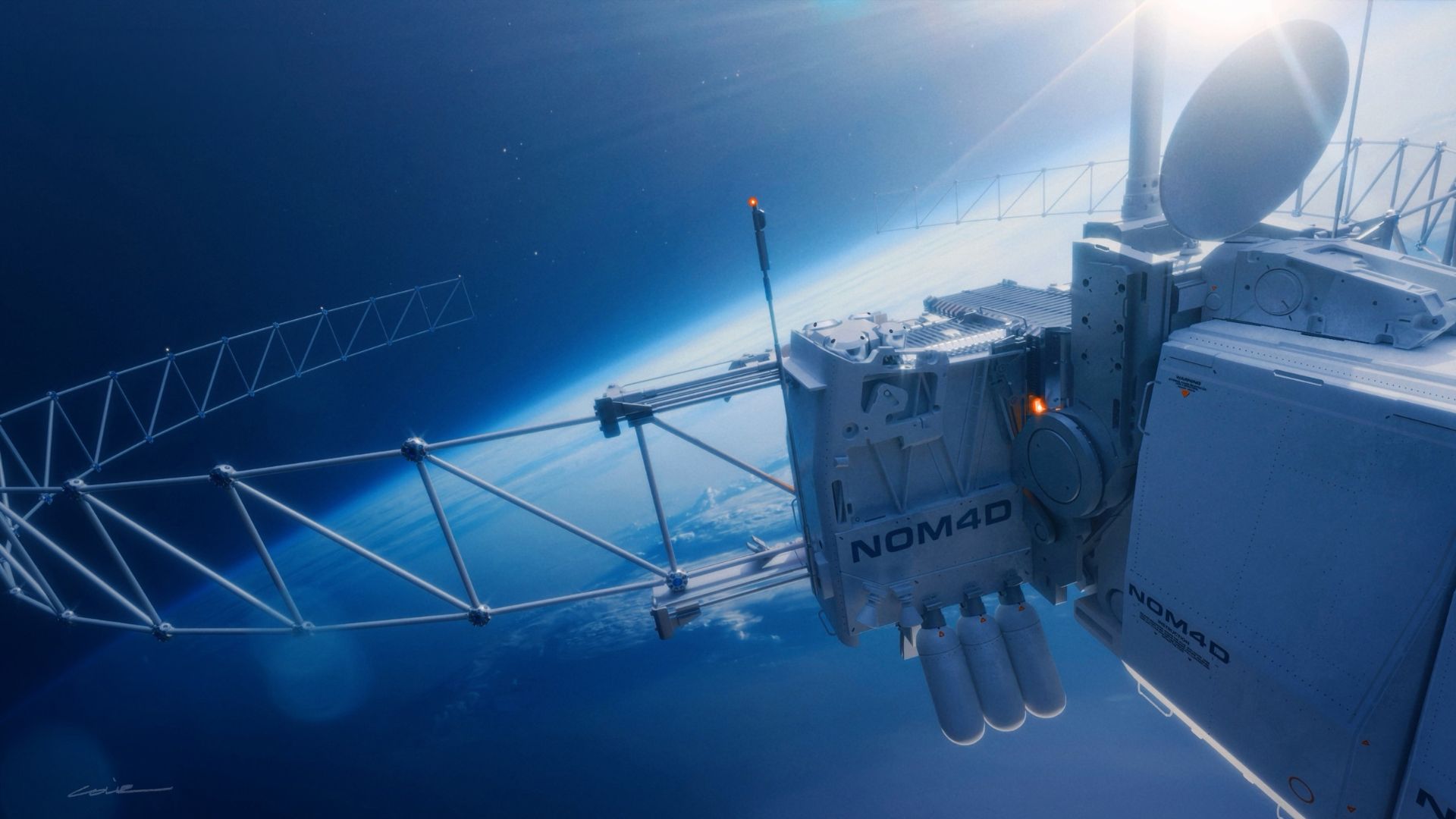
Caltech researchers have developed a robotic system that has successfully built a structure in space without human intervention for the first time. The autonomous truss builder uses a robotic manipulator to collect structural struts and joints from nearby dispensers and assemble them into identical sections. The technology was developed as part of the Defense Advanced Research Projects Agency’s (DARPA) Novel Orbital and Moon Manufacturing, Materials, and Mass-efficient Design (NOM4D) program. According to the team, the demonstration marks a step toward enabling robots to autonomously construct large structures in space without requiring astronauts. Autonomous Orbital Construction The robotic system is capable of assembling a structure in space without direct assistance from astronauts. The autonomous builder constructed a section of a truss structure in low Earth orbit, marking the first demonstration of its kind. Called Autonomous In-Space Tensioned Reflector Assembly (ASTRA), the technology uses a robotic manipulator to collect structural components from onboard dispensers and repeatedly assemble sections, known as bays, of a perimeter truss. Its components include composite fiber tubes, aluminum joints, and a reflective surface made from a perforated Kapton film. The system is intended to construct a 1.4-meter-diameter (4.6-foot-diameter) reflector antenna. Although the demonstration did not complete the entire antenna, it successfully assembled a third truss bay in orbit, establishing the feasibility of the autonomous construction approach. ASTRA combines a robotic arm, motorized component dispensers, an assembly plate, and an onboard computer within a payload approximately 1 cubic meter (35 cubic feet) in size. The payload was launched on March 30, 2026, from Vandenberg Space Force Base aboard Momentus Inc.’s Vigoride 7 orbital vehicle. The vehicle carried ASTRA as one of 10 payloads on SpaceX’s Transporter-16 mission. Before launch, the system contained two preassembled truss bays and the components required to construct additional sections. Once in orbit, ground controllers instructed the onboard computer to release the launch restraints and deploy the two existing bays. The robotic manipulator then began assembling the third bay. It picks up individual struts and joints from nearby dispensers, positions them on an assembly plate, and connects them to form the required structural section. After a bay is assembled, the system attaches a net-like reflective film to the truss. The design uses two reflective cable nets prestressed against each other with springs. Once prepared, the completed section is pushed outward into space, allowing the manipulator to repeat the construction sequence. ASTRA’s planned configuration consists of 11 bays connected to the reflective surfaces. One of the technology’s important features is its lightweight reflective material, co-developed by Caltech researchers and collaborators at the University of Pennsylvania. Unlike conventional knitted metallic mesh used in deployable reflectors, the perforated film requires less prestress. This could help engineers build lighter structures while maintaining the required reflective surface. Beyond rocket limitations Operating the system in space presented several challenges that were not encountered during laboratory testing on Earth. The team had to repeatedly adjust commands and troubleshoot unexpected problems using images transmitted by the spacecraft. Communication opportunities were limited to approximately seven or eight windows of around 15 minutes each day. Researchers therefore tested potential solutions using a flight spare of ASTRA maintained in Pellegrino’s Caltech laboratory before sending revised instructions to the orbital system. The project represents the third phase of DARPA’s NOM4D program. During the first two phases, researchers developed the assembly concept and demonstrated its operation in laboratory conditions. The program aims to enable the construction of structures hundreds of meters or even kilometers in size. Current space structures are constrained by rocket fairing dimensions, requiring engineers to either fold components for deployment or assemble sections delivered through multiple launches. Autonomous orbital manufacturing could provide another approach by allowing structural components to be assembled directly in space. Although ASTRA was unable to complete its planned reflector before the demonstration’s December mission-end deadline, the results provide a starting point for refining the technology. Future applications could include large space telescopes, radio-frequency antennas, communications infrastructure, and solar arrays for collecting energy in orbit. Such structures could eventually exceed the dimensions of systems that can be transported or deployed using conventional spacecraft. Get the latest in engineering, tech, space & science - delivered daily to your inbox.Jijo is an automotive and business journalist based in India. Armed with a BA in History (Honors) from St. Stephen's College, Delhi University, and a PG diploma in Journalism from the Indian Institute of Mass Communication, Delhi, he has worked for news agencies, national newspapers, and automotive magazines. In his spare time, he likes to go off-roading, engage in political discourse, travel, and teach languages.
Defence-backed US robot builds space structure without human assistance for first time
Full Article
Original Source
Read the full article at Interestingengineering →KhanList aggregates and links to publicly available news content. We do not host full articles from third-party sources. Always verify important information with original sources.