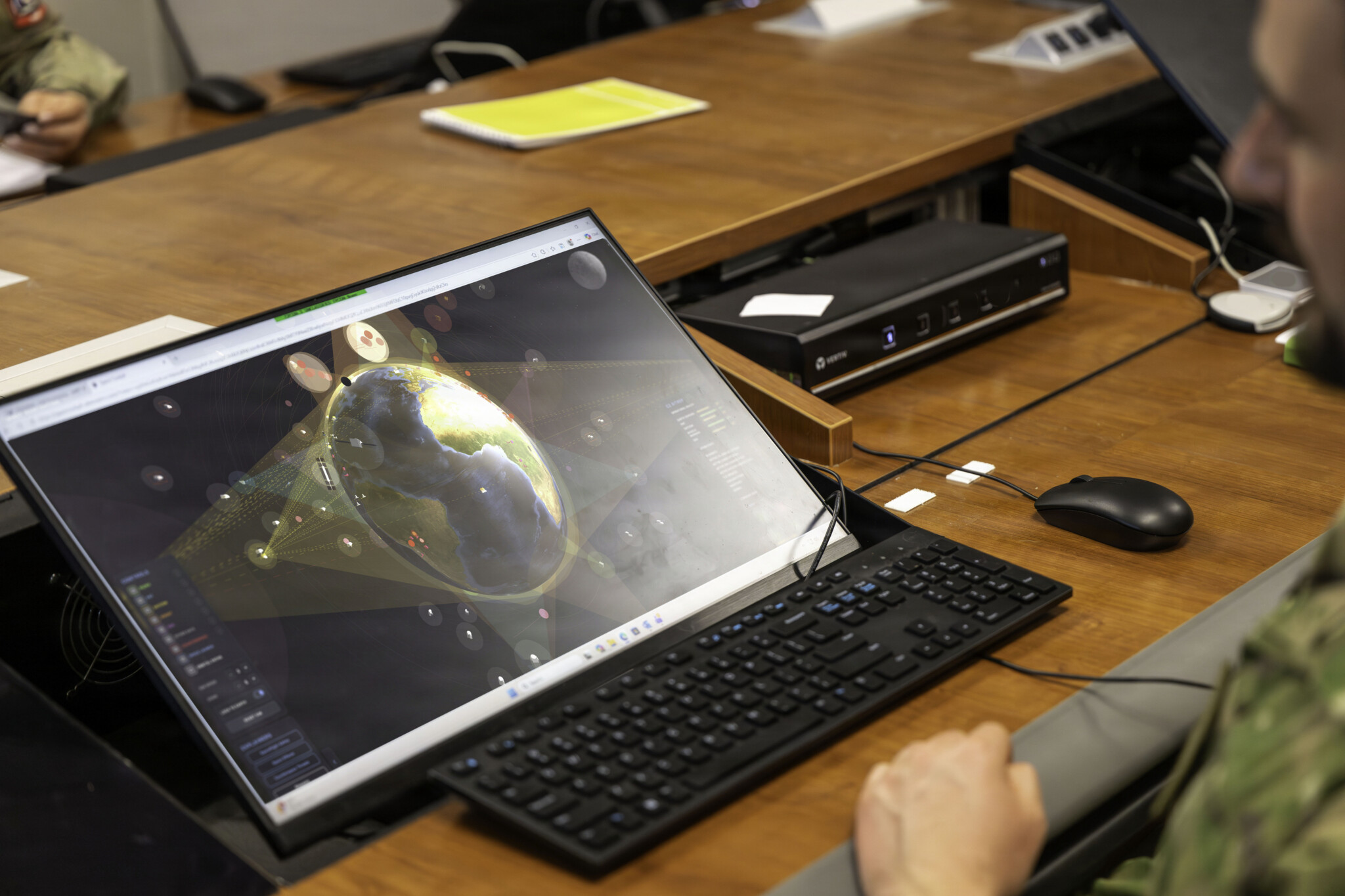
The United States and its allies are still fine-tuning how to operate together in space. During the last week of June, U.S. and other Five Eyes personnel convened at Vandenberg Space Force Base for the 2026 Space Tactics Analysis Team Working Group (SpaceTAT), which the Space Force highlighted this week in a press release. The group studied intelligence on adversary tactics and developed ways to strengthen coalition responses, but real-world space cooperation remains constrained by classification, incompatible systems, and Pentagon bureaucracy. U.S. Cannot Defend Space Assets Alone SpaceTAT brought together operators, intelligence professionals, and system experts to develop actionable responses to adversarial space activity. Participants outlined defensive satellite maneuvers, identified needed training and software updates, and built a shared playbook to help coalition forces coordinate across national lines. This effort illustrates the Space Force’s recognition that the United States will not operate in or defend space alone. Its 2025 International Partnership Strategy calls for incorporating allies into force design, development, and employment while improving interoperability and information sharing. However, working groups and exercises are only one part of integration. Coalition personnel also need to exchange information rapidly, connect their systems seamlessly, and know who to contact within partners’ forces for various space needs. Persistent Barriers Remain A July 2025 Government Accountability Office (GAO) report found that classification and foreign-disclosure processes continued to impede combined space operations. Intelligence agencies sometimes required additional approval before U.S. Space Command could distribute information to allied space operations centers, even when it was already marked as releasable to those countries. Senior military leaders raised these concerns previously, in 2024. Gen. Stephen Whiting, commander of U.S. Space Command, warned that overclassification inhibits conversations needed to integrate allied capabilities. Air Marshal Paul Godfrey, the first commander of UK Space Command, similarly argued that allies cannot develop interoperable capabilities when they lack sufficient insight into U.S. space systems. Technical barriers also hinder cooperation. Incompatible military systems, along with differing data standards and processing systems can make space-related information provided by allies unusable for U.S. operations. However, specific examples remain classified. Moreover, the Department of Defense’s (DOD’s) complex division of space-related responsibilities creates confusion for allies and can lead to coordination failures within the department. Canadian and Japanese officials told GAO that the number of U.S. entities involved in space operations made it difficult to identify the correct point of contact. The same overlapping responsibilities can leave U.S. forces unaware of one another’s activities. In one case, the Space Force conducted an activity with a European partner without notifying U.S. European Command, which learned of it from the foreign government. Congress Should Demand Accountability GAO recommended that DOD set milestones for integrating allies and partners into space operations; address Space Force staffing shortages in roles responsible for planning, security cooperation, and foreign disclosure; and clarify security cooperation responsibilities department-wide. All three public recommendations remain open. The Pentagon plans to complete personnel-related actions by September 2026 and establish integration milestones by year’s end. DOD rejected the responsibilities clarification recommendation, arguing that existing guidance is sufficient for allies to know who to contact for space-related needs; GAO disagrees. Congress should act now to schedule oversight for early 2027. By then, DOD’s stated target dates will have passed, allowing lawmakers to assess whether the department completed the promised actions and determine why any recommendations remain unresolved. The House and Senate Armed Services Committees should require the Pentagon to submit a classified briefing, accompanied by an unclassified summary, on the implementation of GAO recommendations. SpaceTAT is one building block for deeper allied space cooperation. Congress should ensure that classification barriers, incompatible systems, and bureaucratic confusion do not prevent the United States and its allies from building on that progress. Emmerson Overell is a project coordinator at the Center on Cyber and Technology Innovation (CCTI) at the Foundation for Defense of Democracies (FDD), where she focuses on threats to U.S. and allied national security in the Arctic, space, and cyberspace. For more analysis from Emmerson and FDD, please subscribe HERE. Follow FDD on X @FDD and @FDD_CCTI. FDD is a Washington, DC-based, nonpartisan research institute focusing on national security and foreign policy.
Space Force Is Deepening Allied Cooperation. Congress Should Track the Results.
Full Article
Original Source
Read the full article at Fdd →KhanList aggregates and links to publicly available news content. We do not host full articles from third-party sources. Always verify important information with original sources.