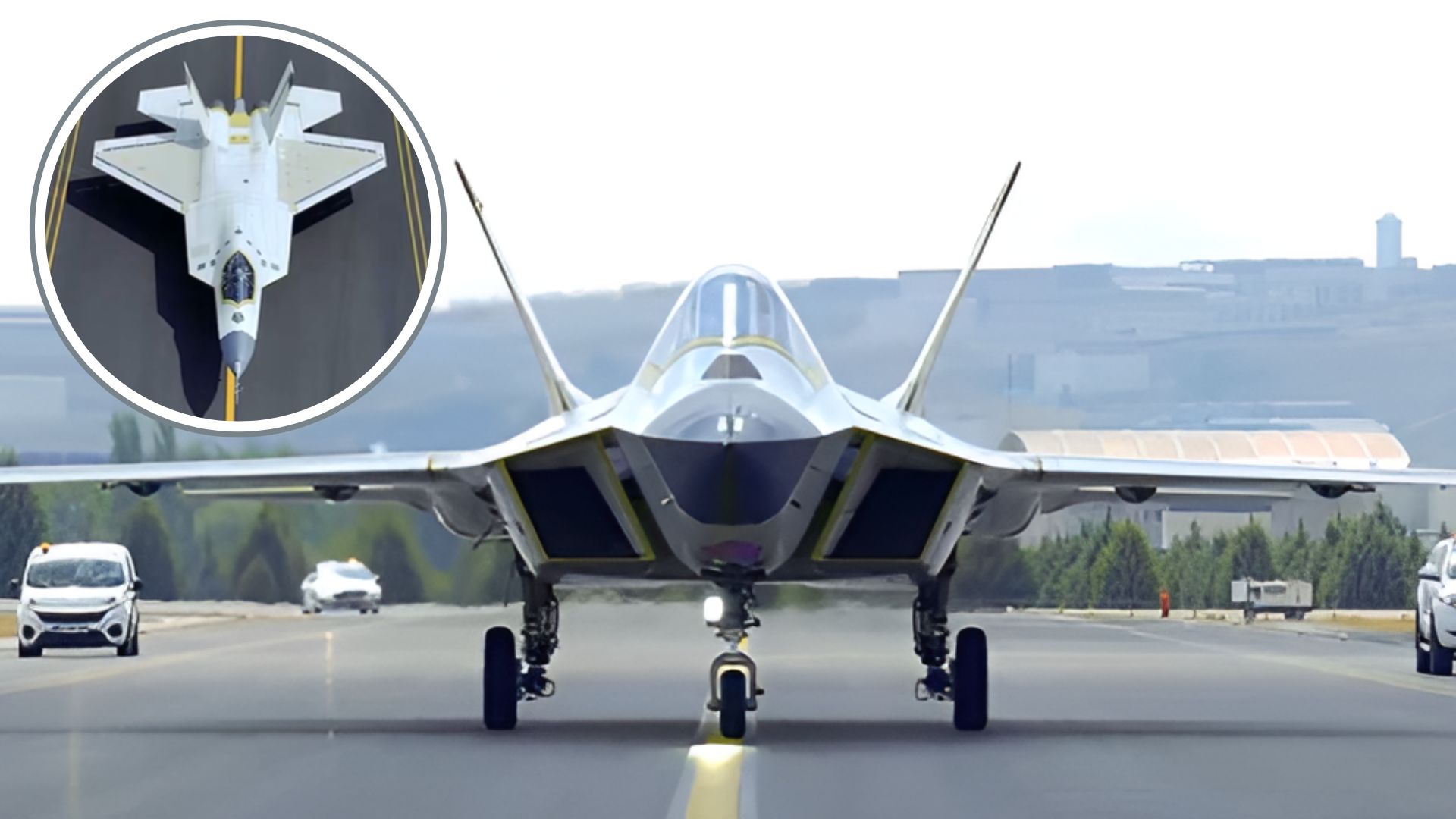
Turkey’s next-generation KAAN fighter has entered another key phase of development after Turkish Aerospace Industries (TUSAŞ) began powered taxi tests with the P1 prototype, bringing the stealth aircraft closer to its next flight milestone. Footage released by the company shows the twin-engine jet rolling down the runway under its own power as engineers assess braking, steering, engine response and ground handling. Those evaluations are a standard part of aircraft development and must be completed before a prototype is cleared for flight. The milestone carries added significance because P1 is the first KAAN prototype built to closely represent the fighter’s intended production configuration. TUSAŞ expects the aircraft to make its maiden flight within the next few months. Flight campaign begins The KAAN program emerged after the United States removed Turkey from the F-35 program in 2019 over Ankara’s acquisition of the Russian-made S-400 air defense system. Losing access to the stealth fighter prompted Turkey to accelerate development of an indigenous replacement for its future combat fleet. The first prototype, designated P0, completed its maiden flight on Feb. 21, 2024. That aircraft primarily served as a technology demonstrator, allowing engineers to verify flight controls, aerodynamic performance and core aircraft systems before introducing more advanced prototypes. P1 reflects lessons learned during those early flights. Engineers redesigned parts of the airframe, refined the aircraft’s external shaping and integrated more representative mission systems. The prototype will also validate internal fuel capacity, weapons bay arrangements and sensor integration before the program moves closer to production. TUSAŞ plans to add another aircraft to the campaign before the end of 2026. The P2 prototype remains under construction and will eventually join P1 in flight testing, allowing engineers to divide performance, avionics and structural evaluations across multiple aircraft. American engines, Turkish ambitions KAAN measures 21 meters in length with a 14-meter wingspan and is designed to reach Mach 1.8 while operating at altitudes of up to 55,000 feet. The current prototypes fly with twin General Electric F110-GE-129 engines, the same powerplant family used by Turkey’s F-16 fleet. Each engine generates roughly 30,000 pounds of thrust with afterburner. Turkey has already received 10 U.S.-built engines to support prototype development and the initial production batch. That dependence on American propulsion is expected to end over time. TUSAŞ and TUSAŞ Engine Industries are developing the TF35000 turbofan to power future production aircraft after the first 20 to 40 fighters enter service with the F110. Production timeline holds TUSAŞ General Manager Mehmet Demiroğlu recently described P1 as the point where KAAN enters flight testing in its “real configuration,” distinguishing it from the earlier engineering demonstrator. He has also said additional prototypes will join the program as testing expands, increasing sortie rates and shortening the overall development schedule. The company currently plans to build 148 aircraft. Defense industry reporting has suggested Indonesia could account for as many as 48 fighters, although officials have not released a detailed production breakdown.Deliveries to the Turkish Air Force remain targeted for 2028. Reaching that goal will depend on the upcoming flight-test campaign staying on schedule as P1 and, later, P2 accumulate the data needed to certify Turkey’s first domestically developed fifth-generation fighter.Recommended ArticlesGet the latest in engineering, tech, space & science - delivered daily to your inbox.Aamir is a seasoned tech journalist with experience at Exhibit Magazine, Republic World, and PR Newswire. With a deep love for all things tech and science, he has spent years decoding the latest innovations and exploring how they shape industries, lifestyles, and the future of humanity.
Turkey’s answer to the US F-35 hits key milestone as KAAN P1 begins powered taxi tests
Full Article
Original Source
Read the full article at Interestingengineering →KhanList aggregates and links to publicly available news content. We do not host full articles from third-party sources. Always verify important information with original sources.