
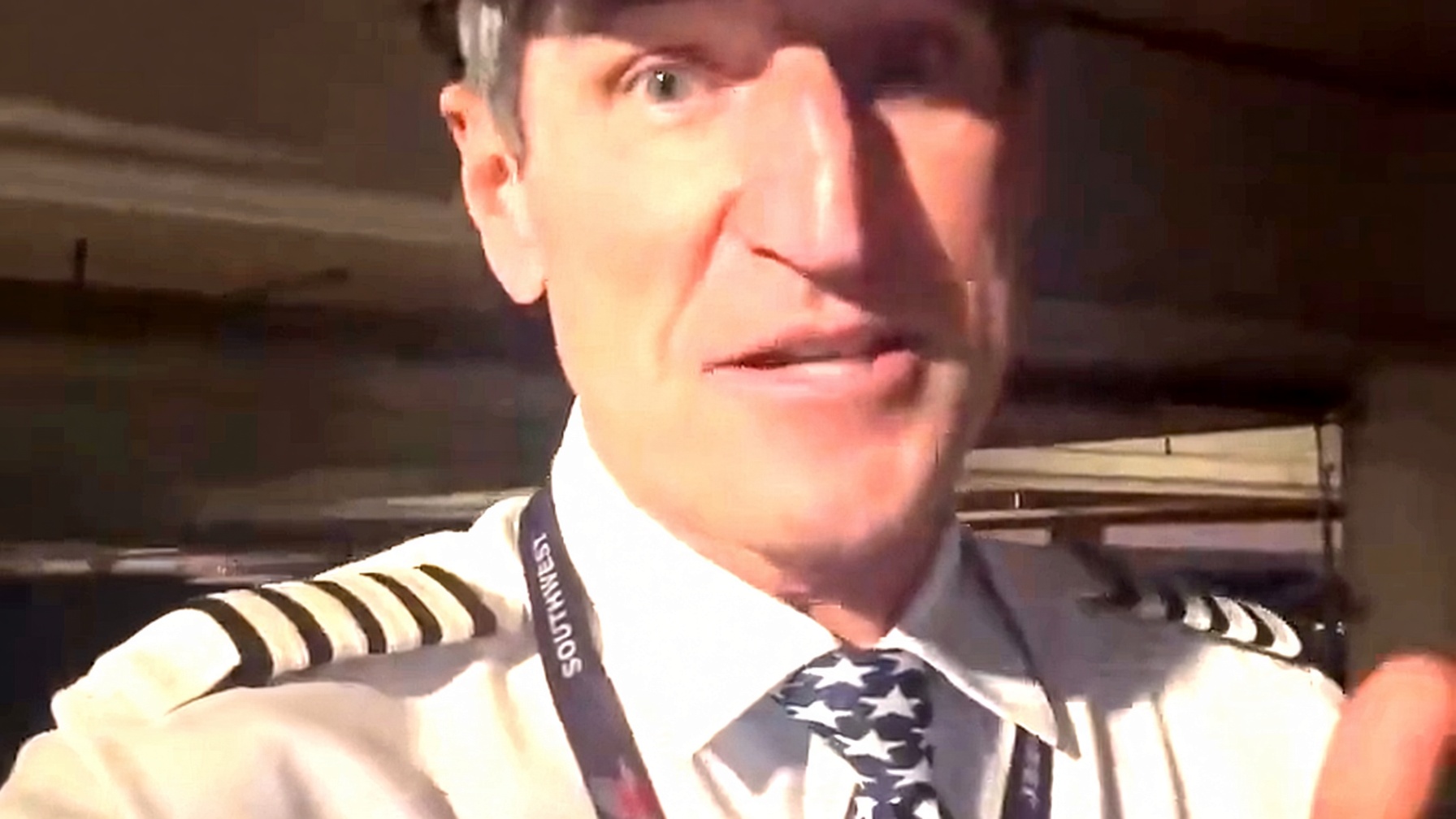
A pilot, reportedly with Southwest Airlines, says he flew from Cancún to Phoenix without any communications problems. He’s concluded that Friday’s nationwide flight shutdown was a government operation to control people. He calls the whole thing “a big farce.” He managed to successfully complete his own flight, which was already in the air by the time trouble began, and claims that proves the whole thing was a scam. The video is from @mike4flight, the profile of Mike McHugh. Standing in a parking garage in uniform, he lists the facilities he spoke with and says they all worked fine. Then he offers his theory: So whatever’s going on, I think it’s designed to create fear and disruption and chaos, because that’s how the government gets control of things, controls people. Watch the pilot’s video He never explains how this advances the government’s goal, what additional control it gains, or why it wants that control. Which power are stranded passengers supposed to surrender? The government already decides whether planes can take off. Keeping people at the airport for hours accomplishes what, exactly? And how does costing airlines hundreds of millions of dollars in a day advance its goals? He says “I don’t know what’s going on,” but instead of then keeping quiet he decides to tell the world it’s a government operation. His fight went fine, but that doesn’t mean everything was actually fine. Some communications worked, others didn’t. Radar information could become unreliable even while a pilot could hear a controller. A pilot hears the frequencies he’s assigned at the times he’s using them. That doesn’t say much. The decision to let aircraft already airborne continue while stopping departures isn’t a contradiction. Limiting the number of flights controllers had to work given the conditions they faced made sense. Every landing reduced the workload. Every new departure would have added another aircraft needing instructions, separation and handoffs between controllers. Remaining capacity could be reserved for aircraft already flying. Working frequencies and contingency procedures could help bring those flights in without supporting a normal stream of new departures. The FAA’s ground stop rules cover facilities that are only partially unable to provide service. You don’t wait until every radio goes silent before reducing traffic. In fact, depending on when he flew, the ground stop may have helped make his trip uneventful. Fewer planes competing for the remaining capacity would make his experience easier. He may be pointing to the benefit of the restriction as evidence it wasn’t needed in the first place. Friday’s nationwide departure stop began at 3:54 p.m. Eastern and was lifted around 8:15 p.m. It lasted over four hours. By early Saturday morning, there were more than 12,500 cancellations across Friday and Saturday. Looks like some stuck travelers got a concert from the singer of Hoobastank during the national air traffic shut down https://t.co/xWW5yE9JaP — Jennie Taer (@JennieSTaer) November 14, 2026 According to Transportation Secretary Sean Duffy, legacy telecommunications switches and routers became overloaded, producing inconsistent radar information and communications at en route centers and airport approach facilities. He said the newer internet protocol switches hadn’t experienced these problems. The L3Harris-operated FAA telecommunications network carries voice and surveillance information between facilities. Trouble moving that information interrupts a controller’s radio audio and radar display. Apparently the break down came in Cisco 600-series routers manufactured between 2001 and 2006. Homeland Security Secretary Markwayne Mullin managed to throw Duffy under the bus while trying to defend the administration. Standing beside him at the briefing, Mullin said the apparent problem involved Duffy and the FAA installing patches, equipment and technology that overwhelmed the older system. The new tech was “overwhelming the older system.” Duffy’s defense was that the new equipment hadn’t failed. Watch Markwayne Mullin explain the apparent cause beside Sean Duffy When I reviewed the administration’s modernization plan, I warned that compressing decades of hardware replacements, software integrations and transitions into 36 months brought risks of service disruption. Duffy used the briefing to press Congress for $50 billion. He wants more taxpayer money rather than user fees to prop up an agency that’s failed to modernize with the billions given to it before, without explaining why only money – and not fixing project management, budgeting and leadership at the agency – is all that’s needed. Topics on this page
Southwest Pilot Calls Out Nationwide Flight Shutdown As A Government Control Plot
Full Article
Original Source
Read the full article at Viewfromthewing →KhanList aggregates and links to publicly available news content. We do not host full articles from third-party sources. Always verify important information with original sources.