
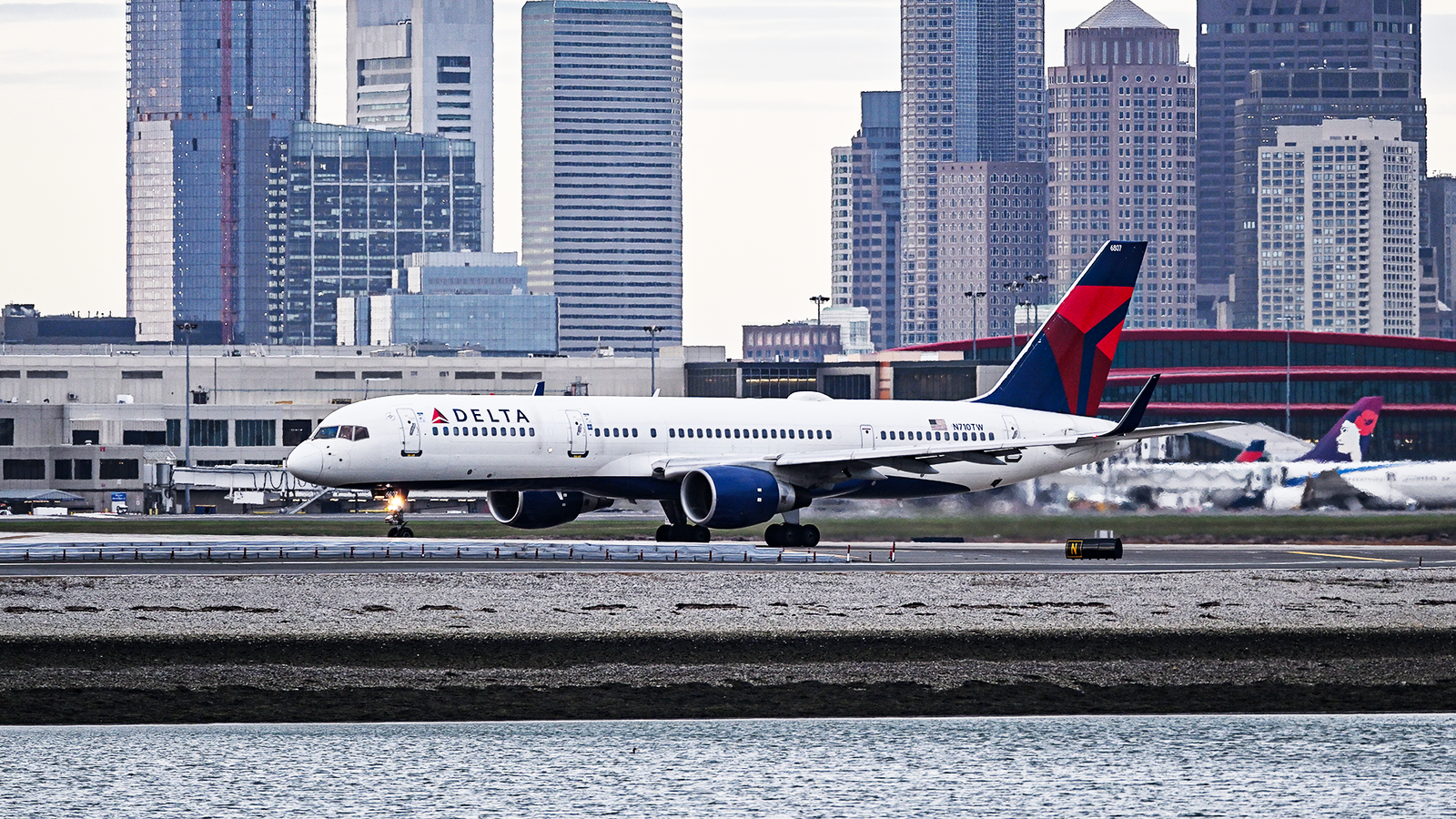
Published Nov 14, 2026, 3:00 PM EST Jack comes to Simple Flying with a lifelong interest in all things aviation. He holds a degree in Aerospace Engineering from Georgia Tech, and is a certified private and remote pilot. Beyond these experiences, Jack previously worked for a corporate flight department where he gained first-hand experience in the world of business aviation. Currently, Jack works in the professional services industry and continues to build his flight hours outside of work. Delta Air Lines is taking two very different approaches to international growth in 2027. At Boston Logan International Airport (BOS), it is adding seasonal European destinations and increasing frequencies on established routes, including daily service to Reykjavík, four weekly flights to Venice, and daily service between Boston and Milan. The airline is also launching a daily Austin–Paris link and a new Detroit–Athens connection. In Atlanta, however, Delta has postponed its planned launch to Riyadh until March 2027 after deadly attacks near King Khalid International Airport (RUH) raised security concerns. The contrast shows why the airline’s near-term network strategy is more straightforward in Europe than in the Middle East. The Boston expansion builds on an existing hub with substantial local demand, established transatlantic traffic, and partner connections across Europe. Riyadh offers a potentially valuable new market, particularly as Saudi Arabia invests in tourism and international business, but the route depends on a security environment that Delta cannot control. The airline is therefore pursuing growth where demand and operating conditions are more predictable while waiting for a safer opportunity to introduce a strategically significant long-haul service. Boston’s European Network Is Growing From An Established Base Credit: Robin Guess | Shutterstock Delta’s Boston expansion for summer 2027 adds Reykjavík and Venice, while increasing Boston–Milan to daily service. Reykjavík begins April 12 and operates daily through October 30 using Boeing 757-200 aircraft. Venice starts May 7 with four weekly flights on Airbus A330-300s, while Milan’s frequency increase gives passengers more options on a route Delta already serves. With Reykjavík included, the airline says Boston will have 14 unique long-haul destinations during the peak summer season and 16 international destinations overall. The growth is supported by Boston’s existing scale. Delta carried 5.6 million passengers from Logan in 2025, approximately 200,000 more than its closest competitor, and says it has increased seat capacity there by 50% since 2019. The airline averages around 170 daily departures from the airport and has invested in facilities such as its Delta One lounge. These figures indicate that the new international routes are being added to a substantial operation rather than relying on a newly established market. Delta’s position also gives it access to a mix of local business and leisure travelers, as well as passengers connecting from other US cities. Its Boston network is particularly useful for transatlantic flying because the city is geographically closer to Europe than many other major US gateways. Reykjavík Replaces A Lost Competitor, Not An Empty Market Credit: Kevin Hackert | Shutterstock Delta’s return to Boston–Reykjavík comes after low-cost carrier Play ceased operations in September 2025. Play had offered a lower-cost option between the cities, and its departure left an opening for another airline to attract travelers seeking nonstop access to Iceland. Delta’s schedule is designed around the spring-to-autumn travel season, when demand for Iceland’s landscapes, outdoor activities, and connecting travel is strongest. However, Boston is not an unserved market. Icelandair continues to operate between Boston and Reykjavík, meaning Delta will join an existing competitive route rather than create a monopoly. The Points Guy noted that the airline also previously flew the route in 2021, before discontinuing it later that year. Its 2027 return therefore represents a renewed attempt to establish a sustainable presence, now supported by a larger Boston operation and a broader range of connecting itineraries. The aircraft choice reflects the market’s scale and the route’s relatively short transatlantic distance. Delta’s 757-200 offers Delta Premium Select, Comfort, and Main cabins, but no Delta One lie-flat business-class product. That is a more limited premium proposition than the A330-300 assigned to Venice, which includes Delta One. The configuration suggests Delta is matching capacity and product to a route where leisure demand is likely to be significant, rather than deploying its most premium aircraft. Delta Is Spreading Its European Growth Beyond Boston The 2027 expansion is not confined to Logan. Delta plans to launch daily Austin–Paris service on March 27 using an Airbus A330-900neo, giving Austin its first nonstop connection to the French capital. The route also creates one-stop access to nearly 70 destinations across Europe, India, and Africa through the airline’s joint venture with Air France-KLM. This is a broader network proposition than simply serving local demand between Texas and France. Detroit–Athens will begin June 8 and operate three times weekly through October 28 on an Airbus A330-200. Athens will become Delta’s 12th unique long-haul destination from Detroit during the peak summer season. The frequency is more cautious than Austin–Paris, reflecting a seasonal leisure market and a route that does not need daily capacity in its first year. Meanwhile, Boston–Venice will use a widebody with Delta One and Premium Select, indicating a higher premium-cabin emphasis than Reykjavík. These additions demonstrate Delta’s preference for measured growth in markets where it already has a hub, connecting feed, or established transatlantic presence. The airline is also extending some existing European services into shoulder seasons and increasing frequencies where demand supports it. Rather than relying on one large international launch, Delta is distributing capacity across several gateways and matching aircraft size to anticipated demand. Riyadh Carries A Different Kind Of Risk Credit: Santi Rodriguez | Shutterstock Delta had planned to launch nonstop Atlanta–Riyadh service on October 23, 2026, marking its first direct connection to Saudi Arabia. The route was designed to operate three times weekly on an A350-900, with daily flights during its opening week. Through Atlanta, passengers from across Delta’s domestic network would have gained access to the Saudi capital, while the airline would have established a direct link to a market central to the kingdom’s economic diversification plans. The launch was postponed to March 2027 after missile and drone attacks struck the Riyadh area, including King Khalid International Airport. The attacks reportedly killed at least 13 people and prompted airlines to reconsider operations in the region. Delta said it was monitoring developments in coordination with government and aviation partners, including Saudia and Riyadh Air, and emphasized that customer and employee safety guided the decision. Unlike the Boston additions, the obstacle is not simply whether enough passengers will buy tickets. Airlines must assess airspace restrictions, airport security, insurance exposure, crew safety, and the reliability of onward operations. The FAA issued a caution notice for US operators flying to or over Saudi Arabia through December 10, 2026, citing threats associated with military activity and navigation-system interference. Reuters reported that other airlines also adjusted Saudi and regional schedules after the attacks. Premium Revenue Supports The Case For Selective Expansion Credit: Delta Air Lines Delta’s latest financial results help explain why the airline is investing in routes with different cabin and aircraft profiles. In the third quarter of 2026, ticket revenue from premium products reached $6.82 billion, narrowly exceeding the $6.80 billion generated by main-cabin tickets. Premium revenue rose 18% year over year, compared with 12% growth in main-cabin ticket revenue. Across the first nine months of 2026, premium ticket revenue also edged above main-cabin revenue, at $19.10 billion versus $19.068 billion. These figures cover Delta’s overall ticket sales, not international routes alone, but they show why the airline is emphasizing premium seating across its network. Boston–Venice and Austin–Paris offer Delta One, while Detroit–Athens provides a full long-haul cabin mix. Reykjavík, by contrast, uses a 757 without lie-flat business class, keeping a premium-economy option while avoiding a more expensive widebody deployment. Delta can therefore pursue several customer segments without assigning identical capacity to every route. The fleet strategy also matters. Delta is introducing newer widebodies, including the A330-900neo and A350 family, while continuing to use older aircraft such as the 757 where their economics and capacity remain appropriate. Its September-quarter financial release documents the premium revenue trend. The airline’s challenge is to convert that willingness to pay for upgraded cabins into sustained returns without adding more capacity than each market can support. Riyadh Can Wait, But The Opportunity Will Not Disappear Credit: Delta Air Lines Delta’s Boston expansion is the safer near-term investment because it builds on an established operation, benefits from existing transatlantic demand, and uses seasonal schedules to manage capacity. The Riyadh route has greater geopolitical exposure, but postponement does not necessarily undermine its long-term commercial rationale. Saudi Arabia’s investment in tourism, business, and international connectivity could still create demand for a nonstop US service once operating conditions become more predictable. The next test will be whether Delta can turn its Boston additions into durable routes beyond their opening seasons. The Reykjavík route faces direct competition from Icelandair, while Venice and Milan will need to sustain premium and leisure demand across a concentrated summer market. If those services perform well, Delta may have room to add frequencies or extend schedules. For Riyadh, the March 2027 target should be treated as a reassessment point rather than a guarantee. The airline’s ability to launch will depend on security conditions, regulatory guidance, and confidence among its partners. Together, the two strategies show Delta pursuing growth without treating every attractive destination as ready for immediate service.
How Delta Air Lines' Boston Expansion Became A Safer Bet Than Its Postponed Atlanta–Riyadh Launch
Full Article
Original Source
Read the full article at Simpleflying →KhanList aggregates and links to publicly available news content. We do not host full articles from third-party sources. Always verify important information with original sources.