
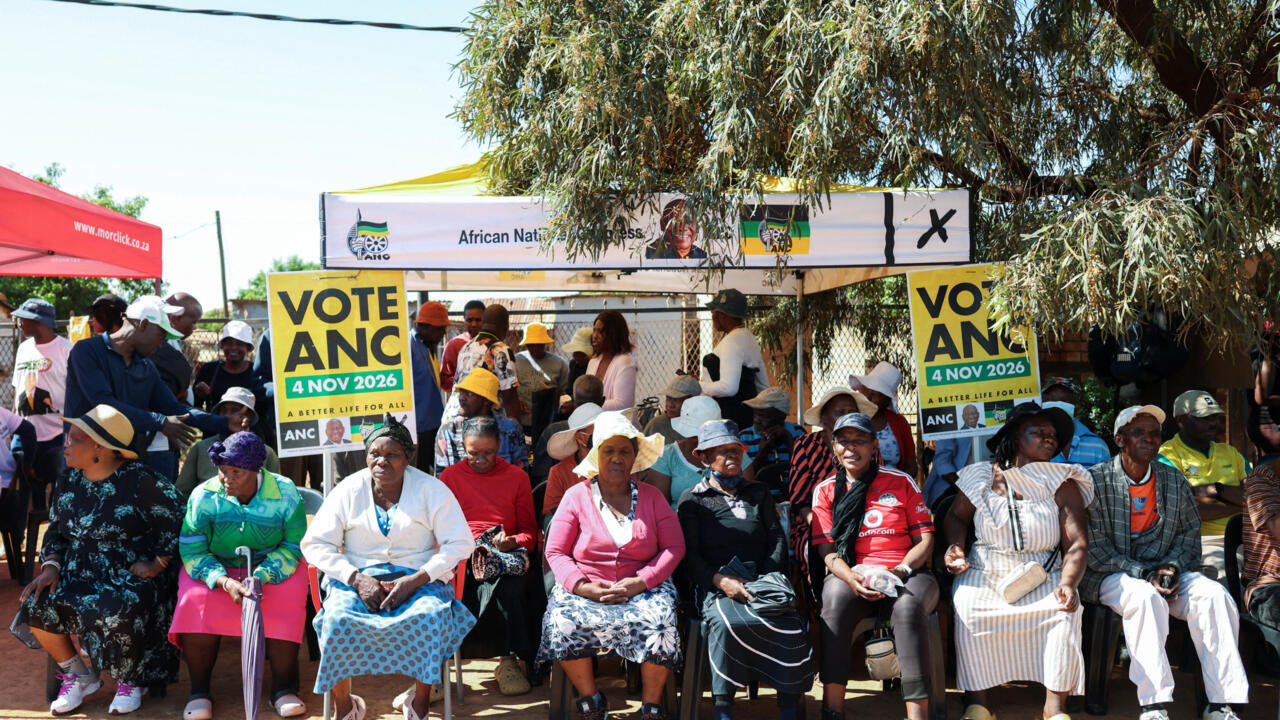
South Africans queued from early on Wednesday to vote in municipal elections, with anger over corruption, crime and failing public services threatening to inflict fresh losses on the African National Congress. Issued on: 04/11/2026 - 15:31 3 min Reading time Voting has been largely incident-free, more than four hours after polls opened at 7am (0500 GMT). More than 29 million voters are registered, but the last municipal elections in 2021 drew a turnout of just 46 percent. The African National Congress (ANC), the party of Nelson Mandela fell below 50 percent support for the first time in municipal elections in 2021 and could drop below 40 percent this time, according to opinion polls. With no other party large enough to take its place, many cities in South Africa are heading for unstable coalition governments that have been partly blamed for failing to deliver basic services, including water and electricity. Spotlight on Africa: Cameroon votes, Niger Delta oil pollution, South Africa - US ties "I have seen the challenges that we face at local government level, but we are determined to rebuild our local government structure," President Cyril Ramaphosa said after voting today in Johannesburg. Poor public services Some of the voters' biggest concerns ahead of these elections are unreliable water and electricity supplies, unemployment, crime and a lack of affordable housing. "I am hoping things will improve this time, especially where we live. What we need most is better service delivery," Themba Ntuli, a 47-year-old security guard, told Reuters. Others, including Sabelo Zulu, a 37-year-old engineer, worry that a tight result could leave many municipalities with hung councils and unstable coalition governments. The frustrations were echoed in Cape Town and other cities. "I want things to change... people must get work. People mustn't suffer," Thembinkosi Somana, 50, who was first in line to cast his ballot at a polling station in Langa, the city's oldest township, told AFP. In the port city of Gqeberha, 26-year-old Shane Jacob, who is unemployed, said: "Voting? Never, not again. I have been voting since 2018, and what did I get? Nothing. My life has not changed; if anything it has gotten worse." The outcome will help shape the political landscape ahead of the 2029 national election and could influence the succession battle within the ANC as Ramaphosa nears the end of his term as party leader in 2027. The legacy of Nelson Mandela 30 years after his election as president Fight for Johannesburg Although ANC still enjoys loyalty from some voters due to its role in ending apartheid, growing numbers of South Africans are fed up with problems such as power cuts and water shortages, even in Johannesburg, for long the party's stronghold. It is now one of the cities considered as the largest prize of these polls, as South Africa's commercial hub. Moses Mashaba, a 27-year-old street vendor from Johannesburg's Soweto township, told AFP that he was driven to vote by the sense that "things have been horrible". "Sometimes we don't have water or electricity. There is also a high unemployment rate, which has been frustrating," he added. Among ANC's opponents, the Democratic Alliance's (DA) candidate Helen Zille launched an energetic campaign for mayor, and opinion polls project she will win the most votes but fall short of a majority. The city has had seven mayors since 2021 as successive coalition governments collapsed, while residents sometimes endure weeks without water or electricity and motorists contend with broken traffic lights and pothole-riddled roads. Other metro areas to watch include Tshwane, home to the administrative capital Pretoria, and eThekwini, which includes the port city of Durban and where former President Jacob Zuma's uMkhonto weSizwe party is strong. The DA is heavily favoured to retain control of Cape Town. Local governance has been a weak point for the ANC, which was forced into a coalition with the DA and smaller parties after it lost its national majority in 2024. South Africa heads for coalition talks after ANC loses 30-year majority Polls will close at 9pm (1900 GMT) and final results are expected to be announced on Sunday. They will offer a clearer picture of the political landscape before the next general election in 2029. (with Reuters and AFP)
South Africa votes in local elections as growing anger threatens ANC
Full Article
Original Source
Read the full article at Rfi →KhanList aggregates and links to publicly available news content. We do not host full articles from third-party sources. Always verify important information with original sources.