
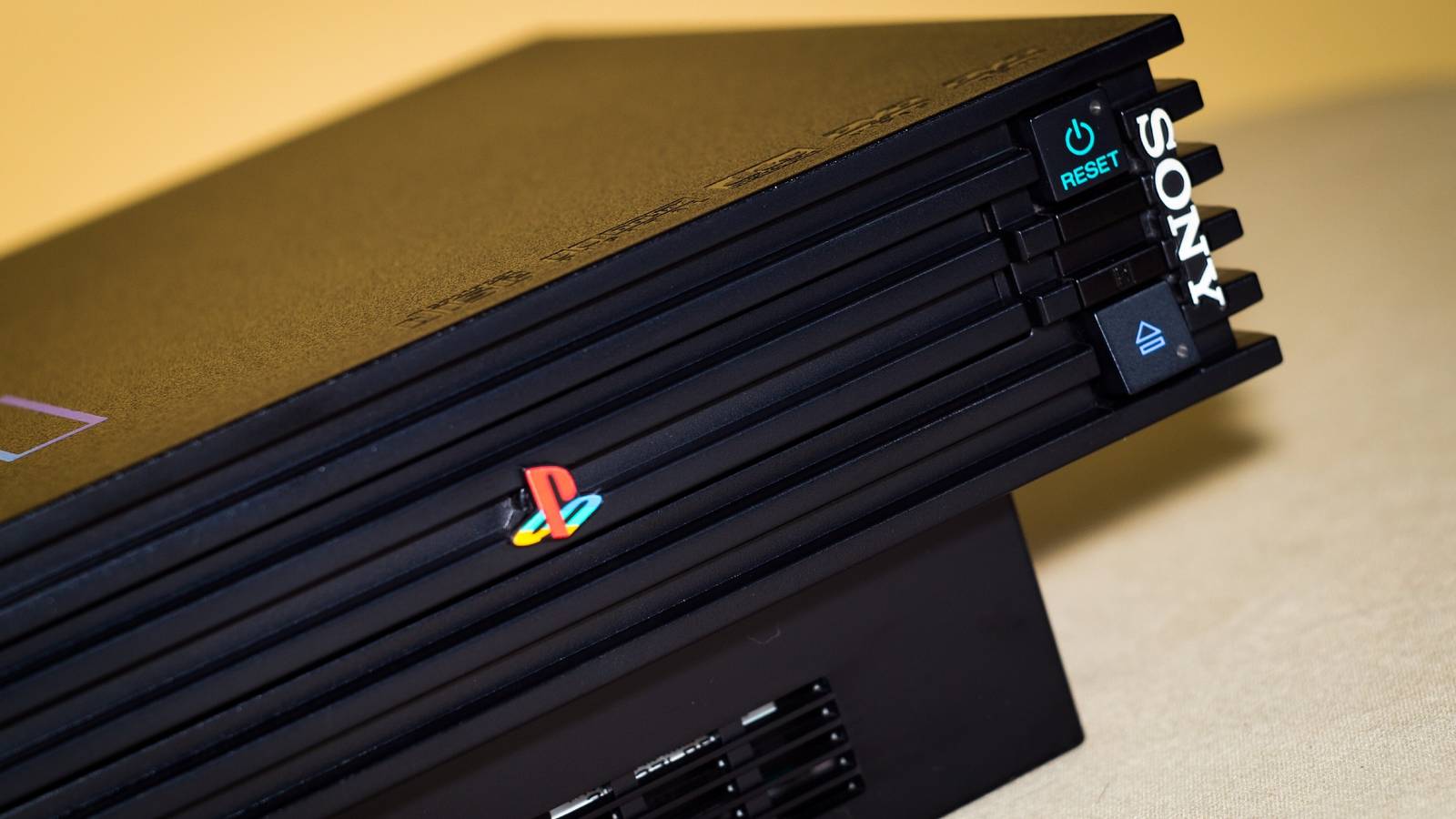
Published Nov 4, 2026, 3:01 PM EST Gaming has been Samarveer’s greatest passion, and the Literature graduate in him takes immense joy in dissecting games for their themes, messages, and impact. Samarveer holds a deep appreciation of gaming, and considers the platform to be the most immersive and impactful across all media. He can be found engaging with gaming communities online, always ready to debate the finer points of ray tracing or itching to write an 8-page collegiate thesis on any game that impacts him emotionally. The PlayStation 2 holds an awful lot of memories for an entire generation — I was one of the millions of kids who played their first-ever 3D GTA game on the PS2. We may remember this console as one of the greatest ever, but Sony seemed to have considerably bigger ambitions for its little black box. In fact, 24 years ago, Sony sold an official kit that could turn your PS2 into an honest-to-goodness Linux PC, complete with the hardware and software needed to get started. I'm not talking about some obscure homebrew project, either, or some exploit that made you jump through hoops. Sony actually wanted people to experiment with its hardware, and the result was far more interesting than you'd expect from a gaming console. Sony actually sold everything you needed to turn a PS2 into a PC The PS2 Linux Kit was a very real product In 2002, buying a PlayStation 2 meant buying some games, memory cards, and a multitap, so four kids could crowd one couch and a CRT TV. Yet you could also buy a PlayStation 2 bundle that came with a 40GB hard drive, an Ethernet adapter, a VGA monitor cable, a USB keyboard and mouse, and two DVDs of Linux — for $200 on top of the $300 console. You could even write your own software. Not to mention, you also needed a compatible computer monitor, even though Sony had done most of the heavy lifting. This kit also came in a Japan-only version in 2001, which technically makes a Japan-region PS2 today a quarter-century-old Linux machine. It sounds incredible today, but Sony explicitly marketed it to Linux enthusiasts, programmers, and hobbyists who wanted to experiment with the PS2's hardware. This wasn't just aimed at gamers looking for another way to play their favorite titles. The official kit also included a hard drive and a network adapter. They were official PS2 peripherals that also enabled other console features, including online connectivity and hard-drive functionality in supported hardware. Of course, there was a catch. You couldn't just hook the console up to any old television to have the PS2 Linux experience. Sony supplied a monitor adapter that required a compatible VGA display supporting sync-on-green (the green cable). That's what made this whole setup considerably more restrictive than just plugging a desktop PC into a monitor. The machine was a proper computer under the hood Sony wasn't handing developers a conventional desktop PC Credit: Wikimedia Commons / Deni Williams The PS2's internals were considerably more unusual than those of a conventional computer at that time. It had a 294MHz Emotion Engine, built around a MIPS III-compatible CPU core and supplemented by two vector processing units designed to accelerate the mathematical workloads games relied on. It also had just 32MB of RDRAM for system memory, alongside 4MB of embedded DRAM in its Graphics Synthesizer. In fact, even though we're talking about a 24-year-old Linux computer, this distro still provided a proper Graphical User Interface working kernel, GNU development tools, GNU Compiler Collection (GCC), and X11 support through XFree86. However, one significant compromise remained: Linux developers didn't get unrestricted access to the Graphics Synthesizer's hardware acceleration. Linux on the PS2 didn't mean that users could easily run unauthorized copies of PS2 games, though. Sony deliberately restricted direct graphics access. Naturally, this meant that developers couldn't just treat the console's GPU like an ordinary PC GPU, either. This peculiar arrangement made the kit interesting. After all, we're talking about Sony opening up a proprietary gaming machine to general-purpose computing, and they never surrendered complete control over the underlying hardware. What was the PS2 Linux experience like? An actual desktop operating system, with all the limitations you'd expect Now, for a 24-year-old Linux machine, you'd expect the PS2 to offer only a command-prompt terminal to play around with. You'd be wrong, though, since Linux on the PS2 also offered a desktop GUI. Built around a Linux 2.2-era kernel and the XFree86 graphical environment, it let you connect to the internet, navigate the filesystem, and even run some applications like you would on a conventional Linux computer. More importantly (and even more interestingly), Sony included a collection of development software, GCC, programming libraries, and other GNU tools. This meant that you could write, compile, and test your own code without ever needing another computer. Understandably, this was a compelling proposition for students and hobbyists interested in learning Linux, or even experimenting with the PS2's architecture. It almost predicted today's handheld console environment You can't not see the similarities It's hard not to see this Linux PS2 machine as ahead of its time, given how closely its philosophy matches the direction the handheld PC market has taken. Devices like the Steam Deck aren't content with being locked-down gaming appliances today. They offer a relatively open computing environment, letting us install alternative operating systems, experiment with desktop apps, and treat that gaming hardware as a general-purpose computer. Sony was exploring a remarkably similar idea two decades before Valve made it mainstream, albeit with considerably less powerful hardware and a much less polished experience. The real innovation wasn't that the PS2 could run Linux, but that Sony was willing to support it officially. You didn't need to jailbreak anything, void your warranty, or hunt down obscure community patches. Sony had effectively given us permission to treat its gaming console like a computer. That's the part of the PS2 Linux experiment that feels genuinely ahead of its time. It's a shame the console industry abandoned this vision The idea, at the end of the day, was for too niche a crowd Credit: Wikimedia Commons / Deni Williams The PS2 Linux Kit wasn't an isolated experiment. Sony had already offered the Net Yaroze development environment for the original PlayStation, letting indie developers create their own games. Even the PlayStation 3 took it further with OtherOS, which let owners install Linux directly on their consoles. Still, it had its limitations. For starters, the console's 32MB of system memory (and its 294MHz processor) weren't exactly powerful enough for heavy tasks or even desktop multitasking. Even lightweight applications such as early builds of the Mozilla web suite or the Dillo browser had to contend with the console's hardware limitations, and the restricted graphics acceleration made the experience far less capable than a regular PC. The bottom line is that the PS2 Linux Kit will never replace your desktop. It was a developmental playground, and it wasn't meant to be a general-purpose computer. We'll probably never see anything like it again Modern consoles are absurdly powerful compared to what we had in 2002, and yet manufacturers have become increasingly reluctant to let consumers do anything with that hardware beyond what their carefully curated ecosystems permit. It's backwards, really, to spend hundreds of dollars on a machine capable of sophisticated computing and still needing exploits and compatibility layers to run another OS. I genuinely miss the idea that buying a gaming console could also mean getting an affordable playground for experimentation. Projects like the Steam Deck show that there's still an appetite for hardware that encourages tinkering, but Sony's PS2 Linux experiment remains a particularly fascinating reminder of what happens when manufacturers trust their customers to do more with the machines they own. RetroTINK-5X Pro
Sony turned the PS2 into a Linux PC 24 years ago, and it was way ahead of its time
Full Article
Original Source
Read the full article at Xda-developers →KhanList aggregates and links to publicly available news content. We do not host full articles from third-party sources. Always verify important information with original sources.