
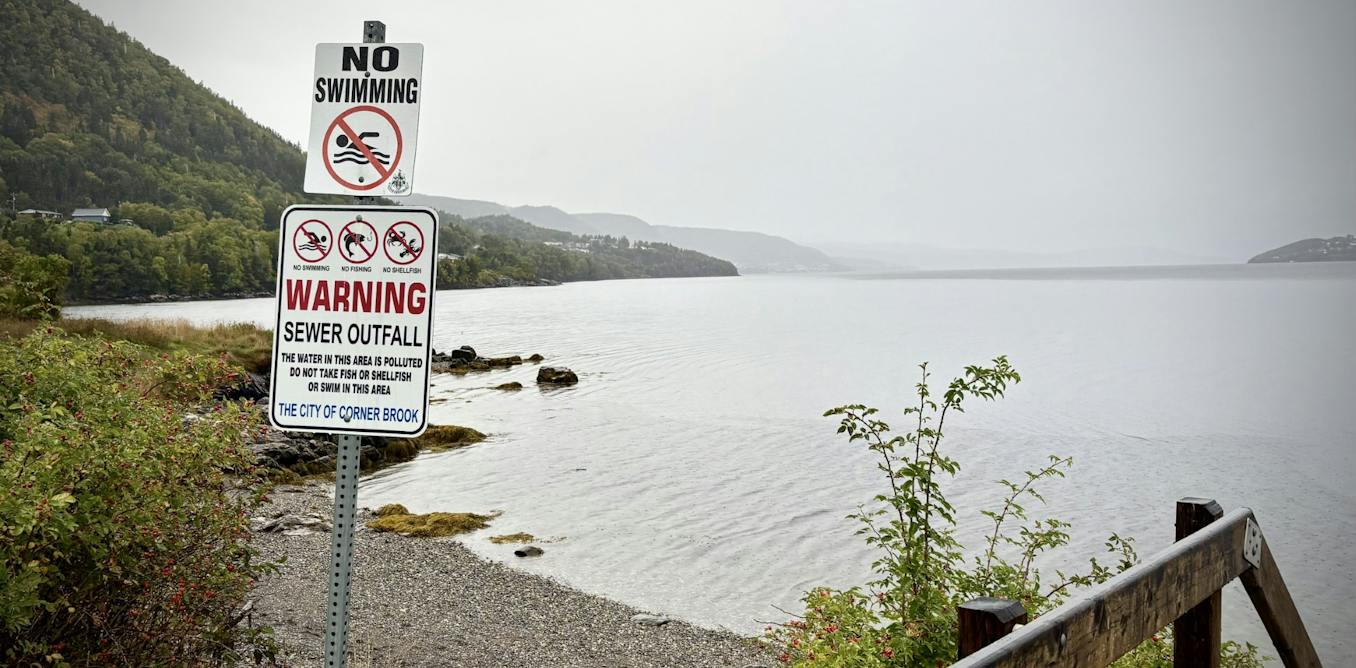
The popular new Netflix thriller series Below portrays life in coastal Newfoundland and a frightening presence in the water that turns out to be a giant squid. However, the show’s tagline, “something’s in the water,” also speaks to another alarming reality in the water for many Newfoundland communities: sewage. Municipalities across the island of Newfoundland struggle to manage and dispose of raw sewage. The persistence of sewage effluent in local waters is experienced as a localized environmental threat, an infrastructural inequality, a burden on local finances and labour and a source of embarrassment in Newfoundland’s cities and towns that do not have the infrastructures to comply with federal wastewater management regulations. In a new SSHRC-funded project, I am exploring the mismatches between wastewater policies and local experiences of sewage infrastructure challenges in Newfoundland. Policy-infrastructure mismatches In Canada, wastewater is regulated at the federal level under the Fisheries Act by the Wastewater Systems Effluent Regulations (WSER). The regulations came into effect in 2015 and require secondary-level wastewater treatment (for example, facilities using biological processes to remove organic matter and suspended solids) to meet national quality standards and reduce threats to fish and human health. Yet, in Newfoundland and Labrador, 186 of 212 wastewater discharge points regulated by the WSER have no treatment at all. In 2021, only three per cent of Newfoundland and Labrador wastewater systems complied with the WSER. Map of Canada’s Effluent Quality results under the WSER (2021 results): Systems meeting WSER requirements at least 75 per cent of the time. (Generated by the author, November 2026) Under the WSER, non-compliant municipalities must apply for “transitional authorizations (TAs),” or permissions to continue polluting. TAs require regular sampling, analyses in authorized labs, acute-lethality (fish kill) tests and the submission of this data to a federal portal. However, many smaller communities with few municipal staff and small budgets struggle to finance, administer and monitor their water to meet these reporting requirements and continue polluting with permission. Infrastructural inequities Newfoundland communities of various sizes struggle to bridge the gap between the enforcement of federal environmental policies and their sewage management realities on the ground. For example, the City of Corner Brook releases over 20,000 square metres (approximately eight Olympic-sized swimming pools) of raw, untreated sewage effluent into the ocean every day. The city has struggled for more than a decade to obtain provincial and federal funds to build a secondary treatment facility. The estimated cost of the facility required in Corner Brook is $120-130 million. In early 2026, the city was served with an environmental directive by armed Department of Fisheries and Oceans officers who levied fines and threatened criminal charges because of the volume of effluent the city is releasing into the Bay of Islands. The city of Corner Brook in 2022. It releases huge amounts of raw, untreated sewage effluent into the ocean every day. (Marcus Urbenz/Unsplash) In the meantime, Corner Brook pays $60,000 a year to an authorized private lab to analyze their polluted water samples in order to provide the required data to the federal government’s portal. Small communities across the island are also dealing with big sewage issues. In addition to lacking wastewater treatment facilities, many municipalities have aging sewage infrastructure and experience frequent sewage blockages, line breaks and overflow. For small towns with an increased population during warmer months due to seasonal residents, workers and tourists, these challenges compound as the sewage increases. The town clerk of a community with around 1,000 residents recently estimated that 30 per cent of the town’s budget could be spent elsewhere if not for the costs of water and sewage infrastructure repairs and wastewater monitoring. Contracting out wastewater sampling For many small municipalities, producing data to keep a transitional authorization can be a labour burden, logistically challenging and expensive. Third-party companies are stepping in to fill the gap between regulations and municipal realities by selling wastewater sampling, lab and consulting services for a fee. In a recent interview, an elected official in a small western Newfoundland town with a population of less than 500 residents told me: “When you see the (company) van drive through town, you know there’s also an $8,000 invoice coming.” The Gulf of St. Lawrence is seen from Gros Morne National Park in western Newfoundland in 2017. THE CANADIAN PRESS/Colin Perkel A 2019 report in The Telegram estimated that 80 per cent of Newfoundland municipalities contract out their wastewater sampling and analysis to one firm, Biomaxx Environmental. Following global trends in wastewater monitoring and the growing presence of private sector solutions for municipal wastewater challenges, I suggest the current enforcement of WSER is creating the conditions for community wastewater challenges to become a source of profit. In other words, wastewater is emerging as a place where private companies are creating a market for themselves in municipalities struggling to comply with regulations that were not made with their infrastructure realities in mind. ‘Get back from the water’ In Below, Josh Hartnett’s Calvin Penney runs through a community event shouting for everyone to “get back from the water!” When watching the scene, I was reminded of stories I’ve heard from municipal staff and residents of Newfoundland communities running up to tourists to tell them to stay out of the waters near outfalls, where pipes, drains or sewers discharge wastewater into bodies of water. One such incident included a cruise ship passenger clad in snorkel equipment, wading into the waters from the beach directly in front of Corner Brook’s largest sewage outfall. Untreated sewage — along with the disconnect between federal regulations and local infrastructure — is a major obstacle in communities that still lack wastewater treatment. Local sewage challenges also reach far beyond environmental pollution and municipal budgets, affecting community planning, tourism, public health, recreation, local food sovereignty and access to shoreline food sources.
Something else is lurking just ‘Below’ the surface of Newfoundland’s waters — raw sewage
Full Article
Original Source
Read the full article at Theconversation →KhanList aggregates and links to publicly available news content. We do not host full articles from third-party sources. Always verify important information with original sources.