
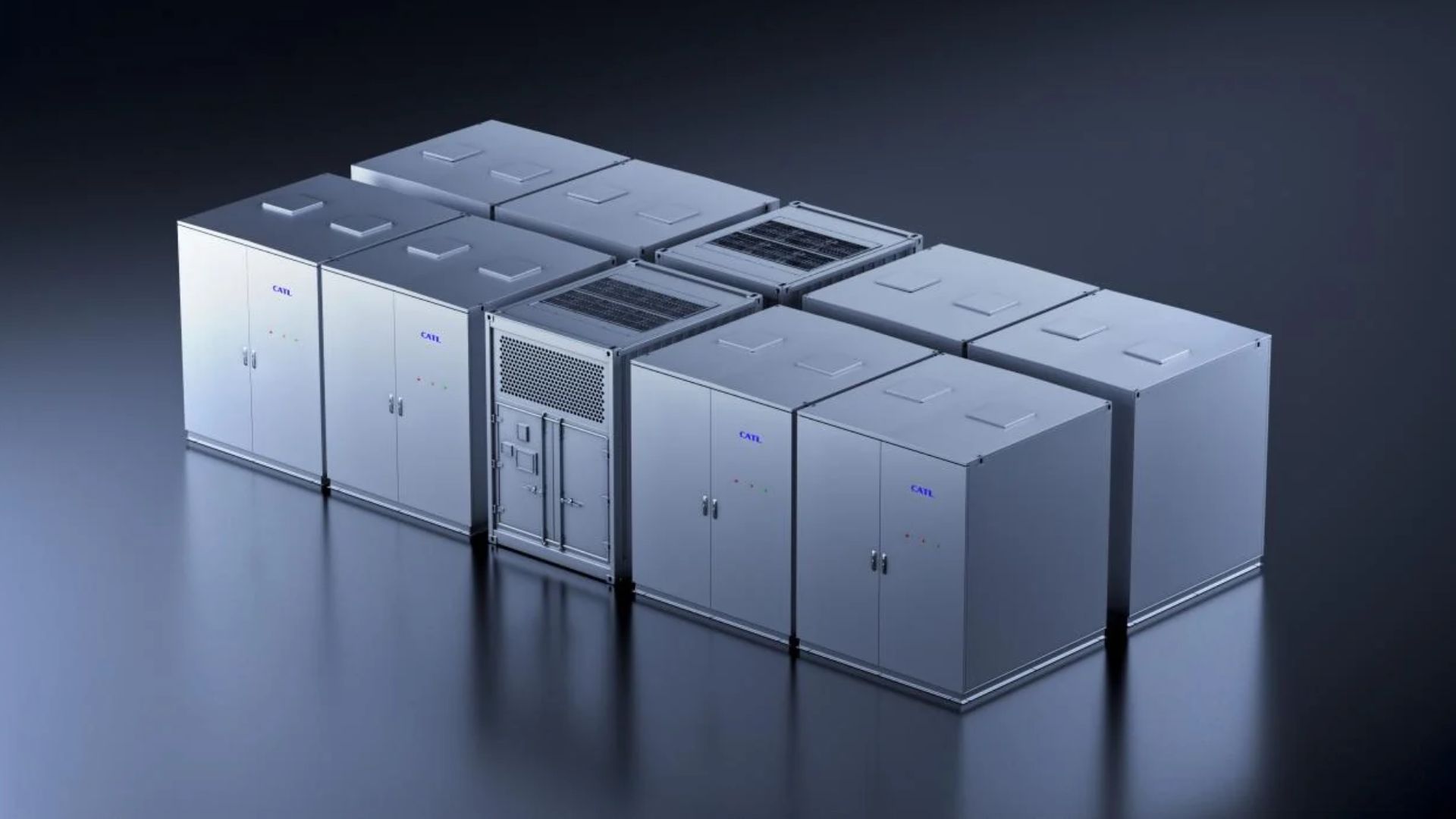
Lithium-ion batteries have become the backbone of electric vehicles and energy storage. But a rival chemistry built around one of the world’s most abundant elements is now becoming more and more viable. Sodium-ion batteries are entering commercial production, with major manufacturers betting they could make energy storage cheaper, more resilient, and less dependent on lithium. In February 2026, China’s CATL and automaker Changan unveiled what they described as the world’s first mass-production passenger vehicle equipped with sodium-ion batteries, with sales planned for the middle of the year. In April, CATL also signed a major agreement to supply 60 gigawatt-hours of sodium-ion batteries to energy storage company Beijing HyperStrong Technology over three years. These developments suggest sodium-ion technology is approaching a new stage. But it still faces a fundamental challenge. Lithium-ion batteries have a considerable head start in energy density, cost, and manufacturing scale. Sodium is abundant, but that doesn’t automatically make better batteries Both technologies work on the same basic principle. During charging and discharging, ions move between a positive electrode (cathode) and a negative electrode (anode), with an electrolyte allowing them to travel between the two. The main difference is the element carrying the charge. Lithium-ion batteries use lithium, while sodium-ion batteries use sodium, which is widely available in seawater and common salts. That abundance could reduce dependence on lithium mining and price fluctuations. Sodium-ion cells can also use aluminum current collectors on both electrodes, potentially reducing their reliance on copper. Some designs avoid lithium, cobalt, and graphite altogether. However, sodium-ion batteries are not automatically free of critical minerals. Certain commercial cathode chemistries still use materials such as nickel and manganese, while their hard-carbon anodes require specialized manufacturing. The supply chain for these components is also much less mature. The International Energy Agency (IEA) notes that sodium-ion battery production remains heavily concentrated in China, despite the potential for more geographically diverse raw-material supplies. Lithium-ion still has the energy-density advantage For electric vehicles, one of the most important measures is energy density. It measures how much energy a battery can store relative to its weight or volume. Here, lithium-ion remains ahead. According to the IEA’s 2026 assessment, the latest sodium-ion cells can reach around 175 watt-hours per kilogram (Wh/kg). By comparison, lithium iron phosphate (LFP) cells can reach approximately 205 Wh/kg, while nickel-manganese-cobalt (NMC) batteries can reach around 265 Wh/kg. A less energy-dense battery needs to be larger or heavier to store the same amount of energy. In a vehicle, this can mean less driving range or less space for passengers and cargo. The IEA estimates that an average SUV equipped with sodium-ion batteries could achieve up to 350 kilometers (217 miles) of range, compared with approximately 400-600 kilometers (249–373 miles) for lithium-ion vehicles under average weather conditions. Sodium-ion batteries do have an important advantage in colder environments. The latest cells can retain around 90 percent of their nominal capacity at temperatures as low as -40°C (-40°F), outperforming conventional lithium-ion chemistries, particularly LFP. This could make them useful in cold-weather vehicles and equipment. The competition is shifting toward specific applications Sodium-ion’s strongest near-term opportunity may not be replacing the battery in every electric car. Instead, it could find a place in smaller vehicles, two- and three-wheelers, urban delivery fleets, and stationary energy storage, where weight and volume are sometimes less restrictive. The grid-storage market is particularly interesting. Batteries used to store electricity from solar and wind installations do not need to fit inside a vehicle or maximize driving range. Cost, safety, durability, and reliable performance can matter more than energy density. CATL’s 60 GWh agreement with HyperStrong reflects this opportunity, while its TENER sodium-ion storage system, unveiled in June 2026, points to growing interest in commercial-scale stationary applications. Still, the economics are not settled. Lithium-ion manufacturing has benefited from decades of investment and enormous production volumes. In particular, LFP batteries have become highly cost-competitive, making it difficult for sodium-ion to win simply because sodium is cheaper and more abundant. The IEA says global sodium-ion production in 2025 was less than 1 percent of lithium-ion output. Even announced projects for 2030 represent only a fraction of planned lithium-ion manufacturing capacity. A second battery chemistry, not necessarily a replacement The arrival of sodium-ion batteries is important, but it does not mean lithium-ion is about to lose its dominant position. Lithium-based cells continue to improve, while sodium-ion manufacturers still need to scale production, refine materials, and demonstrate consistent performance. The more likely outcome is a battery industry with multiple chemistries serving different needs. Lithium-ion will remain attractive where range, weight and energy density are priorities. Sodium-ion could become increasingly useful where cold-weather performance, material availability and supply-chain diversification carry greater value. Right now, sodium-ion’s biggest achievement may be giving battery manufacturers another option. And in an industry increasingly shaped by the demand for electric vehicles and grid storage, having more than one viable chemistry could prove just as important as developing a better battery.Get the latest in engineering, tech, space & science - delivered daily to your inbox.Kaif Shaikh is a journalist and writer passionate about turning complex information into clear, impactful stories. His writing covers technology, sustainability, geopolitics, and occasionally fiction. A graduate in Journalism and Mass Communication, his work has appeared in the Times of India and beyond. After a near-fatal experience, Kaif began seeing both stories and silences differently. Outside work, he juggles far too many projects and passions, but always makes time to read, reflect, and hold onto the thread of wonder.
Sodium vs. lithium: Which battery technology will power the next decade
Full Article
Original Source
Read the full article at Interestingengineering →KhanList aggregates and links to publicly available news content. We do not host full articles from third-party sources. Always verify important information with original sources.