
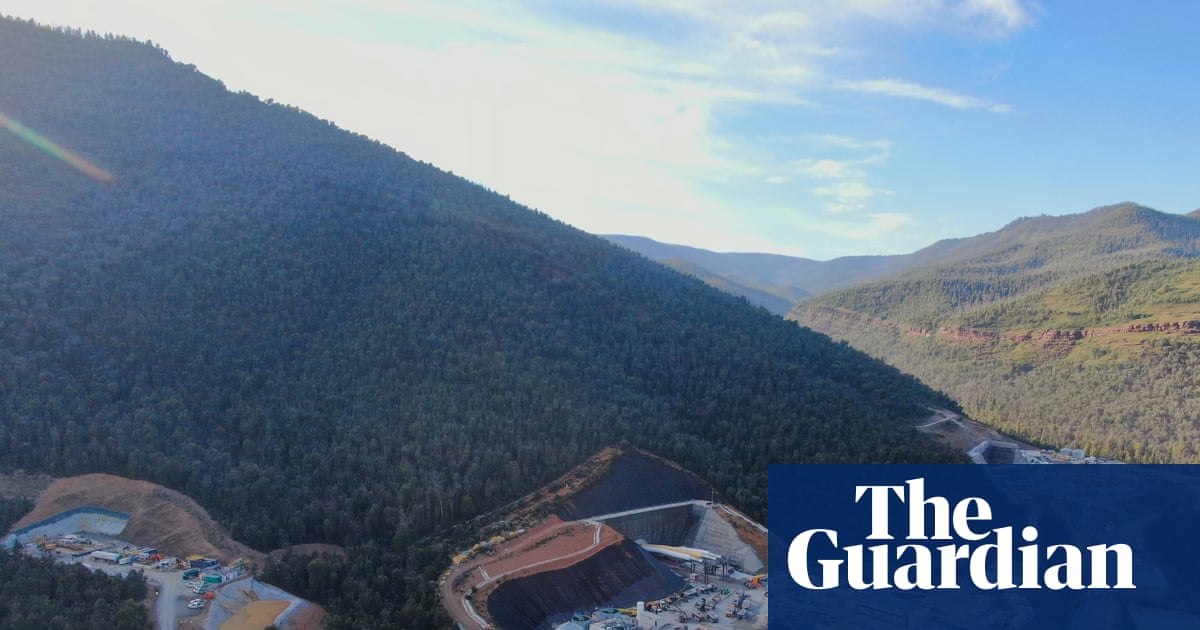
The cost of Snowy Hydro 2.0 has blown out to as much as $25bn, with a major reassessment finding the long-delayed renewable energy project will not be completed until the end of the decade.First touted by the Turnbull government in 2017 with a price tag of $2bn, the cost of the project in the Kosciuszko national park has increased dramatically over time. In 2023 it was revised to almost $13bn, with construction due to completed by the end of 2028.But new projections by the Snowy Hydro company, released on Thursday night, shows it will now cost at least $22.2bn, with contingency for a further increase to $25bn.Machine tunnelling is now 65% complete, and major excavations are in their final stages. Work to build the new underground power station is under way, with about 5,000 people at work on the project.But the project reset shows Snowy 2.0 won’t be completed and fully commissioned until 2029.The Albanese government plans to announce additional project oversight and financing structures for Snowy 2.0 in coming weeks. Another injection of taxpayer funds is expected, along with possible private financing components.TimelineSnowy Hydro projectShowMarch 2017Snowy 2.0 feasibility study announcedMarch 2017Turnbull government calls the plan a $2bn intervention in the energy market, with completion date expected by 2026-27 22 May 2017Commonwealth says it will buy out state government shares in Snowy Hydro Limited December 2017Board approves feasibility study which estimates the cost at between a $5.4 billion ‘low case’ scenario a $6.9 billion ‘worst case’December 2018Board approves a final investment decision, with a $6.1bn cost estimateFebruary 2019NSW government gives planning approval for exploratory worksJune 2020Commonwealth environmental approval receivedDecember 2020First tunnel boring machine commissionedDecember 2021Second tunnel boring machine commissionedDecember 2021Third tunnel boring machine, known as Florence, commissionedJune 2022Chief executive and managing director Paul Broad resigns December 2022Completion date pushed back to 2026-2722 February 2023Florence becomes stuck after hitting soft ground 150m into a 15km tunnel excavation. Remains stuck for nearly a yearAugust 2023Expected total cost increased to $12 billion and completion date pushed out to 2028October 2025Snowy Hydro says it expects another major cost overrun and orders a reassessment of the project October 2026Total cost expected to reach $25 billion, with completion date pushed to late 2029Beset by challenges – including major delays when a specialist boring machine became bogged and wedged in hard rock – the project’s timeline and extraordinary cost overruns have been blamed on its unique nature, significant risk and technical complexity.The boring machine, known as Florence, is still not yet at the halfway point of its 15km tunnel work.Principal contractor, Future Generation Joint Venture (FGJV), also faced “cost estimation challenges”, according to the company.Since the project was signed off on in late 2018, more detailed technical analysis has been required, while FGJV has missed productivity targets and failed on cost and planning performance. Global price rises for construction equipment, services and staff have all exceeded early estimates.Florence the tunnel boring machine is not yet at the halfway point of its 15km tunnel work. Photograph: Peter Hannam/The GuardianThe project aims to link two existing Snowy reservoirs with tunnels up to 27km long. Once completed, it will be able to generate 2,200 megawatts of power and provide 350,000 megawatt-hours of storage.Despite the soaring cost and repeatedly delays, Snowy Hydro chief executive, Dennis Barnes, said the situation could have been worse.“This project is incredibly complex, it is off the charts even for mega projects,” he said.“The original contract had so many flaws, and the project was stalled. The thing I’m pleased about is that if it wasn’t for the reset, if it wasn’t for the collaborative relationship we now have with the contractor, I think this would have been worse.“The silver lining is the project is beginning to hit its straps.”skip past newsletter promotionafter newsletter promotionAsked if he was concerned community confidence in Snowy 2.0 was shot, Barnes said the project would provide half the storage capacity needed for renewables in Australia and would help lower electricity prices.Snowy 2.0 is expected to be the largest source of stored dispatchable energy in the national electricity market, with its functions to include firming intermittent wind and solar generation and absorbing surplus renewable generation during periods of low demand.It will provide peak-load generation during periods of high demand and boost supply during prolonged periods of low wind and solar output.Critically, it is designed to reduce extreme wholesale price spikes by adding substantial supply when the market is stressed.“I’m confident that we can get the message out that the lowest cost system of the future is renewables backed by Snowy pumped hydro, batteries, and gas,” Barnes said.The energy minister, Chris Bowen, and the finance minister, Katy Gallagher blamed the former Coalition government for the poor design and cost projections, but insist Snowy 2.0 is necessary to strengthen Australia’s national energy grid.Labor looks set to attempt to place blame for the delays and overruns at the feet of the former energy minister and current opposition leader, Angus Taylor.“The government remains transparent about the pressures facing this project and securing the best possible outcome for taxpayers, energy consumers and the grid,” they said in a statement.“Once complete, the pumped hydro expansion of the Snowy Scheme will provide more than half of the total energy storage the grid needs by 2050, strengthening energy security and putting downwards pressure on energy prices.”
Snowy Hydro 2.0 has blown out to 12 times its original cost – but the CEO says it ‘could have been worse’
Full Article
Original Source
Read the full article at Theguardian →KhanList aggregates and links to publicly available news content. We do not host full articles from third-party sources. Always verify important information with original sources.