
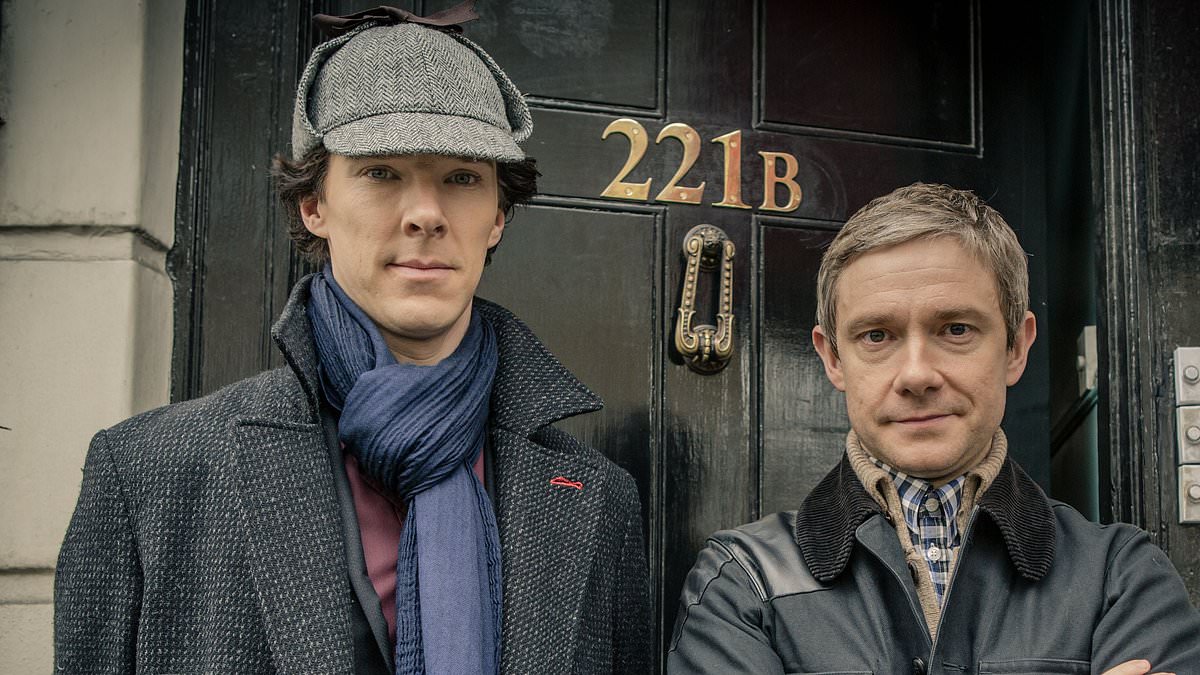
See more Daily Mail on Google - save us as a Preferred Source Published: 04:50 EDT, 28 August 2026 | Updated: 04:52 EDT, 28 August 2026 Sir Arthur Conan Doyle's estate has won a legal battle over the rights to the name of his Sherlock Holmes character's sidekick Dr Watson.Relatives of the author and creator of the Baker Street sleuth, who died in 1930, sued a businessman over his plans for a clothing range called 'Dr Watson'.Joel Brown, who runs a clothing firm based near Manchester, applied to register the name as a trademark in the UK for clothes including leisurewear, sportswear, footwear and headgear.But Sir Arthur's estate objected to the move, arguing the application overlapped with its registered trademarks for 'Dr Watson' and 'Holmes and Watson'.Debuting in the 1887 book A Study in Scarlet, Sherlock Holmes appeared in four novels and 56 short stories by Sir Arthur alongside his friend Dr Watson.The characters have been the subject of tens of thousands of stage adaptations, films and television programmes, including the BBC series Sherlock, which starred Benedict Cumberbatch as the detective and Martin Freeman as his confidant.In its filing to the UK Intellectual Property Office (UKIPO), which rules on trademark disputes, Sir Arthur's estate said the public could confuse the author's characters with the clothing brand.Lawyers said potential customers could mistakenly believe clothes sold by Mr Brown were endorsed by the estate. Sir Arthur Conan Doyle, who died in 1930, created the fictional detective Sherlock HolmesThe UKIPO found in favour of the estate and said the application could not be registered.In evidence submitted to the hearing, the estate said: 'The articles of protective clothing, footwear and headgear covered by the opponent's earlier trade mark are similar to all of the goods covered by the application.'The two sets of goods overlap in their physical nature, both being items of clothing and likely being manufactured from similar materials.'They are also likely to be manufactured in similar factories, stored in the same warehouses and distributed by the same entities. They therefore occupy the same channels of trade and reach the market in a like manner.'Mr Brown's representatives said the estate's 'Dr Watson' trademark only covered 'protective clothing' which was 'fundamentally' different from what he planned to sell.They also pointed to guidance produced by the UKIPO which states the level of fame of some fictional characters means 'they are unlikely to be perceived as indicators of trade origin'.In a written ruling, trademark hearing officer Catrin Williams said: 'I find that a significant proportion of the relevant public will understand Dr Watson as a reference to the literary character found in the Sherlock Holmes series of stories. Benedict Cumberbatch and Martin Freeman as Holmes and Watson in the BBC series Sherlock'I appreciate that the Trade Marks Manual Examination Guide states that the names of fictional characters may be considered descriptive in relation to goods and services connected with books, films and similar media.'However, my assessment of the goods has been confined to the opponent's protective clothing, footwear and headgear. In respect of those goods, I consider the mark to possess a medium degree of inherent distinctiveness.'The mark is neither descriptive nor allusive of these particular goods in question, and I do not consider that they have any meaningful association with the literary character Dr Watson.'I consider that the average consumer is likely to mistake the parties' marks for one another even where I have found the goods to be similar to a low degree.'Mr Brown has been ordered to pay £1,300 towards the estate's costs in the case.
Sherlock Holmes and the case of the trademark battle: Arthur Conan Doyle's estate wins fight with businessman over name of detective's sidekick Dr Watson
Full Article
Original Source
Read the full article at Dailymail →KhanList aggregates and links to publicly available news content. We do not host full articles from third-party sources. Always verify important information with original sources.