
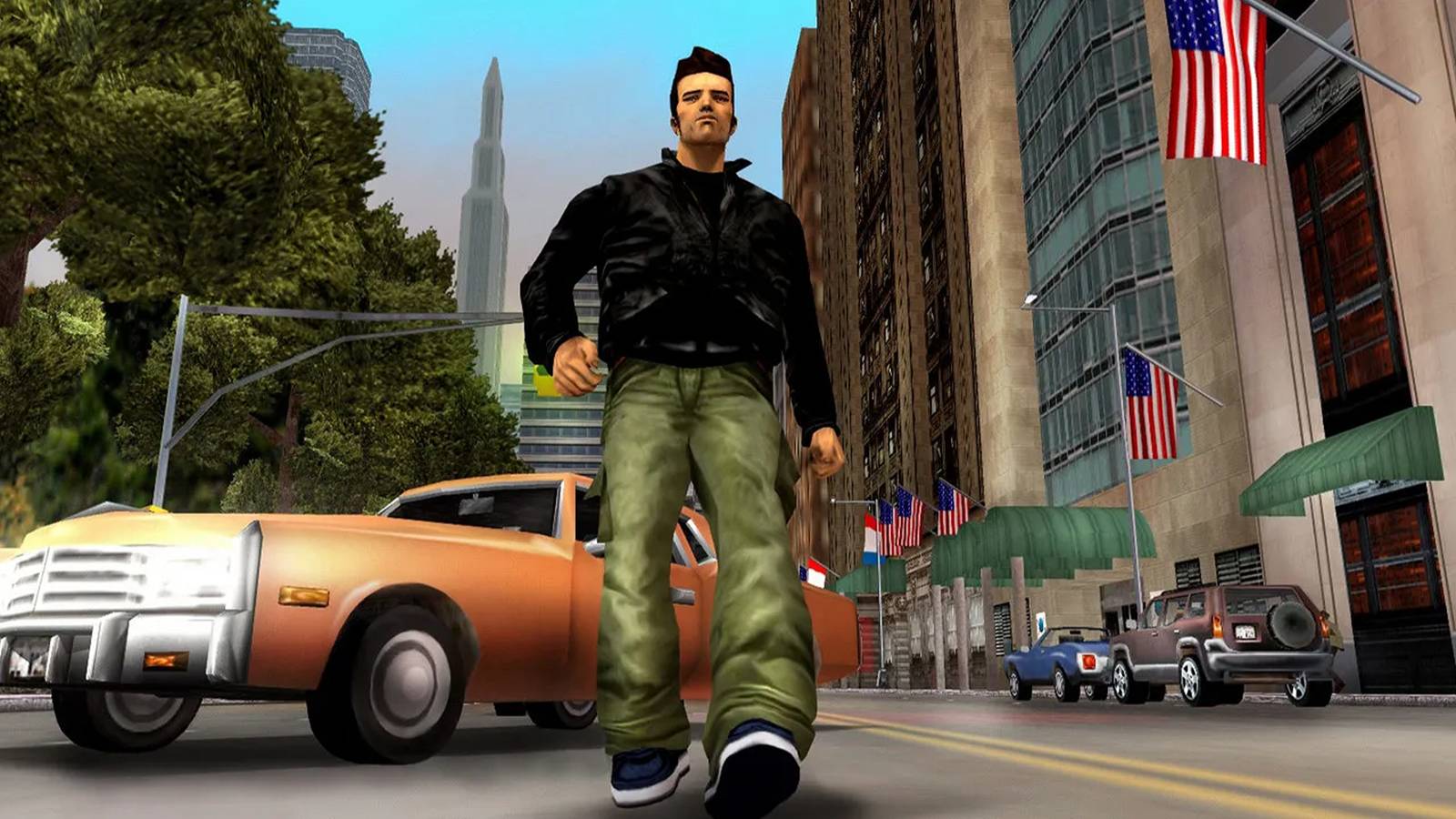
Published Aug 28, 2026, 6:09 AM EDT Writing from the Chicagoland area in Illinois, Robert is an avid movie watcher and will take just about any excuse to find time to go to his local movie theaters. Robert graduated from Bradley University with degrees in Journalism and Game Design with a minor in Film Studies. Robert tries his best to keep up with all the latest movie releases, from those released in theaters to those released on streaming. While he doesn't always keep up with the latest TV shows, he makes it a goal to watch nearly every major new release possible. He has been honing his craft and following any and all movie news all his life, leading up to now, where he has a vast knowledge of film and film history. He also logs every movie that he watches on his Letterboxd page, and has hosted a weekly online movie night with his closest friends for over 6 years. Sign in to your Collider account One of the inherent fascinations with video games as a medium over other forms of art is that, thanks to the combination of the massive exponential growth of technology available and the playable aspects of the artform, older experiences prove to age much less gracefully than other artforms. This isn't to say that there aren't timeless classic video games that are still a blast to play nowadays, but when a game hasn't aged well, its flaws and limitations of the era really become apparent to a point of being unavoidable. The PlayStation brand is filled with so many of these infamously poorly aged games, as games that were once heralded as classics of the era manage to have their legacy slightly altered by the process of time and gamers grow accustomed to the quality of life changes of the modern era. All of these games are still undeniably great in the context of when they released, but it's hard to imagine a reason to revisit them nowadays aside from for the sake of history or outright nostalgia. 10 'Jet Moto' (1996) Capitalizing on the popularity of both extreme motocross sports in the '90s and prominent racing games, Jet Moto was one of the premier multiplayer experiences on the original PlayStation as well as a great racing game that predated Gran Turismo and Crash Team Racing. However, racing games as a genre have evolved a great deal since 1996, with the sluggish controls and jarring early PS1 graphics majorly holding this game back. Especially since the Jet Moto formula was better refined and solidified within multiple PS1 sequels, the flaws and poorly aged attributes of the original game stick out that much more. It isn't without its charms and strengths, as it was a classic of the era for a reason, but as other racing video games of the era have aged gracefully with timeless controls, Jet Moto falters and crashes before it can reach the finish line. 9 'PaRappa the Rapper' (1996) Often credited as the first rhythm game ever made, PaRappa the Rapper's colorful charm and inventive gameplay style would become the template for an entire genre of massively brilliant games across gaming history. However, few genres are absolutely perfect on their first go-around, as some gameplay elements within PaRappa the Rapper make it a test of patience in the context of modern rhythm gaming. For a genre defined by precision and timing, being in rhythm with the game's songs feels archaic at best and unresponsive at worst. This is made worse when the game incentivizes a sense of free-flow originality which, while fun in concept, in practice makes the songs that much harder and needlessly complex. It's a shame because the game is overflowing with charm and personality, making the most out of each of its only 6 levels, but aggressively annoying for those even slightly familiar with modern rhythm games. It also doesn't help that this formula was solidified and made better in both the spinoff game, Um Jammer Lammy, and its sequel, PaRappa the Rapper 2. 8 'Assassin's Creed' (2007) One of the early prominent examples of an open-world adventure game and one of the standout early titles during the 7th generation of consoles, Ubisoft's Assassin's Creed proved to be so successful that it completely reshaped them as a studio. With the Assassin's Creed franchise still going strong to this day, the original game in the series certainly shows its age compared to just how much the franchise has evolved and grown with time. Combat feels stiff and unsatisfying; the parkour that would define later entries of the franchise is janky and unresponsive in this game, and as a whole, the true strengths and charm of the franchise feel massively muted and dull. There is a reason that Assassin's Creed II is so much more beloved by fans of the franchise, as it is the real open-world classic that made the franchise a household name instead of the middling original title. Image via Playstation One of the first major PlayStation franchises and the go-to example of vehicular combat in video games, Twisted Metal has carved out a distinct niche for itself over the years thanks to its mixture of carnage, wild absurdity, and the inherent fun of its wild destruction. However, like many other long-lasting franchises, Twisted Metal has grown a great deal since its original entry, making it difficult to sit through the annoyances of the original game when one can simply play one of the significantly better sequels. Unresponsive and archaic controls are the main culprit that stops Twisted Metal from being a timeless classic, as the simple concept of controlling your vehicle can feel like a Herculean task for certain vehicles. The graphics aren't much to write home about, although the low-polygon vehicles and prerecorded videos certainly have some janky charm to them. 6 'Tekken' (1995) Tekken is still one of the undeniable titans of the fighting game genre, continuing to be massively celebrated and the go-to example of a great 3D fighter. While other 90s fighting games have had a built-in classic status that places them among the best fighting games of all time, the original Tekken has too many poorly aged elements that hold it back from similar praise. This PS1 port of the arcade classic feels extremely rigid and slow compared to later entries, still relying on the ingenuity of 3D fighting to find success. Fighting game fans don't even need to leave the PS1 to find an amazing Tekken experience, as Namco would eventually refine and elevate the series with Tekken 3, creating the true apex and potential of 3D fighting games. As it stands, with modern Tekken being as compelling as ever and Tekken 3 holding value as a timeless classic, there is genuinely no reason to play the original game except for understanding how much better Tekken has gotten. Collider Exclusive · Sci-Fi Survival Quiz Which Sci-Fi World Would You Survive? The Matrix · Mad Max · Blade Runner · Dune · Star Wars Five universes. Five completely different ways the future went wrong — or sideways, or up in flames. Only one of them is the world your instincts were built for. Eight questions will figure out which dystopia, galaxy, or desert wasteland you'd actually make it out of alive. 💊The Matrix 🔥Mad Max 🌧️Blade Runner 🏜️Dune 🚀Star Wars TEST YOUR SURVIVAL → 01 You sense something is deeply wrong with the world around you. What do you do? The first instinct is often the truest one. APull on every thread until I understand the system — then figure out how to break it. BStop asking questions and start stockpiling — food, fuel, weapons. Questions don't keep you alive. CKeep my head down, observe carefully, and trust no one until I know who's pulling the strings. DStudy the patterns. Every system has a rhythm — learn it, and you learn how to survive it. EFind the people fighting back and join them. You can't fix a broken galaxy alone. NEXT QUESTION → 02 In a world of scarcity, what resource do you guard most fiercely? What we protect reveals what we believe survival actually requires. AKnowledge. If you understand the system, you don't need resources — you can generate them. BFuel. Everything else — movement, power, escape — runs on it. CTrust. In a world of fakes and informants, a truly reliable ally is rarer than any commodity. DWater. And after water, information — the two things empires are truly built on. EShips and credits. The galaxy is big — you survive it by being able to move through it freely. NEXT QUESTION → 03 What kind of threat keeps you up at night? Fear is useful data — if you're honest about what you're actually afraid of. AThat reality itself is a lie — that everything I experience has been constructed to keep me compliant. BA raid. No warning, no mercy — just the roar of engines and then nothing left. CBeing identified. Once someone with power decides you're a problem, you're already out of time. DBeing outmanoeuvred — losing a political game I didn't even know I was playing. EThe Empire tightening its grip until there's nowhere left to run. NEXT QUESTION → 04 How do you deal with authority you don't trust? Every dystopia has a power structure. Your approach to it determines everything. ASubvert it from the inside — learn its rules well enough to weaponise them against it. BIgnore it and stay out of its reach. The further from any power structure, the better. CAppear to comply while doing exactly what I need to do. Visibility is the enemy. DManoeuvre within it carefully. You can't beat a system you refuse to understand. EResist openly when I have to. Some things are worth the risk of being seen. NEXT QUESTION → 05 Which environment could you actually endure long-term? Survival isn't just tactical — it's physical, psychological, and very much about where you are. AUnderground bunkers and server rooms — cramped, artificial, but with access to everything that matters. BOpen wasteland — brutal sun, no shelter, constant movement. At least the threat is honest. CA dense, rain-soaked city where you can disappear into the crowd and nobody asks questions. DMerciless desert — extreme heat, no water, and something enormous living beneath the sand. EThe fringe — backwater planets and busy spaceports where the Empire's attention rarely reaches. NEXT QUESTION → 06 Who do you want in your corner when things fall apart? The company you keep is the clearest signal of who you actually are. AA tight crew of believers who've seen behind the curtain and have nothing left to lose. BOne or two people I'd trust with my life. Any more than that and someone talks. CNobody, ideally. Alliances are liabilities. I work alone unless I have no choice. DA community bound by shared hardship and mutual survival — people who need each other to last. EA ragtag team with wildly different skills and total commitment when it counts. NEXT QUESTION → 07 Where do you draw the line — if you draw one at all? Every survivor eventually faces a moment that tests what they're actually made of. AI won't harm the innocent — even the ones who'd report me without hesitation. BI do what I have to to protect the people I've chosen. Everything else is negotiable. CThe line shifts depending on who's asking and what's at stake. DI draw a long-term line — nothing that compromises my people's future, even if it'd help now. ESome lines, once crossed, can't be uncrossed. I know which ones they are. NEXT QUESTION → 08 What would actually make survival worth it? Staying alive is one thing. Having a reason to is another. AWaking others up — dismantling the illusion so no one else has to live inside it. BFinding somewhere — or someone — worth protecting. A reason to keep moving. CAnswers. Understanding what I am, what any of this means, before time runs out. DLegacy — shaping the future in a way that outlasts me by generations. EFreedom — for myself, for others, for every world still living under someone else's boot. REVEAL MY WORLD → Your Fate Has Been Calculated You'd Survive In…Your answers point to the world your instincts were built for. This is the universe your temperament, your survival instincts, and your particular brand of stubbornness were made for. The MatrixYou took the red pill a long time ago — probably before anyone offered it to you. You're a systems thinker who can't help but notice the seams in things. You're drawn to understanding how the system works before figuring out how to break it. You'd find the Resistance, or it would find you — your instinct for spotting constructed realities is the machines' worst nightmare. You function best when you have access to information and the freedom to act on it. The Matrix built an airtight prison. You'd be the one probing the walls for the door. Mad MaxThe wasteland doesn't reward the clever or the well-connected — it rewards those who are hard to kill and harder to break. That's you. You don't need comfort, community, or a cause larger than the next horizon. You need a vehicle, a clear threat, and enough fuel to outrun it — and you're good at all three. You are unsentimental enough to survive that world, and decent enough — just barely — to be something more than another raider. In the wasteland, that distinction is everything. Blade RunnerYou'd survive here because you know how to exist in moral grey areas without losing yourself completely. You read people accurately, keep your circle small, and ask the questions others prefer not to answer. In a city where humanity is a legal designation rather than a feeling, you hold onto something that keeps you functional. You're not a hero. But you're not lost, either. In Blade Runner's world, that distinction is everything. DuneArrakis is the most hostile environment in the known universe — and you are precisely the kind of person it rewards. Patience, discipline, and political awareness are your core strengths — and on Arrakis, they're survival tools. You understand that the long game matters more than any single victory. Others come to Dune and are consumed by it. You'd learn its logic and earn its respect. In time, you wouldn't just survive Arrakis — you'd begin to reshape it. Star WarsThe galaxy far, far away is vast, loud, and in a constant state of violent political upheaval — and you wouldn't have it any other way. You find meaning in being part of something larger than yourself — a cause, a crew, a rebellion. You'd gravitate toward the Rebellion, or the fringes, or whatever pocket of the galaxy still believes the Empire's grip can be broken. You fight — not because you have to, but because standing aside isn't something you're capable of. In Star Wars, that willingness is what makes all the difference. ↻ RETAKE THE QUIZ 5 'Resident Evil' (1996) One of the most important trilogies on the original PlayStation was Capcom's legendary zombie horror games, Resident Evil. The games raised the stakes of horror gaming and found an exceptional blend of puzzle-solving, action, and scares that still keeps gamers invested in the modern age as some of the greatest games of their generation. However, the initial icon of survival horror feels extremely sluggish to play today, at least in terms of its original PS1 version. The PS1 version of Resident Evil is largely held back by both the graphical limitations of the console and the extremely dated tank controls that make combat and traversal a cumbersome task to overcome. While the game technically has DualShock analog controls on the Director's Cut version, this edition of the game has its own failures, most notably a laughably bad soundtrack. The biggest issue is that the original Resident Evil in all of its glory was perfectly remade only 6 years later in Resident Evil 0, leaving no reason to ever return to this original classic. 4 'Guitar Hero' (2005) It cannot be understated just how much of a phenomenon Guitar Hero became for the rhythm game genre, as it became a dominating cultural moment and just about every gamer's household had a plastic guitar peripheral. However, when gamers think back on the greatness of the franchise in the 2000s, they often think of games like Guitar Hero II or Guitar Hero III: Legends of Rock, as the original game became extremely dated and outclassed only a few years after its release. The game laid the groundwork and potential for the franchise to work, but the mixture of uncalibrated timings to its notes and an abundance of cover tracks due to the franchise not having the pull or prominence to get the original recordings holds it back in many regards. There's certainly still love for Guitar Hero as an icon of 2000s gaming, but this love only goes so far when the original game is considered. 3 'Alien Trilogy' (1996) No singular genre has had such an overwhelming growth and evolution since its early days as the first-person shooter, with so many previously classic shooters feeling absolutely terrible to play nowadays with the modern luxuries of dual-stick or mouse controls for aiming. As far as PlayStation first-person shooters are concerned, the most prominently poorly aged example is Alien Trilogy, a once massively celebrated shooter that bases itself on the first three films in the Alien series. While the game was appreciated when it first released for recapturing the tension and atmosphere of the films, its attempts at a first-person shooter under a modern lens make it completely unplayable. This, combined with the high level of difficulty and precision required of the player to even navigate the maps, makes it a nightmare to play and something that has entirely faltered due to the passage of time. 2 'Tomb Raider' (1996) It feels wrong on some level to call out the original Tomb Raider for its poorly aged attributes, as the influence and importance that the game has held in the larger scope of adventure games and PlayStation history cannot be understated. Still, any adventure game that combines unintuitive tank controls with precise platforming and combat is going to fall under scrutiny in a modern context, as Lara Croft's first outing is a test of patience in the worst regards. More than any other game on this list, the experience of playing Tomb Raider is not one of the high-flying action-adventure that modern entries would have one believe. Instead, the game is one defined by frustration, being mad at just how cumbersome it is to actually play and feeling baffled at the fact that the game was such a celebrated classic in the first place. It's one of the best cases of the impacts of time on a video game, as what was once considered one of the greatest games of all time feels completely unplayable today. 1 'Grand Theft Auto III' (2001) Image via Rockstar Games Grand Theft Auto III may not be as frustratingly unplayable as some of the other entries on this list, but it's a game whose originally groundbreaking strengths have been completely nullified by subsequent entries, leaving behind only its glaring age as its standout individuality. This grandfather of the open-world genre is celebrated for its influence, yet the game is rough to return to after 25 years of growth and excellence within the GTA franchise and open-world games as a whole. It's missing a lot of the quality-of-life features and charms of other PS2 entries in the franchise; the game has a gross, low-polygonal look that makes it feel like a PS1 game despite being on PS2, and its mission design ranges from extremely boring to extremely frustrating. Especially when games like Grand Theft Auto: Vice City and Grand Theft Auto: San Andreas exist, there is genuinely zero reason to return to Liberty City unless you're playing Grand Theft Auto IV.
10 Classic PlayStation Games That Are Completely Unplayable Today
Full Article
Original Source
Read the full article at Collider →KhanList aggregates and links to publicly available news content. We do not host full articles from third-party sources. Always verify important information with original sources.