
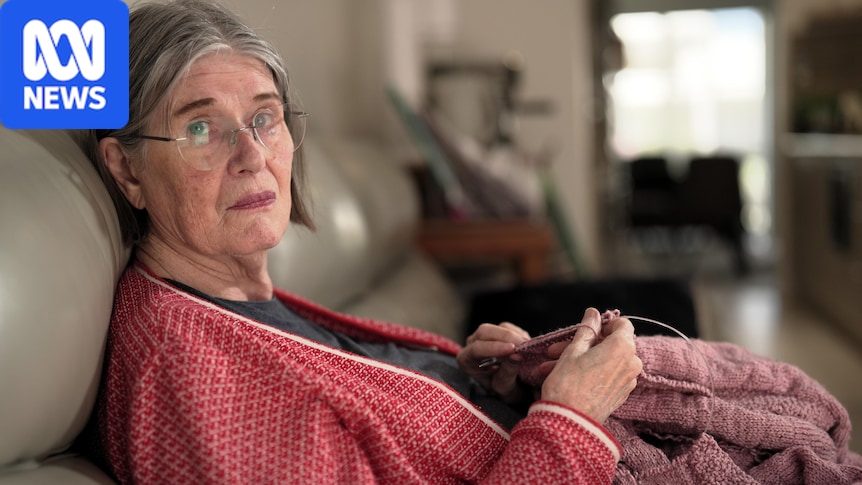
Patients could make fewer visits to specialists and instead rely on their GP to treat some medical conditions, under a possible shake-up of specialist care in Australia.A parliamentary inquiry is considering a sweeping overhaul of the system to help patients who struggle to afford private specialists or languish on public waitlists for years."I think we are at a tipping point … we knew this was going to happen, it was predictable," committee chair and Labor MP Mike Freelander said."I'm not interested in this being a blame game, I'm interested in this inquiry being one that looks at solutions and that all governments take responsibility."Suzanne Luder has suffered from severe and unexplained abdomen pain. (ABC News: Patrick Stone)Each year, almost 2 million people delay seeing a specialist or skip it altogether, according to the Grattan Institute.Pensioner and former librarian Suzanne Luder has been on a public waitlist to see a gastroenterologist for the past two years, while suffering from severe and unexplained abdomen pain."Sitting in the darkness and wondering what the hell is wrong with you — I think that's the worst part," she said.Eventually she was diagnosed with gastritis and oesophagitis after paying more than $1,000 to be treated in the private system."The doctor said it was one of the most dramatic examples of [those conditions] he had seen in his practice," she said."I'm not the poorest pensioner on the block … but if I'm going to live till I'm 95 I'm going to need the money I've got."Some patients could avoid seeing a specialistOne of the potential solutions being canvassed by the inquiry is government funding for what are known as "secondary consultations", where GPs can ask specialists for advice on a diagnosis, management of a patient or whether a referral is needed.Existing Medicare items cover some similar consults, but they are not broadly available.Dr Freelander said an example could be a GP calling a dermatologist for advice about whether a mole on their patient required urgent attention, with both the GP and specialist paid for their time."At the moment it's a bit of an ad hoc arrangement. Many GPs will ring specialists they know and ask them for advice about a particular patient," Dr Freelander said."But we think we could formalise that … and it would help people in rural and remote areas."Mike Freelander says GPs and specialists can work together. (ABC News: Callum Flinn)A 2022 evaluation of a Queensland pilot program found patients avoided a face-to-face specialist appointment in 86 per cent of cases after their GP obtained specialist advice.Grattan Institute health program director Peter Breadon said evaluations of similar "secondary consultation" systems had also found a large proportion of cases could be managed without a specialist appointment, reducing demand and helping patients avoid long waits for care."Not only do you free up the specialist time, that patient saves money as well and we found that it would not diminish the quality of care at all," Mr Breadon said.The proposal could also reduce pressure on public outpatient clinics.While clinics provide one-third of specialist care, in some parts of Australia patients are languishing on waitlists for years.The inquiry has written to the states and territories, which run the clinics, to discuss how to improve access."We've heard that some people go blind with the retinal deterioration in older age because they can't access ophthalmologists … I think we need to change that on an urgent basis," Dr Freelander said.Julian Rait says action should have been taken sooner. (ABC News: Patrick Stone)Ophthalmologist and outgoing vice-president of the Australian Medical Association Julian Rait said he had seen outpatient capacity collapse over his 35-year-career."I'm a little despondent about how late this discussion has occurred," Dr Rait said."Now we're in a situation where we've reached a high-inflation environment where we haven't prepared the system adequately."Should doctors be penalised for charging exorbitant fees?Demand for specialists is partly being driven by an aging population and the increasing prevalence of chronic illnesses.But training places for the next generation of doctors are limited, tied to funding and teaching capacity, with the health department predicting a shortage of almost 7,000 specialists by 2033.Shortages are particularly prevalent in regional and rural areas of Australia, where people report travelling hours for basic care.Peter Breadon said rules were needed to "target the bad apples". (ABC News: Darryl Torpy)Mr Breadon said the projections of how many specialists were needed should be turned into targets for training."In the absence of those targets, it's very hard to hold the medical colleges to account and to make sure the hospitals are funding and supporting the training places that are needed."The lack of specialists has driven up fees, according to the Grattan Institute, which argues some private specialists are charging too much because they know their patients cannot easily go elsewhere for care.A recent health department consultation paper found Australians spent more than $4 billion on out-of-hospital specialist services in 2025, an increase of more than 75 per cent since 2019."Surely it's within our power … to set some rules to target the bad apples that are charging too much and protect patients," Mr Breadon said.Dr Freelander said the inquiry would examine a range of drivers behind rising out-of-pocket specialist costs, such as patients presenting with more complex conditions and increasing practice overheads."It's easy to label doctors as greedy and sometimes it does seem that the fees are large, but there are reasons why large gap fees are being charged," he said.The inquiry will also examine whether Medicare rebates need to be lifted, with doctors describing them as "almost meaningless"."Over time, because of the erosion of the Medicare rebate relative to the costs of providing the care, the out-of-pocket expenses we've had to levy on patients have been increasing," Dr Rait said.With submissions due to close this month, Suzanne Luder said she hoped the inquiry would prompt change."Life's too precious to be hanging around waiting on a list."
Shake-up of specialist healthcare proposed to cut prohibitive costs
Full Article
Original Source
Read the full article at Abc →KhanList aggregates and links to publicly available news content. We do not host full articles from third-party sources. Always verify important information with original sources.