
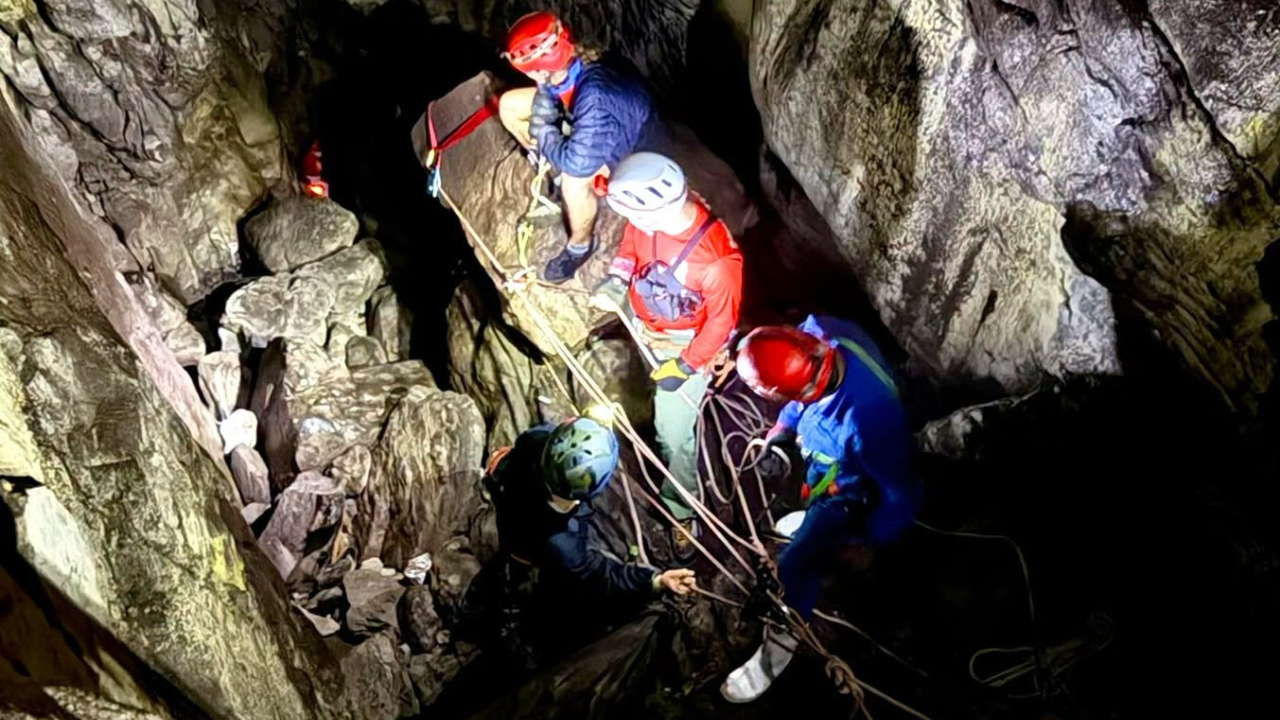
Their first call involved a young female hiker who tripped, fell, and sustained injuries along Table Mountain, requiring airlifting. The Western Cape Search and Rescue (WSAR) team has raised concerns following seven rescue incidents that occurred in one day. Their first call involved a young female hiker who tripped, fell, and sustained injuries along Table Mountain, requiring airlifting to a nearby landing zone before being transported to hospital. American Visitor Collapses Shortly, afterwards a 56-year-old American visitor collapsed while hiking Platteklip Gorge. The Western Cape Government Health and Wellness Emergency Medical Service (EMS), and the Air Mercy Service (AMS) rescue helicopter was dispatched, and a rescuer was hoisted to the scene to assist the patient before he was airlifted to safety and transferred to a waiting ambulance for further medical treatment. Hiker experiences severe cramps Meanwhile, a couple attempting to descend the technical sections of India Venster contacted WSAR for assistance. As teams were responding, the hikers reported that they had managed to continue their descent slowly. At the top of Platteklip Gorge, another male hiker was suffering from severe cramps and could not continue. First responders and rangers treated him before assisting him to the upper cable station, where they transported him down the mountain. Young hiker falls As the afternoon progressed, rescue demands grew on Saturday after a 24-year-old hiker, attempting to scramble up a break in the cliffs above Union Ravine away from the established trails, fell about four meters. The fall caused him to sustain injuries, leaving him stranded on a small ledge unable to continue. He called for help. Technical teams were deployed to the scene and roped down the cliffs to reach him, assess his injuries and provide medical care. Injured hiker lifted 130m Teams then carried out a challenging rope rescue, raising the injured hiker approximately 130 metres to the top of Table Mountain. However, reaching the top was not the end of the operation, as the cableway was no longer operating, leaving rescuers with no option but to carry the patient to the toilet facilities near the upper cable station. With strong winds making conditions difficult, the rescue team had to wait several hours before the cableway could safely bring them down the mountain. There, they sheltered from the elements while waiting for an opportunity to safely evacuate. The 24-year-old hiker was safely down the mountain after 8am. According to WSAR, staff had remained on duty long after normal closing time on Saturday, helping transport rescuers and specialist equipment up and down the mountain. Twisted Ankle They returned to assist again on Sunday morning, after receiving a call to rush towards Cecillia Forest when a 24-year-old female twisted her ankle. A responding paramedic safely assisted her down the mountain, where she was collected by a friend. The seventh incident involved a 32-year-old Tunisian visitor who hiked solo on an unfamiliar route from the India Venster trail. Hiker falls 4m As darkness fell, he realised that he could no longer safely navigate the terrain and called for assistance. WSAR said that this incident place additional pressure on an already demanding evening, requiring valuable rescue resources to be diverted from the ongoing technical operation above Union Ravine, in order to reach the stranded hiker as quick as possible. Rescue teams were roped down from the cable car before hiking swiftly across the mountain to locate him along the Grotto Fountain Cairn Traverse. Rescue teams respond According to WSAR, this approach saved valuable time, allowing rescuers to reach him and assist him safely down the mountain. Adding that calling for help was the right decision. “We would much rather someone recognise that they’re in difficulty and call early than continue into increasingly dangerous terrain,” Nel said. The call for help “But when several emergencies happen at the same time, every new call also means making decisions about where to deploy people and equipment, and how best to help everyone who needs assistance,” he added. WSAR noted that it is a side of mountain rescue that is not always visible. David Nel, WSAR spokesperson, said that more than 33 litres of water were handed out to hikers who had run out. 33 litres of water “With a particularly hot summer forecast and the busiest hiking months still ahead, we’re asking everyone to take a little extra care,” Nel warned. “Perhaps it’s checking that a friend has enough water before setting off.” Ensure that someone knows your whereabouts and when you are expected to return home. Safety tips Nel also suggested that one should take a torch and warm clothing, even when the weather looks perfect. “Encouraging someone to turn around when conditions become difficult, or simply stopping to help a stranger who’s struggling along the trail.” Adding that these might seem like small things, but they can make an enormous difference. The importance of calling early Nel stressed the importance of calling if something goes wrong, because calling early allows the rescuers more time to respond and a better opportunity to bring everyone home safely. “We don’t share these stories to discourage anyone from enjoying the mountains, but we do hope these stories encourage everyone to think a little differently about how we prepare, the decisions we make and the people we encounter along the way,” Nel concluded.
‘Seven incidents in one day’: Concerns over increased Table Mountain rescues
Full Article
Original Source
Read the full article at Citizen →KhanList aggregates and links to publicly available news content. We do not host full articles from third-party sources. Always verify important information with original sources.