
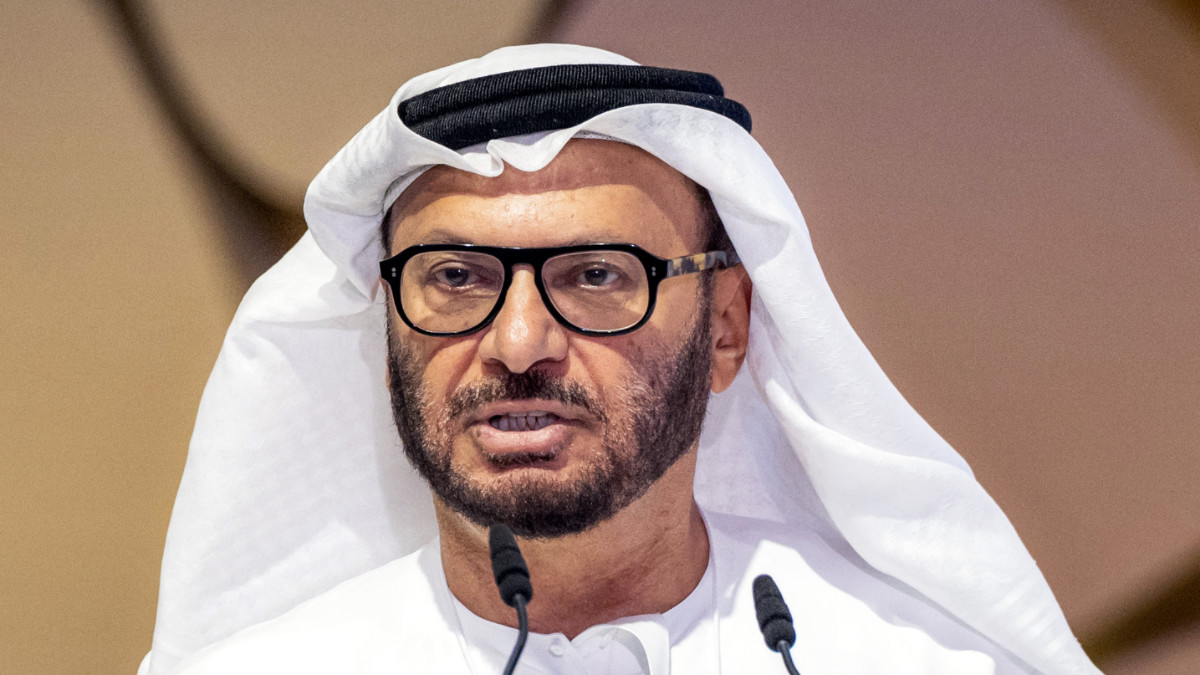
Anwar Gargash said the region could face the consequences of a war with no clear winner and no political settlement Anwar Gargash, diplomatic adviser to the UAE president, speaks at the Hili Forum 2026 in Abu Dhabi, on 7 September 2026 (Fadel Senna/AFP) Published date: 9 November 2026 17:46 GMT | Last update: 5 sec ago A senior UAE official warned that the Gulf must be prepared for a “long period of uncertainty” in which the US and Iran are not able to come to a political settlement to end their war, leaving the region in a state of limbo. "We should... prepare for a long period of uncertainty in which neither a decisive resolution nor stable regional order can be taken for granted,” Anwar Gargash, the diplomatic advisor to UAE President Mohamed bin Zayed, said on Monday at a forum in Abu Dhabi. Gargash’s remarks come as the Middle East tries to decipher whether US President Donald Trump will launch fresh strikes on Iran. Expectations of a new attack were high until last week, when on 3 November the Democrats won a sweeping midterm election victory that Trump and Vice President JD Vance attributed to the unpopularity of the US-Israeli war on Iran. Trump told CNN on Monday it was “highly unlikely” he would attack while negotiations are ongoing. New MEE newsletter: Jerusalem Dispatch Sign up to get the latest insights and analysis on Israel-Palestine, alongside Turkey Unpacked and other MEE newsletters But the US and Israel attacked Iran in February during negotiations. A US attack on Iranian nuclear facilities in June 2025 also came during negotiations. The US has three aircraft carrier strike groups in the Middle East. Trump told CNN that he has already identified civilian infrastructure, including 38 bridges that they can “knock down in literally one hour”. Foreseeable future Even if a new round of war is averted, Gargash’s comments reflect the uncertainty that could plague Gulf capitals for the foreseeable future. The US is blockading Iranian shipping, and Iran is attacking vessels in the Strait of Hormuz. Meanwhile, Saudi Arabia is enduring consistent strikes from the Houthis, who are aligned with Iran, in Yemen. A "no war, no peace" scenario would pose serious challenges for Gulf states that want to attract foreign investment and get energy exports back to pre-war levels. All the Gulf states that host US military facilities were targeted by Iran after the 28 February attack. Gulf states have downplayed damage caused by Iranian strikes: Report Read More » The UAE is not just an oil exporter; its diversified economy relies on foreign investment in real estate, tourism, and maritime trade, all of which could be at risk during prolonged instability. The UAE was opposed to the US and Israeli attack in February but then quickly became the most hawkish Gulf state in favour of the war. The UAE launched air strikes against Iran and sought to pressure Pakistan against mediating between Tehran and Washington by pulling a $3.5bn loan. Still, the UAE, which is Israel’s closest Arab partner, bore the brunt of Iranian reprisals with over 3,000 missiles and drones directed at the Gulf state. Reuters reported that the UAE and other Gulf states downplayed the extent of strikes. Iran’s attacks on the port of Fujairah were particularly sophisticated, with Iran targeting infrastructure that ships crude oil and finished petroleum products from oil terminals to shipping berths, according to Reuters. In September, the UAE appeared to take a more conciliatory approach to Iran. Gargash said the region needed a "new mindset" and called for negotiations to end the war and to include an "Iranian-Arab" element. The UAE is at the forefront of Gulf states expanding pipelines to bypass the Strait of Hormuz, but Houthi strikes on Saudi Arabia’s East-West Pipeline underscore the vulnerability of bypass routes. Gargash said that the UAE would invest more in its "defensive capabilities, the maintenance of credible deterrence, and stronger international security partners”. Middle East Eye delivers independent and unrivalled coverage and analysis of the Middle East, North Africa and beyond. To learn more about republishing this content and the associated fees, please fill out this form. More about MEE can be found here.
Senior UAE official says Gulf faces 'prolonged uncertainty' with no settlement to Iran war
Full Article
Original Source
Read the full article at Middleeasteye →KhanList aggregates and links to publicly available news content. We do not host full articles from third-party sources. Always verify important information with original sources.