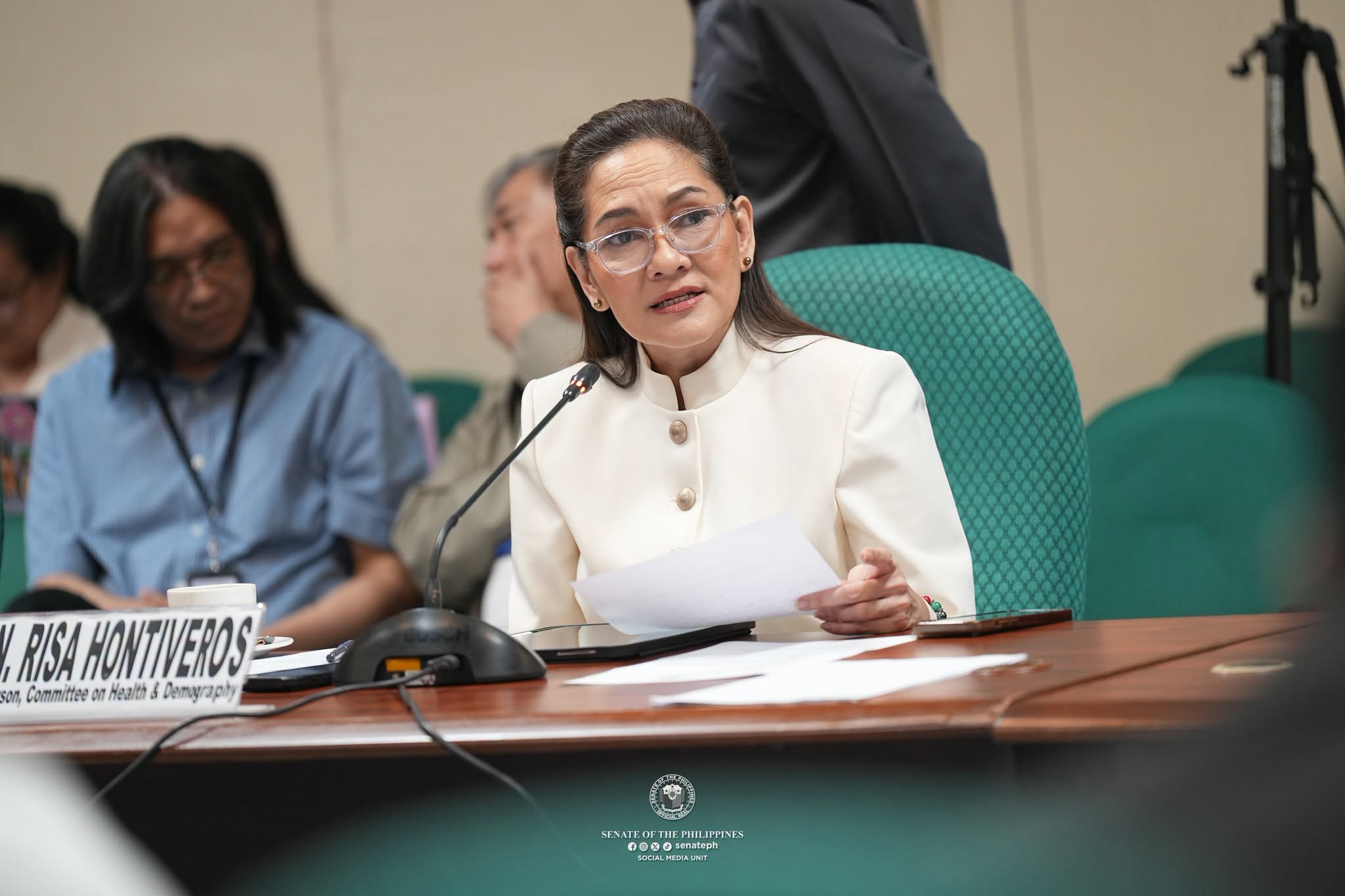
PROPOSED COMMISSION. Senator Risa Hontiveros introduces Senate Bill No. 1576, which plans to transform the National Nutrition Council into the National Nutrition Commission, on July 28, 2026. Senate of the Philippines The proposed National Nutrition Commission, if created by law, would craft nutrition-related policies, monitor the implementation of these policies, and ensure that targets are met MANILA, Philippines – Before Nutrition Month ends in July, experts and government agencies are deliberating on transforming the National Nutrition Council (NNC) into the National Nutrition Commission. During a Senate health committee hearing on Tuesday, July 28, Senator Risa Hontiveros introduced Senate Bill No. 1576 or the proposed National Nutrition Commission Act, the measure she authored which seeks to transform the country’s highest policymaking body on nutrition into a commission that directly answers to the president. The NNC is currently an attached agency of the Department of Health, with recently appointed DOH Secretary Jose Pujalte Jr. as its chairperson. “Mahigit 50 taon na ang National Nutrition Council, ngunit marami pa ring batang kulang sa nutrisyon, pamilyang nakakaranas ng gutom, at komunidad na hindi naaabot ng tuloy-tuloy na serbisyo. At higit na nakababahala ay ang pagtaas ng antas ng pagkabansot o stunting sa 25.3 na porsyento,” Hontiveros said in her opening statement. (The National Nutrition Council has been in existence for over 50 years, yet there are still many undernourished children, families experiencing hunger, and communities not reached by continuous service. What’s more alarming is the rise in the stunting rate to 25.3%.) She mentioned the 2025 Updating Survey of the Food and Nutrition Research Institute, which classifies stunting as a high public health concern. Stunting is considerably worse in rural areas, with the highest incidence recorded in the Bangsamoro Autonomous Region in Muslim Mindanao at 30.9%. Hontiveros, the Senate health committee chairperson, added: “Ang problema, maraming ahensiya ang may mandato, pero laging hindi malinaw kung sino ang namumuno, sino ang nag-uugnay, at sino ang mananagot kapag hindi naaabot ang mga targets. Ito ang layong tugunan ng Senate Bill No. 1576.” (The problem is that while many agencies have this mandate, it is often unclear who is in charge, who is coordinating, and who is accountable when targets are not met. This is what Senate Bill No. 1576 aims to address.) The bill proposes a dedicated governing body with nutrition experts, focused on addressing nutritional gaps. The bill lays out the commission’s responsibilities, including formulating nutrition-related policies and programs, supervising and monitoring their implementation, recommending measures to promote the right to nutrition, and conducting investigations on enforcing the right to nutrition, health, and food. It also calls for the creation of nutrition offices in every province, city, and municipality, with local or provincial nutrition action officers as heads. During the planned transition period from the NNC to the new commission, the NNC executive director and deputy executive directors would serve as the commission’s first chairperson and commissioners until formal appointments by Malacañang. Health Undersecretary Albert Domingo, who became concurrent executive director of the NNC in mid-July, expressed support for the bill, saying the transformation could better reflect the council’s expanding mandate as the primary entity for nutrition policies, while coordinating with all concerned agencies and multisectoral groups. “We can see that the bill is responsive to the multisectoral nature of nutrition governance,” he said in a mix of English and Filipino. Meanwhile, Nutrition Foundation of the Philippines executive director Maria Lourdes Vega suggested that at least one of the commissioners be a registered nutritionist-dietitian to “provide the technical credence and competence of nutrition policy formulation rooted in nutrition science as well.” She added that local government units must organize local nutrition committees to coordinate action on the ground. For ImagineLaw’s Mikhail Millan, the bill should also establish conflict-of-interest management policies to “firmly shield the commission’s policymaking from undue influence.” – Rappler.com How does this make you feel? Loading
Senate bill eyes nutrition council revamp to address malnutrition
Full Article
Original Source
Read the full article at Rappler →KhanList aggregates and links to publicly available news content. We do not host full articles from third-party sources. Always verify important information with original sources.