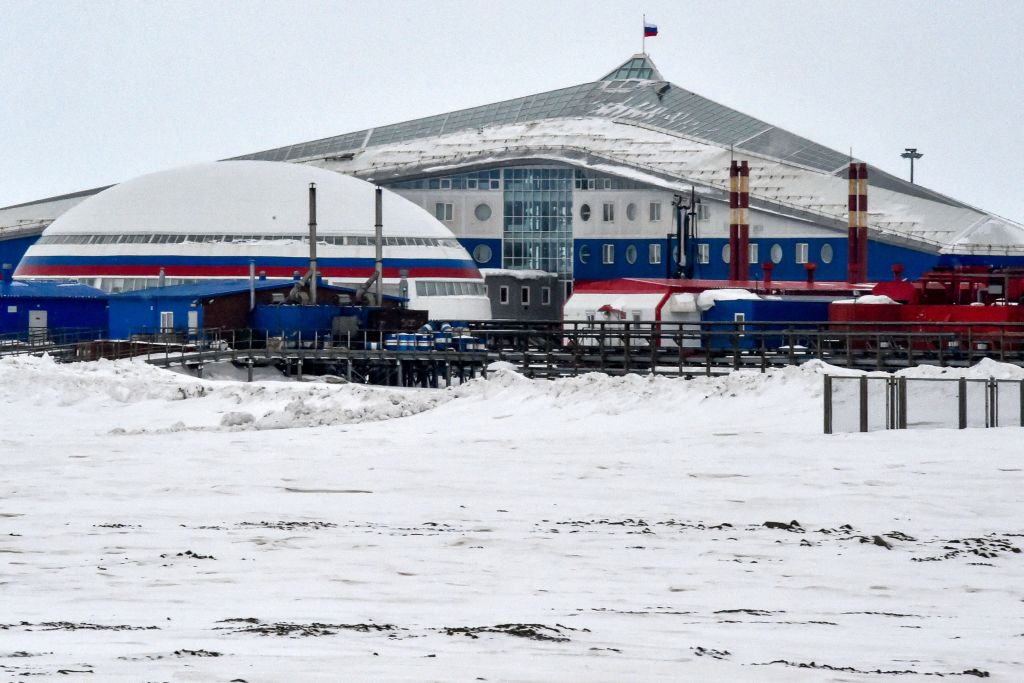
Russia’s Arctic ambitions have collided with the limits of its current power. Western sanctions have disrupted technology imports and delayed major shipbuilding and energy projects, while the war in Ukraine has strained the money, personnel, and industrial capacity needed to renovate northern bases, ports, and infrastructure. These constraints have widened the gap between what Moscow wants to accomplish in the Arctic and what it can deliver today. But Washington and its allies should not mistake delayed development for declining Russian interest. The Arctic is not important to Russia simply because President Vladimir Putin decided it should be. The region is embedded in Russian national identity, economic planning, military doctrine, and state institutions. State corporations, regional governments, and security agencies sustain Moscow’s northern agenda. Those structures — and the interests they serve — will outlast Putin and the war in Ukraine. The reasons are geographic and strategic. The Northern Sea Route runs along Russia’s Arctic coastline, providing a corridor for exporting energy and minerals to Asian markets. Although Moscow wants the route to compete with the Suez Canal, unpredictable ice, high operating costs, and limited infrastructure prevent it from becoming a dependable year-round alternative. Russia is therefore investing — albeit at a limited capacity since invading Ukraine — in ports, transshipment hubs, icebreakers, and other infrastructure to expand exports, collect service fees, and strengthen its control over Arctic shipping. Moscow views that control as both a source of revenue and geopolitical leverage, as well as the region’s hydrocarbons, fisheries, and critical minerals as long-term strategic assets. Although many projects remain expensive, technically difficult, or constrained by environmental or geopolitical limitations, these resources and routes remain central to Russian economic and security planning. The High North is also critical to Moscow’s homeland defense and nuclear posture. The Northern Fleet, based on the Kola Peninsula near Finland and Norway, contains the maritime component of Russia’s nuclear arsenal, including ballistic-missile submarines designed to survive an initial nuclear attack and retaliate. Russia’s “bastion defense” concept depends on protecting the Barents Sea and Arctic waters where these submarines patrol. The Kola Peninsula also places Russian submarines near the Greenland-Iceland-United Kingdom Gap, a maritime chokepoint they must cross to reach the North Atlantic. Any future Russian government will inherit the same coastline, resources, nuclear forces, access routes, and proximity to the United States. The Kremlin may be constrained in the Arctic today, but its interests are enduring. The idea of the Arctic as a foundation of future Russian power remains rooted in Russian strategic thinking. That gives NATO a window to prepare, not permission to become complacent. Allied countries have begun rebuilding their Arctic defenses. Canada is investing in forward operating sites, radar, satellite communications, and airports. Denmark is funding patrol vessels, long-range drones, and air-surveillance radar. Norway and the UK are deepening anti-submarine cooperation, while the United States is funding icebreakers, Alaskan infrastructure, and improvements to polar-based missile defenses. NATO’s Arctic Sentry initiative, launched in February, is intended to bring allied efforts under one coordinated umbrella. That momentum is welcome, but allies should not reinforce Arctic defenses to spite or protect themselves from one another. President Donald Trump’s remarks toward Greenland and Canada have fueled distrust within the alliance, creating the type of division that Moscow seeks to exploit. NATO is strongest when its members combine their geography, expertise, forces, and intelligence rather than question one another’s intentions. The next joint step should be to use Arctic Sentry to connect and expand allied intelligence, surveillance, and reconnaissance capabilities into a shared network stretching from seabed to outer space. Underwater, NATO should connect systems already under development. The UK’s Atlantic Bastion program aims to link autonomous ships, submarines, and aircraft through an AI-enabled targeting system. The U.S. is reportedly modernizing its highly classified Integrated Undersea Surveillance System, originally designed to track Soviet submarines, while researching other advanced undersea capabilities. NATO should integrate these efforts with Norwegian expertise and Canada’s planned maritime sensors. Allies should also jointly test autonomous underwater vehicles, unmanned surface vessels, and advanced maritime sensors in the High North. These systems would improve awareness of Russian submarine movements and intelligence-gathering ships. In space, NATO should prioritize resilient Arctic satellite communications. Allies should test military and commercial systems under extreme cold, electronic interference, and limited connectivity. They should also wargame the loss of GPS and satellite links while testing redundant systems and backup communication pathways to prepare for Russian interference with GPS and satellite communications. Nordic allies, especially Norway, should lead this work because of their experience operating in the Arctic’s harsh environment and contending with almost daily Russian GPS jamming (blocking of signals) and spoofing (manipulation of signals). These disruptions have affected civilian aviation and have previously occurred during major NATO military exercises, giving Norway practical experience that could strengthen alliance-wide preparations. NATO should also expand persistent allied access and training. Canada’s planned Northern Operational Support Hubs should support recurring U.S. and NATO deployments, prepositioned supplies, joint exercises, and intelligence operations. Washington should expand and regularize existing U.S. rotational training across the Nordic Arctic, building on periodic Marine deployments to Norway and moving toward a sustained training presence modeled after the UK’s year-round Royal Marine operations in Norway. These deployments would improve interoperability and ensure lessons learned in one part of the Arctic are shared across the alliance. Russia’s current limitations should not deceive NATO into thinking that the Arctic has fallen in Moscow’s priorities. The alliance must capitalize upon its northern momentum and use this period to build more resilient communications and undersea surveillance systems, more regular training, and greater trust among allies. Russia’s constraints may be temporary, but NATO’s preparations should be enduring. Rear Admiral Mark Montgomery (U.S. Navy, ret.) is a Senior Fellow at the Foundation for Defense of Democracies (FDD) and served 32 years in the U.S. Navy, including serving as deputy director for plans, policy, and strategy (J5) at U.S. European Command. Emmerson Overell is a project coordinator at FDD’s Center on Cyber and Technology Innovation, where she focuses on threats to U.S. and allied security in the Arctic, space, and cyberspace.
Securing the Arctic
Full Article
Original Source
Read the full article at Fdd →KhanList aggregates and links to publicly available news content. We do not host full articles from third-party sources. Always verify important information with original sources.