
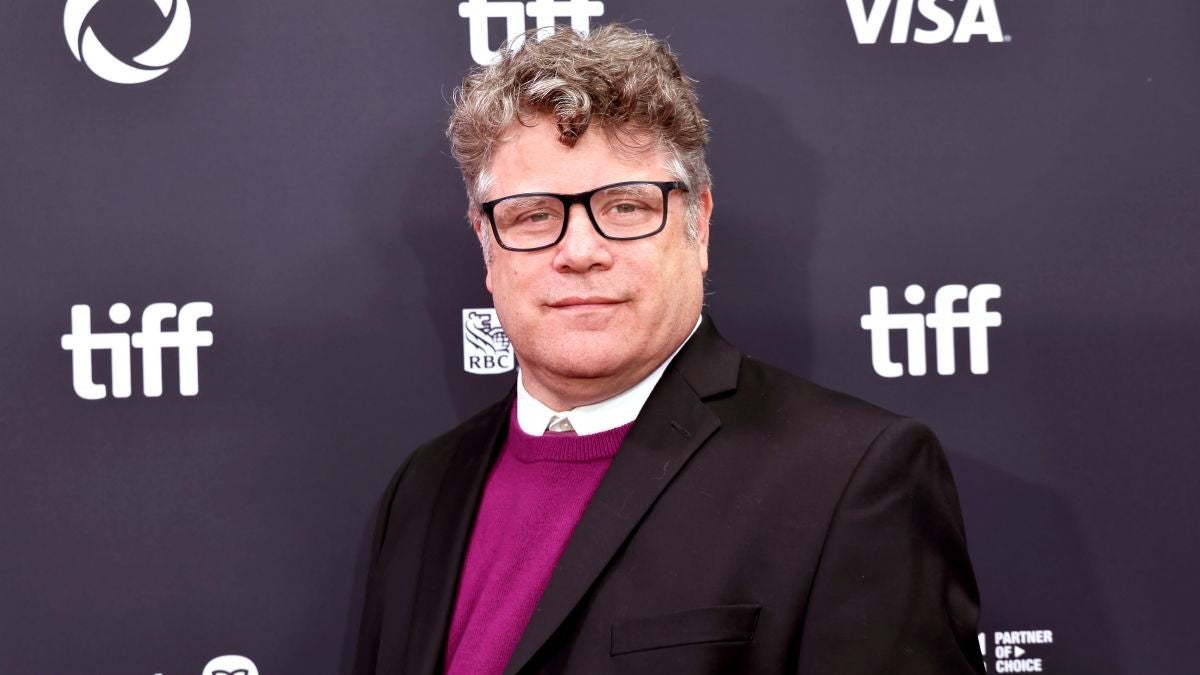
SAG-AFTRA President Sean Astin spoke directly to the actors union’s members during its plenary this past weekend, noting the frustration and desperation many of them feel as declining job opportunities have made it difficult to pay membership dues and qualify for the guild’s health plan. “The bottom line is that no agreement can make studios produce more or make audiences watch. But what we can do, what your union can do and is doing, is to use every bit of leverage we have to make sure working performers have a place in whatever this industry becomes,” Astin said in a speech recorded at SAG-AFTRA’s Miracle Mile headquarters. “We know what you’re up against because you’ve told us. Your experiences do reach the people you elect, and they shape what we do,” he continued. Astin’s speech comes as the industry-wide rollback in film and television productions, combined with the demise of the residual system that allowed working class actors to make a living during the height of linear TV, has made it more and more difficult for thousands of SAG-AFTRA members to qualify for the union’s health plan. While SAG-AFTRA successfully established a “Success Bonus Distribution Fund” to provide additional compensation for actors on films and television programs that find success on streaming, the $1.5 million in payments scheduled to be sent out in the weeks ahead from productions released in 2024 will only benefit an estimated 700 performers in a union with more than 160,000 members. Amidst these growing struggles, actors have taken to social media to network with each other to help find employment and to share their frustration both with declining job opportunities and with SAG-AFTRA itself. Former Nickelodeon star Drake Bell made waves with an Instagram post decrying the union after losing his healthcare. “Do not become an actor. Do not join SAG. You can work for 35 years and they still say [middle finger emoji],” he seethed. Astin acknowledged such frustration and the “palpable disconnect between the work of this union and the lived experience of too many of our members.” “Our communications have to be precise, legally sound and confident. But even when we get that right, our messages can feel a world away from someone who hasn’t worked in months or more,” Astin said. “For many, the question is no longer how to advance their careers; it’s whether they can afford to continue pursuing them at all. That is the hard truth of this moment, and no corner of our membership has gone untouched.” With healthcare costs across the United States continuing to spiral due in part to government subsidy cuts passed by the Trump Administration and Republicans in 2025, the minimum earnings requirement for the SAG-AFTRA health plan will increase from $28,933 to 31,616 in 2030, the next bargaining agreement negotiation year between the guild and Hollywood studios. In addition, SAG-AFTRA will be phasing out relief measures on membership dues that were implemented to support members who were struggling to make ends meet during the COVID pandemic and the 2023 strikes at the end of this week, returning to standard policy with membership termination for actors who have not paid their dues for an extended period of time. Astin acknowledged the end of those measures in his speech, noting that it marks a “painful moment for our union” but also saying that such measures “cannot continue indefinitely.” “To those affected: we want you working, and we want you in this union. If your membership has ended, please reach out to member services. Our staff will work with you,” he said. As part of the national board meeting, SAG-AFTRA announced several new developments in the union’s initiatives, including an increase to the health reimbursement account allocation for senior performers from $1,140 to $1,500 annually for those with 20 or more retiree health credits and from $240 to $312 for those with fewer than 20 retiree health credits. The HRA allocation changes will impact more than 10,000 individuals. The national board also adopted a comprehensive resolution affirming that employers may not require covered performers and media professionals to sign non-disclosure agreements (NDAs) as a condition of employment unless the terms have been bargained with and approved by the union, a measure adopted to counter what SAG-AFTRA says has been a wave of pressure by studios and companies against actors to sign broad NDAs that “chill legal rights and suppress transparency.” And on the leadership front, the board gave longtime national executive director and chief negotiator Duncan Crabtree-Ireland a vote of confidence, adding CEO to his job title and extending his contract through 2032. Going forward, Astin said he wanted the relationship and communication between SAG-AFTRA’s leadership and rank-and-file to be “unflinching,” but also with the aim to “build us up rather than wear us down.” “What does solidarity look like when you’re driving alone to an audition, when you’re sitting at home recording a self-tape, when you’re waiting for the phone to ring? Solidarity isn’t only something we experience when we’re together; it’s a choice we make. We are members of a union, and we are bound to each other,” he said.
Sean Astin Responds to SAG Actors’ Outcry Over Health Insurance: ‘Your Experiences Do Reach the People You Elect’
Full Article
Original Source
Read the full article at Thewrap →KhanList aggregates and links to publicly available news content. We do not host full articles from third-party sources. Always verify important information with original sources.