
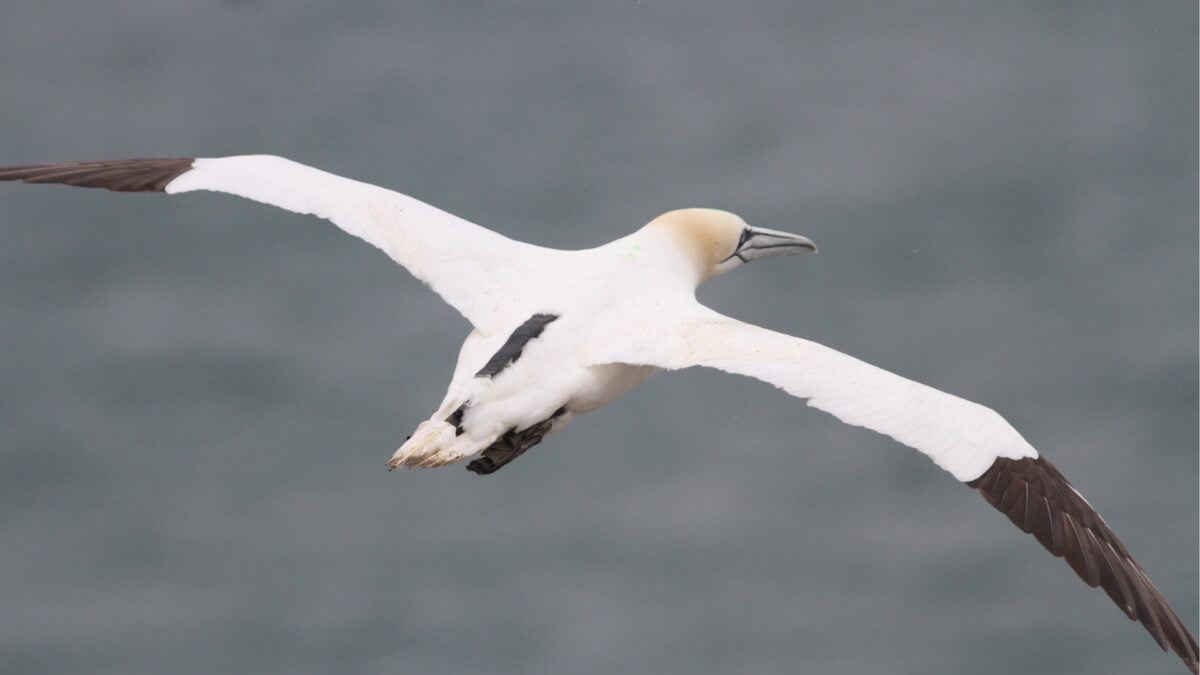
Tens of thousands of commercial fishing and shipping vessels sail the world’s oceans each day. This traffic can degrade habitats, produce noise, and cause collisions that threaten marine wildlife, so monitoring their activity is essential to conservation. The trouble is, some of these ships evade public tracking systems. Globally, about three quarters of industrial fishing vessels and one quarter of transport and energy vessels go unseen, meaning they do not broadcast their locations publicly via the automatic identification system (AIS). This maritime radio broadcast system automatically transmits a ship’s identity, location, course, and speed to other nearby ships, coastal stations, and satellites. Some vessels do not broadcast due to technical issues, while others deliberately disable their AIS transponders. That’s a problem for scientists who rely on this tracking data to understand animal-vessel interactions and guide marine conservation, but one team of researchers has come up with a clever solution. In a study published today in the journal Science Advances, they show that seabirds equipped with audio recorders can detect unseen vessels acoustically and help fill in data gaps. “Fishing and shipping have enormous impacts on marine life around the world,” lead author Jonathan Rutter, a postdoctoral research fellow in the Department of Biology at the University of Oxford, told Gizmodo in an email. “In particular, seabirds are often killed in fishing gear, one of the greatest threats to their populations.” Scientists have traditionally studied these impacts by looking at the overlap between where birds go (which is tracked via GPS) and where vessels go (which is tracked via AIS). Together, these data help researchers build a “footprint of risk,” Rutter explained. “Our audio study reveals that with conventional methods, such footprints of risk may be strikingly incomplete.” Seabirds search out stealthy ships Rutter and his colleagues tested whether seabirds equipped with lightweight audio recorders could help detect unseen ships, particularly fishing vessels operating in the North Atlantic, Mediterranean Sea, and South Pacific. They attached recorders and GPS trackers to the backs and tails of three different species that each live in a distinct marine habitat: the northern gannet, Balearic shearwater, and Westland petrel. “Attaching devices to birds makes them slightly heavier while also affecting their aerodynamics,” Rutter said. “However, these impacts are very low—we use non-invasive attachment methods developed over many years, and here we only attached devices for one to two weeks at a time. We only tag when there is a clear benefit for the species, and we closely monitor the birds’ weight and breeding success to ensure our impacts are minimal.” As they flew over ships, the birds’ audio recorders picked up distinctive, low-frequency humming sounds that are only produced by engines. The researchers adapted an existing vessel sound detection model that uses algorithms to identify this hum, allowing them to match the presence of a ship to the bird’s GPS location. A significant portion of documented vessel sounds did not overlap with AIS reported activity. Most notably, the northern gannet spent an average of 68 minutes per day near ships, and at least 22 minutes of that time was around unseen ones. That means at least 32% of vessel audio captured by gannets came from AIS-undetected vessels, but the researchers note that this is a conservative estimate, and the true proportion may be closer to 57%. “We know from previous video logger deployments that northern gannets from Grassholm interact with large trawl vessels almost exclusively,” Rutter said. “These vessels are required to use public AIS tracking, yet we found that for at least one third (and probably greater than half) of vessel audio detections, there was no match with AIS.” “This was a far higher proportion of unseen fishing than we expected, and it could reflect some combination of poor satellite reception or deliberate AIS disabling,” he added. He and his colleagues are already developing another method to track unseen fishing vessels that looks at seabird behaviors to determine when a bird is following a ship. “Like audio, this method could help reveal a more complete picture of the risk seabirds face from fishing activity, both seen and unseen,” Rutter said.
Seabirds With Audio Recorders Are Hunting Down Unseen Ships—and Finding More Than Expected
Full Article
Original Source
Read the full article at Gizmodo →KhanList aggregates and links to publicly available news content. We do not host full articles from third-party sources. Always verify important information with original sources.