
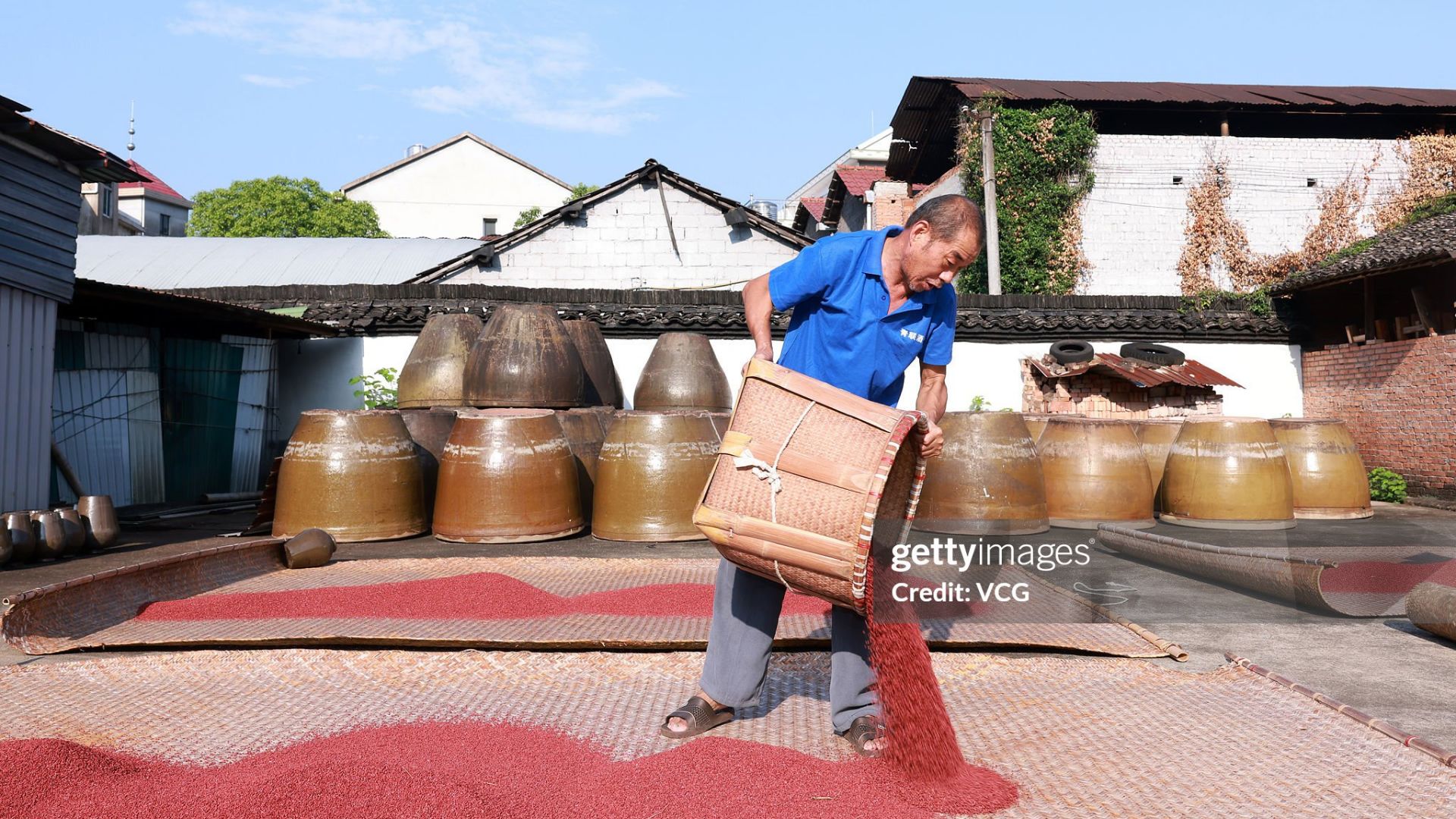
Brewers in China used red mold and bast-fiber textiles to filter rice-based alcoholic beverages approximately 5,000 years ago, according to a new study. University of Arizona researchers examined 16 pottery vessels and five specialized filters from the Wayaoli archaeological site in China’s Zhejiang Province. Using microscopic residue analysis, they identified starch grains, phytoliths, fungi, and microfibers preserved on the pottery. These residues indicated that the vessels were used to produce rice-based alcoholic beverages, including red-colored alcohol made with Monascus mold. Ancient brewers used red mold to ferment rice Archaeologists first found five unusual pottery filters with connected upper and lower bowls. Based on their design, they suspected they might have been used to produce alcohol, although it appeared they could also have supported other processes, including grain processing and water purification. However, residue analysis revealed rice starch and traces of Monascus mold, which is associated with traditional red rice brewing, on all five filters. Its enzymes break down rice starch into sugars that can then be fermented, the study reported. Additionally, the mold produces red pigments, suggesting that the Ancient Chinese drank red alcohol. Some starch grains showed damage consistent with cooking and fermentation, providing further evidence that the vessels were used in alcohol production. Researchers also discovered several starchy plant fibers, including foxnut, Job’s tears, and underground storage organs. The residue evidence aligns with an earlier study conducted at the Shangshan archaeological site in Zhejiang Province, dating back 10,000–9,000 years, which indicated that Monascus was used to ferment rice-based beverages. Another processing technique Researchers found traces of microscopic fibers identified as bast-fibers, which stem from the inner bark of plant stems and can be used to manufacture textiles. That suggests ancient brewers placed woven fabric inside the upper bowls of the pottery filters to separate the liquid from solid material. “These bast fibers were likely woven into textiles and placed on the upper filter bowl to improve alcohol filtration,” said researchers. The study states that bast-fiber textiles were used for filtration, improving both the taste and clarity of alcoholic beverages. However, researchers found no intact cloth at the archaeological site. Alcohol held ritual significance According to the study, most of these pottery filters came from burials excavated at the site. These vessels frequently appeared alongside other pottery associated with household activities, including jars, plates, and cooking pots. The researchers interpreted the presence of filters in burials as evidence of alcohol’s importance in the community’s social and ritual traditions. Late Neolithic societies in the Lower Yangzi River region were known for their intensive rice agriculture, technological innovation that increased social complexity, and elaborate ritual practices. Rice fermentation played a role in advancing culture and manufacturing techniques. By analyzing the microscopic residues on ancient pottery, researchers uncovered a major feature of these cultures. They identified evidence of both fermentation and filtration techniques used about five millennia ago. The study findings demonstrated the production of rice-based fermented beverages using Monascus molds and bast-fiber textiles. It suggested the significance of alcohol during the social and rituals during the Late Songze and Early Liangzhu periods. Get the latest in engineering, tech, space & science - delivered daily to your inbox.Originally from LA, Maria Mocerino has been published in Business Insider, The Irish Examiner, The Rogue Mag, Chacruna Institute for Psychedelic Plant Medicines, and now Interesting Engineering.
Scientists uncover 5,000-year-old Chinese brewing secret: Rice, red mold, cloth-lined filters
Full Article
Original Source
Read the full article at Interestingengineering →KhanList aggregates and links to publicly available news content. We do not host full articles from third-party sources. Always verify important information with original sources.