
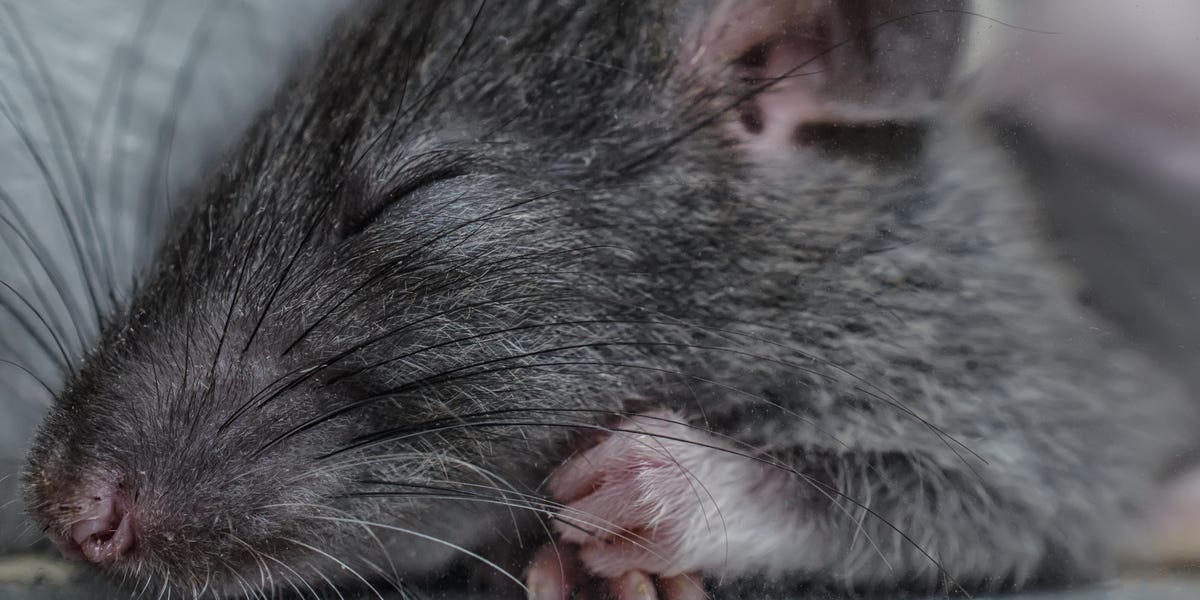
3 min readHere’s what you’ll learn when you read this story:Anesthesia is one of the most useful tools in exploring human consciousness, as it allows scientists to compare differences between a conscious and unconscious brain more easily, possibly leading to insights into how the waking mind forms our subjective experience.A new study uses this approach with rats and discovers that, while the mind has more absolute transfer entropy (a mathematical quantification of the flow of information) when unconscious, the brain becomes an “informational tuner” when awake. The team used arrays for high-density custom electrocorticography (ECoG) to extract traveling waves, the electrical ripples believed to carry information across different cortical regions.Studying human consciousness is an immensely difficult problem, and it’s the reason why so many scientists, philosophers, and theologians have been trying to explain it for millennia. However, within the last two centuries, humans gained an unlikely ally in exploring the inner depths of the human mind: anesthesia. It isn’t a method that could directly solve what’s known as “the hard problem,” or why the human mind creates subjective experiences, but it can help elucidate what happens when we purposefully turn off the lights of consciousness.Yes, anesthesia helps patients endure painful surgeries or undergo an uncomfortable dental procedure, but it’s also an immensely important technique for exploring consciousness. After all, when you “put someone under,” all forms of consciousness cease, which could provide a pathway to understanding our waking mind if we can learn why this occurs. Of course, that’s easier said than done, and explorations into anesthesia have produced varying theories of consciousness, including ones that traipse into the quantum realm.A new study, published in the journal iScience and led by researchers at Kyoto University, examines the effects of anesthesia on the right hemisphere in the brains of rats to see how information flows across cortical regions. By comparing waking rats with those under anesthesia, the team used arrays for high-density custom electrocorticography (ECoG) to extract what’s known as “traveling waves,” the ripples that propagate across the brain and carry information.“The relationship between traveling waves and information transfer has been suggested previously,” the team writes in the study. “However, it has never been directly examined whether traveling waves preferentially enhance information flow along their propagation direction… compared to the other directions.”By comparing awake rats with those under anesthesia, the team noticed counterintuitive differences between the two. Surprisingly, the drugged brain contained more absolute transfer entropy (a mathematical quantification of the flow of information), but the curves of these waves were messy and chaotic. In conscious rats, however, the brain channeled information with more precision along the axis of traveling waves.The team theorizes that the mind undergoes a phenomenon known as “informational tuning” while awake, essentially selecting and “tuning” information from the unending flow of waves. So while the state of consciousness doesn’t impact the absolute amount of this information (in fact, there’s more of it when the rats are unconscious), the waking brain is what tunes this unorganized flow.“This unexpected finding suggests that while the anesthetized brain is flooded with random, noisy information, the awake brain selectively regulates information in specific directions,” Kyoto University’s Yutaka Komura, a co-author of the study, said in a press statement. “In other words, the awake brain excels in the ‘reliability’ and precision of information communication, rather than just the raw quantity.”While this study provides an overview of what might be happening in our waking and anesthetized brains, it doesn’t dig deep enough to uncover the exact biological mechanisms responsible for these behaviors. Komura hopes that future studies will help “bridge the gap” between the conscious mind’s role as “informational tuner” and how it forms our conscious perception.Darren lives in Portland, has a cat, and writes/edits about sci-fi and how our world works. You can find his previous stuff at Gizmodo and Paste if you look hard enough.
Scientists Turned Off Consciousness in Rats. Then Their Brains Started Going Wild.
Full Article
Original Source
Read the full article at Popularmechanics →KhanList aggregates and links to publicly available news content. We do not host full articles from third-party sources. Always verify important information with original sources.